
• Skip to primary navigation
  • Skip to main content
  • Skip to primary sidebar

Earth Wise

A look at our changing environment.

  • Home
  • About Earth Wise
  • Where to Listen
  • All Articles
  • Show Search
Hide Search
You are here: Home / Archives for unstable

unstable

Arctic Communities And Permafrost Thaw | Earth Wise

December 16, 2021 By EarthWise Leave a Comment

Permafrost thaw threatens arctic communities

Permafrost is frozen soil, rock or sediment that can be as much as a few thousand feet thick.  To qualify as permafrost , the material has to have been at or below the freezing point of water for two or more years.  Most of it is located in high latitudes in the Arctic and Antarctic regions.   Permafrost covers nearly a quarter of the exposed land in the Northern Hemisphere.

Permafrost contains enormous amounts of carbon in the form of frozen soil that includes remnants of plants and animals, in some cases that have been there for more than 20,000 years.

The Arctic region has been warming faster than any place else on earth and thawing permafrost is already unleashing methane and carbon dioxide to the atmosphere, adding to the global temperature rise.

Apart from the impact on the global climate, thawing permafrost is making the ground unstable and is causing serious problems for local communities.

Recent research using satellite observations provides an overview of the Arctic to identify communities and infrastructure that will be at risk over the next 30 years.

Using high-resolution data from the Copernicus Sentinel satellite missions along with ground-based data going back to 1997, researchers modeled the permafrost ground temperature trends and extrapolated them out to 2050.  The results were that 55% of the infrastructure currently located on permafrost and within 60 miles of the Arctic coastline – infrastructure on which many communities rely – is likely to be affected.

Most human activity in the Arctic takes place along permafrost coasts.  Permafrost thaw is exposing these coasts to rapid change that threatens biodiversity and puts pressure on communities.

**********

Web Links

Satellites pinpoint communities at risk of permafrost thaw

Photo, posted January 24, 2014, courtesy of Brandt Meixell / USGS via Flickr.

Earth Wise is a production of WAMC Northeast Public Radio.
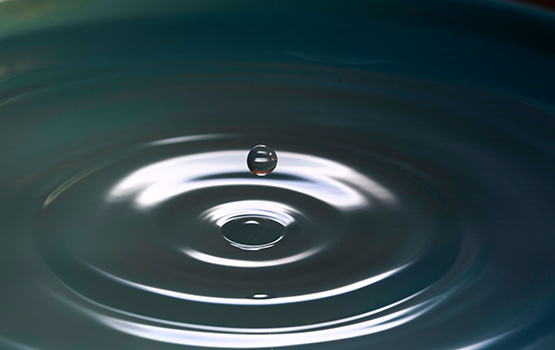
Nanotech Water Purification | Earth Wise

July 14, 2020 By EarthWise Leave a Comment

Ultrathin nanosheets separate ions from water

We have occasionally talked about metal-organic frameworks, which are organic-inorganic hybrid crystalline structures that have a microscopic cage-like structure.  MOFs have been under development for a diverse set of applications including gas storage and separation, liquid purification, energy storage, catalysis, and sensing.

For the first time, an international research team, led by researchers from Monash University in Australia, has created an ultrathin porous membrane based on MOF technology that can completely separate potentially harmful ions, such as lead and mercury, from water.

This innovation could enhance water desalination and transform even the dirtiest water into something potable for millions of people around the world.  The new membrane performed steadily in tests for more than 750 hours using only limited energy.

The technology uses water-stable monolayer aluminum-based MOFs just a millionth of a millimeter in thickness.  These are essentially two-dimensional structures.  The ultrathin membrane is permeable to water – it achieves maximum porosity – but rejects nearly 100 percent of ions.  It has been a daunting challenge to fabricate ultra-thin MOFs for water-based processing.  Most previous membranes were too thick and unstable in water. 

Most existing ion separation membrane technologies are based on polymers and have the limitation that they have limited selectivity.  They don’t reject all unwanted ions.

The new membrane technology has great potential based on its precise and fast ion separation and could be ideal for a variety of filtration applications such as gas separation and separation of organic solvents such as paint.  Such membranes might also be used to remove harmful carcinogens from the atmosphere.

**********

Web Links

Ultrathin nanosheets separate ions from water

Photo courtesy of Monash University.

Earth Wise is a production of WAMC Northeast Public Radio.
Safe And Simple Hydrogen Peroxide

November 29, 2019 By EarthWise Leave a Comment

We don’t think about hydrogen peroxide very often.  Perhaps we have a bottle of it under our bathroom sink that we haven’t touched in a few years.   But it is an important product manufactured in the millions of tons each year and the basis of a $6 billion global business.

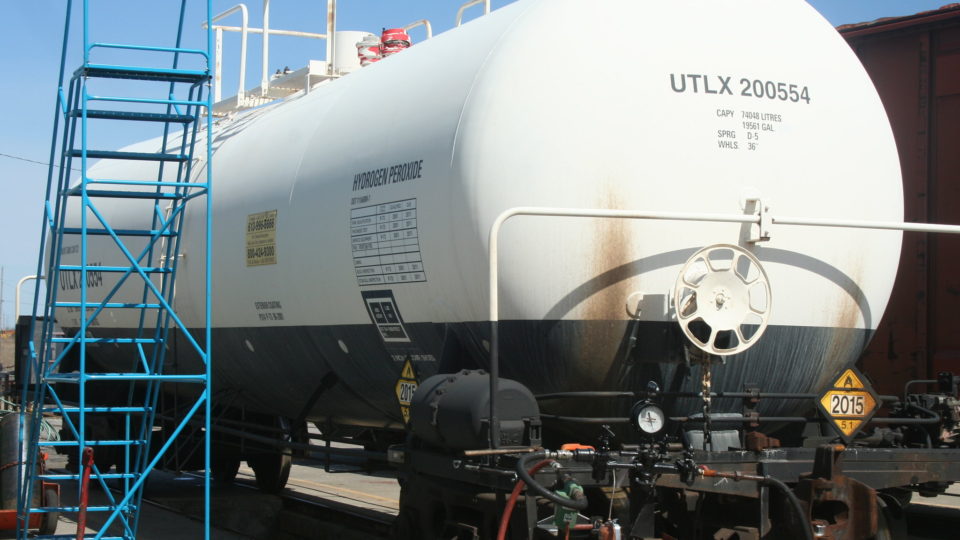
Hydrogen peroxide is widely used as an antiseptic, a detergent, in cosmetics, as a bleaching agent, in water purification, and in many other applications.  It is produced in industrial concentrations of up to 60% in solution with water in order to maximize the economics of transportation.  This makes transportation hazardous and costly because the concentrated form is unstable.  Most applications use a far more diluted form.

Researchers at Rice University have developed a new method for producing hydrogen peroxide that is much simpler and safer than the current technology, which actually dates back to the 1930s.  The Rice technique requires only air, water and electricity to produce the chemical.  The electrosynthesis process, which is detailed in the journal Science, uses an oxidized carbon nanoparticle-based catalyst.

The process could enable point-of-use production of pure hydrogen peroxide solutions, which would eliminate the need to transport the hazardous concentrated chemical.  The use of a solid electrolyte instead of the traditional liquid electrolyte eliminates the need for product separation or purification that is part of the current technology.

In the future, instead of storing containers of hydrogen peroxide, hospitals that use it as a disinfectant could turn on a spigot and get, for example a 3% solution on demand.  Instead of storing chemicals to disinfect swimming pool water, future homeowners could flick a switch and turn on their peroxide reactor to clean their pools.

**********

Web Links

Water + air + electricity = hydrogen peroxide

Photo, posted April 19, 2009, courtesy of Robert Taylor via Flickr.

Earth Wise is a production of WAMC Northeast Public Radio.
Lots Of Renewable Energy In Germany

April 29, 2019 By EarthWise Leave a Comment

As the contributions to the electrical grid from renewable sources continue to rise, people have expressed concerns about what might happen as sources like wind and solar energy become dominant.  Not many years ago, there was a common concern that if wind and solar contributed more than about a quarter of the energy mix, the grid might become unstable or unreliable.  Theoretical models looked at this situation but there hadn’t been much real-world data to look at.

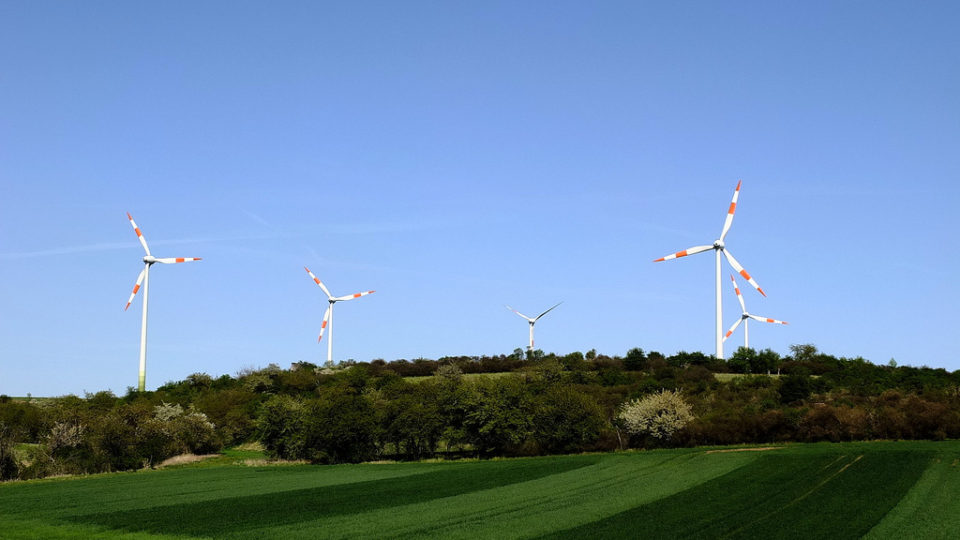
One place where there is now real-world data on a large scale is Germany.  Germany has been aggressively deploying both wind and solar energy for years as part of a national initiative called the Energiewende or energy transition.  Germany recently increased its renewable energy goal from 55% to 65% by the year 2030.   The increased share of renewables takes into account the decommissioning of aging nuclear and coal power plants.

A demonstration of the feasibility of such a goal occurred in the first week of March when renewable sources actually supplied nearly 65% of Germany’s electricity.  Wind power alone provided nearly half of the country’s power.  As a result, fossil fuel plants ran at a minimum output and nuclear facilities were shut down at night.

Germany has a very large domestic coal industry and indeed lignite coal generated an average of 24% of the country’s power last year.   However, recently that share was down to just 12%.  During that first week of March, solar power contributed more than 5% of Germany’s electricity, biomass 7.6%, and hydropower 3.5%.

While the week with 65% renewable set a record, the ongoing trend is very positive as well.  In 2018, renewable energy generated an average of more than 40% of Germany’s electricity.

**********

Web Links

Renewables Generated a Record 65 Percent of Germany’s Electricity Last Week

Photo, posted April 28, 2012, courtesy of Flickr.

Earth Wise is a production of WAMC Northeast Public Radio.

Primary Sidebar

Recent Episodes

  • An uninsurable future
  • Clean energy and jobs
  • Insect declines in remote regions
  • Fossil fuel producing nations ignoring climate goals
  • Trouble for clownfishes

WAMC Northeast Public Radio

WAMC/Northeast Public Radio is a regional public radio network serving parts of seven northeastern states (more...)

Copyright © 2026 ·