• Skip to primary navigation
  • Skip to main content
  • Skip to primary sidebar

Earth Wise

A look at our changing environment.

  • Home
  • About Earth Wise
  • Where to Listen
  • All Articles
  • Show Search
Hide Search
You are here: Home / Archives for uganda

uganda

Shrinking African glaciers

March 27, 2024 By EarthWise Leave a Comment

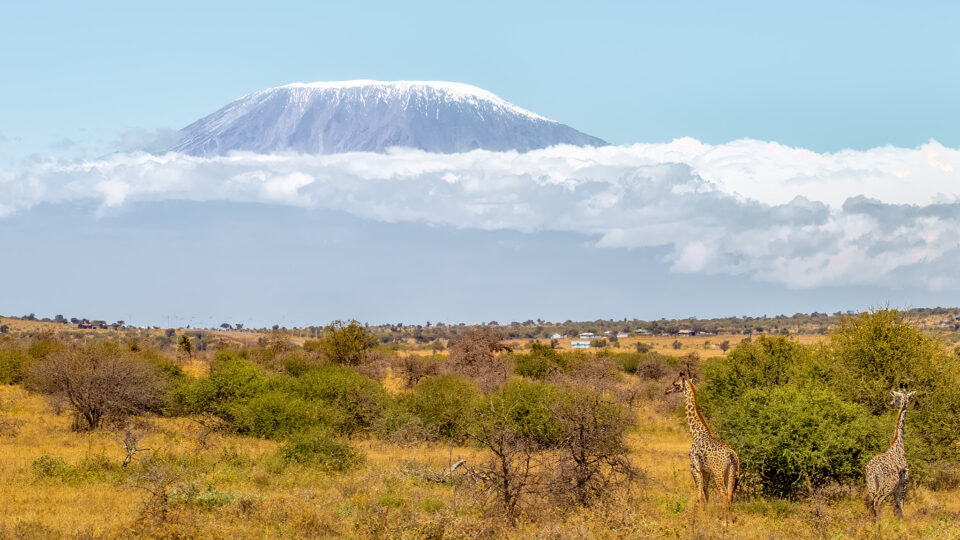
We don’t usually associate Africa with glaciers, but the continent has had glaciers on its highest peaks for the past 10,000 to 15,000 years.  Africa’s glaciers are found in three regions:  the Rwenzori Mountains along the border between Uganda and the Democratic Republic of the Congo, Mount Kilimanjaro, and Mount Kenya.  At the turn of the 20th century, there were 43 glaciers scattered across 6 peaks within the Rwenzori Mountains.  In the intervening years, things have greatly changed.

 Since the early 20th century, Africa’s glaciers have shrunk by 90%.  Because all these glaciers are close to the equator, they are especially vulnerable to warming.  According to a new study published in the journal Environmental Research: Climate, in the last two decades, Africa’s glaciers have lost roughly half their area.

This rapid decrease is alarming to climate scientists because they represent a clear indicator of the impact of climate change.  A major factor in the decline of the glaciers is the reduction in cloud cover over the mountains.  Sunshine is melting glaciers and turning ice directly into water vapor even when temperatures are below freezing.  Reductions in snowfall at the same time means that the melting glaciers are not being replenished.

Scientists believe that the tropical glaciers of Africa may all but disappear over the next 25 years.

Roughly three-quarters of the Earth’s freshwater is stored in the world’s more than 200,000 glaciers.  According to scientists, if the world reaches but maintains 1.5 degrees of warming, half of the world’s glaciers could be gone by the end of this century.  If the world continues to warm as it has been without slowing down, more than 80% of the glaciers will disappear.

**********

Web Links

Africa’s Tropical Glaciers Have Shrunk by 90 Percent, Research Shows

Photo, posted February 26, 2022, courtesy of Ray in Manila via Flickr.

Earth Wise is a production of WAMC Northeast Public Radio
Wildlife rebounding in Uganda

December 6, 2023 By EarthWise Leave a Comment

Wildlife making a comeback in Uganda

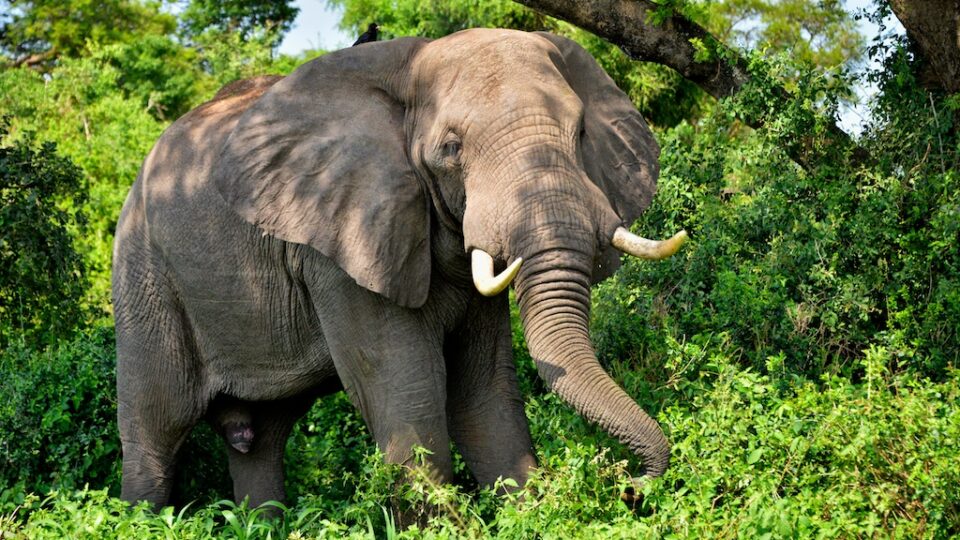
The numbers of elephants, rhinos, and other animals in Uganda’s nature preserves is steadily improving, reversing the trend of steady declines previously caused by poachers, wildlife traffickers, and conflict.

Between the 1960s and 1980s, political conflict and lawlessness in Uganda led to massive declines in some species as poaching, trafficking, and encroachment ran rampant.

Uganda’s population of over 700 northern white and eastern black rhinos was completely wiped out in the early 1980s by people hunting them for their horns.  A charity brought four rhinos in 2005 to a sanctuary called the Ziwa Rhino and Wildlife Ranch and, according to the Uganda Wildlife Authority, there are now 33 in the facility.

Increased conservation efforts have allowed the population of buffalos to increase 77% to over 44,000 since 1983.  The number of elephants has surged almost 300% to nearly 8,000 over that same time period.  There has also been an increase in the number of mountain gorillas in dense forests.

Over the years, the Ugandan government has brought in a string of conservation policies including lengthy jail terms for violations.  As a result, wildlife populations have been on a steady recovery.

It is typical to think about species in terms of how close to extinction they are, but the ultimate goal of conservation is to recover species.  This means not only gaining distance from extinction but also resuming a species’ role in its ecosystem and repopulating its former range.  Whether the wildlife in Uganda is achieving this status remains to be seen, but the trends are very positive.

**********

Web Links

Uganda Sees Resurgence of Rhinos, Elephants, Buffaloes

Photo, posted September 15, 2014, courtesy of Rod Waddington via Flickr.

Earth Wise is a production of WAMC Northeast Public Radio
Tracking Locust Swarms | Earth Wise

June 12, 2020 By EarthWise Leave a Comment

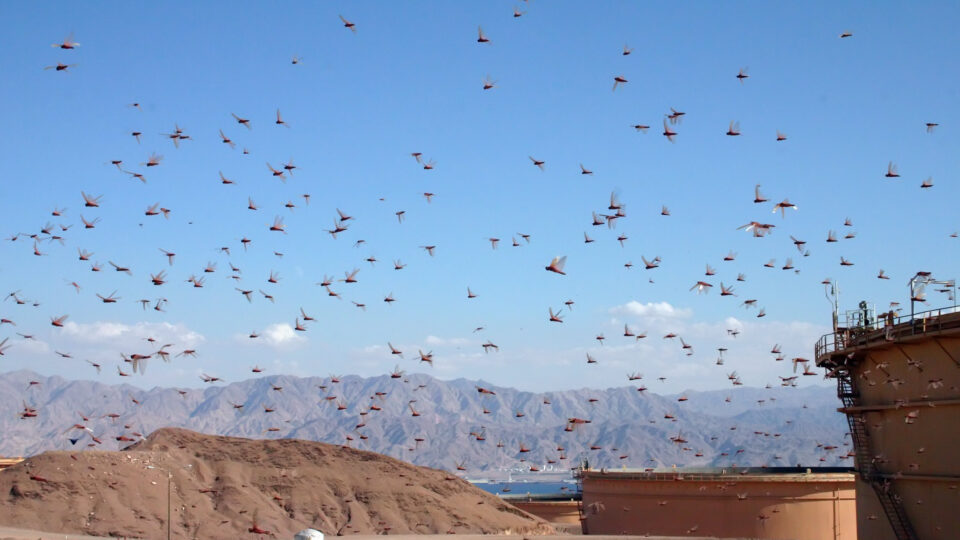
Plagues of locusts have been reported since the times of the Egyptian pharaohs.  In recent history, there have been desert locust plagues during multiple decades of the 20th century.  Since January, a very large population of locusts gathered in Kenya and has destroyed over 2,000 square miles of pasture and crop land.  Swarms have since reached portions of Ethiopia, Somalia, Uganda, and South Sudan.  Apart from East Africa, there are locust swarms in Yemen and other Middle East countries and in Pakistan as well.  The current situation continues to represent an unprecedented threat to food security and livelihoods in East Africa.  Locust swarms can range in size from less than half a square mile to hundreds of square miles, each containing 20 to 40 million locusts.

The National Oceanic and Atmospheric Administration uses a powerful air quality model to track the movement and deposition of pollution from wildfires, volcanoes and industrial accidents.  Called the HYSPLIT dispersion model, it has now been refined for the purpose of tracking swarms of locusts.

Because desert locusts are passive fliers that drift with the wind, the model’s high-quality data on wind speed and direction can lead to accurate predictions of where the locusts will go and when.

NOAA is working with the United Nations Food and Agriculture Organization – the FAO.  The new web application based on HYSPLIT is being used by the FAO to issue forecasts and warnings to affected countries about forthcoming waves of locust swarms.  Such forecasts enable local officials to conduct aerial spraying to reduce the impact of desert locusts which can destroy grains, grasses and other greens that are life-sustaining foods for entire regions.

**********

Web Links

NOAA teams with United Nations to create locust-tracking application

Photo, posted November 20, 2004, courtesy of Niv Singer via Flickr.

Earth Wise is a production of WAMC Northeast Public Radio.

Climate Opinions

December 4, 2015 By WAMC WEB

https://earthwiseradio.org/wp-content/uploads/2015/11/EW-12-04-15-Climate-Opinions.mp3

An international poll of over 45,000 people in 40 countries looked at opinions about climate change and the need to curb greenhouse gas emissions.  The results are quite interesting.

[Read more…] about Climate Opinions

Primary Sidebar

Recent Episodes

  • An uninsurable future
  • Clean energy and jobs
  • Insect declines in remote regions
  • Fossil fuel producing nations ignoring climate goals
  • Trouble for clownfishes

WAMC Northeast Public Radio

WAMC/Northeast Public Radio is a regional public radio network serving parts of seven northeastern states (more...)

Copyright © 2026 ·