• Skip to primary navigation
  • Skip to main content
  • Skip to primary sidebar

Earth Wise

A look at our changing environment.

  • Home
  • About Earth Wise
  • Where to Listen
  • All Articles
  • Show Search
Hide Search
You are here: Home / Archives for treaty

treaty

Disappearing wetlands

August 21, 2025 By EarthWise Leave a Comment

More than 170 countries gathered recently to discuss how to save wetlands, which are critical ecosystems.  However, the U.S. was a no-show for most of the summit and Russia said it will withdraw from the wetlands treaty.

Wetlands are a crucial element of all life on Earth, supplying fresh water, oxygen, habitat, and food.  The Ramsar Convention, an international treaty focused on the conservation and wise use of wetlands, is the oldest modern global environmental agreement, adopted in 1971. 

Despite this agreement, since 1970 more than 35% of wetlands have been lost or degraded.  A recent report compiled by more than 60 experts from around the world issued a dire warning that the decline of wetlands spells trouble for global food security, climate stability, and even the capacity for life on Earth to persist.

Sadly, geopolitics have overtaken even the instinct for survival.  Because of a prior resolution to monitor Ukranian wetlands harmed during Russia’s ongoing war there, Russia now intends to withdraw from the treaty.  Meanwhile, the U.S. delegate to the wetlands summit only showed up near the end of the meeting to demand that conference documents make no mention of climate change, diversity equity and inclusion, gender, UN sustainable development goals, or zero growth.

Disengagement by the United States from the world’s increasing and shared environmental problems is a global crisis that only worsens existing global crises.

**********

Web Links

Earth’s Wetlands Are Disappearing and Global Efforts to Save Them Are Unraveling

Photo, posted October 8, 2013, courtesy of Marek Kusmin via Flickr.

Earth Wise is a production of WAMC Northeast Public Radio
Approaching critical global temperature thresholds

January 21, 2025 By EarthWise Leave a Comment

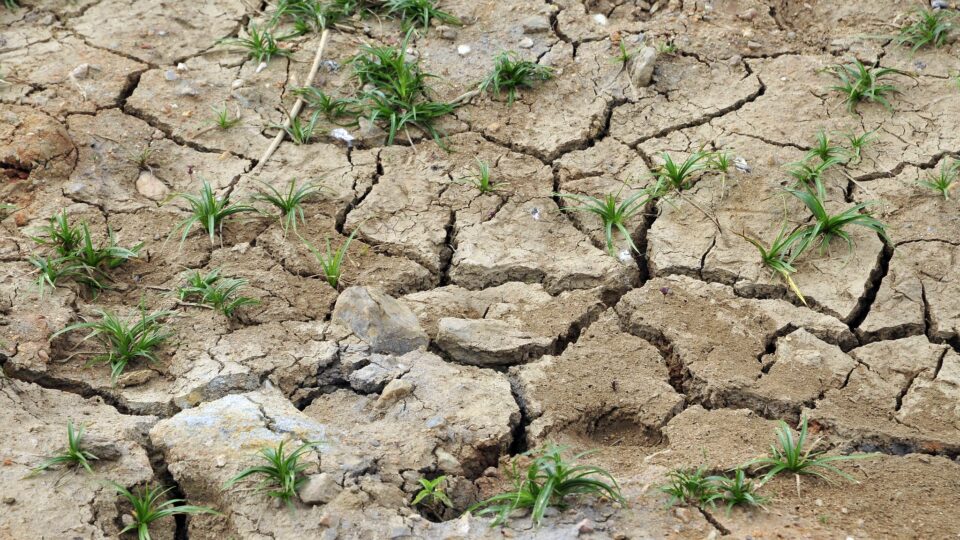
The globe is approaching critical temperature thresholds

The Paris Climate Agreement is a global treaty adopted in 2015 to combat climate change by limiting global warming to well below 2°C above pre-industrial levels, while striving to keep it below 1.5°C.  But according to recent research, the planet is quickly approaching these critical thresholds. 

An international research team led by scientists from Colorado State University, Stanford University, and ETH-Zurich in Switzerland combined insights from 10 global climate models, and – with the help of artificial intelligence – found that regional warming thresholds are likely to be reached faster than previously thought.

In fact, the researchers found that most land regions will likely surpass the critical 1.5°C threshold by 2040 or even earlier.  Additionally, several regions are on track to exceed the 3.0°C threshold by 2060.  Regions including Central Europe, the Mediterranean, South Asia, and parts of sub-Saharan Africa are expected to reach these thresholds faster. 

The research team relied on transfer learning, a cutting-edge machine learning technique that leverages pre-trained models to tackle new, related tasks.

The research, which was recently published in the journal Environmental Research Letters, found that 34 regions are likely to exceed 1.5°C of warming by 2040.  Of those 34 regions, 31 of them are expected to reach 2°C of warming by 2040, and 26 of these 34 regions are projected to surpass 3°C of warming by 2060.

**********

Web Links

AI predicts that most of the world will see temperatures rise to 3C much faster than previously expected

Photo, posted February 23, 2011, courtesy of 2011 CIAT / Neil Palmer via Flickr.

Earth Wise is a production of WAMC Northeast Public Radio
Politics and plastic

December 19, 2024 By EarthWise Leave a Comment

Political differences are blocking plastic reforms

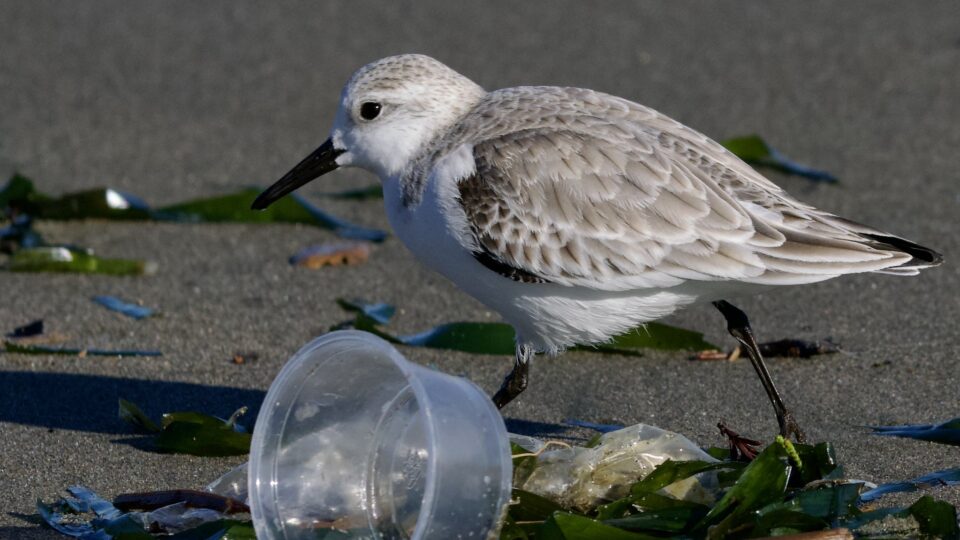
The world currently produces nearly half a billion tons of plastic each year.  This is more than twice the amount it produced 20 years ago.  Half of all plastics ever manufactured have been made in the past 20 years.  Plastic waste is everywhere.  About eight million tons of plastic waste escapes into the ocean each year.

Environmental groups have urged nations to adopt a legally binding treaty to address the ever-growing problem of plastic pollution. The United Nations climate conference in South Korea last month took up the issue of reaching agreement on such a treaty.  At what was supposed to be the final round of talks on the topic, delegates could not bridge wide differences on what such a treaty should contain.

The main bone of contention was whether the treaty should include limits on plastic production itself.  Saudi Arabia, Russia, Kuwait, and other oil-producing countries opposed any curbs on plastic production.   They also opposed the phase-out of harmful chemicals used in the production of plastic.

The Saudi delegation claimed that if the issue of plastic pollution is addressed, there should be no problem with producing plastics.  They said the problem is pollution itself, not plastics.  They proposed a focus on improving recycling and waste management.

Of course, preventing plastic pollution from occurring is an extremely challenging thing to do.  Delegates from countries pushing for a wide-ranging treaty – led by Rwanda – were unwilling to accept a toothless theory lacking real constraints on the plastics industry.

As the conference ended, delegates said that they would reconvene in future months to try again to produce a treaty.  No date or place has been announced.

**********

Web Links

Nations Fail to Reach an Agreement on Plastic Pollution

Photo, posted February 4, 2023, courtesy of Ingrid Taylar via Flickr.

Earth Wise is a production of WAMC Northeast Public Radio

Methane Emissions And The Paris Agreement | Earth Wise

August 21, 2023 By EarthWise Leave a Comment

The Paris Agreement is a legally binding international treaty on climate change adopted at the UN Climate Change Conference in 2015.  Its goal is to strengthen the global response to climate change by committing to limit the rise in global average temperature to well below 2°C above pre-industrial levels, and pursue efforts to limit that increase to just 1.5°C. 

Achieving the goals of the Paris Agreement requires reaching net-zero carbon dioxide emissions by or around 2050, as well as deep reductions in methane and other emissions. 

According to a new study by researchers from Simon Fraser University in Canada, reductions in methane emissions are needed urgently  if we are to meet the goals of the Paris Agreement.  The study, which was recently published in the journal Nature’s Communications Earth & Environment, suggests that global warming levels could be kept below 2°C if methane mitigation efforts are initiated globally before 2030.  However, delaying methane mitigation to the year 2040 or beyond would increase the risk of exceeding 2°C, even if net-zero carbon dioxide emissions were achieved.

Methane is a potent greenhouse gas, second only to carbon dioxide in contributing to global temperature increases over the last two centuries.  However, methane is known to warm the planet 86 times more effectively than carbon dioxide over a 20-year period.

During the past 40 years, more than 60% of global methane emissions have been produced as a result of human activities, such as fossil fuel exploitation, livestock production, and waste from landfills.

**********

Web Links

Delaying methane mitigation increases risk of breaching Paris Agreement climate goal, study finds

Photo, posted July 22, 2011, courtesy of Steven W. via Flickr.

Earth Wise is a production of WAMC Northeast Public Radio
The U.S. Ratifies A Climate Treaty | Earth Wise

October 14, 2022 By EarthWise Leave a Comment

The United States ratifies a climate treaty

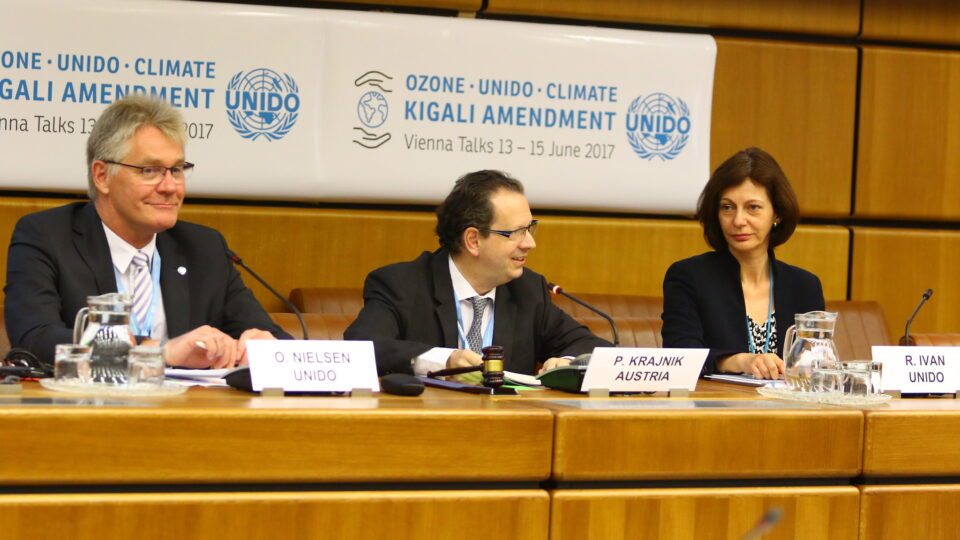
In a rare display of bipartisanship, the U.S. Senate voted 69-27 in favor of ratifying a key international climate agreement aimed at curbing global warming.  The Kigali Amendment to the Montreal Protocol, which has been ratified by 137 other countries so far, ends the use of climate-warming hydrofluorocarbons that are 1,000 times more potent than carbon dioxide in warming the atmosphere.   This is the first international climate treaty that the U.S. has joined in 30 years.

The Kigali Agreement was established in Kigali, Rwanda in 2016 to phase out HFCs, which have been the replacements for CFCs (chlorofluorocarbons) in air conditioners and refrigerators.  CFCs were found to be depleting the ozone layers that protects the earth from harmful ultraviolet rays.  HFCs do not deplete the ozone layer, but they have been a significant contributor to global warming.

The U.S. ratification of the treaty is largely symbolic.  The American Innovation and Manufacturing Act, passed by Congress in 2020, gave the EPA authority to regulate HFCs and the agency has already been doing so.  However, the Senate action shows that the U.S. is back on the international climate bandwagon. 

Failure to ratify the Kigali Amendment would have closed segments of the chemical and manufacturing industries to U.S. producers after 2023 because the Montreal Protocol prohibits trade with countries not party to it or its amendments.

Environmental advocates are hopeful that the U.S. can move forward on other climate actions.  A next step would be to focus on methane, the second leading driver of climate change after carbon dioxide.

**********

Web Links

Senate Votes to Ratify the Kigali Amendment, Joining 137 Nations in an Effort to Curb Global Warming

Photo, posted June 13, 2017, courtesy of UNIDO via Flickr.

Earth Wise is a production of WAMC Northeast Public Radio

Regulating Plastic Pollution | Earth Wise

August 11, 2021 By EarthWise Leave a Comment

Instituting regulations for plastics that transcend borders is complicated but necessary

Much of the world is united in the desire to do something about the problem of plastic waste.  But putting in place regulations that transcend national borders is complicated.

One hundred fifteen countries have established bans on plastic bags, but globally, there are seven different definitions of what is considered a plastic bag.  Things like bag thickness can determine whether something even counts as a plastic bag.  These differences create loopholes that enable illegal bags to be used.  For a global company like Nestle, which sells food products in 187 countries, it means complying with 187 different sets of national regulations on plastic packaging.

At least 100 nations have expressed support for a global plastic treaty.  Preliminary talks are dealing with issues like setting a specific date to eliminate plastic from spilling into the ocean, creating a harmonized set of definitions and standards, coordination of national targets and plans, and creating a fund to build waste management facilities where they are most needed in less developed countries.

New plastic waste is created at a rate of over 300 million tons a year.   To date, 75% of all plastic ever produced has become waste, and plastic production is expected to triple by 2050.

With public concern about plastic waste growing and increasing support by countries around the world, there is growing optimism that a global treaty to address plastic waste could be approved on a pace that could make a difference.  Negotiations for international treaties can drag on for a decade or more.  There is not that kind of time to spare in this case, so perhaps urgency will drive more efficient action.

**********

Web Links

Global treaty to regulate plastic pollution gains momentum

Photo, posted February 3, 2015, courtesy of Thad Zajdowicz via Flickr.

Earth Wise is a production of WAMC Northeast Public Radio.

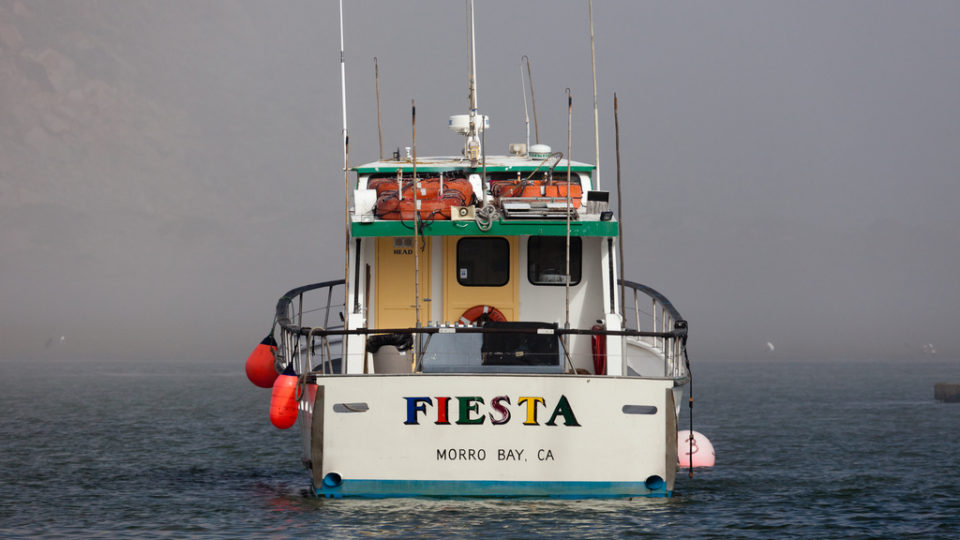
Fish And Ships

April 25, 2019 By EarthWise Leave a Comment

Solutions to overfishing of certain tuna and shark populations have been hindered by some significant unknowns:  where the fishing is happening, and where the fish are.  But researchers from Stanford University have recently shed some light on this mystery. 

According to a paper recently published in the journal Science Advances, the researchers have developed a map of shark, tuna, and ship movements that could help ocean managers identify regions of the sea where vulnerable species may be at risk. 

The researchers’ work builds on a 2018 study in which four years of satellite vessel movement data was used to develop a machine learning algorithm that mapped the footprint of 70,000 different fishing vessels around the world.  In their paper, the researchers zeroed in on the activities of 900 vessels from 12 countries in the northeast Pacific Ocean to figure out to what degree fishing fleets, sharks, and tunas overlapped. 

The researchers combined the vessel data with the ocean habitat preferences of sharks and tunas obtained from a decade-long tracking program called Tagging of Pacific Predators (or TOPP).  According to the IUCN, most of the 876 individuals tagged in TOPP belong to species that are either threatened or near-threatened.

By synthesizing this data, researchers were able to map where sharks and tunas would have the highest overlap with commercial fishing vessels.  Increasing the transparency of where fish meets fleets will allow ocean managers to determine where international protections may be needed. 

The United Nations is currently developing the world’s first legally binding treaty to protect international waters.  The Stanford University researchers hope their findings can help with this treaty’s formulation. 

**********

Web Links

Tunas, sharks and ships at sea

Photo, posted June 20, 2011, courtesy of Mike Baird via Flickr.

Earth Wise is a production of WAMC Northeast Public Radio.

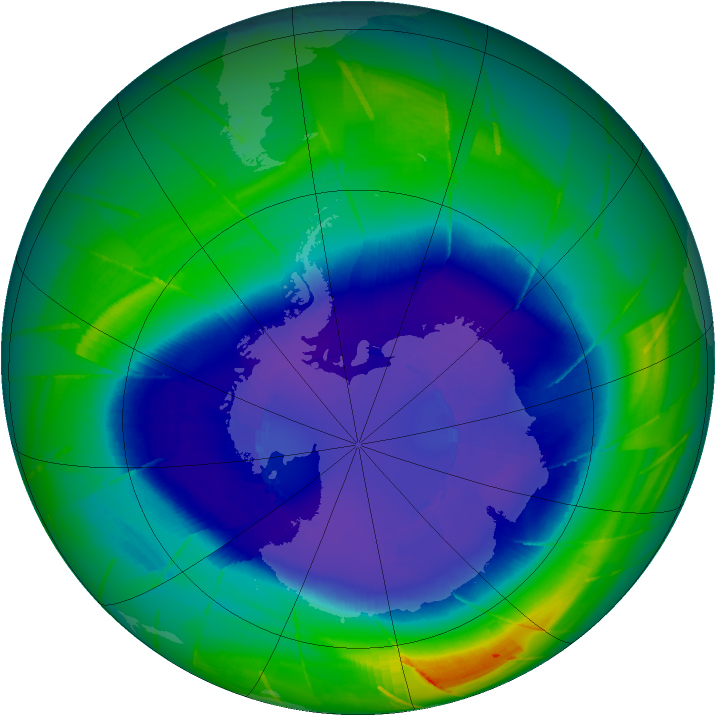
Ozone Treaty And Greenhouse Gas Emissions

September 20, 2017 By EarthWise 1 Comment

https://earthwiseradio.org/wp-content/uploads/2017/09/EW-09-20-17-Ozone-Treaty-And-Greenhouse-Gas-Emissions.mp3

The Montreal Protocol, the international treaty adopted to restore the earth’s protective ozone layer almost thirty years ago, turns out to also have had a major impact on climate-altering greenhouse gas emissions.

[Read more…] about Ozone Treaty And Greenhouse Gas Emissions

Primary Sidebar

Recent Episodes

  • An uninsurable future
  • Clean energy and jobs
  • Insect declines in remote regions
  • Fossil fuel producing nations ignoring climate goals
  • Trouble for clownfishes

WAMC Northeast Public Radio

WAMC/Northeast Public Radio is a regional public radio network serving parts of seven northeastern states (more...)

Copyright © 2026 ·