• Skip to primary navigation
  • Skip to main content
  • Skip to primary sidebar

Earth Wise

A look at our changing environment.

  • Home
  • About Earth Wise
  • Where to Listen
  • All Articles
  • Show Search
Hide Search
You are here: Home / Archives for towns

towns

Living in a warming world

June 13, 2025 By EarthWise Leave a Comment

As global temperatures rise due to increased greenhouse gas emissions, communities around the world face more frequent and intense heatwaves, droughts, and extreme weather events. These growing climate pressures not only strain infrastructure and natural resources, but also play a critical role in shaping where people live. 

Recent projections from the First Street Foundation, which analyzes climate risks across the United States, highlight just how significant these shifts could be. In Sacramento County, California, rising flood risks, declining air quality, and soaring insurance costs could lead to a population decline of up to 28% by 2055. The risk assessment also projects that Monmouth and Ocean counties in New Jersey could each lose more than 30% of their populations. And Fresno County, California, could see nearly half of its residents relocate due to mounting climate-related pressures.

Urban areas like cities, towns, and suburbs are particularly vulnerable to the impacts of climate change.  Cities become significantly hotter due to the abundance of heat-absorbing surfaces and lack of green spaces, which intensifies heatwaves, worsens conditions for vulnerable populations, and may ultimately force some people to move.

Addressing these challenges requires a combination of climate solutions focused on both mitigation and adaptation. Solutions like expanding green infrastructure with urban parks and green roofs, and promoting sustainable development through energy-efficient buildings and transit-friendly design could all play a vital role in strengthening climate resilience.

As the planet warms, where we live – and how we live there – is rapidly being redefined.

**********

Web Links

The 12th National Risk Assessment

Solar on farmland

Photo, posted May 15, 2013, courtesy of Germán Poo-Caamaño via Flickr.

Earth Wise is a production of WAMC Northeast Public Radio

Bees and urban wildflowers

May 23, 2025 By EarthWise Leave a Comment

Urban wildflowers may threaten bees in some cases

Post-industrial cities often have large numbers of vacant lots, left behind as people have moved out of the area.  Local residents are often tempted to plant wildflowers to make these deserted spaces more attractive. 

Wildflowers are an important food source for bees.  Pollinators like bees play a vital role in food production and attracting them with food sources is a good idea.  However, a study by researchers at the University of Cambridge in the UK found that there are dangers associated with planting wildflowers in some urban settings.

Wildflowers growing on land previously used for buildings and factories can accumulate lead, arsenic, and other metal contaminants from the soil.  These metals have previously been shown to damage the health of pollinators that ingest the metals in the nectar as they feed.

The Cambridge study was carried out in Cleveland, Ohio, which has nearly 34,000 vacant lots.  Cleveland was previously the site of iron and steel production, oil refining, and car manufacturing.  The researchers tested the nectar from flowering plants growing on disused land throughout the city.  Lead was the contaminant found in the highest concentrations.  They also found that different species of plants accumulate different amounts and different types of metals.

The goal of the study was not to discourage the planting of wildflowers in towns and cities.  It is to highlight the importance of growing the right species of wildflowers as well as to encourage testing soils for metals before planting wildflowers and to clean up pollution.  Wildflowers are important for pollinators, but it is also important that they don’t contribute to the decline of pollinator populations that has already been happening for a number of reasons.

**********

Web Links

Growing wildflowers on disused urban land can damage bee health

Photo, posted August 26, 2012, courtesy of RJP via Flickr.

Earth Wise is a production of WAMC Northeast Public Radio
Native plants and road salt pollution

February 12, 2025 By EarthWise Leave a Comment

Can native plants help mitigate pollution from road salt?

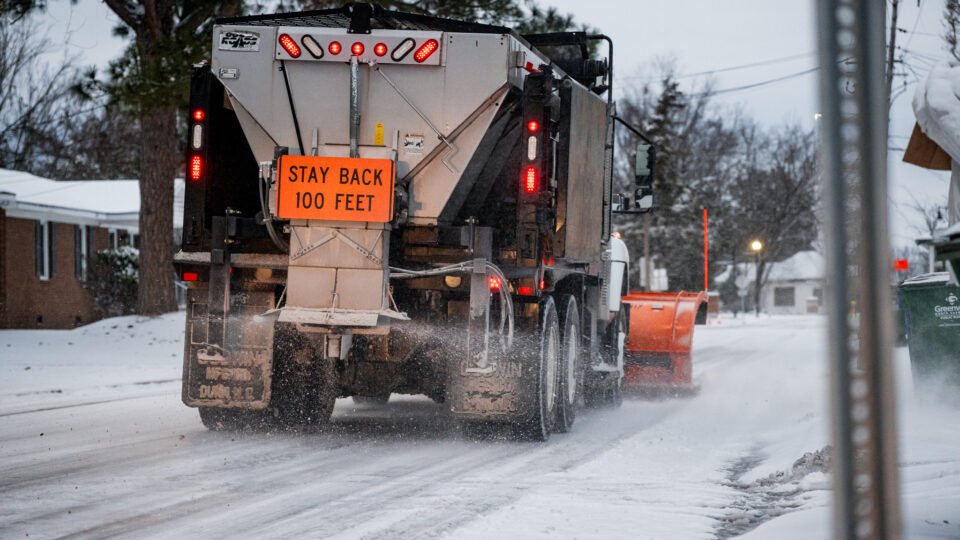
Applying salt to roadways lowers the freezing point of water and prevents slippery surfaces, which makes it safer for people to drive in wintry conditions.  In the U.S., more than 22 million tons of road salt is spread every year. 

But road salt harms infrastructure and the environment.   In fact, road salt damages cars and metal infrastructure by accelerating rust and corrosion.  Road salt can also leach into soil and waterways, disrupting ecosystems, degrading soil, contaminating water, and damaging vegetation. 

In cities and towns, road salts often wash into stormwater systems, posing health concerns and challenges for infrastructure.

A new study led by researchers from Virginia Tech looked at how salt affects plants and whether certain plants could mitigate salt pollution. The research team studied stormwater detention basins in Northern Virginia, examining the impacts of road salt on plants, soils, and water quality in green infrastructure systems.

The findings, which were recently published in the journal Science of the Total Environment, found that the amount of salt present in green infrastructure systems does reach levels that threaten plant communities.  However, the researchers found that relying on salt-tolerant plants for mitigation is unlikely to be effective because they simply don’t take in enough salt.

Certain plants, particularly cattails, absorbed substantial amounts of salt.  But even in a basin densely planted with salt-tolerant cattails, only up to 6% of the road salt applied during winter could be removed. 

Plants alone cannot solve our salt pollution problem.

**********

Web Links

Researcher studies the power of native plants to combat road salt pollution

Photo, posted January 22, 2025, courtesy of the City of Greenville, North Carolina via Flickr.

Earth Wise is a production of WAMC Northeast Public Radio
The last coal plant in Britain

October 31, 2024 By EarthWise Leave a Comment

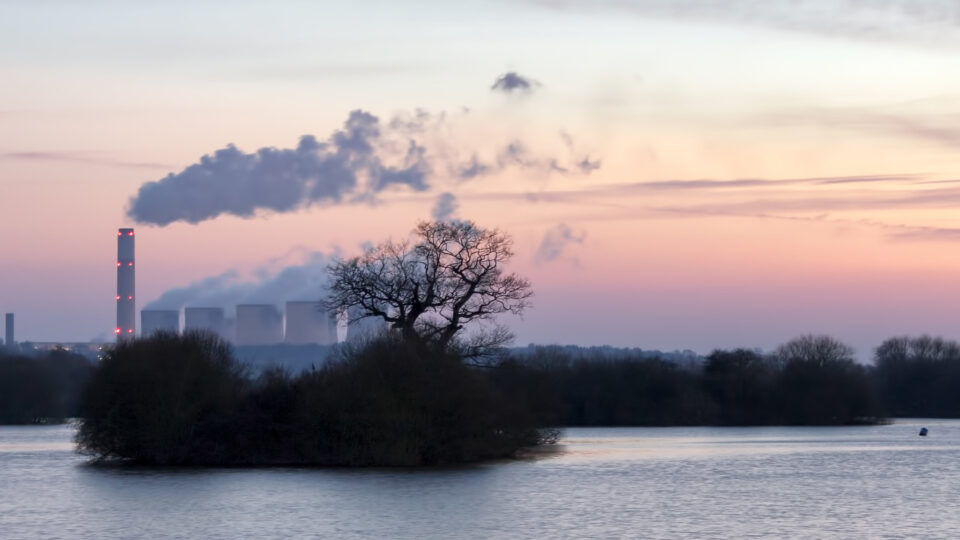
The last coal plant in Britain has closed

The Industrial Revolution, which basically got underway in the mid-19th century, was largely enabled by coal, which fueled iron manufacturing, railroads, steam engines, and more.  Most of these things got their start in Britain, which inspired the rest of the world to follow suit.

The world’s first coal-burning power plant began producing electricity at the Holborn Viaduct in London in 1882.  This September, Britain – the birthplace of coal power – shut down its last coal-burning power station when the 2,000-megawatt Ratcliffe-on-Soar facility ceased operations.  Uniper, the company that operated the plant, will be converting the 750-acre site to a low-carbon energy hub.

Shutting down coal plants is not a simple matter, as they are the lifeblood of entire towns and regions where they are located.  Finding fair transitions for workers is an uphill battle that has to take place in many locations.

Coal is the dirtiest fossil fuel, producing more greenhouse gas than others, but historically was the cheapest and most abundant source of power in many countries.  In recent decades, it has been replaced by gas, nuclear power, and most recently, renewables like wind and solar.

The coal era has ended in much of the world. The United States still gets 16% of its electricity from coal, but that number keeps getting smaller.  Unfortunately, the great majority of coal use is in the world’s two most populous countries:  India and China.  Both are adding renewable energy sources, but both have rapidly climbing energy demand.  China’s coal consumption is expected to peak this year and flatten out.  But there is still work to be done to bring an end to coal power.

**********

Web Links

Britain Shuts Down Last Coal Plant, ‘Turning Its Back on Coal Forever’

Photo, posted March 13, 2016, courtesy of Arran Bee via Flickr.

Earth Wise is a production of WAMC Northeast Public Radio

Natural solutions for coastal defense

May 30, 2024 By EarthWise Leave a Comment

Nature-based coastal defense systems have a role to play

Protecting coastal cities and towns from the dangers of tsunamis, storm surges, and sea-level rise has become an ever-increasing challenge.  There are so-called hard coastal defenses as well as nature-based solutions.  A new study by the University of Tokyo has found that combining the two types of defenses may be the most effective way to protect, support, and enrich coastal communities.

Sea walls, dikes, dams, and breakwaters are the traditional hard measures.  They are popular and have proven track records but are facing challenges to keep pace with increasing climate risks.  They are expensive to build and require continuous upgrades and repairs.  While they do provide protection from many disaster risks, they also can cause significant disruption to coastal ecosystems as well as to coastal communities.

Nature-based coastal defenses include such things as mangroves and coral reefs.  So-called soft measures involve restoring, rehabilitating, reforesting, and nourishing natural ecosystems that protect coastal areas.

The Tokyo researchers analyzed the defense strategies in terms of risk reduction, climate change mitigation, and cost-effectiveness over a 20-year period. The results of the study were that among all coastal defense options in lower-risk areas, hybrid measures provide the highest risk reduction and can harness the advantages of both hard and soft measures. 

The findings provide strong evidence for integrating nature-based components into coastal defenses, but these approaches have not yet been adequately tested in circumstances of extreme events and high-risk urgency.  Research in this area has important implications for policy makers, coastal planners, and communities looking to make evidence-based decisions.

**********

Web Links

A natural touch for coastal defense

Photo, posted October 22, 2021, courtesy of Kevin Dooley via Flickr.

Earth Wise is a production of WAMC Northeast Public Radio
Keeping The Keeling Curve Going | Earth Wise

March 21, 2023 By EarthWise Leave a Comment

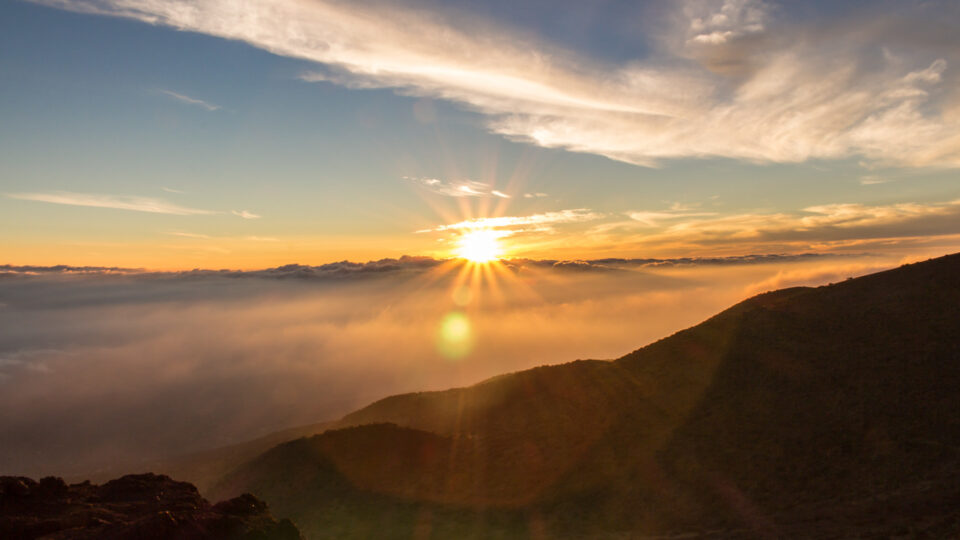
The world’s longest-running record of direct readings of carbon dioxide levels in the atmosphere is the Keeling Curve, measurements taken at the summit of Mauna Loa in Hawaii.  The readings have been going on with almost no interruption since Charles Keeling began taking them in the 1950s.  But the eruption of Mauna Loa last November toppled power lines at the mountaintop observatory and buried a mile of the main road up the mountain in lava.

Scientists have been scrambling to resume measurements and the near-term solution has been to take them, for the first time, on Mauna Kea, the neighboring large volcano about 25 miles away.  The National Oceanic and Atmospheric Administration flew in and installed instruments at the Mauna Kea observatory so that only about a week went by without measurements.   It happened so quickly because months earlier, NOAA had already started looking into installing a backup site on Mauna Kea where there is an observatory run by the University of Hawaii.

NOAA used helicopters to install solar panels and batteries on Mauna Loa to restore power in the short term since it will be months before a new road can be built on the still-cooling lava. The plan is to collect parallel measurements for a year to see if Mauna Kea, which hasn’t erupted for thousands of years, might become a long-term backup for Mauna Loa.

The Hawaiian volcanoes are uniquely suited for the measurements because they are surrounded by thousands of miles of empty ocean and are very high up, away from towns, cars, and forests.  Scientists are now monitoring measurements from the two sites to see how they compare.

**********

Web Links

Battling Lava and Snowstorms, 2.5 Miles Above the Pacific

Photo, posted November 2, 2015, courtesy of Neal Simpson via Flickr.

Earth Wise is a production of WAMC Northeast Public Radio
Carbon Capture In Wyoming | Earth Wise

January 25, 2023 By EarthWise Leave a Comment

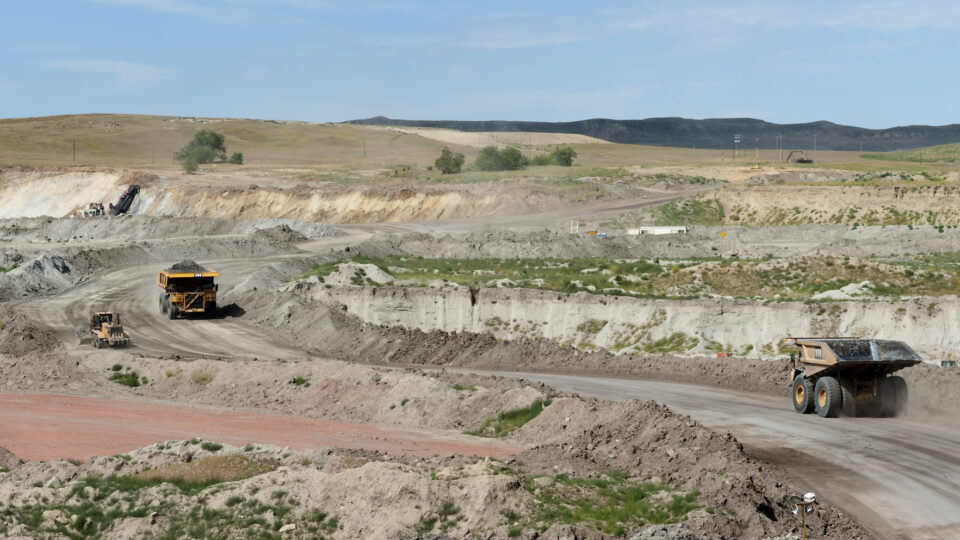
Wyoming produces about 40% of our country’s coal and many towns in the state were built because of and make their living from it.  With coal’s plummeting share in the nation’s electricity, there is a great deal of anxiety among residents of those towns.

As carbon dioxide levels in the atmosphere continue to climb, there is a growing sense that cutting emissions will not happen quickly enough and it will be necessary to pull the greenhouse gas out of the atmosphere.  The current long-term government climate strategy assumes that carbon removal will account for 6 to 8 percent of the nation’s greenhouse gas reductions by 2050.

The Inflation Reduction Act passed in August provides $3.5 billion to help build “direct air capture hubs” around the country, with an emphasis on fossil fuel-dependent communities such as many in Wyoming. 

The town of Rock Springs, Wyoming is home to the Jim Bridger Coal Plant. A company called CarbonCapture, Inc., is launching Project Bison, which will build a direct air capture facility outside of town that is set to begin operations next year.  It will initially capture 10,000 metric tons of CO2 per year but plans to expand that to 5 million tons a year by 2030. 

That would be far more than any current carbon capture plant can do. The largest plant in the world, located in Iceland, pulls in only about 4,000 metric tons a year.

There are many problems associated with carbon capture.  It uses up very large amounts of energy, possibly presents environmental problems, and is very expensive.  In short, the technology has a long way to go before becoming viable.  However, this may ultimately be another example where necessity is the mother of invention.

**********

Web Links

Carbon Removal Is Coming to Fossil Fuel Country. Can It Bring Jobs and Climate Action?

Photo, posted July 22, 2012, courtesy of Max Phillips via Flickr.

Earth Wise is a production of WAMC Northeast Public Radio
What Is Healthy Soil? | Earth Wise

August 30, 2022 By EarthWise Leave a Comment

Defining what constitutes healthy soil

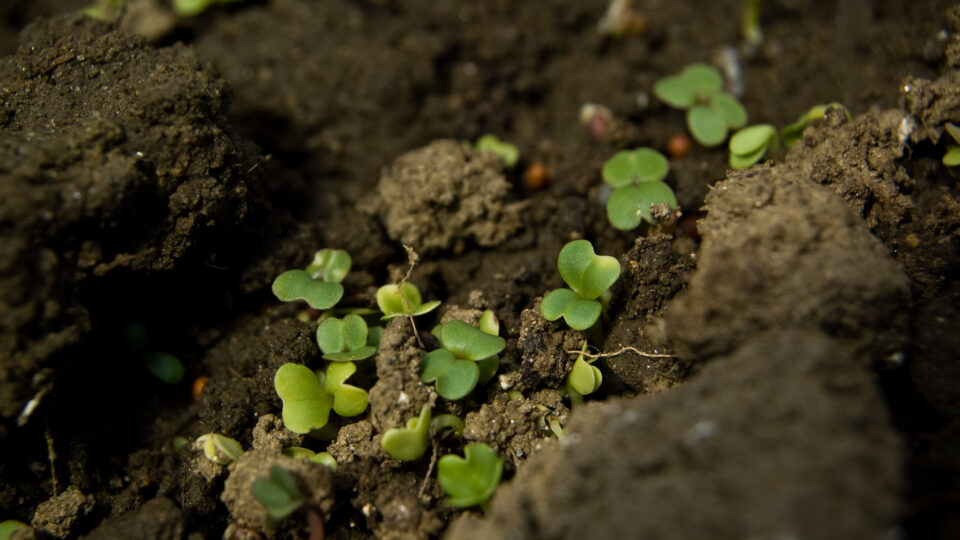
Soil supports life by providing many critical ecosystem services.  For example, soil acts as a water filter, a growing medium, and provides habitat for billions of organisms.  Soil is also the foundation of our cities and towns, and the basis of global agroecosystems, which provide humans with feed, fiber, food, and fuel.

For all of these reasons and many more, having healthy soil is vital.  But what does soil health mean? And how should it be measured?

According to new analysis by researchers from Cranfield University and Nottingham University in the U.K., how we think about, measure, and study soil must change in order to better understand how to manage this resource effectively. 

While the term ‘soil health’ is widely used, it means different things to different people.  There is no single agreed upon way to gauge the overall health of soil. 

Current approaches to assess soil health measure individual soil properties and use findings  to assign a single number giving an overall score.  But according to the research team, this does not reflect the wider system perspective that’s needed to fully evaluate the health of soil over time.

Instead, the researchers propose a new system to assess soil health based on a hierarchical framework that takes in several measures, including signs of life, signs of function, signs of complexity, and signs of emergence, which is the extent to which soils recover from multiple stressors. 

This new approach, which can be applied to all soils, moves us closer to an interdisciplinary understanding of the whole picture of soil health.  After all, healthy soil is fundamental to our survival.

**********

Web Links

We need to change how we think about soil

Photo, posted April 8, 2008, courtesy of Brian Boucheron via Flickr.

Earth Wise is a production of WAMC Northeast Public Radio.

Compost And Landfills | Earth Wise

January 19, 2021 By EarthWise Leave a Comment

the importance of landscaping

Composting is popular as a way to keep solid waste out of landfills and many people turn much of their kitchen waste into rich soil amendments.   Cities and towns across the country have composting programs that collect waste from residents to produce large quantities of compost rather than adding the waste to landfills.  A new study from North Carolina State University looked into the environmental benefits of actually using compost at landfills.

Most municipal composting programs require that the compost they produce gets used “beneficially”.  The new research shows that using compost as an alternative daily cover at landfills is competitive and often superior to the use of compost as a soil amendment in terms of its environmental benefits.

Landfills apply a layer of daily cover to reduce odors, reduce windblown debris, and keep vermin out of landfill waste.  Federal regulations require six inches of soil as a daily cover.

Compost from food waste in particular is not always suitable for soil amendment in gardens and agricultural fields because it often contains broken glass and other contaminants.

The North Carolina State study looked at the environmental impact of using compost as daily cover in landfills compared with its use as a soil amendment.  They looked at global warming potential, acidification potential, eutrophication (which is the amount of nutrients released to ground and surface water), cumulative energy demand, and the depletion of resources.

The study concluded that using compost as landfill daily cover is environmentally superior with regard to eutrophication, acidification, and global warming potential.  On the other hand, soil amendment was better in terms of resource depletion and cumulative energy demand.

**********

Web Links

Applying Compost to Landfills Could Have Environmental Benefits

Photo, posted April 22, 2008, courtesy of Alachua County via Flickr.

Earth Wise is a production of WAMC Northeast Public Radio.

Boutique Hotels For Birds | Earth Wise

April 28, 2020 By EarthWise Leave a Comment

building boutique hotels for threatened birds

The changing Arctic climate has had a drastic effect on its seabirds.  In fact, seabirds worldwide are in crisis, with global populations plummeting nearly 70% over the past 70 years as a result of climate change, over-fishing, habitat loss, and other human impacts on their environment.

Above the Arctic circle in Norway, seabird behavior has changed dramatically.  Black-legged kittiwakes – which are the most seafaring member of the gull family – used to nest in cliffs over the ocean and seldom ventured inland.  But in recent years, that has changed.  Because of a warming ocean, increased storminess and other changes that are decimating chick populations in their normal habitat, the birds have been setting up housekeeping in places like shopping centers and office buildings in Tromsø and other towns along Norway’s north coast.

Tromsø, Hammerfest and other towns at the very north end of Norway have become very popular with tourists seeking the Northern Lights and wanting to see glaciers before they disappear.  The booming tourism has been put on hold for the moment as it has elsewhere, but when it returns, the regions growing hotels and shopping areas are facing a problem.

The birds taking up residence on these buildings are unpleasant neighbors.  They are especially noisy during the breeding season and people are having to put up nets or spikes on buildings to discourage the kittiwakes from settling there.

Local ecologists are now building boutique hotels just for kittiwakes. Using abandoned buildings on piers, they are adding ledges for nesting, materials for nest-building, and electronic speakers that croon kittiwake songs.  The hope is that the birds will stay in their own hotels and leave the other ones for the human tourists.

**********

Web Links

Norwegians are building boutique hotels for threatened Arctic birds

Photo, posted April 14, 2018, courtesy of Charlie Jackson via Flickr.

Earth Wise is a production of WAMC Northeast Public Radio.

A Quiet Clean Energy Revolution

March 5, 2019 By EarthWise Leave a Comment

While the Trump administration seeks to prop up and promote use of fossil fuels, the country continues to move in the opposite direction.  Last year was actually a pretty positive year for clean energy in the U.S.

In terms of public opinion, 70% of Americans surveyed believe the country should produce 100% of its electricity from renewable energy sources and more than half of survey respondents think renewables are a good idea even if they raise energy bills.

Companies in the U.S. purchased a record 6.43 gigawatts of renewable power, enough to power 1.5 million homes.  The number of corporations entering into renewable energy deals doubled last year.

More than 300 U.S. cities, towns or counties have made commitments to climate action and, as of November, 99 cities have committed to 100% renewable energy, doubling the total from a year ago.

A number of gubernatorial candidates running on ambitious renewable energy platforms were elected in November including those in Illinois, Colorado, New Mexico, Maine and Nevada.

Utilities are responding to the growing demand for clean energy.  Consumers Energy in Michigan plans to cut carbon emissions by 80% and stop using coal.  Iowa-based MidAmerican Energy will become the first U.S. utility to source 100% of its electricity from renewable sources next year.  Xcel Energy, one of the biggest utilities in the country, has committed to be 80% carbon-free by 2030 and go completely carbon-free by 2050.

The fossil fuel industry with its supporters in high places is still kicking and screaming, but there is no doubt that the U.S. energy system is changing, and the quiet clean energy revolution will only pick up more steam in 2019.

**********

Web Links

The US Underwent a Quiet Clean Energy Revolution Last Year

Photo, posted August 15, 2009, courtesy of Ken via Flickr.

Earth Wise is a production of WAMC Northeast Public Radio.

Alaska’s Threatened Communities

January 27, 2017 By EarthWise

https://earthwiseradio.org/wp-content/uploads/2017/01/EW-01-27-17-Alaskas-Threatened-Communities.mp3

Because of its Arctic location, Alaska is warming about twice as fast as the rest of the United States.   The past year has been the warmest on record.  The forces of erosion and increasingly powerful storms have resulted in the imminent risk of destruction for at least 31 Alaskan towns and cities.   Many are predicted to become uninhabitable over the next few decades.  Residents of these places are likely to join the growing flow of climate refugees around the globe.

[Read more…] about Alaska’s Threatened Communities

Primary Sidebar

Recent Episodes

  • An uninsurable future
  • Clean energy and jobs
  • Insect declines in remote regions
  • Fossil fuel producing nations ignoring climate goals
  • Trouble for clownfishes

WAMC Northeast Public Radio

WAMC/Northeast Public Radio is a regional public radio network serving parts of seven northeastern states (more...)

Copyright © 2026 ·