• Skip to primary navigation
  • Skip to main content
  • Skip to primary sidebar

Earth Wise

A look at our changing environment.

  • Home
  • About Earth Wise
  • Where to Listen
  • All Articles
  • Show Search
Hide Search
You are here: Home / Archives for tissue

tissue

What happened to the sea stars?

September 11, 2025 By EarthWise Leave a Comment

Billions of sea stars off the Pacific coast of North America from Mexico to Alaska have died from a wasting disease since 2013.  This die-off is considered to be the largest ever marine epidemic.  Over 90% of the population of sunflower sea stars has succumbed to the disease.

The result has been an explosion in the population of the sea urchins that the sea stars feed on.  In turn, the sea urchins have devoured kelp forests that provide habitat for thousands of marine creatures.  These kelp forests support a multi-million-dollar economy through fisheries and tourism as well as sequestering carbon dioxide and protecting vulnerable coastlines. 

The disease begins with lesions and eventually kills sea stars by seemingly melting their tissues over a period of about two weeks.  Sea stars with the disease become contorted and lose their arms.

For years, the definitive cause of the wasting disease has been elusive.  But researchers from the University of British Columbia, the Hakai Institute, and the University of Washington have now identified a bacterium that is the disease-causing agent.

A strain of the Vibrio pectenicida bacteria – named FHCF-3 – is responsible.  The Vibrio genus of bacteria includes pathogens that infect corals, shellfish, and even humans.  Vibrio cholerae is the cause of cholera.

Research is now underway to understand the link between the disease and warming ocean temperatures due to climate change.  The hope is that the discovery of the cause of the wasting disease will help guide management and recovery efforts for sea stars and impacted ecosystems.

**********

Web Links

‘Disease detectives’ discover cause of sea star wasting disease that wiped out billions of sea stars

Photo, posted April 16, 2011, courtesy of Brian Gratwicke via Flickr.

Earth Wise is a production of WAMC Northeast Public Radio
Mercury In The Amazon Rainforest | Earth Wise

March 8, 2022 By EarthWise Leave a Comment

Mercury polluting the Amazon rainforest

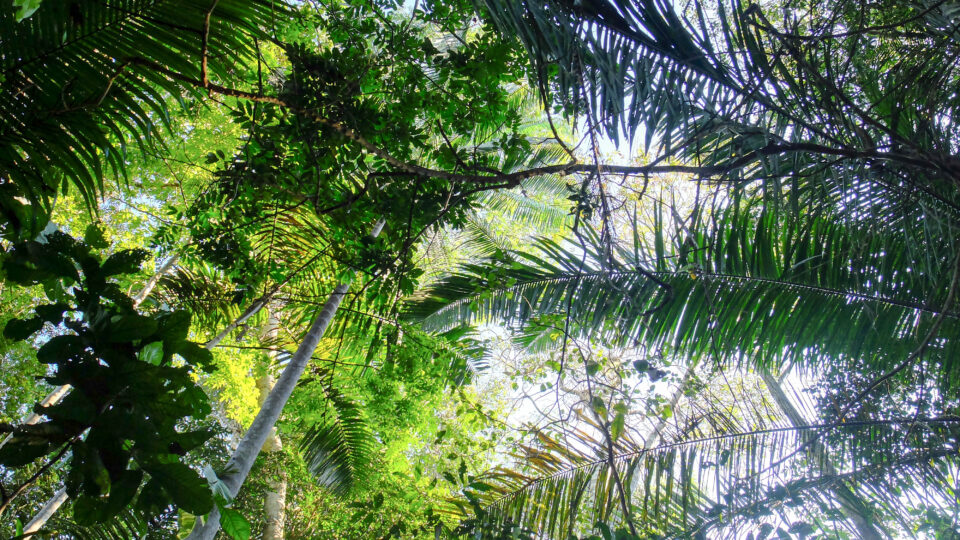
Recent research has found that some of the highest levels of mercury pollution ever recorded are in a patch of pristine Amazonian rainforest.  The international team of researchers discovered that illegal goldmining in the Peruvian Amazon is the source of the pollution.

Illegal miners separate gold particles from river sediments using mercury.  Mercury binds to gold, forming pellets large enough to be caught in a sieve.   The pellets are then burned in open fire ovens, releasing the mercury to the atmosphere, leaving the gold behind.  The mercury smoke ends up being washed into the soil by rainfall, deposited onto the surface of leaves, or directly absorbed into leaf tissues.

Deforested areas had low levels of mercury, while the areas with the largest, densest old-growth trees captured huge volumes of atmospheric mercury, more than any other ecosystem studied in the entire world.  Mercury levels were directly related to leaf area index:  the denser the canopy, the more mercury it holds.  Birds from this area have up to twelve times more mercury in their systems than birds from less polluted areas.  Such high concentrations of mercury could provoke a decline of up to 30% in these birds’ reproductive success.

Small-scale artisanal gold mining is an important livelihood for local communities.  Eliminating it outright may not be a viable solution but coming up with ways to continue to provide a sustainable livelihood while protecting communities from poisonous pollution is essential.

In the meantime, the forests are doing an important service by capturing much of the mercury and preventing it from getting into the general atmosphere and endangering more people and animals.  Burning or harvesting the mercury-ridden trees would release the mercury back into the atmosphere.

**********

Web Links

Modern Day Gold Rush Turns Pristine Rainforests into Heavily Polluted Mercury Sinks

Photo, posted August 24, 2016, courtesy of Anna and Michal via Flickr.

Earth Wise is a production of WAMC Northeast Public Radio.

Fighting Disease in Cavendish Bananas | Earth Wise

January 31, 2022 By EarthWise Leave a Comment

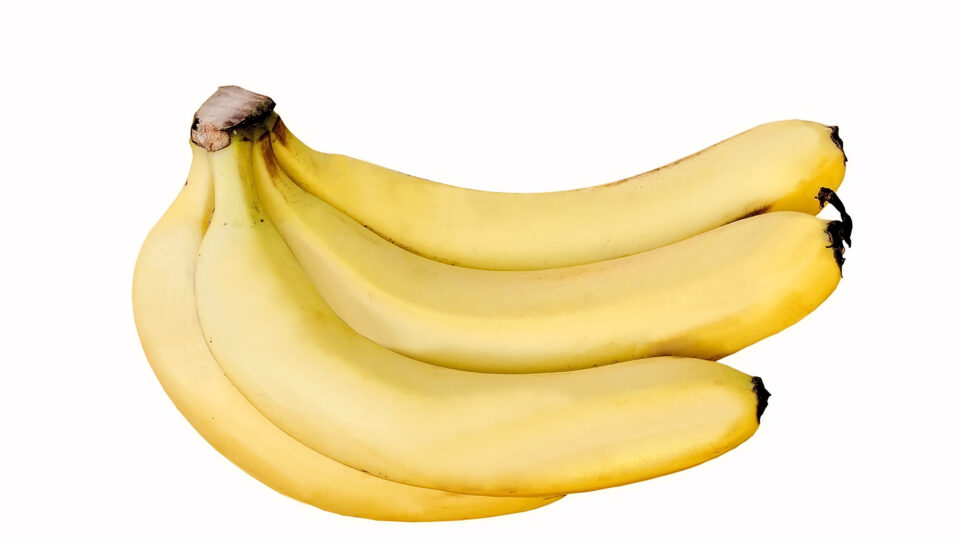
Cavendish bananas account for about half of global banana production and the vast majority of bananas entering international trade.  The plant is unable to reproduce sexually and instead is propagated via identical clones.  So, the genetic diversity of the Cavendish banana is exceedingly low. 

In 2008, Cavendish cultivars in Sumatra and Malaysia started to be attacked by Panama disease, a wilting disease caused by a fungus.  In 2019, Panama disease was discovered on banana farms in the coastal Caribbean region, its first occurrence in the Americas.  In the 1950s, Panama disease wiped out the Gros Michel banana, the commercial predecessor of the Cavendish.

Scientists at the University of Cambridge have found a novel way to combine two species of grass-like plants – which include bananas, rice, and wheat – using embryonic tissue from their seeds.  The technique allows beneficial characteristics, such as disease resistance, to be added to the plants.

Joining the shoot of one plant to the root of another to grow as one plant is known as grafting.  It was thought to be impossible to do with grass-like plants – called monocotyledonous  grasses – because they lack a certain tissue type in their stems.  But the new research, published in the journal Nature, showed it can be done with the plants in their earliest embryonic stages.

Cavendish bananas are sterile, so disease resistance can’t be bred into future generations.  But the grafting technique may provide a way to produce Cavendish banana plants that are resistant to Panama disease.  It may be possible to save an important food crop before it is too late.

**********

Web Links

New grafting technique could combat the disease threatening Cavendish bananas

Photo, posted July 1, 2015, courtesy of Augustus Binu via Flickr.

Earth Wise is a production of WAMC Northeast Public Radio.

Superstrong Nanofibers | Earth Wise

March 5, 2021 By EarthWise Leave a Comment

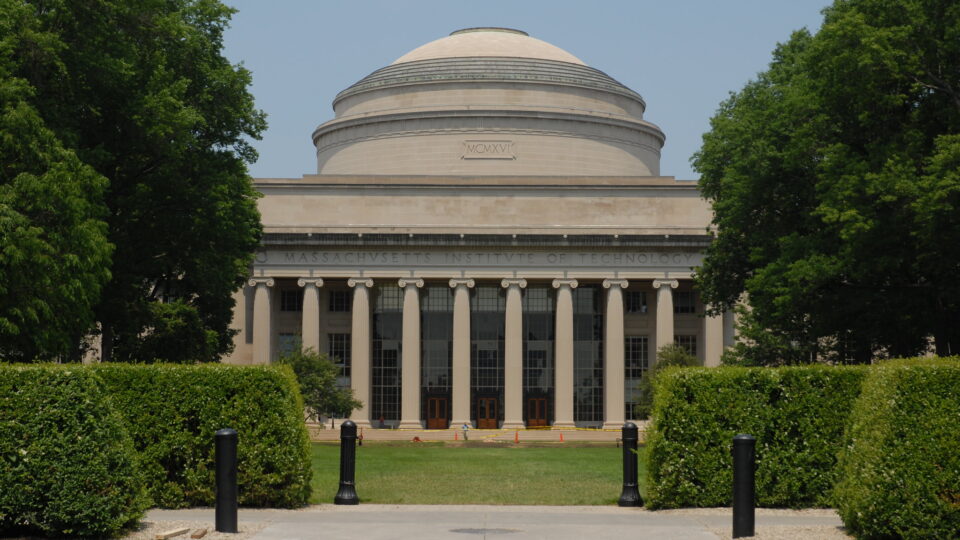
MIT research team has developed superstrong nanofibers

Self-assembly is a ubiquitous process in the natural world that leads to the formation of the DNA double helix, the creation of cell membranes, and to many other structures.   Scientists and engineers have been working to design new molecules that assemble themselves in water for the purpose of making nanostructures for biomedical applications such as drug delivery or tissue engineering.  For the most part, the materials created in this way have been chemically unstable and tended to degrade rapidly, especially when the water is removed.

A team at MIT recently published a paper describing a new class of small molecules they have designed that spontaneously assemble into nanoribbons with unprecedented strength and that retain their structure outside of water.

The material is modeled after a cell membrane.  Its outer part is hydrophilic (it likes to be in water) and its inner part is hydrophobic (it tries to avoid water.)  This configuration drives the self-assembly to create a specific nanostructure and by choosing the appropriate chemicals to form the structures, the result was nanoribbons in the form of long threads that could be dried and handled.  The resultant material in many ways resembles Kevlar.   In particular, the threads could hold 200 times their own weight and have extraordinarily high surface areas.  The fibers are stronger than steel and the high surface-to-mass ratio offers promise for miniaturizing technologies for such applications as pulling heavy-metal contaminants out of water and for use in electronic devices and batteries.

The goal of the research is to tune the internal state of matter to create exceptionally strong molecular nanostructures.  The potential for important new applications is considerable and exciting.

**********

Web Links

Researchers construct molecular nanofibers that are stronger than steel

Photo, posted June 19, 2007, courtesy of Andrew Hitchcock via Flickr.

Earth Wise is a production of WAMC Northeast Public Radio.

Primary Sidebar

Recent Episodes

  • An uninsurable future
  • Clean energy and jobs
  • Insect declines in remote regions
  • Fossil fuel producing nations ignoring climate goals
  • Trouble for clownfishes

WAMC Northeast Public Radio

WAMC/Northeast Public Radio is a regional public radio network serving parts of seven northeastern states (more...)

Copyright © 2026 ·