• Skip to primary navigation
  • Skip to main content
  • Skip to primary sidebar

Earth Wise

A look at our changing environment.

  • Home
  • About Earth Wise
  • Where to Listen
  • All Articles
  • Show Search
Hide Search
You are here: Home / Archives for thrive

thrive

Relocating native plants

May 2, 2025 By EarthWise Leave a Comment

Relocating endangered native plants

Climate change is endangering many native plant species.  As the climate warms, many species will need to establish themselves in new places that are more hospitable than their historic ranges.  But many native plants in the U.S. cannot move themselves by natural forces quickly enough to avoid climate-change driven extinction.  For such plants to survive into the future, they will need human help to move into adjacent areas, a process called “managed relocation.”

Such a process has its problems.  There is no guarantee that a plant will thrive in a new area.  On the other hand, relocating plant species historically has often had disastrous consequences.  Consider, for example, the story of kudzu in the American south.

Researchers at the University of Massachusetts Amherst have studied this problem in detail and reported the results in the journal Global Change Biology.

The issue is how to help plants move successfully without their causing harm in their new locations.  The study found that some plant traits can lead to success and some to ecological disaster.  In some cases, the same traits that help plants to establish themselves in a new location make them powerful invasive species.  Traits like having a large size predispose a plant to not only establish itself but spread wildly. 

The study recommends that people managing relocation need to focus on plants whose traits they have determined to be conducive to successful relocation but more unlikely to cause harm in their new environment. 

**********

Web Links

If Native Plants Are Going to Survive Climate Change, They Need Our Help to Move—Here’s How to Do It Safely

Photo, posted August 17, 2012, courtesy of Joshua Mayer via Flickr.

Earth Wise is a production of WAMC Northeast Public Radio

Vertical-axis wind turbines

February 19, 2025 By EarthWise Leave a Comment

Developing vertical-axis wind turbine technology

Nearly all wind turbines in use today are horizonal axis wind turbines.  They are a familiar sight with their three giant rotor blades spinning about an axis high above the ground attached to a nacelle containing the gearbox and generator. 

A vertical-axis wind turbine has its rotor shaft transverse to the wind; that is, the shaft rises up from the ground and the gearbox and generator are located close to the ground.

This type of wind turbine does not need to be pointed into the wind, which eliminates the need for wind-sensing and orienting mechanisms.  It is also considerably quieter in operation than horizontal axis wind turbines.  Vertical-axis wind turbines have enjoyed minimal success to date because of a variety of problems including reliability issues and complications related to how they respond to changing wind conditions.

A next-generation vertical wind turbine is going on trial in Australia as part of a research collaboration between Flinders University in South Australia and the start-up company VAWT-X Energy.  The 6KW prototype will be installed at a field site in Australia’s Fleurieu Peninsula.

According to the developers, the new turbine design will be as efficient, or even more efficient, as existing horizontal turbines and will be able to thrive across diverse environments including being part of urban infrastructure where their relative quiet is a real advantage.   Such turbines would be more accessible for applications like off-grid power and sustainable energy solutions for small businesses and farms.  The developers claim the technology can also be scaled up for large-scale windfarms.

**********

Web Links

Progress with new-look wind turbine

Photo courtesy of VAWT-X Energy.

Earth Wise is a production of WAMC Northeast Public Radio
More mosquitoes in a warming climate

January 26, 2024 By EarthWise Leave a Comment

More mosquitoes likely as the climate warms

Over millions of years, Earth’s climate has warmed up and cooled down many times. However, today the planet is warming much faster than it ever has over human history.  According to scientists, the warming is primarily the result of increased anthropogenic greenhouse gas emissions.  In fact, human activities are responsible for nearly all of the increase in atmospheric greenhouse gas emissions over the last 150 years. 

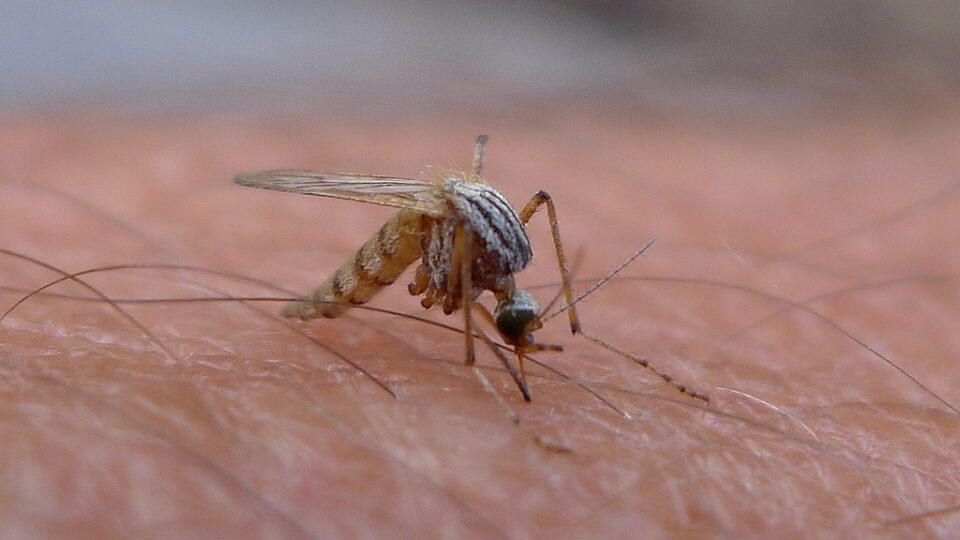
According to a new study published in the journal Ecology, the warming climate may soon mean more mosquitoes.  A research team, led by scientists from Virginia Commonwealth University, found that rising temperatures, often linked to climate change, can make predators of mosquito larvae less effective at controlling mosquito populations.  According to researchers, these warmer temperatures accelerate the development time of larvae, which leads to a smaller window of time in which predators like dragonflies could eat them.  As a result, twice as many mosquito larvae could make it to adulthood in the study area. 

Predators help stabilize ecosystems and food webs.  The study looked at predator-prey interactions between dragonfly nymphs and mosquito larvae.  In the study of Belle Isle along the James River in Richmond, Virginia, the research team found that warmer pools had more aquatic rock pool mosquito larvae – even when their predators that naturally control the populations were present.

While this species of mosquito is not an important disease vector, the researchers emphasize that these findings likely apply to other mosquito species that do act as vectors for diseases, such as West Nile or Zika virus.

The changing climate is creating the perfect environment for mosquitoes to thrive. 

**********

Web Links

Hotter weather caused by climate change could mean more mosquitos, according to VCU-led study

Photo, posted June 20, 2014, courtesy of John Tann via Flickr.

Earth Wise is a production of WAMC Northeast Public Radio

Moss And Carbon Storage | Earth Wise

July 18, 2023 By EarthWise 1 Comment

All plants, including algae and cyanobacteria, carry out photosynthesis. During the process of photosynthesis, plants remove carbon dioxide from the air and release oxygen to the air.  As a result, plants play a crucial role in the fight against climate change. 

According to a new study recently published in the journal Nature Geoscience, mosses – those tiny plants often found on the ground or rocks – might be important antidotes to climate change.  The study, which was led by scientists from the University of New South Wales in Australia and the Institute of Natural Resources and Agrobiology in Spain, uncovered evidence that mosses have the potential to store a massive amount of carbon in the soil beneath them.

The researchers found that mosses sequester around seven billion tons more carbon in the soil than is stored in the bare patches of soil typically found near them.  To put that figure in perspective, that is six times the annual global carbon emissions caused by global land use change, which includes things like deforestation, urbanization, and mining.  The researchers also found that moss-covered soil possessed heightened levels of vital nutrients and fewer instances of soil-borne plant pathogens on average compared to moss-less soil.

Mosses cover an area of more than 3.6 million square miles, which is similar in size to Canada, and can thrive in challenging environments.  The widespread presence and hardiness of mosses is why they can have such a significant impact on soil biodiversity and carbon sequestration. 

The research team hopes future work will focus on understanding the role of all types of vegetation, not just mosses and trees, in capturing carbon.

**********

Web Links

Study: Modest moss supports billions of tons of carbon storage

Photo, posted August 23, 2017, courtesy of Peter Handke via Flickr.

Earth Wise is a production of WAMC Northeast Public Radio
Why Are Insect Populations Declining? | Earth Wise

June 16, 2023 By EarthWise Leave a Comment

Insects are declining

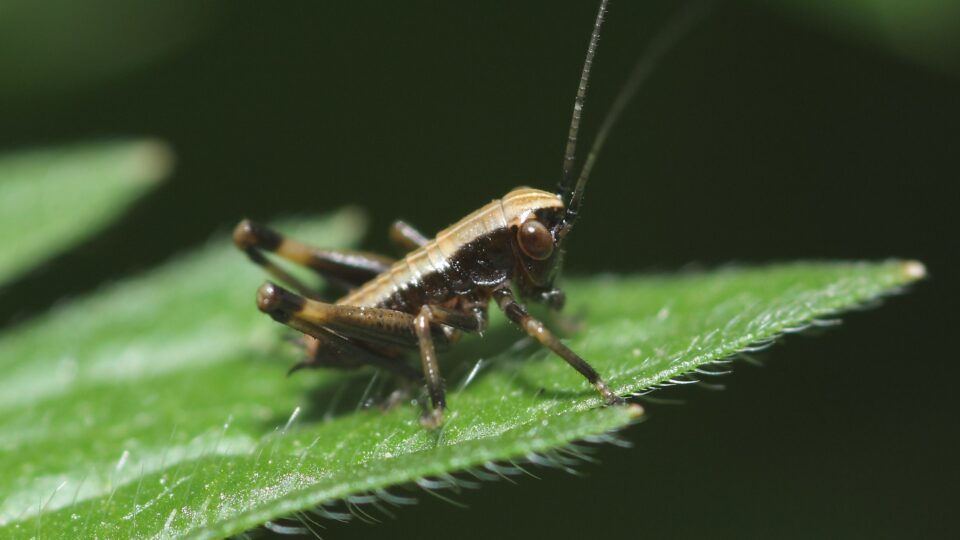
The world is experiencing a decline in overall insect populations as well as a collapse in insect diversity.  A recent special issue of the journal Biology Letters discusses the major causes of this alarming trend.

According to the study, the primary causes of the worldwide decline in insect biomass are land-use intensification in the form of greater utilization for agriculture and building development, climate change, and the spread of invasive animal species as a result of human trade.

The study concludes that it is not just these factors that are driving the global disappearance of insects, but also that these three factors are interacting with each other.  For example, ecosystems that are deteriorated by humans are more susceptible to climate change and so are their insect communities.  Similarly, invasive species can establish themselves more easily in habitats damaged by human land-use and displace native species.  Many native insect species decline or go extinct while others – often invasive species – thrive and increase, leading to decreasing insect diversity.  Warming temperatures are making many locations undesirable for various insect species and they often cannot migrate to anyplace better.

Declining insect populations and diversity results in concomitant declines in plant species that depend on pollinators.  This in turn threatens the stability of entire ecosystems.

The researchers advocate for continued monitoring of insect diversity across many habitats and countries and propose the creation of a network of interconnected nature reserves such that species can move from one to another. 

We often think of insects as pests, but they are a crucial part of the world’s ecosystems.

**********

Web Links

The reasons why insect numbers are decreasing

Photo, posted April 17, 2011, courtesy of Dean Morley via Flickr.

Earth Wise is a production of WAMC Northeast Public Radio
Heatwaves And Bird Populations | Earth Wise

July 28, 2022 By EarthWise Leave a Comment

How the changing climate is affecting bird populations

The increased occurrence and intensity of heatwaves around the world is affecting most living things.  Heatwaves can be lethal for warm-blooded animals – including people – but the behavioral and physiological effects of sub-lethal heat have not been extensively studied.  Heat that doesn’t kill animals can still impact their ability to adapt and thrive as the climate changes.

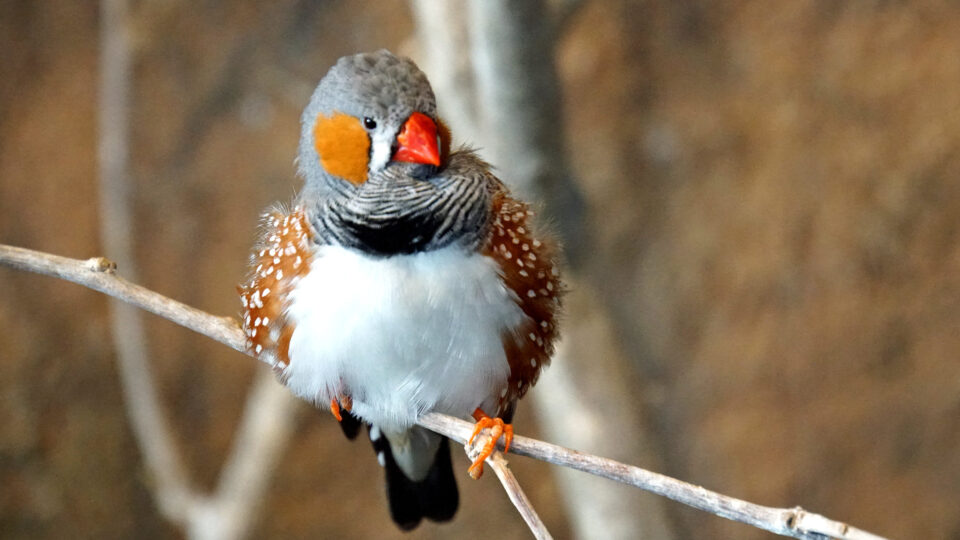
Researchers at the University of Tennessee in Knoxville recently published a new study that examined how heat impacts the behavior and physiology of Zebra finches.  They exposed the birds to a four-hour heat challenge, similar to what wild birds might experience during a hot summer afternoon.   They used Zebra finches because these songbirds experience extreme temperature fluctuations in their native Australia.

The team measured heat effects on thermoregulatory behavior, how heat alters gene activity in tissues critical to reproduction, and how heat affects the area of the brain that controls singing.  The evidence showed that even sub-lethal heat can change a bird’s ability to reproduce both from the functioning of its reproductive system and its motivational circuits for mating behavior.

The researchers found that some individual birds were better able to minimize the physiological effect of heat, for example by adjusting their behavior to dissipate heat.  Some individuals and even some species are likely to be able to adapt to increasingly extreme temperatures.

Global bird populations have been dramatically declining over the past few decades.  Previous studies have shown that birds sing less during heatwaves. Based on the new study, it appears that increasing heatwaves may be a potential underlying mechanism for the decline in bird populations.

**********

Web Links

New Research Suggests Heat Waves Could Lead to Avian Population Decline

Photo, posted August 22, 2017, courtesy of Dennis Jarvis via Flickr.

Earth Wise is a production of WAMC Northeast Public Radio.

Metal From Plants | Earth Wise

March 31, 2020 By EarthWise 2 Comments

harvesting metal from plants

Large amounts of metal in soil are generally bad for plants.  But there are about 700 species of plants that thrive in metal-rich soils.  These plants don’t just tolerate minerals from soil in their bodies but actually seem to hoard them to ridiculous levels.

In areas where soils are naturally rich in nickel, typically in the tropics and Mediterranean basin, plants have either died off or have adapted to become nickel loving.  Slicing open a tree with this adaptation produces a neon blue-green sap that is actually one-quarter nickel, which is far more concentrated than the ore that typically feeds commercial nickel smelters.

A group of researchers from the University of Melbourne and other institutions is investigating whether this phenomenon is not just interesting but might also be of real commercial value.  They established a plot of land in a rural village in Borneo and have been harvesting growth from nickel-hyper accumulating plants.  Every six to twelve months, a farmer shaves off one foot of growth from these plants and either burns or squeezes the metal out.  After a short purification, they end up with about 500 pounds of nickel citrate, potentially worth thousands of dollars on international markets.

Phytomining – extracting minerals from hyper-accumulating plants – cannot fully replace traditional mining techniques.  But the technology could enable areas with toxic soils to be made productive and might allow mining companies to use plants to clean up their former mines and waste while actually collecting some revenue.

There are other plants that suck up cobalt, zinc, and similarly crucial metals.  With growing demand for metals, perhaps it is time to harvest them on the farm.

**********

Web Links

Down on the Farm That Harvests Metal From Plants

Photo courtesy of the University of Queensland.

Earth Wise is a production of WAMC Northeast Public Radio.

Wiping Out Wildlife

December 1, 2016 By WAMC WEB

https://earthwiseradio.org/wp-content/uploads/2016/12/EW-12-01-16-Wiping-Out-Wildlife.mp3

According to a new report from the World Wildlife Fund, the world’s animal populations have suffered widespread population declines in the last half century.  And thousands of species are now scrambling to survive. 

[Read more…] about Wiping Out Wildlife

Primary Sidebar

Recent Episodes

  • An uninsurable future
  • Clean energy and jobs
  • Insect declines in remote regions
  • Fossil fuel producing nations ignoring climate goals
  • Trouble for clownfishes

WAMC Northeast Public Radio

WAMC/Northeast Public Radio is a regional public radio network serving parts of seven northeastern states (more...)

Copyright © 2026 ·