• Skip to primary navigation
  • Skip to main content
  • Skip to primary sidebar

Earth Wise

A look at our changing environment.

  • Home
  • About Earth Wise
  • Where to Listen
  • All Articles
  • Show Search
Hide Search
You are here: Home / Archives for thirsty

thirsty

Chatbots Are Thirsty | Earth Wise

June 19, 2023 By EarthWise Leave a Comment

We hear a lot about artificial intelligence these days.  ChatGPT has found its way into education, technology, and many other aspects of life.  It and its brethren are a source of fascination, enthusiasm, and even fear.  Many of us have given queries to the bot to see what kind of results we can obtain.  But a recent study has found out something about AI systems that we probably didn’t know – they use up lots of fresh water.

According to researchers at the University of California, Riverside, running a few dozen queries on ChatGPT uses up about half a quart of fresh water from already overtaxed reservoirs.

Running artificial intelligence systems like ChatGPT relies on cloud computations done in racks of servers in warehouse-sized data processing centers.  Google’s data centers in the U.S. alone consumed nearly 3.5 billion gallons of fresh water in 2021 in order to keep their servers cool.

Data processing centers consume water in two ways.  They often draw much of their electricity from power plants that use large cooling towers that convert water into steam emitted into the atmosphere.  In addition, the servers themselves need to be cooled to keep running and are typically connected to cooling towers as well.

It isn’t going to be easy for AI systems to reduce their water use.  The study’s authors noted that people make use of AI at all hours of the day and night.  But a significant amount of AI activity is actually the training of the systems.  That could be scheduled for the cooler hours, when less water is lost to evaporation.

In an era of scarce fresh water and droughts, it is important to make AI less thirsty.

**********

Web Links

AI programs consume large volumes of scarce water

Photo, posted May 22, 2023, courtesy of Jernej Furman via Flickr.

Earth Wise is a production of WAMC Northeast Public Radio

The Atmosphere Is Thirstier | Earth Wise      

May 9, 2022 By EarthWise Leave a Comment

The American West is in the throes of a two-decade-long drought.  The climate there is getting warmer and drier, which has led to increasing demand for water resources from both humans and ecosystems.  According to a new study by the Desert Research Institute and collaborators, the atmosphere across much of the U.S. is also demanding a greater share of water than it used to.

Evaporative demand, which is also called atmospheric thirst, is a measure of the potential loss of water from the earth’s surface up to the atmosphere.  It is a function of temperature, humidity, wind speed, and solar radiation.  The study, published in the Journal of Hydrometeorology, assessed trends in evaporative demand during a 40-year period from 1980-2020.

The study’s findings showed substantial increases in atmospheric thirst across much of the Western U.S. over that period, with the largest increases centered around the Rio Grande and Lower Colorado rivers.  This is important because atmospheric thirst is a persistent force in pushing Western landscapes and water supplies toward drought.

The study found that, on average, increases in temperature were responsible for 57% of the changes observed in atmospheric thirst, humidity 26%, and the other factors playing lesser roles.

For farmers and other water users, increases in atmospheric thirst mean that, in the future, more water will be required to meet existing water needs.  Crops already require more water than they did in the past and can be expected to require more water in the future.  Over time, for every drop of precipitation that falls, less and less water is likely to drain into streams, wetlands, aquifers, or other water bodies.

**********

Web Links

New study shows robust increases in atmospheric thirst across much of U.S. during past 40 years

Photo, posted August 9, 2007, courtesy of William Clifford via Flickr.

Earth Wise is a production of WAMC Northeast Public Radio.

Can We Tow Icebergs To Use Their Water? | Earth Wise

February 23, 2021 By EarthWise Leave a Comment

Using icebergs for freshwater

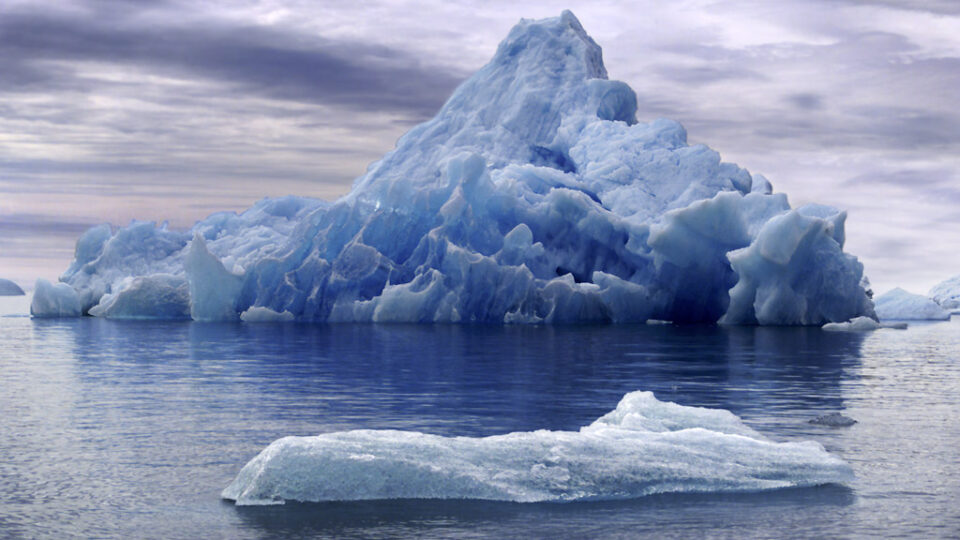
At any given time, there are thousands of icebergs adrift in Antarctica that are hundreds or even thousands of feet across.  For at least fifty years, there has been speculation about whether such icebergs could be towed from the Antarctic to places experiencing freshwater shortages.  The feasibility of such a scheme is still the subject of studies that nowadays include sophisticated computer modeling.

Places like the Persian Gulf, Cape Town, South Africa, and Perth, Australia all experience water shortages and could benefit tremendously from having a large iceberg towed to their waters.

How big an iceberg would it take to quench the thirst of a city like Cape Town?  Computer models show that an iceberg 2,000 feet long and 650 feet thick could produce enough water to supply the city for more than a year.  However, with water temperatures in the 60s in the area, even such a large iceberg would melt away within weeks.  So, to get enough water for a year, it would require a much larger iceberg – one at least a couple of miles long.

Daunting problems include figuring out how many and what sort of ships would be required.  An alternative to such giant icebergs would be finding a way to insulate the icebergs so they don’t melt as quickly, thereby allowing much smaller and more towable icebergs to be harvested.

Beyond these issues, there are the ecological issues of the effects of huge amounts of very cold fresh water affecting local marine ecosystems. 

Despite a wide range of challenges, there is continued interest in the idea of using icebergs as a source of very pure fresh water.  In an increasingly thirsty world, it might someday actually happen.

**********

Web Links

Can icebergs be towed to water-starved cities?

Photo, posted November 1, 2007, courtesy of M A Felton via Flickr.

Earth Wise is a production of WAMC Northeast Public Radio.

Desalination On The Rise

July 23, 2019 By EarthWise Leave a Comment

Desalination has been regarded for decades as a solution for providing fresh water to places where it is scarce.  With drought becoming more common around the world – sometimes even in places where water supplies were thought to be ample – there is increasing pressure to bring new desalination plants online.

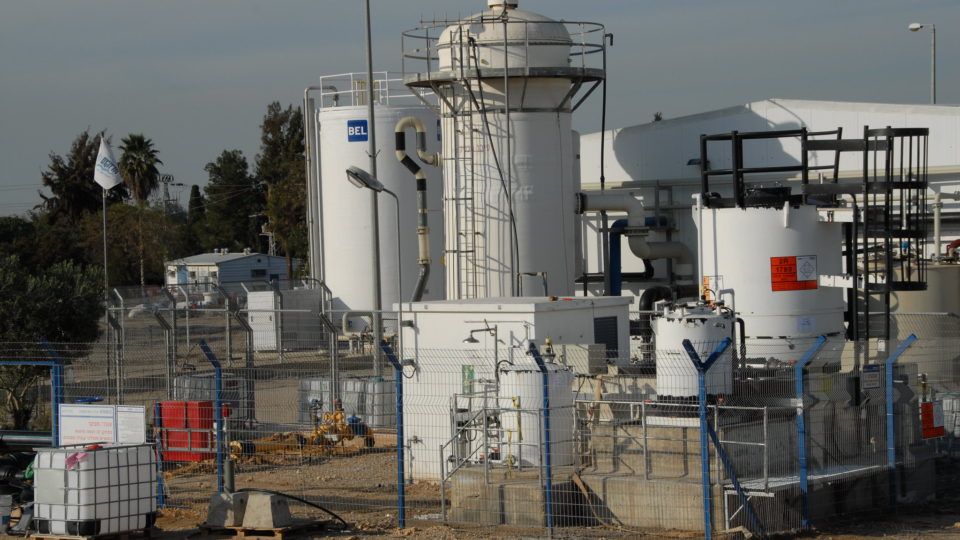
San Diego gets only 12 inches of rain a year and has no groundwater.  It gets half its water from the distant Colorado River, and that source is becoming increasingly unreliable.  Thus, it is no surprise that America’s largest desalination plant is in Carlsbad, about 30 miles north of San Diego.  That plant provides about 10% of the fresh water needs of the region’s 3.1 million people.

There are 11 desalination plants in California, and 10 more are proposed. Desalination is huge in Saudi Arabia, Australia and Israel.  Globally, more than 300 million people get their water from desalination.

But there are problems.  Desalination is expensive and energy-intensive.  If the process is powered by fossil fuels, it contributes to global warming.  There are ecological impacts as well since it takes two gallons of sea water to make a gallon of fresh water, and the gallon left behind is extremely briny and potentially harmful to dump back into the sea.  The intake systems of desalination plants are also harmful to fish and other aquatic creatures.

The cost of desalination has dropped by more than half over the last 30 years but water from it still costs about twice as much as that from other main sources.  The technology is getting better and cheaper, but the industry must confront and solve serious environmental and economic problems in order for desalination to be able to meet the needs of an increasingly thirsty world.

**********

Web Links

As Water Scarcity Increases, Desalination Plants Are on the Rise

Photo, posted January 12, 2011, courtesy of Flickr.

Earth Wise is a production of WAMC Northeast Public Radio.

Primary Sidebar

Recent Episodes

  • An uninsurable future
  • Clean energy and jobs
  • Insect declines in remote regions
  • Fossil fuel producing nations ignoring climate goals
  • Trouble for clownfishes

WAMC Northeast Public Radio

WAMC/Northeast Public Radio is a regional public radio network serving parts of seven northeastern states (more...)

Copyright © 2026 ·