• Skip to primary navigation
  • Skip to main content
  • Skip to primary sidebar

Earth Wise

A look at our changing environment.

  • Home
  • About Earth Wise
  • Where to Listen
  • All Articles
  • Show Search
Hide Search
You are here: Home / Archives for textiles

textiles

Microplastics in Antarctica

March 3, 2025 By EarthWise Leave a Comment

Microplastics are small plastic pieces less than five millimeters long and typically far smaller than that.  They come from a variety of sources, often from larger plastic debris that degrades into smaller and smaller pieces.  There are also microbeads, which are tiny pieces of manufactured polyethylene plastic that are added to various health and beauty products.  Tiny bits of plastic easily pass through filtration systems and end up in the ocean and other bodies of water.

Microplastics are a pervasive problem for which nowhere on Earth is truly untouched.  Despite stringent regulations on materials entering Antarctica, scientists have discovered microplastics in the snow near some of the deep field camps there.

A study by the British Antarctic Survey made use of a new and advanced technique that can detect microplastics as small as 11 microns – about the size of a red blood cell.

The research team found microplastics at concentrations ranging from 73 to 3,099 particles per liter of snow. 

Snow samples from three different sites identified polyamide (used in textiles), polyethylene terephthalate (found in bottles and packaging), polyethylene, and synthetic rubber.  The results suggest that at least the polyamide, which accounted for half the microplastics found, came from local sources.

Additional research is needed to fully understand the sources of microplastic pollution in Antarctica and to understand the broader implications of microplastics in that frozen wilderness. Microplastics have already been detected in several penguin, seal, and fish species.

**********

Web Links

Microplastics discovered in Antarctica

Photo, posted February 3, 2015, courtesy of Christian Stangl via Flickr.

Earth Wise is a production of WAMC Northeast Public Radio
PFAS and groundwater

November 26, 2024 By EarthWise Leave a Comment

PFAS in groundwater in the United States is widespread

Per- and polyfluoroalkyl chemicals, more commonly known as PFAS, are a family of human-made chemicals that have been manufactured and used in a variety of industries since the 1940s.  They provide water-resistance, oil-resistance, dirt-resistance, and corrosion-resistance to a wide range of products, including food wrappers and packaging, clothing, dental floss, nonstick cookware, textiles, and electronics.

Exposure to PFAS has been linked to birth defects, thyroid disease, liver disease, kidney disease, and cancer.  These chemicals do not break down in the environment and therefore, over time, become concentrated in plants, animals, and people. 

According to a new first-of-its kind study by scientists at the U.S. Geological Survey, more than 20% of the U.S. population could be drinking groundwater contaminated with PFAS.  The study, which was recently published in the journal Science, found that those living in the Eastern U.S. are particularly likely to be exposed.

The study is the first to report national estimates of PFAS in untreated groundwater that supplies drinking water to private and public wells. The USGS research also provides the first estimate of the total number of Americans – anywhere from 71 to 95 million – who might be exposed to this contamination.

The researchers note that their estimates merely measure the existence of PFAS – before the water has undergone any treatment or filtering – meaning that, while they may be present, they may be at very low levels. 

To find a link to the detailed USGS map showing the probability of PFAS groundwater contamination in your region, visit our website: EarthWiseRadio.org.

**********

Web Links

PFAS in US Groundwater Interactive Dashboard

Predictions of groundwater PFAS occurrence at drinking water supply depths in the United States

Photo, posted January 12, 2008, courtesy of Andrew Kraker via Flickr.

Earth Wise is a production of WAMC Northeast Public Radio
Cleaning Up Forever Chemicals | Earth Wise

August 29, 2022 By EarthWise Leave a Comment

New technology to help clean up forever chemicals

PFAS, per- and polyfluoroalkyl substances, are chemical pollutants that threaten human health and ecosystem sustainability.  They are used in a wide range of applications including food wrappers and packaging, dental floss, firefighting foam, nonstick cookware, textiles, and electronics.  Over decades, these manufactured chemicals have leached into our soil, air, and water.  Chemical bonds in PFAS molecules are some of the strongest known, so the substances do not degrade easily in the environment.

Studies have shown that at certain levels, PFAS chemicals can be harmful to humans and wildlife and have been associated with a wide variety of health problems.

Currently, the primary way to dispose of PFAS chemicals is to burn them, which is an expensive multistep process.  Even trace levels are toxic, so when they occur in water in low amounts, they need to be concentrated in order to be destroyed.

Researchers at Texas A&M University have developed a novel bioremediation technology for cleaning up PFAS.  It uses a plant-derived material to absorb the PFAS which is then eliminated by microbial fungi that literally eat the forever chemicals.

The sustainable plant material serves as a framework to adsorb the PFAS.  That material containing the adsorbed PFAS serves as food for the fungus.  Once the fungus has eaten it, the PFAS is gone. 

The EPA has established a nationwide program to monitor the occurrence and levels of PFAS in public water systems and is considering adding PFAS threshold levels to drinking water standards.  If this happens, the technology developed at Texas A&M may become an essential part of municipal water systems.

**********

Web Links

Texas A&M AgriLife develops new bioremediation material to clean up ‘forever chemicals’

Photo, posted August 10, 2013, courtesy of Mike Mozart via Flickr.

Earth Wise is a production of WAMC Northeast Public Radio.

Turning Pollution Into Cash | Earth Wise     

April 22, 2022 By EarthWise Leave a Comment

Developing ways to turn pollution into cash

Power plants and other industrial facilities are a major source of carbon emissions.  There are a variety of techniques under development to prevent those emissions by capturing them rather than releasing them into the atmosphere.  All of them add costs to the functioning of the facility.  A good way to offset those costs is to convert the emissions into useful products, ideally making it profitable to capture emissions.

Engineers at the University of Cincinnati have developed an electrochemical system that converts carbon dioxide into ethylene, which is a chemical used in a wide range of manufacturing.  Ethylene has sometimes been called “the world’s most important chemical”.  It is used in many kinds of plastics, textiles, and the rubber found in tires and insulation. It is also used in heavy industry such as steel and cement plants as well as in the oil and gas industry.

The Cincinnati process is a two-stage cascade reaction that converts carbon dioxide to carbon monoxide and then into ethylene.  It is based on the underlying principle of the plug-flow reactor that is used for variety of production applications.  The study, published in the journal Nature Catalysis, demonstrates that the process has high ethylene selectivity – meaning that it effectively isolates the desired compound – as well as high productivity – meaning that it makes a lot of it.  The system will take more time to become truly economical, but the researchers are continuing to make progress on that front with improved catalysts.

The researchers believe that this technique can reduce carbon emissions and make a profit doing it.  Power plants and other facilities emit a lot of carbon dioxide.  With this process, it may be possible to capture it and produce a valuable chemical.

**********

Web Links

Conversion process turns pollution into cash

Photo, posted February 27, 2018, courtesy of Cyprien Hauser via Flickr.

Earth Wise is a production of WAMC Northeast Public Radio.

Food Waste Into Wearables | Earth Wise

November 20, 2020 By EarthWise Leave a Comment

Turning food waste into wearables

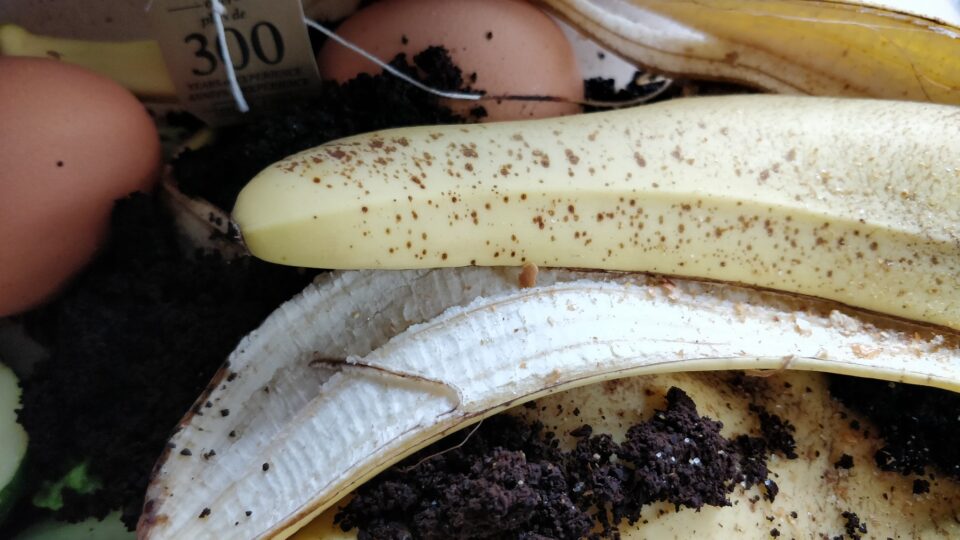
A new startup company spun out of the University of Toronto wants to make clothing from food waste.  If they are successful, you may someday buy a shirt or a pair of gym shorts made from banana peels, rotten tomatoes, coffee grounds, or moldy bread.

A problem faced by the clothing industry is that most textiles are blended with synthetic and non-renewable fiber polyester, which makes them unrecyclable.  An alternative that has come on the scene in recent years is polylactic acid (or PLA), which is a decomposable bioplastic that is currently used for food packaging, medical implants, and 3D printing.  It is likely that a sustainable future for the fashion industry will depend on the ability to make use of biodegradable and carbon-neutral materials.

PLA is typically made from cornstalk, but the startup – called ALT TEX – does not want to rely on a crop already used for feedstock, human consumption, and alternative fuel.  Furthermore, there is no need to plant more corn when there is an abundant supply of unused post-industrial food waste from growers, producers, and retailers that contains the same biological building blocks for producing PLA.

ALT TEX has been conducting experiments using discarded apples to create a PLA-based fabric that is strong, durable, decomposable, and cost effective.  They are working with farmers and food suppliers to access their waste. If their efforts are successful, it would be possible to divert significant amounts of organic waste that currently emits the powerful greenhouse gas methane and instead enable the fashion industry to be more sustainable.

**********

Web Links

Earth-friendly fashion: U of T startup turns food waste into wearables

Photo, posted August 30, 2019, courtesy of Ruth Hartnup via Flickr.

Earth Wise is a production of WAMC Northeast Public Radio.

Finding Plastic In Seafood | Earth Wise

September 15, 2020 By EarthWise Leave a Comment

plastic in seafood

Researchers from the University of Exeter in the UK and the University of Queensland in Australia have developed a new method for identifying and measuring the presence of five different types of plastic in seafood.

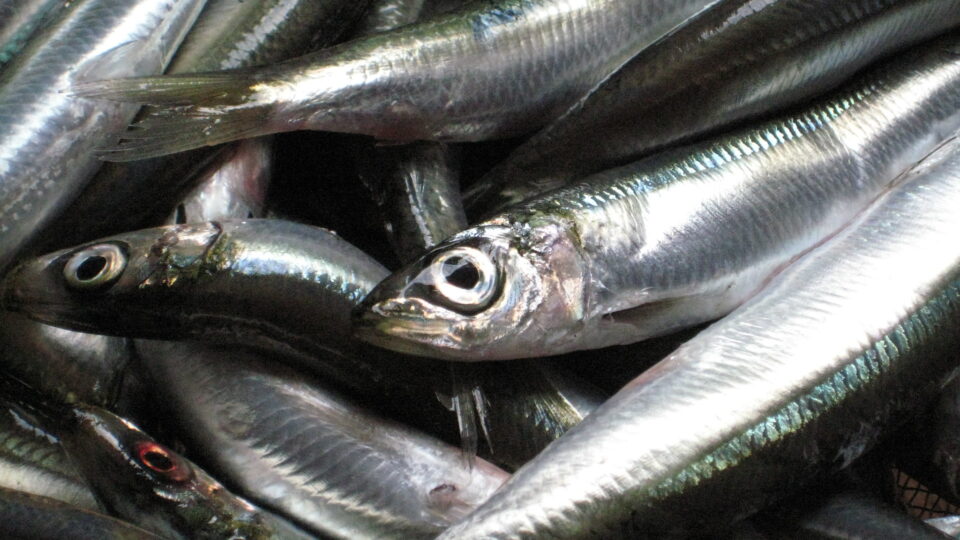
The researchers purchased oysters, prawns, squid, crabs, and sardines from a market in Australia and analyzed them using the new technique.  They found plastic in every single sample.

Their findings showed that the amount of plastics present varies greatly among species and differs between individuals of the same species.  The measured plastic levels were 0.04 mg per gram of seafood in squid, 0.07 mg in prawns, 0.1 mg in oysters, 0.3 mg in crabs, and 2.9 mg in sardines. 

All the plastics are types commonly used in plastic packaging and synthetic textiles and are increasingly found in marine litter:  polystyrene, polyethylene, polyvinyl chloride, polypropylene, and polymethyl methacrylate.

The new method treats the seafood tissues with chemicals that dissolve the plastics present within them.  The resulting solution is then analyzed using a highly sensitive technique called Pyrolysis Gas Chromatography Mass Spectrometry which both identifies and quantifies the plastics.

Microplastics are an increasing source of pollution for much of the planet, including the oceans where they are eaten by all types of marine creatures ranging from planktonic organisms to large mammals.  Microplastics enter our diet not only from seafood, but also from bottled water, sea salt, beer, and honey, as well as from dust that settles on our food.

**********

Web Links

Seafood study finds plastic in all samples

Photo, posted June 23, 2007, courtesy of Flickr.

Earth Wise is a production of WAMC Northeast Public Radio.

A Fabric To Keep You Cool | Earth Wise

September 1, 2020 By EarthWise Leave a Comment

cooling fabric technology

About 10% of all electricity consumption in the U.S. is devoted to keeping us cool with air conditioning and other methods.  Researchers at two universities in Shanghai, China have developed a new material that can be made into clothing that cools the wearer without using any electricity.

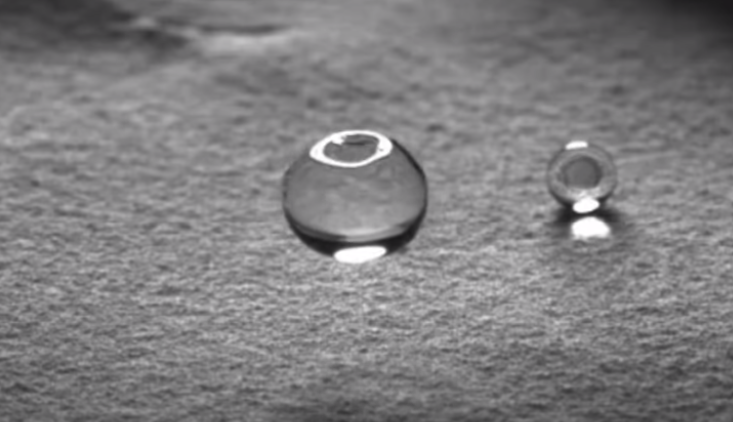
The new fabric transfers heat, allows moisture to evaporate from the skin, and repels water.  Cooling off a person’s body is much more efficient than cooling off an entire room or a building.  There have been textiles and types of clothing designed to perform the cooling function, but most of those have disadvantages.  These include some combination of poor cooling capacity, high energy consumption, complex and time-consuming manufacturing, and high cost.

The researchers wanted to develop a personal cooling fabric that can efficiently transfer heat away from the body while at the same time being breathable, water resistant and easy to make.

The new fabric is made by electrospinning an ordinary polyurethane polymer with a water-repelling fluorinated version of polyurethane polymer along with a thermally conductive filler composed of boron nitride nanosheets.  The resultant material is a nanofibrous membrane that repels water from the outside but has large enough pores to allow sweat to evaporate from the skin and air to circulate. 

Tests of the membrane demonstrated higher thermal conductivity than other conventional or high-tech fabrics.  Used in clothing, the material would be more effective than previous fabrics in conducting heat away from the body. It may be possible to beat the heat without turning on the AC.   These membranes could also be useful for solar energy collection, seawater desalination, and thermal management of electronic devices.

**********

Web Links

New fabric could help keep you cool in the summer, even without A/C

Photo courtesy of the American Chemical Society on Youtube.

Earth Wise is a production of WAMC Northeast Public Radio.

Banning Foreign Trash

February 6, 2018 By EarthWise Leave a Comment

https://earthwiseradio.org/wp-content/uploads/2018/02/EW-02-06-18-Banning-Foreign-Trash.mp3

Since the 1980s, China has been the largest importer of foreign trash.  In 2012, up to 56% of global exported plastic waste wound up in China.  The trash has been both a valuable resource for the country’s booming manufacturing sector as well as an enormous source of environmental and health problems.   

[Read more…] about Banning Foreign Trash

Primary Sidebar

Recent Episodes

  • An uninsurable future
  • Clean energy and jobs
  • Insect declines in remote regions
  • Fossil fuel producing nations ignoring climate goals
  • Trouble for clownfishes

WAMC Northeast Public Radio

WAMC/Northeast Public Radio is a regional public radio network serving parts of seven northeastern states (more...)

Copyright © 2025 ·