• Skip to primary navigation
  • Skip to main content
  • Skip to primary sidebar

Earth Wise

A look at our changing environment.

  • Home
  • About Earth Wise
  • Where to Listen
  • All Articles
  • Show Search
Hide Search
You are here: Home / Archives for strawberries

strawberries

Advantages of vertical farming

June 19, 2025 By EarthWise Leave a Comment

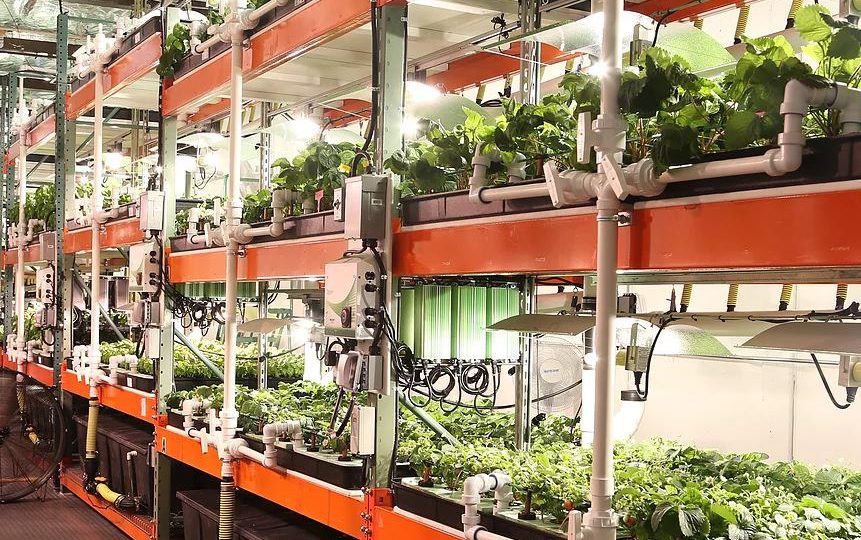
Vertical farming has been increasingly used for leafy greens like lettuce and kale, as well as for herbs and a few fruits like strawberries and tomatoes.  A recent study by the Technical University of Munich has investigated the use of vertical farming for a much broader range of foods.  The study looked at the positive effects of vertical farming on both yield and environmental impact.

Traditional agriculture can reach its limits as a result of extreme weather events or in areas of high population density and resultant high demand.   With vertical farming, food can be grown close to consumers independent of weather and can make very efficient use of space.

The Proteins4Singapore study investigated the potential of a 10-layer vertical farming system cultivating crops, algae, mushrooms, insects, fish, and cultivated meat.  Many of these things are not currently part of many people’s diets.  But these foods can increase the protein yield per cultivation area nearly three hundredfold for crops and 6,000-fold for mushrooms and insects. 

Mushrooms and insects are examples of foods that require little light and cultivating them reduces energy consumption and, therefore, associated costs.

The biggest challenges for controlled environment agriculture – which is what vertical farming is – are the high energy demands for cultivation and the social acceptance.  Some of the foods that are especially well-suited to vertical farming – such as algae and insects – are not generally accepted by many consumers.  Controlled environment agriculture can revolutionize food production, but it will take a combination of technological advances, policy initiatives, and public engagement.

**********

Web Links

Vertical Farming to increase yields and reduce environmental impact

Photo, posted October 21, 2022, courtesy of Fred Miller / University of Arkansas System Division of Agriculture via Flickr.

Earth Wise is a production of WAMC Northeast Public Radio
Strawberries and climate change

August 12, 2024 By EarthWise Leave a Comment

The changing climate threatens the future of strawberries

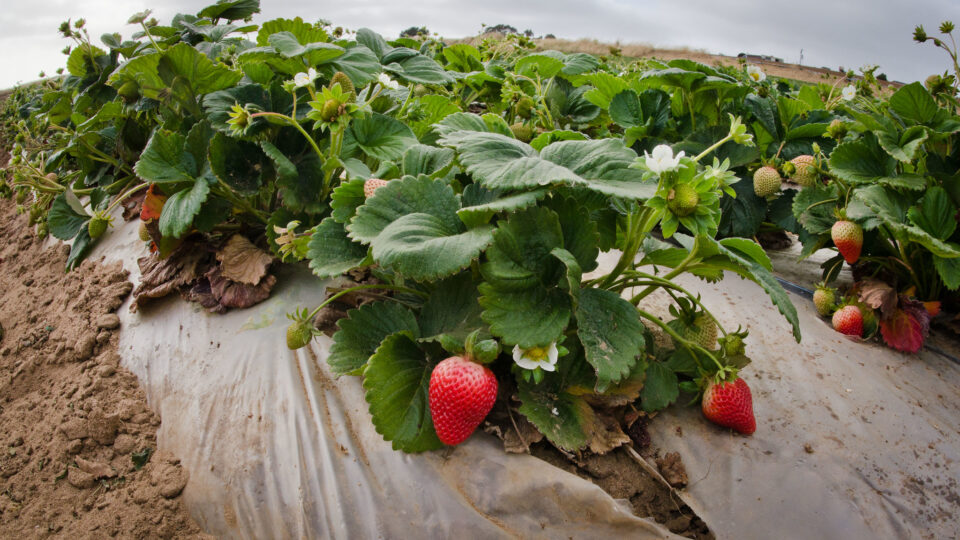
The demand for strawberries continues to climb around the world.  According to data from World Population Review, China remains the global leader in strawberry production, a spot it’s held since 1994.  Last year, China produced 3.3 million tons of strawberries, followed by the United States at 1.05 million tons, Egypt at 597,000 tons, and Mexico at 557,000 tons.

While strawberries are grown coast to coast in the U.S., California and Florida are the top two strawberry-producing states due to their favorable climate conditions.  In fact, California produces more than 90% of the domestic strawberry crop.  But Florida plays a key role in domestic strawberry production as well by growing the majority of the winter crop. 

A new study by researchers from the University of Waterloo in Canada has examined the effect of climate change on California’s strawberry crop.  According to the research team, strawberries could be fewer and more expensive because of the higher temperatures caused by climate change.  The report, which was recently published in the journal Sustainability, found that a 3° Fahrenheit rise in temperature could reduce strawberry yields by up to 40%.

According to the researchers, the impact of climate change on strawberry production could be mitigated by implementing certain sustainable farming practices.  These include optimizing irrigation to ensure adequate water supply during heat waves and using shading plants and shade structures to mitigate heat stress.

Understanding how rising temperatures affect crop yields should encourage farmers and governments to develop sustainable agriculture responses to global warming.

**********

Web Links

Influence of Regional Temperature Anomalies on Strawberry Yield: A Study Using Multivariate Copula Analysis

Strawberry Production by Country 2024

Researchers predict fewer, pricier strawberries as temperatures warm

Photo, posted June 3, 2007, courtesy of David Slack via Flickr.

Earth Wise is a production of WAMC Northeast Public Radio
Fighting Mildew With Robots | Earth Wise

July 10, 2020 By EarthWise Leave a Comment

Using robots to fight mildew in agriculture

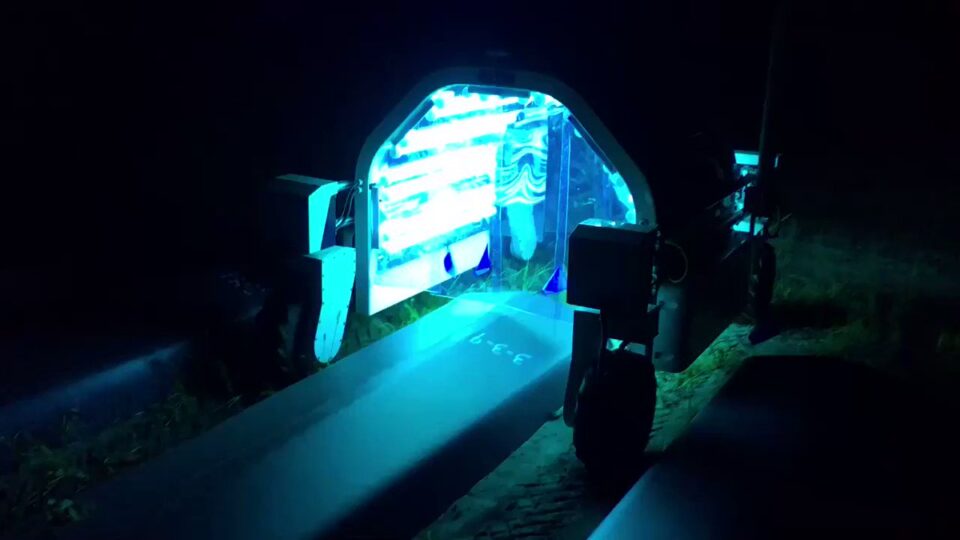
Cornell Researchers have partnered with Norwegian company SAGA Robotics to develop autonomous robots that can roam vineyards at night armed with ultraviolet lamps that can kill powdery mildew, which is a pathogen that devastates many crops, including grapes.

The robots are being field tested on Chardonnay grapes at two sites:  Cornell AgriTech’s research vineyards in Geneva, New York, and at Anthony Road Wine Co. in Penn Yan, New York.

Cornell has been researching the use of UV light to kill grapevine powdery mildew for nearly 30 years.  They have also worked with the University of Florida on using it to control powdery mildew in strawberries.

The UV treatment has been shown to suppress powdery mildew over a period of two years with the application of treatments once a week.  The technique represents a breakthrough because the mildew can adapt to chemical anti-fungal sprays in a single season, making them ineffective.  UV light damages DNA, but mildews have natural biochemical defenses that are triggered by the blue light present in sunlight.  By applying the UV at night, when there is no blue light from the sun, the defenses of the mildew are defeated.

In earlier trials, the researchers used UV lamps mounted on a tractor wagon, but this required all-night labor to treat an entire vineyard.  That has now been replaced with autonomous vehicles that can work seven nights a week, all night long.

The next development will be imaging technology that will detect and quantify mildew on grape leaves.  With this, the dose of UV light applied to a particular vine will depend on whether it is sick or healthy.

A high-tech solution to a problem that plagues vineyards.

**********

Web Links

Robots armed with UV light fight grape mildew

Photo courtesy of Rodrigo Onofre/Twitter.

Earth Wise is a production of WAMC Northeast Public Radio.

Natural Habitats And Strawberry Farms | Earth Wise

April 22, 2020 By EarthWise Leave a Comment

natural habitat benefits farms

According to a new study led by researchers from the University of California – Davis, conserving natural habitat around strawberry fields can protect farmers’ yields, their bottom line, and the environment.  The study also suggests that conserving natural habitat in this way has no detectable threat to food safety. 

In this study, which was recently published in the journal Ecological Applications, the research team conducted surveys and experiments at 20 strawberry farms along California’s Central Coast.  This region is responsible for 43% of the nation’s strawberry production. 

The researchers found that strawberry farmers were better off with natural habitat, like forests, grasslands, wetlands, and shrubs, around their farms than without it.  According to the study’s models, adding natural habitat can reduce crop damage costs by 23%.  Removing natural habitat can increase costs by as much as 76%. 

Importantly, the strawberry farms with natural habitat surrounding them showed no signs of increased fecal contamination.  While bird feces were regularly encountered on the ground, only 2 of 10,000 strawberries examined show signs of direct fecal contamination.  Those contaminated berries would be discarded during the hand-harvesting process.   

These findings run contradictory to current best practice recommendations that support natural habitat removal around strawberry farms in order to decrease bird fecal contamination and crop damage.  These food safety requirements were a consequence of the deadly outbreak of E. coli in 2006, which was traced back to spinach grown in this region.   

It seems like our agricultural landscapes can both support and benefit from biodiversity. 

**********

Web Links

Natural habitat around farms a win for strawberry growers, birds and consumers

Photo, posted June 16, 2011, courtesy of the USDA via Flickr.

Earth Wise is a production of WAMC Northeast Public Radio.

The Dirty Dozen Of 2018

May 18, 2018 By EarthWise Leave a Comment

https://earthwiseradio.org/wp-content/uploads/2018/05/EW-05-18-18-The-Dirty-Dozen.mp3

Every year, the Environmental Working Group ranks pesticide contamination in 47 popular fruits and vegetables for its Shopper’s Guide to Pesticides in Produce.  The environmental nonprofit has created this ranking annually since 2004. 

[Read more…] about The Dirty Dozen Of 2018

A Solar-Powered Vertical Farm

November 21, 2017 By EarthWise 1 Comment

https://earthwiseradio.org/wp-content/uploads/2017/11/EW-11-21-17-A-Solar-Powered-Vertical-Farm.mp3

Vertical farming is a method for producing crops in vertically stacked layers or surfaces typically in a skyscraper, used warehouse, or shipping container.  Modern vertical farming uses indoor farming techniques and controlled-environment agriculture technology.

[Read more…] about A Solar-Powered Vertical Farm

Primary Sidebar

Recent Episodes

  • An uninsurable future
  • Clean energy and jobs
  • Insect declines in remote regions
  • Fossil fuel producing nations ignoring climate goals
  • Trouble for clownfishes

WAMC Northeast Public Radio

WAMC/Northeast Public Radio is a regional public radio network serving parts of seven northeastern states (more...)

Copyright © 2026 ·