• Skip to primary navigation
  • Skip to main content
  • Skip to primary sidebar

Earth Wise

A look at our changing environment.

  • Home
  • About Earth Wise
  • Where to Listen
  • All Articles
  • Show Search
Hide Search
You are here: Home / Archives for storage

storage

Wildfires and carbon storage

August 14, 2024 By EarthWise Leave a Comment

Wildfires impacting carbon storage potential

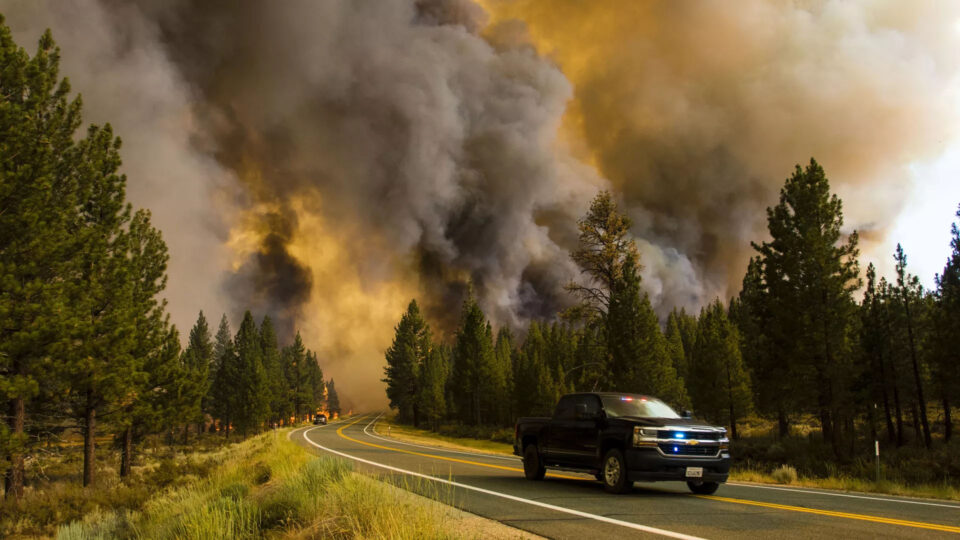
Forests are known to be a key natural solution to the increasing amounts of carbon dioxide in the atmosphere.  For this reason, there are widespread efforts to plant more trees around the world and to prevent increasing deforestation for development and agriculture.  But a new study has highlighted the fact that wildfires in the western US are degrading the potential for forests to help curb climate change.

The study has established a baseline for how much carbon is currently stored in Western forests, how that amount is changing, and how fires and droughts are affecting the ability of the forests to mitigate climate change.

The study made use of survey data collected by the US Forest Service to estimate how much carbon is stored in 19 ecoregions across the West.  These ecoregions range from hot and dry areas in the Southwest to the wet and cool regions of the Pacific Northwest.

The study reveals that the carbon stored in living trees declined across much of the Western US between 2005 and 2019.  Carbon stored in dead trees and woody debris increased.  These things do not provide long-term carbon storage.  Instead, they release it back into the atmosphere through decomposition or combustion in forest fires.

The increasing frequency and intensity of wildfires, especially since 2020, indicate that the decline in live carbon stored in the forests will become increasingly pronounced.  The result, according to the study’s authors, is that we cannot rely on increasing carbon storage in Western US forests.  It may be possible to increase the stability of carbon storage in the forests with mechanical thinning and prescribed burning, but the carbon carrying capacity of those forests is not likely to be what is needed.

**********

Web Links

Forest carbon storage has declined across much of the Western US, likely due to drought and fire

Photo, posted July 25, 2021, courtesy of Felton Davis via Flickr.

Earth Wise is a production of WAMC Northeast Public Radio
Geological thermal energy storage

August 7, 2024 By EarthWise Leave a Comment

The electricity grid is increasingly using solar and wind power.  Depending on those two sources requires the ability to store energy to have on hand when the sun isn’t shining and the wind isn’t blowing.   Energy needs to be stored away to be used hours, days, or even weeks after it is produced.

Energy storage is booming.  California has increased its energy storage capacity tenfold in recent times.  One day in April, storage batteries were the largest source of electricity in the state for a period of two hours.  But batteries are not the only way to store energy.  There are chemical, electrochemical, mechanical, and thermal methods that each has potential advantages and unique features.

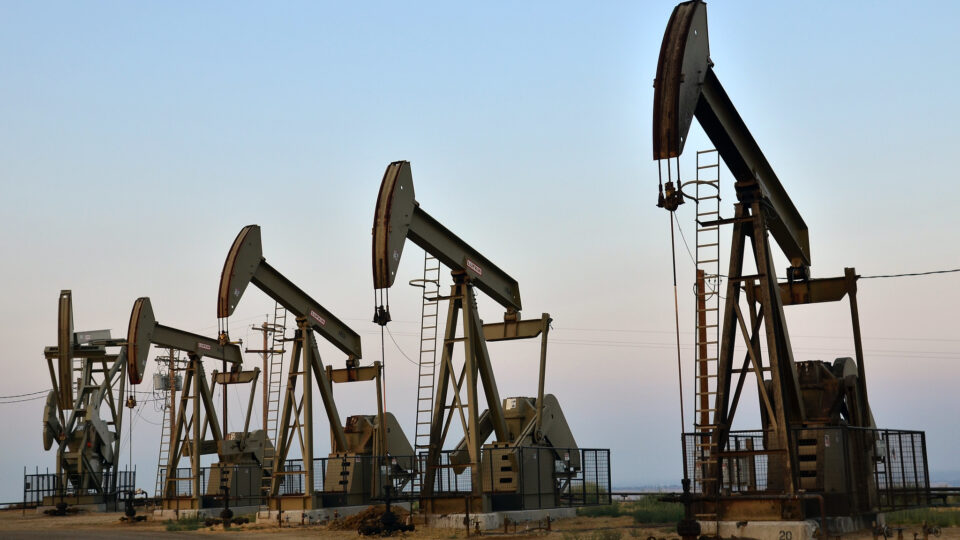
A project in Kern County, California, is making use of an abandoned oil field to create a long-term energy storage installation.  The plan is to retrofit depleted oil wells to store concentrated solar energy in superheated groundwater for long periods of time.  The stored heat can then be used to drive turbines when electricity is needed.

Some 1,200 feet below the surface of the oil field are pockets of permeable sandstone that have been emptied of the oil they previously contained.   An array of parabolic mirrors will gather solar energy that will heat silicon oil in an underground loop to 700 degrees Fahrenheit.  The oil pipeline will heat up groundwater down below.  When electricity is needed, the heated groundwater will be brought to the surface to operate turbines.

There is no new technology involved.  The individual aspects have never all been combined before, but the likelihood of success is high.  There are lots of depleted oil fields that could be used this way in the future.

**********

Web Links

Can a California Oilfield Be Retrofitted to Store Solar Energy?

Photo, posted July 18, 2017, courtesy of John Ciccarelli / BLM via Flickr.

Earth Wise is a production of WAMC Northeast Public Radio
Much more energy storage for New York

August 2, 2024 By EarthWise Leave a Comment

As solar and wind power play an ever-growing role in the electricity grid, the need for energy storage also grows.  Even if sun and wind can provide more energy than is needed at a particular time, they can’t provide it at all times.  The ability to store excess energy waiting in reserve for when the sun and wind are not providing it is essential to avoid the need for burning fossil fuels to take up the slack.

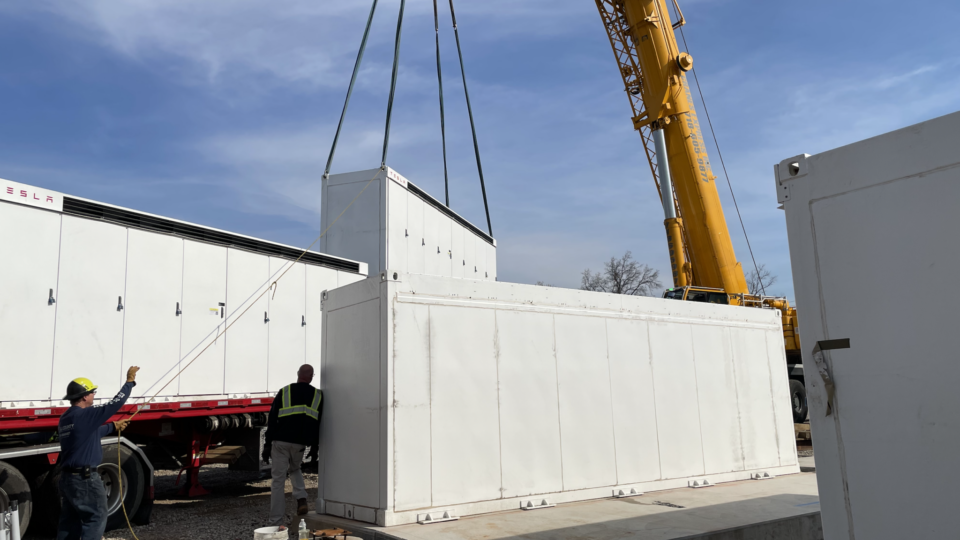
The New York State Public Service Commission has announced that it has approved a new framework for the state to have in place a nation-leading six gigawatts of energy storage by 2030.  This represents at least 20% of the peak electricity load of New York State.

An extensive set of recommendations to expand New York’s energy storage programs describe cost-effective ways to unlock the rapid growth of renewable energy across the state as well as to bolster the reliability of the grid.  The buildout of storage deployment is estimated to reduce projected future statewide electric system costs by nearly $2 billion.  New York has previously established goals to generate 70% of its electricity from renewable sources by 2030 and 100% zero-emission electricity by 2040.

The new roadmap includes programs to procure an additional 4.7 gigawatts of new energy storage projects across large-scale, retail, and residential energy storage sectors across the state.  These future procurements, when combined with the 1.3 gigawatts already being procured or under contract, will allow the State to achieve the 6-gigawatt goal by 2030.

Energy storage plays a critical role in decarbonizing the grid, reducing electricity system costs, and improving the reliability of the electricity system.

**********

Web Links

New York approves plan to add six gigawatts of energy storage by 2030

Photo courtesy of NineDot Energy.

Earth Wise is a production of WAMC Northeast Public Radio
Around-the-clock clean energy

June 14, 2024 By EarthWise Leave a Comment

Using solar and wind power can go a long way toward replacing fossil fuel-generated electricity, particularly with the addition of battery energy storage.  But because of the intermittent nature of both sun and wind, other sources are still needed.  There is also the need for ways to produce high temperature for industrial processes.  Complete decarbonization will require a host of complementary technologies.

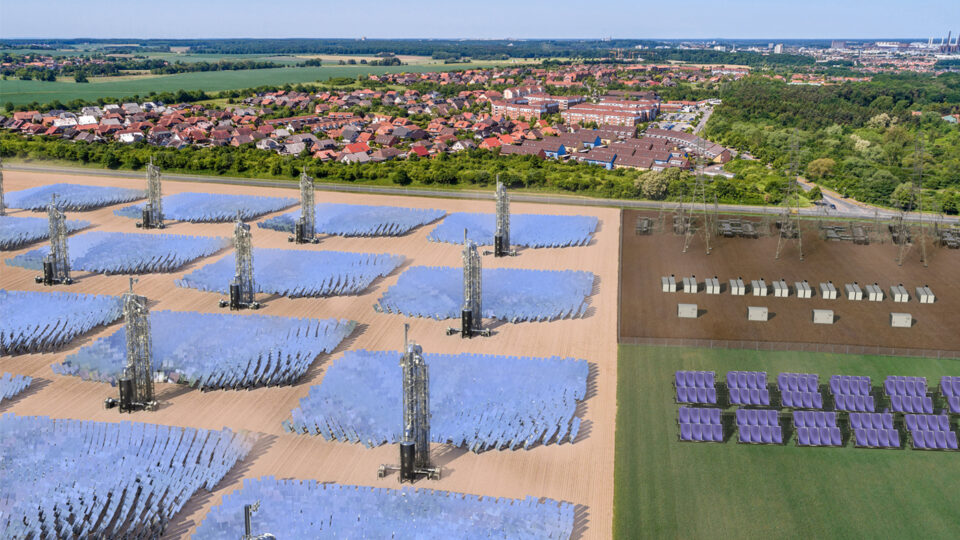
A spinout company from MIT called 247Solar is building high-temperature concentrated solar power systems that make use of overnight thermal energy storage to provide electric power around the clock as well as industrial-grade heat.

The system uses a field of sun-tracking mirrors to reflect sunlight to the top of a central tower.  A proprietary solar receiver heats air to over 1,800 degrees Fahrenheit.  The heated air drives turbines that generate 400 kilowatts of electricity and produces 600 kilowatts of heat.  Some of the hot air is routed through a long-duration thermal energy storage system and the stored heat is then used to drive the turbines when the sun isn’t shining.  The unique part of the technology is not the concentrated solar power; it is the solar receiver.

The modular systems can be used as standalone microgrids for communities, or to provide power in remote places.  They can also be used in conjunction with conventional wind and solar farms to enable around-the-clock renewable power.

The first deployment will be with a large utility in India.  If it is successful, 247Solar hopes to scale up rapidly with other utilities, companies, and communities around the globe.

**********

Web Links

Offering clean energy around the clock

Photo credit: 247Solar.

Earth Wise is a production of WAMC Northeast Public Radio
California renewable energy

June 12, 2024 By EarthWise Leave a Comment

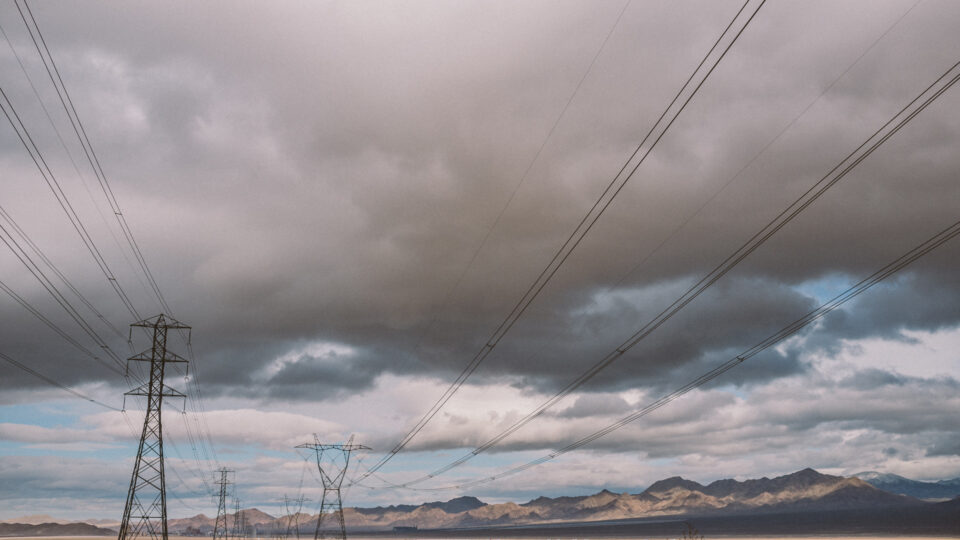
Renewable energy in California exceeding 100% of energy demand

California has aggressively pursued the use of renewable energy, particularly solar and wind power.  Last year, renewables supplied 54% of the state’s electricity needs.  This year, California has been achieving some remarkable milestones with its renewable energy.

As of May 26th, California had produced more than 100% of its electricity demand with wind, solar, and hydropower for parts of 51 straight days and 75 out of 81 days.  On May 25th, California’s grid ran entirely on renewable energy for 10.1 straight hours and renewables provided 83% of the state’s electricity for the entire 24-hour period.  California uses more electricity than any other state apart than Texas, which uses more than half its energy for operating refineries and petrochemical plants.

Excess power in California is either exported to other states or is used to charge up the state’s growing arrays of energy storage batteries.  California has the largest grid-connected battery storage facility in the world, located in Kern County.  The facility can store nearly 3,300 megawatt-hours of energy.

The ability to produce more power than the state needs occurs during the day when the sun is shining, and when many people are not at home.  At night, demand goes up and solar power is not available.  But as the quantity of energy storage available continues to grow along with additional solar installations, California will ultimately be able to wean off of the gas-fueled power plants it predominantly uses at night.

According to some experts, California may operate entirely on renewables and battery storage as soon as 2035. 

**********

Web Links

California exceeds 100% of energy demand with renewables over a record 30 days

Photo, posted January 11, 2016, courtesy of Jared Eberhardt via Flickr.

Earth Wise is a production of WAMC Northeast Public Radio

Gravity storage on the grid

June 4, 2024 By EarthWise Leave a Comment

For the past several years, the Swiss-based company Energy Vault has been developing an energy storage system based on the principle of using mechanical devices to lift heavy concrete blocks into stacks using power generated by wind turbines or other renewable sources.  When energy is needed, the blocks are lowered back to the ground, spinning generators in the process.

The principle of storing energy in the form of gravitational potential energy is the most widely used form of energy storage in existence but usually works by pumping water into a reservoir at higher elevation and then letting the water come back down when energy is needed.

Energy Vault has built a grid-scale 100 MWh gravity storage system in Rudong China.  It has now been successfully tested with charging and discharging and has been commissioned. Pending final provincial and state approvals, it will be the world’ first commercial, utility-scale non-pumped hydro gravity energy storage system.

The Rudong project teamed Energy Vault with environmental management company CTNY and Atlas Renewable.  Energy Vault has extended its license agreement with Atlas Renewable to 15 years.  CTNY has announced plans for eight additional deployments of the Energy Vault gravity storage system across China, representing more than 3.7 GWh of energy storage.

Energy Vault’s technology has attracted a fair amount of skepticism from parts of the energy community based on the environmental burdens of concrete as well as durability issues.  It appears the technology will have significant real-world testing in China, which should provide unambiguous answers to everyone’s questions.

**********

Web Links

Energy Vault Announces Successful Testing and Commissioning of First EVx 100 MWh Gravity Energy Storage System by China Tianying, Extension of Atlas Renewable Licensing Agreement to 15 Years

Photo, posted December 21, 2018, courtesy of Nancy Winfrey via Flickr.

Earth Wise is a production of WAMC Northeast Public Radio
Giant batteries and the grid

May 31, 2024 By EarthWise Leave a Comment

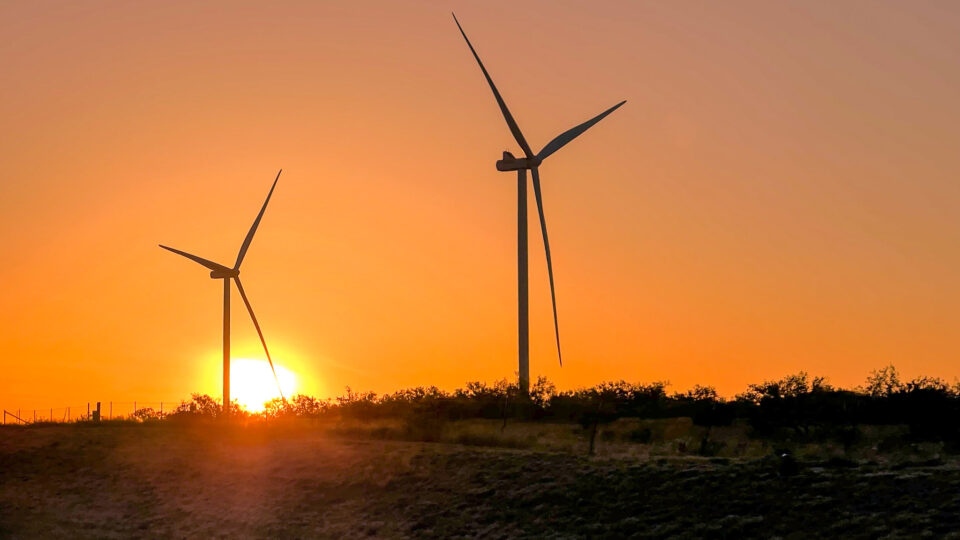
Giant batteries are transforming how electricity is used

All across the country, electric utility companies are starting to use giant batteries to counteract the biggest weakness of renewable energy; namely, that the sun doesn’t always shine, and the wind doesn’t always blow.  Solar panels and wind turbines can keep generating energy when people don’t need it and batteries can store up that energy for when they do.

Over the past three years, battery storage capacity on US grids has grown by a factor of ten adding up to 16 gigawatts.  This year, it is expected to double again, led by massive growth in Texas, California, and Arizona.

California generates more electricity from solar power than any other state.  But it has a timing problem:  solar power is plentiful during the day, but it disappears in the evening when people get home from work and start using lots of electricity.  The previous solution was to burn lots of fossil fuel to produce it.

This has been changing thanks to battery storage.  Since 2020, California has installed more giant batteries than anywhere else in the world other than China.  Batteries are gradually replacing fossil fuels for California’s evening power needs.  On the evening of April 30th, for example, batteries supplied more than 20% of California’s electricity.  This is equivalent to the output of seven large nuclear reactors.

Batteries have multiple uses in the grid.  They handle big swings in generation from renewable sources, they reduce congestion on transmission lines, and they help to prevent blackouts during heat waves.  Batteries are starting to eat into the market for fossil fuels and will play an ever-growing role in the electricity grid.  As the role of renewables grows, so will the role of batteries.

**********

Web Links

Giant Batteries Are Transforming the Way the U.S. Uses Electricity

Photo, posted December 5, 2022, courtesy of Jonathan Cutrer via Flickr.

Earth Wise is a production of WAMC Northeast Public Radio

Marine carbon dioxide removal

May 23, 2024 By EarthWise Leave a Comment

Marine CO2 removal

About 30% of the carbon dioxide emitted by human activity is absorbed by the oceans.  As a result, they are getting warmer and more acidic, and the currents that help shape global weather are shifting.  To try to reduce global warming, people want to be able to store even more carbon dioxide in the oceans without the negative effects of doing so.

There are multiple efforts across the globe to achieve effective marine carbon dioxide removal.  Some are based on sinking carbon-rich materials to the bottom of the sea.  This is the marine equivalent of capturing CO2 from the air and storing it underground.  Other efforts involve increasing the alkalinity of the ocean, which increases its ability to chemically react with carbon dioxide as well as lowers its acidity, which is desirable in many ways.

Running Tide, a U.S.-based company, has been dumping thousands of tons of wood-industry waste 190 miles off the coast of Iceland.  The company has also been experimenting with dumping algae and kelp and sinking it deep below the ocean.  Such materials on land either get burned or decay, in both cases releasing CO2 into the atmosphere.  On the deep-sea bottom, the carbon is trapped.

Other efforts involve pumping seawater through electrodialysis filter systems to remove excess acidity or adding alkaline rocks to increase water alkalinity.

All of these efforts are a form of geoengineering, and like proposed ideas to cool the atmosphere, pose potential risks.  There is no silver bullet to solve the climate crisis.  It will take a combination of many solutions to address the issue of excess carbon dioxide in the atmosphere.  Marine carbon dioxide removal is one of the solutions that may play a role.

**********

Web Links

Scientists Are Trying to Coax the Ocean to Absorb More CO2

Photo, posted February 22, 2018, courtesy of Bobbie Halchishak/USFWS via Flickr.

Earth Wise is a production of WAMC Northeast Public Radio

The cost of methane emissions

April 26, 2024 By EarthWise Leave a Comment

Stanford University-led research has determined that American oil and gas operations are emitting more than 6 million tons of methane each year.  The emissions come from both intentional vents and unintentional leaks. 

Methane is the main component of natural gas and losing that much of it through leakage is costing the industry a billion dollars a year just in lost revenue.  Adding in the harm to the economy and human well-being caused by adding this much potent greenhouse gas to the atmosphere is estimated to increase the cost of these emissions to $10 billion a year.

These emission and cost estimates are roughly three times the level predicted by the U.S. government.  The Stanford numbers are based on roughly a million aerial measurements of wells, pipelines, storage, and transmission facilities in six of the nation’s most productive oil and gas regions located in Texas, New Mexico, California, Colorado, Pennsylvania, and Utah.  These areas account for 52% of U.S. onshore oil production and 29% of gas production.

The survey also found that fewer than 2% of the methane emitters are responsible for 50-80% of emissions in four of the regions.  It also found that midstream infrastructure – which includes gathering and transmission pipelines, compressor stations, and gas processing plants – is responsible for about half of total emissions.

While the federal government estimates that methane leakage averages about 1% of gas production, the new survey puts the number at 3%, and some regions lose almost 10% to leakage.

Better tracking and fixing these leaks – especially the larger ones –  is essential for climate change mitigation.

**********

Web Links

Methane emissions from U.S. oil and gas operations cost the nation $10 billion per year

Photo, posted June 5, 2015, courtesy of Dave Houseknecht / USGS via Flickr.

Earth Wise is a production of WAMC Northeast Public Radio
Storing carbon underground and abandoned wells

April 18, 2024 By EarthWise Leave a Comment

Energy companies pushing for expansion of underground carbon storage

Using government support in the form of subsidies and tax credits, energy companies and others are planning to capture millions of tons of industrial carbon dioxide emissions and pipe the greenhouse gas into underground storage.  It is a strategy enthusiastically supported by the fossil fuel industry because it allows them to keep burning the stuff.

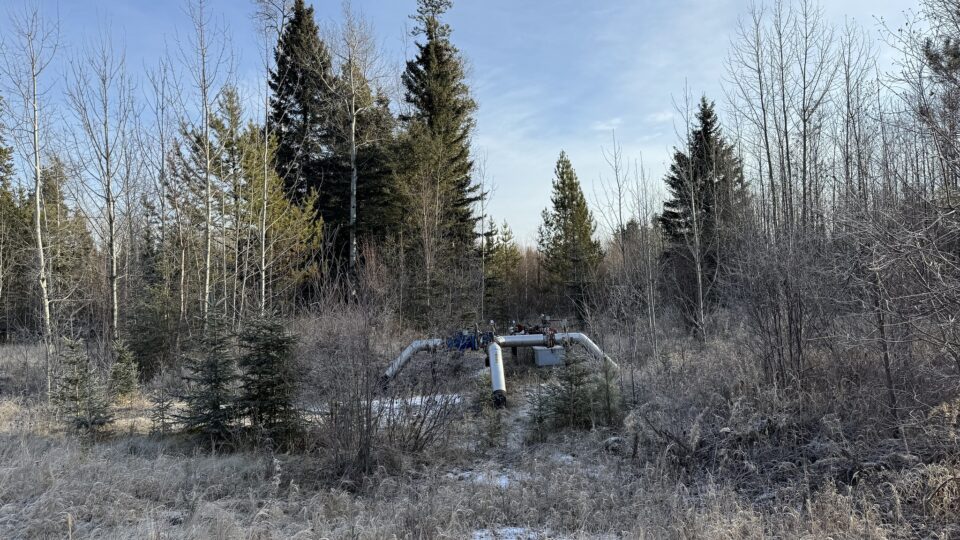
There are currently 69 projects being reviewed by federal and state regulators seeking to store CO2 underground.  The sorts of places where carbon dioxide can be injected are geologic zones containing porous rock formations which, in no way coincidentally, are the same places where oil and gas deposits are found.  As a result, these places are studded with abandoned wells that have accumulated over the past century.

In Louisiana, there are about 120,000 abandoned wells that overlie geological zones that could store carbon dioxide.  Environmental watchdog groups have identified numerous abandoned wells within a few miles of proposed storage sites.

The problem is that abandoned wells leak – even ones that have been plugged – and many haven’t been.  The question is how much leakage will occur and what will be the consequences of the leakage.  In Texas, pumping oilfield wastewater into abandoned wells has led to geysers of toxic water, artificial saline lakes, and earthquakes.

Underground carbon dioxide sequestering on a scale large enough to really matter will have to extend to very large areas.  For example, injecting 100 million tons per year could create a pressurized zone as large as 100 miles.  How large a problem this might create from abandoned wells in the zone is not at all clear but cannot be ignored.

**********

Web Links

Companies Are Poised to Inject Millions of Tons of Carbon Underground. Will It Stay Put?

Photo, posted December 3, 2023, courtesy of Jason Woodhead via Flickr.

Earth Wise is a production of WAMC Northeast Public Radio
Lithium in Arkansas

April 11, 2024 By EarthWise Leave a Comment

New method being explored to tap lithium deposits in Arkansas

There are more and more electric cars on the road and utilities are installing record amounts of battery storage to back up solar and wind power generation.  Both of these things currently use lithium-ion batteries so the need for them keeps growing.

There is actually plenty of lithium in the world.  Sources of more than 100 million tons have been identified, which is enough to meet the projected needs for decades.  But lithium is not easy, cheap, or environmentally friendly to extract.  It is either blasted out of rocks that are then roasted at 2000-degree temperatures, or it is extracted from brine in places like the high Andes where it leaves behind toxic residues.  Ramping up lithium production could greatly diminish the environmental benefits derived from green technologies.

A technique called direct lithium extraction, or DLE, may be a possible solution.  The lithium is pulled out of brine while leaving other dissolved compounds behind.  It is being tested in many places around the world and appears to offer the lowest negative impacts of available extraction technologies.

The Salton Sea area in California has rich deposits of lithium and is a good candidate for DLE.  But conditions may be even better in Arkansas whose Smackover Formation is a brine-rich expanse of limestone. 

The area was a productive oil field a hundred years ago and then undertook brine-processing in the 1950s to extract bromine.  So, the area already has industrial infrastructure and no new land would need to be cleared.

The former oil fields of Arkansas may become an important domestic source of lithium.

**********

Web Links

In Rush for Lithium, Miners Turn to the Oil Fields of Arkansas

Photo, posted February 26, 2021, courtesy of Ivan Radic via Flickr.

Earth Wise is a production of WAMC Northeast Public Radio
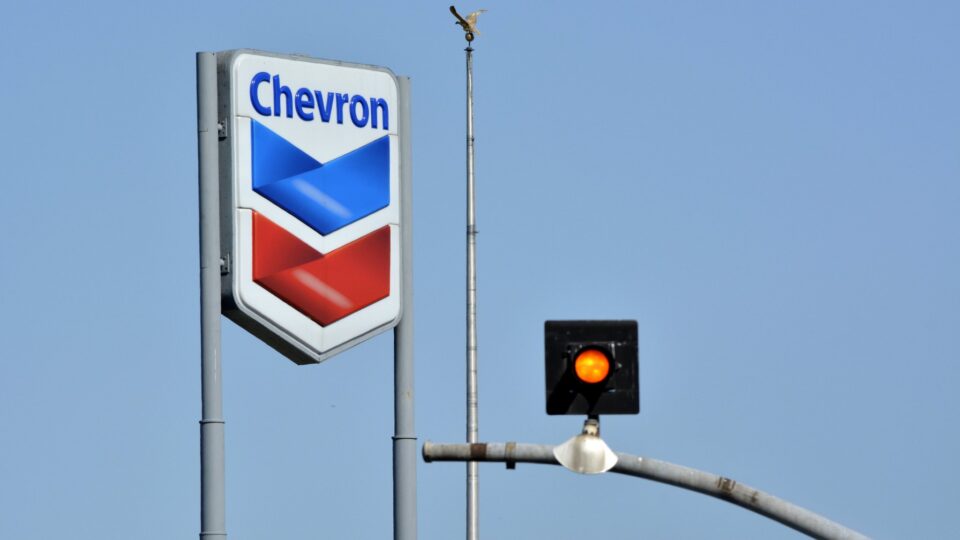
A giant underground battery

February 5, 2024 By EarthWise Leave a Comment

Building a giant underground battery

Two up-and-coming energy technologies are coming together near a tiny town in central Utah.  Outside of the town of Delta, population 3,600, two caverns, each as deep as the Empire State Building, are being created from an underground salt formation to be used to store hydrogen gas.  The gas will be used as a fuel in a new electricity generation plant.

The plant will replace an aging local coal-fired power plant.  The new plant will burn a mixture of natural gas and hydrogen – green hydrogen produced without emitting greenhouse gases. To produce the hydrogen, the facility will operate 40 giant electrolyzers that will use excess solar and wind power generated at times of low demand to split water molecules into hydrogen and oxygen.

The caverns were created by a process called solution mining in which high-pressure water is pumped down into salt deposits that are dissolved. The resulting caverns are 200 feet in diameter and 1,200 deep and lie 3,000 to 4,000 feet below the surface.  Hydrogen cannot escape through the thick salt layers.

The amount of energy that can be stored in the form of hydrogen fuel in these caverns is massive – far more than all the battery storage installed in the U.S. to date.  Chevron has a majority stake in one of the projects and will supply the natural gas.  The facility is expected to go online in 2025.

While this will produce far fewer emissions than existing coal plants, it is not carbon-free.  Currently, turbine technology cannot operate with pure hydrogen fuel.  The Delta plant will run on only 30% hydrogen.  The hope is that turbine technology will improve in the future and permit operation on pure hydrogen.

**********

Web Links

A Huge Underground Battery Is Coming to a Tiny Utah Town

Photo, posted September 9, 2013, courtesy of Scott via Flickr.

Earth Wise is a production of WAMC Northeast Public Radio
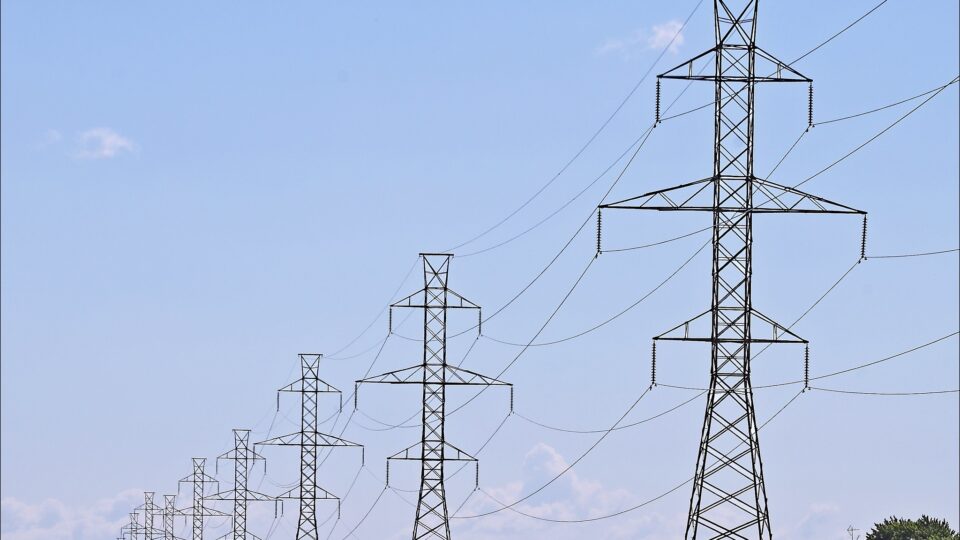
Cleaning the grid can create messes

January 9, 2024 By EarthWise Leave a Comment

Renewables can create messes in the grid

The electric grid is increasingly embracing renewable energy sources like solar and wind power as well as the energy storage systems that support them.  These generation sources differ from traditional sources in that they produce direct current electricity rather than alternating current electricity.  Our power grid runs on alternating current.  Traditional generators produce alternating current that synchronizes with the grid.  Wind and solar power connect to the grid using electronic power converters called inverters that produce the required alternating current. 

All of this technical detail is something we don’t pay much attention to, except that the current state of inverter technology can lead to some problems that don’t exist with a fully synchronous power system. 

The electric grid frequently experiences disruptive events like trees falling on powerlines, squirrels shorting out substation equipment, and so on.  These things normally don’t cause widespread trouble, although there have been notable exceptions such as the massive Northeast blackout of 2003 triggered by an overloaded transmission line drooping onto foliage.

The issue with inverters is that they can shut down in the presence of certain disturbances to the grid.  This has happened on a number of occasions and has exposed vulnerabilities that need to be addressed by the industry.  Inverter-based resources currently constitute only a relatively small fraction of the grid, but that fraction is growing steadily and can have an increasingly widespread impact.  The grid was built predominantly for synchronous generation, and it must be adapted and improved to assure the reliability that is required and expected.  It is an issue that can’t be ignored.

**********

Web Links

Renewables are cleaning the grid. They’re also messing it up

Photo, posted July 5, 2017, courtesy of Sue Thompson via Flickr.

Earth Wise is a production of WAMC Northeast Public Radio
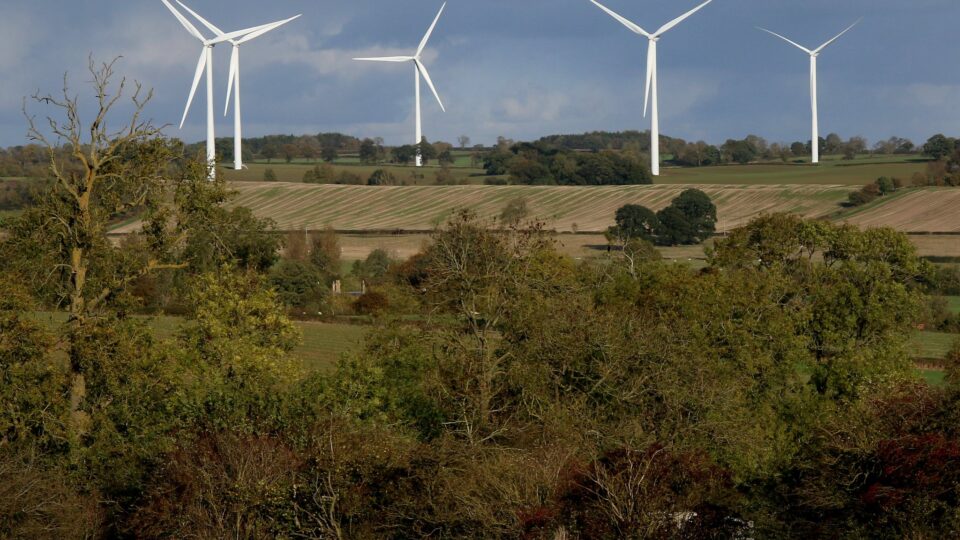
Powering Britain with sun and wind

November 8, 2023 By EarthWise Leave a Comment

The United Kingdom is quite small in size compared with the US, but its population of 67 million makes it a fairly large country with substantial energy needs.  A recent study by Oxford University looked at the ability of wind and solar power to provide for those energy needs over the course of time.

According to the study, Britain’s energy needs could easily be met entirely by the two sources of clean power.  Wind and solar can provide significantly more energy than the highest energy demand forecasted for 2050 and nearly 10 times the current electricity demand. 

Britain currently requires 299 TWh per year.  The Oxford study found that wind and solar could generate as much as 2,896 TWh per year. Furthermore, the researchers stated that these estimates are intentionally conservative, taking into account concerns around land use and the visual impact of installations.

The analysis assumes that offshore wind would produce nearly three-quarters of the energy required.  Onshore wind would contribute about 7%, while taking up only 0.07% of the country’s land.  Utility-scale solar would add about 19% of the power.  The small remainder comes from rooftop solar.  The researchers do point out that the power grid would require significant upgrades to handle all this renewable energy and that there would need to be appropriate quantities of energy storage. 

According to the authors of the study, achieving these results is a question of ambition rather than technical feasibility.  So far, the UK government has not been aggressive in making the transition to renewable energy.

**********

Web Links

Wind and solar power could significantly exceed Britain’s energy needs

Photo, posted November 4, 2021, courtesy of Steve Knight via Flickr.

Earth Wise is a production of WAMC Northeast Public Radio

Hydrogen hubs

November 2, 2023 By EarthWise Leave a Comment

The Infrastructure Investment and Jobs Act of 2021 earmarked $7 billion in federal funding aimed at accelerating the commercial-scale deployment of hydrogen as well as driving down its cost.  Clean hydrogen is considered to be a key technology for cleaning up hard-to-decarbonize industrial sectors like refining, chemicals, and heavy-duty transport. 

On October 13th, the Department of Energy named seven regional clean hydrogen hubs which will provide clean hydrogen production, storage, delivery, and end-use components.  The so-called H2Hubs are expected to collectively produce three million metric tons of hydrogen annually. 

One selected project is the Appalachian Hydrogen Hub that includes West Virginia, Ohio, Kentucky, and Pennsylvania.  Another is the California Hydrogen Hub, that will produce hydrogen exclusively from renewable energy and biomass.  Then there is the Gulf Coast Hydrogen Hub, centered in the Houston, Texas region.  A fourth hub is the Heartland Hydrogen Hub, which includes Minnesota, North Dakota, and South Dakota.  A fifth hub is the Mid-Atlantic Hydrogen Hub, that includes Pennsylvania, Delaware, and New Jersey.  The sixth is the Midwest Hydrogen Hub that includes Illinois, Indiana, and Michigan.  Finally, there is the Pacific Northwest Hydrogen Hub that includes Washington, Oregon, and Montana.

Each of these hubs involve multiple partner organizations in their regions and each has specific goals and strategies. The seven centers are located all around the country and are intended to jumpstart a national network of clean hydrogen producers, consumers, and connective infrastructure.

**********

Web Links

Hydrogen hubs have arrived. Here are the big winners of the $7 billion sweepstakes

Photo, posted August 17, 2010, courtesy of David Stanley via Flickr.

Earth Wise is a production of WAMC Northeast Public Radio
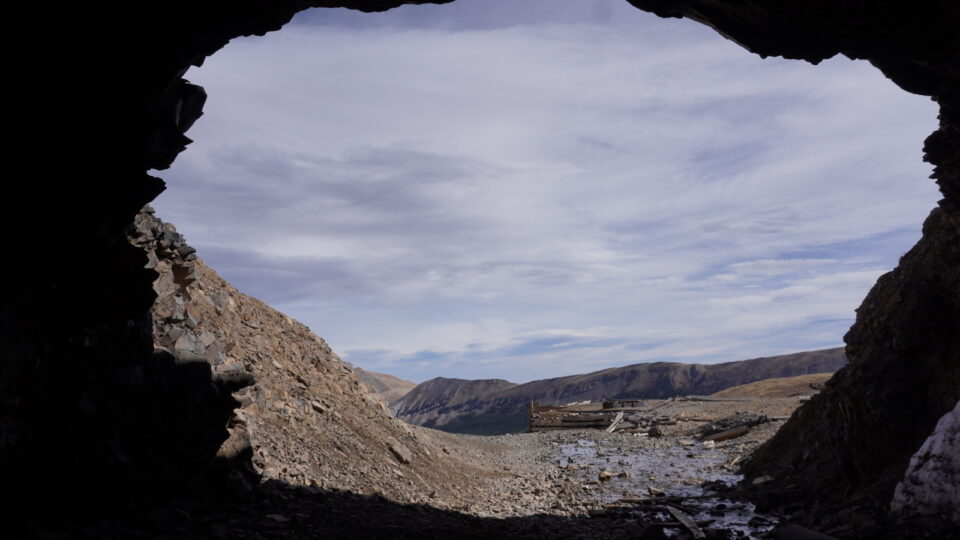
Storing Energy In Abandoned Mines | Earth Wise

October 10, 2023 By EarthWise Leave a Comment

Using abandoned mines to store energy

An international study led by researchers from Austria has developed a novel way to store energy by transporting sand into abandoned underground mines.  The technique is called Underground Gravity Energy Storage or UGES.

As the world deploys growing amounts of wind and solar energy, it is increasingly important to find ways to accessibly and efficiently store that energy to eliminate the inherent variability of the generation.  There are many ways to store energy on a short-term basis – most commonly in batteries – but cost-effective long-term storage is still in its early stages.

The UGES technique generates electricity by lowering sand into an underground mine thereby converting the potential energy of the sand into electricity by the same regenerative braking effect used in hybrid and electric cars.  The lowering sand operates a generator.   Storing energy is accomplished by lifting the sand from the mine with electric motors to an upper reservoir where it is ready for the next cycle.  By its nature, this storage technique has an indefinite duration, unlike batteries, for example, which lose energy to self-discharge.

The main components of UGES are the mineshaft, motor/generator, sand storage sites, and mining equipment.  The deeper and broader the mineshaft, the more power can be extracted from the plant, and the larger the mine, the more energy can be stored. Mines generally already have the basic infrastructure needed and are connected to the power grid.  The researchers estimate that there is global potential of 7 to 70 TWh of storage. Total global generating capacity is currently at the lower end of that range.

**********

Web Links

Turning abandoned mines into batteries

Photo, posted October 21, 2020, courtesy of Christine Warner-Morin via Flickr.

Earth Wise is a production of WAMC Northeast Public Radio

A Groundwater Crisis | Earth Wise

September 22, 2023 By EarthWise Leave a Comment

A groundwater crisis is brewing

The majority of U.S. drinking water systems rely on groundwater, as do America’s farms.  Even though groundwater is a crucial resource for the country, there is no central oversight or even monitoring of its status across the country.  The health of the country’s aquifers is difficult to gauge.

The New York Times spent months amassing data from 80,000 wells across the country by reaching out to federal, state, and local agencies nationwide.

The survey found that 45% of the wells examined showed a statistically significant decline in water levels since 1980.  Forty percent of the sites reached record-low water levels over the past 10 years, with last year the worst yet.

Over pumping is the biggest problem.  State regulations tend to be weak and there is no federal oversight.  The warming climate reduces snowpack, which means less water in rivers, increasing the need to tap into groundwater.  Warmer weather means thirstier plants, increasing the demand for water.

It is a nationwide problem, not just one in the drought-ridden West.  Arkansas, which produces half of the country’s rice, is pumping groundwater twice as fast as nature can replace it.  Three-quarters of Maryland’s wells have seen substantial drops in water levels.

As groundwater is pumped out, the empty space can collapse under the weight of the rock and soil above it, permanently diminishing the capacity for future groundwater storage.

There are likely to be parts of the U.S. that run out of drinking water and groundwater depletion threatens America’s status as an agricultural superpower. Objectively, the status of American groundwater is a crisis that threatens the long-term survival of communities and industries that depend on it. 

**********

Web Links

Five Takeaways From Our Investigation Into America’s Groundwater Crisis

Photo, posted July 25, 2009, courtesy of Chris Happel via Flickr.

Earth Wise is a production of WAMC Northeast Public Radio

Grid-Scale Gravity Energy Storage | Earth Wise

September 19, 2023 By EarthWise Leave a Comment

As wind and solar energy play a growing part in our energy system, the need for grid-scale energy storage is growing as well.  An historic form of energy storage and still the largest in installed capacity is pumped hydro storage, which makes use of the potential energy contained in having water sitting at a higher elevation where it can be released downward to operate turbine generators.  This is an effective system but is limited to places where geography cooperates.

For the past five years, a company called Energy Vault has been developing a system that uses the same principle to generate electricity but instead of pumping water to a higher elevation, it uses mechanical devices to lift heavy objects such as concrete blocks to an appropriate height.  Lowering the blocks back to the ground drives generators.

To date, Energy Vault has only built demonstration systems with a fraction of the storage capacity needed for grid-scale operation. Their EV1 Tower in Switzerland was successfully grid interconnected in 2020 and demonstrated round-trip efficiency (the fraction of the energy stored that was produced by the generators) above 75%.  Their improved EVx system is expected to do better than 80%.

This year the company, along with partners Atlas Renewable and China TIanying, is now in the first phases of commissioning a grid-scale system located outside of Shanghai, China.  The 25-MW system is built adjacent to a wind farm and a national grid interconnection site

This is the first grid-scale gravity energy storage system and is expected to be fully online in the fourth quarter of this year.  A second, similar system is now under contract to be built elsewhere in China.

**********

Web Links

First grid-scale gravity energy storage system undergoes commencement in China

Photo courtesy of Energy Vault.

Earth Wise is a production of WAMC Northeast Public Radio

Lakes Are Shrinking | Earth Wise

September 11, 2023 By EarthWise Leave a Comment

A study by the University of Colorado Boulder has found that more than half of the world’s largest lakes have shrunk over the last three decades.  This is a very big problem because about one-quarter of the Earth’s population lives in the basin of a drying lake.  People depend on lakes for drinking water and irrigation and lakes are central to the survival of local ecosystems as well as migrating birds.  Lakes cover only about 3% of the planet, but they hold nearly 90% of the liquid surface freshwater.

The study used satellite observations from 1992 to 2020 to estimate the area and water levels of nearly 2,000 freshwater bodies.  These account for 96% of Earth’s total natural lake storage and 83% of that in man-made reservoirs.  About 53% of the world’s lakes have clearly shrunk, while only 22% have gained water.  The study estimates that about 160 trillion gallons of water has been lost over the 28-year period.  That’s about 17 times the maximum capacity of Lake Mead, the largest reservoir in the United States.

Many of the world’s most significant lakes have been shrinking. The dramatic declines in Lake Mead have been headline news for years.  The Caspian Sea, which is the world’s largest inland body of water – has long been declining.

The main causes of the decline in natural lakes are climate change and human consumption.  Reservoirs face an additional major problem of sediment buildup which reduces their storage capacity and diminishes their benefits of water supply, flood control, and hydropower.

Lake loss is a big problem.

**********

Web Links

More than half of the world’s largest lakes are drying up

Photo, posted April 10, 2018, courtesy of Ninara via Flickr.

Earth Wise is a production of WAMC Northeast Public Radio

Aluminum In Batteries | Earth Wise

September 1, 2023 By EarthWise 1 Comment

Researchers working on a new battery

Batteries are playing a bigger and bigger role in our lives.  Apart from their use in ubiquitous smartphones, laptops, and other devices, millions of electric vehicles are hitting the roads, and utilities are installing giant banks of batteries to store energy generated by wind and solar farms.

The necessary characteristics of batteries are high energy density and stability.  The latter is needed so that batteries can be safely and reliably recharged thousands of times.  For decades, lithium-ion batteries have been the go-to for all these modern battery applications.  And they have gradually gotten better and cheaper all the time.  But the improvements are getting smaller, and the price reductions have limits.

For these reasons, researchers are always looking for batteries with higher energy density – so that, for example, electric cars can drive farther on a charge – and that can be made more cheaply, are not flammable, and are very stable.

Since the 1970s, researchers have investigated the use of aluminum for the anode of batteries because its properties would allow more energy to be stored.  However, when used in lithium-ion batteries, aluminum developed fractures and failed after a few cycles.

Researchers at Georgia Tech University have developed a type of aluminum foil with small amounts of other materials that create specific microstructures.  Used in battery anodes, this material does not degrade and appears to be a path to a better battery.  When incorporated into a solid-state battery that does not contain the flammable liquid found in standard lithium-ion batteries, the result is a battery that checks most of the boxes in the search for a better battery.

Much more work is needed to assess the potential for the aluminum-based battery, but it looks very promising.

**********

Web Links

Aluminum Materials Show Promising Performance for Safer, Cheaper, More Powerful Batteries

Photo, posted August 27, 2019, courtesy of Marco Verch via Flickr.

Earth Wise is a production of WAMC Northeast Public Radio

  • « Go to Previous Page
  • Page 1
  • Page 2
  • Page 3
  • Page 4
  • Interim pages omitted …
  • Page 7
  • Go to Next Page »

Primary Sidebar

Recent Episodes

  • An uninsurable future
  • Clean energy and jobs
  • Insect declines in remote regions
  • Fossil fuel producing nations ignoring climate goals
  • Trouble for clownfishes

WAMC Northeast Public Radio

WAMC/Northeast Public Radio is a regional public radio network serving parts of seven northeastern states (more...)

Copyright © 2026 ·