• Skip to primary navigation
  • Skip to main content
  • Skip to primary sidebar

Earth Wise

A look at our changing environment.

  • Home
  • About Earth Wise
  • Where to Listen
  • All Articles
  • Show Search
Hide Search
You are here: Home / Archives for starfish

starfish

A starfish to the rescue

June 3, 2025 By EarthWise Leave a Comment

Researchers are trying to reintroduce sunflower sea stars along the Pacific Coast

Beginning in 2013, a mysterious disease associated with a marine heatwave decimated the population of sunflower sea stars.  Those huge, colorful 24-armed starfish thrived along the Pacific Coast between Alaska and Baja California.  But in fairly short order, nearly six billion of the creatures perished, amounting to 94% of the global population.  California lost 99% of its sea stars to the wasting disease.

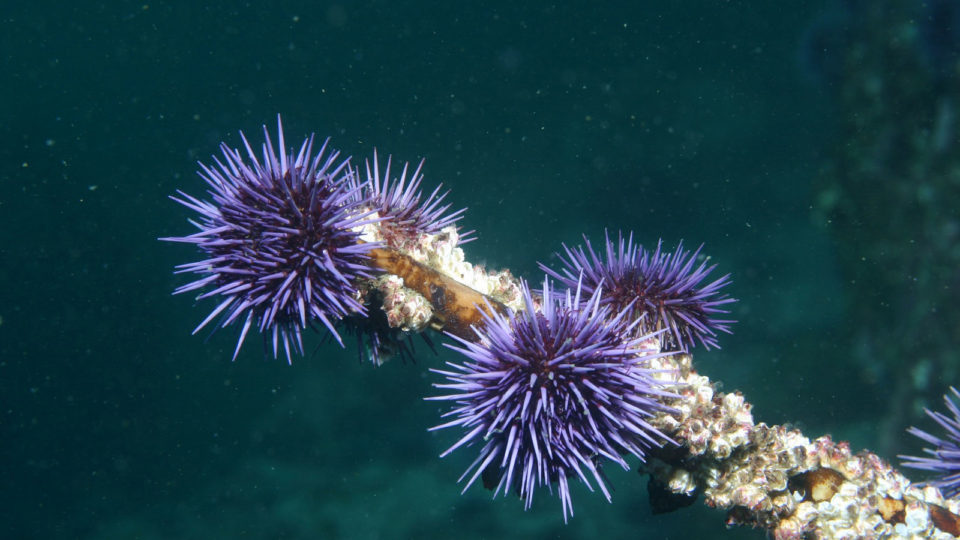
The result was an ecological disaster.  Sunflower sea stars are carnivorous and purple urchins are the mainstay of their diet.  Without sea stars to balance the food web, the urchin population exploded.  Urchins devour kelp and over the past decade, 96% of the region’s kelp forests vanished.  Kelp forests serve as shelter and food for a vast array of marine life and kelp sequesters carbon as much as 20 times more than terrestrial forests.

Researchers in California and Alaska are breeding sunflower sea stars in captivity to try to produce enough of the creatures to support reintroduction.  The first successful spawning of sea stars took place last year at the Birch Aquarium at San Diego’s Scripps Institution of Oceanography.  But all of these are siblings, which is not a desirable breeding stock for a new population.  So, they are now working with the Alaska SeaLife Center, which has the largest collection of the animals in the world.  The center will provide animals to introduce genetic diversity to the growing population in captivity.

The hope is to be able to reintroduce sea stars to the Pacific region within three to five years.

**********

Web Links

A rare, giant starfish could hold the key to restoring kelp forests on the California coast

Photo, posted November 11, 2007, courtesy of Patrick Briggs via Flickr.

Earth Wise is a production of WAMC Northeast Public Radio
Some Good News For The Great Barrier Reef | Earth Wise

September 5, 2022 By EarthWise Leave a Comment

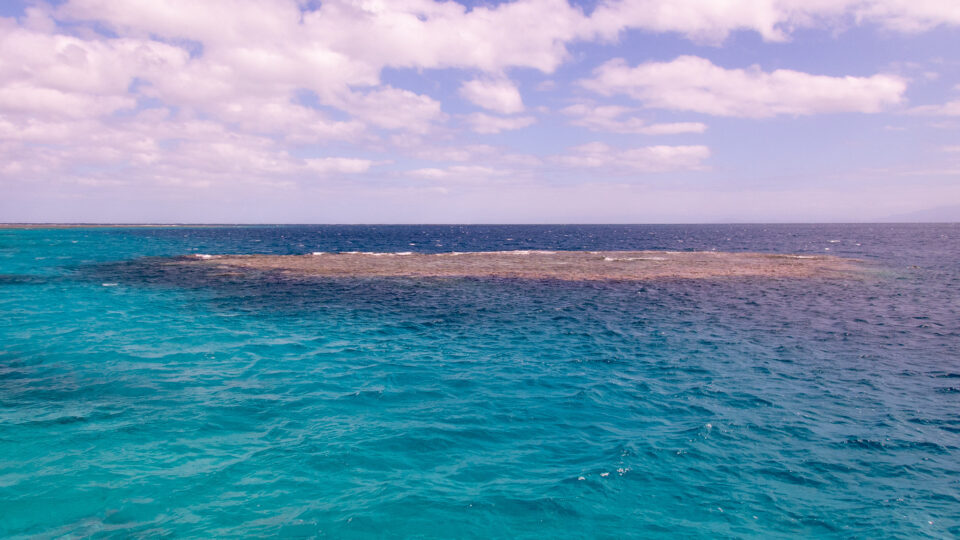
It seems like there has been nothing but dire news from Australia’s Great Barrier Reef.  Earlier this year, there was yet another mass bleaching event – the fourth in seven years and the first ever to strike during a cooler La Niña phase in the Pacific.  But this bleaching event was less severe than other recent ones, which makes it possible for parts of the reef to bounce back.

In particular, in the northern and central stretches of the reef, scientists have recorded the most extensive coral cover seen in 36 years of study.  In areas where coral cover has expanded, it is mostly fast-growing Acropora corals driving the growth.  That isn’t the best outcome, given that Acropora are particularly vulnerable to strong waves, highly susceptible to bleaching, and are the preferred target of crown-of-thorns starfish.

Those creatures are a major problem for the Great Barrier Reef.  In contrast to the upper stretches of the reef, the southern third actually saw coral cover drop from 38 to 34 percent over the course of the past year.  Scientists blame the decline on an outbreak of crown-of-thorns starfish, which prey on corals.  The starfish grow faster and eat more in warmer, more acidic waters.   Carbon emissions are both raising ocean temperatures and turning waters more acidic.

The large increases in hard coral cover in the reef are certainly good news, but it is important to understand that they can be quickly negated by disturbance on reefs where Acropora corals predominate.  Warming temperatures and mass bleaching events continue to pose a critical threat to all reefs, especially when there are crown-of-thorns starfish outbreaks and increasing frequency of tropical cyclones.

**********

Web Links

Parts of Great Barrier Reef See Most Extensive Coral Cover In 36 Years

Photo, posted July 15, 2019, courtesy of Kenneth Lu via Flickr.

Earth Wise is a production of WAMC Northeast Public Radio.

The Cockroaches Of The Ocean

December 14, 2018 By EarthWise Leave a Comment

https://earthwiseradio.org/wp-content/uploads/2018/12/EW-12-14-18-The-Cockroaches-of-the-Ocean.mp3

The coast of Northern California is home to underwater forests – huge, sprawling tangles of brown seaweed.  Kelp forests play a similar role in the oceans as the one that ordinary tree forests play on land.  Like trees, kelp absorbs carbon emissions and provides critical habitat and food for a wide range of species.

[Read more…] about The Cockroaches Of The Ocean

Tsunami And Invasive Species

November 13, 2017 By EarthWise Leave a Comment

https://earthwiseradio.org/wp-content/uploads/2017/10/EW-11-13-17-Tsunami-and-Invasive-Species.mp3

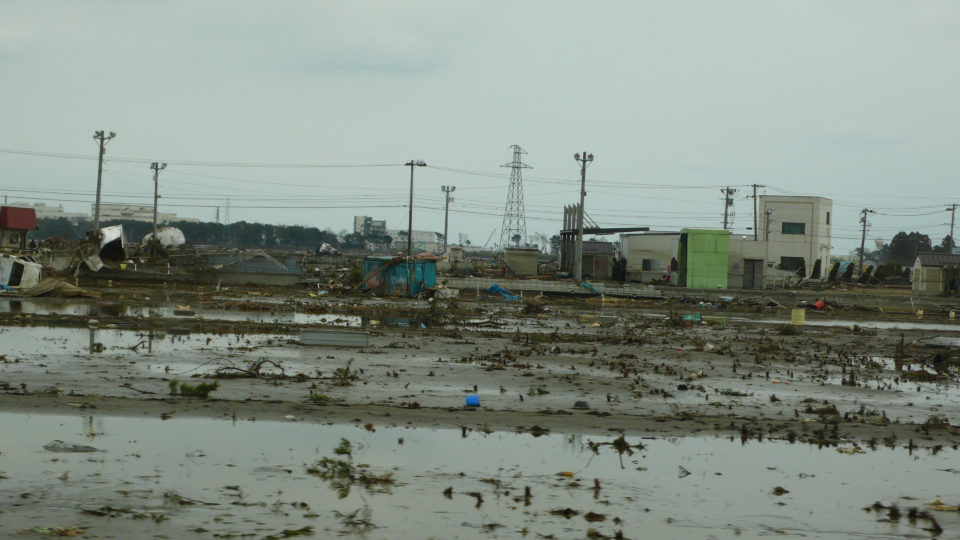
According to a new study published in the journal Science, scientists have discovered that hundreds of Japanese marine species have been swept across the Pacific Ocean to the United States following the deadly Tsunami in 2011.        

[Read more…] about Tsunami And Invasive Species

Primary Sidebar

Recent Episodes

  • An uninsurable future
  • Clean energy and jobs
  • Insect declines in remote regions
  • Fossil fuel producing nations ignoring climate goals
  • Trouble for clownfishes

WAMC Northeast Public Radio

WAMC/Northeast Public Radio is a regional public radio network serving parts of seven northeastern states (more...)

Copyright © 2026 ·