• Skip to primary navigation
  • Skip to main content
  • Skip to primary sidebar

Earth Wise

A look at our changing environment.

  • Home
  • About Earth Wise
  • Where to Listen
  • All Articles
  • Show Search
Hide Search
You are here: Home / Archives for starch

starch

A biostimulant for wheat

May 28, 2025 By EarthWise Leave a Comment

Developing a biostimulant for wheat to boost crop yields

Feeding a global population projected to reach nearly 10 billion by mid-century is a massive challenge.  Wheat provides a fifth of the calories in the global human diet and is a significant source of protein, minerals, vitamins, and fiber.  Finding ways to increase the yield of wheat crops has great value.  However, wheat has complex genetics, which makes it difficult to improve yields by traditional breeding methods or even by genetic engineering.

Researchers at Oxford University and the nearby Rosalind Franklin Institute have developed a biostimulant that can deliver increased wheat yields of up to 12%.  It is applied as a spray and a four-year study in Argentina and Mexico demonstrated that it delivers major yield improvements irrespective of weather conditions.

The biostimulant is based on trehalose 6-phosphate (T6P), which is a natural molecule that regulates the plant equivalent of blood sugar.  T6P prompts plants to produce more starch and increases the rate of photosynthesis.

Naturally occurring T6P cannot be applied topically because it cannot cross cell membranes.  The researchers developed a membrane-permeable precursor of T6P that releases T6P into a plant in the presence of sunlight.

The biostimulant can be manufactured on an industrial scale and would be inexpensive to use. 

The researchers have created SugaROx, a spinout company whose mission is “to increase the productivity, resilience, sustainability, and profitability of crop production” using active ingredients inspired by powerful natural plant molecules.

**********

Web Links

New biostimulant treatment significantly boosts wheat yields, field studies confirm

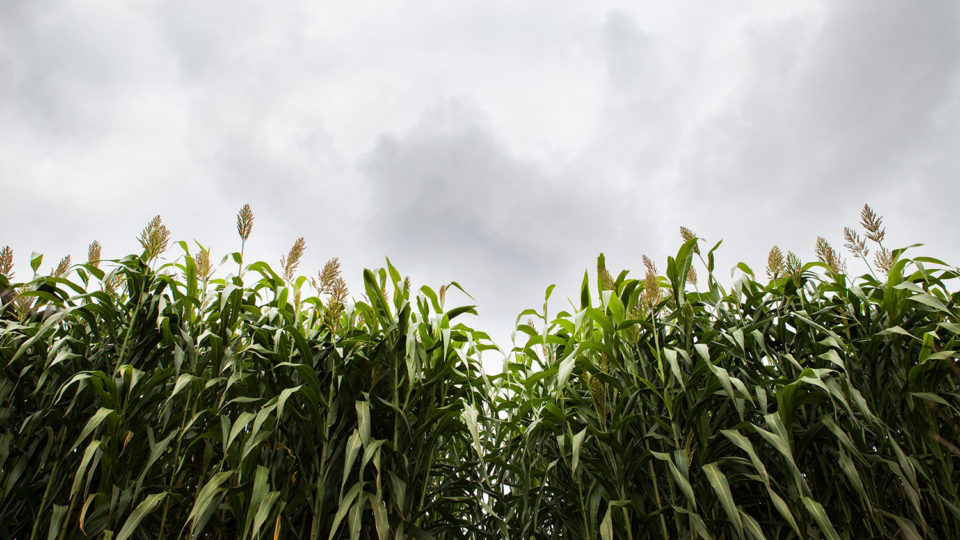
Photo, posted July 28, 2014, courtesy of Brad Higham via Flickr.

Earth Wise is a production of WAMC Northeast Public Radio
Has Wheat Changed for the Worse? | Earth Wise

September 11, 2020 By EarthWise Leave a Comment

wheat and wheat allergies

In recent years, the number of people affected by celiac disease, wheat allergies, or gluten or wheat sensitivity has increased dramatically.  Why this should be is not well understood.  One theory is that modern wheat varieties contain more immunoreactive protein than those used in the past.  Researchers at two German research institutions investigated this issue in detail. 

Wheat grains contain about 70% starch.  Proteins constitute 10 to 12% of wheat, and nearly 80% of that protein is gluten.  Gluten is a compound mixture of two types of protein subgroups:  gliadins and glutenins.

The researchers investigated the protein content of 60 preferred wheat varieties in use during the period between 1891 and 2010, making use of an extensive seed archive.  They selected 5 leading wheat varieties for each decade over that 120-year period and cultivated the plants under the same geographical and climate conditions.

The results were that the modern wheat varieties actually contain slightly less protein than old ones.  Gluten content itself has been essentially constant over the 120 years, although the proportion of gliadins (which are the prime suspect for causing undesired immune responses) was actually 18% lower while the proportion of glutenins was 25% higher.

Overall, they found no evidence that the immunoreactive potential of wheat has changed over the years as a result of the cultivation factors.

The researchers note that some of the other, less significant proteins in wheat have not been investigated with regard to their physiological effects, so there is more work to be done.  But so far, the culprit for increasing wheat sensitivity has not been found.

**********

Web Links

Is modern wheat off the hook?

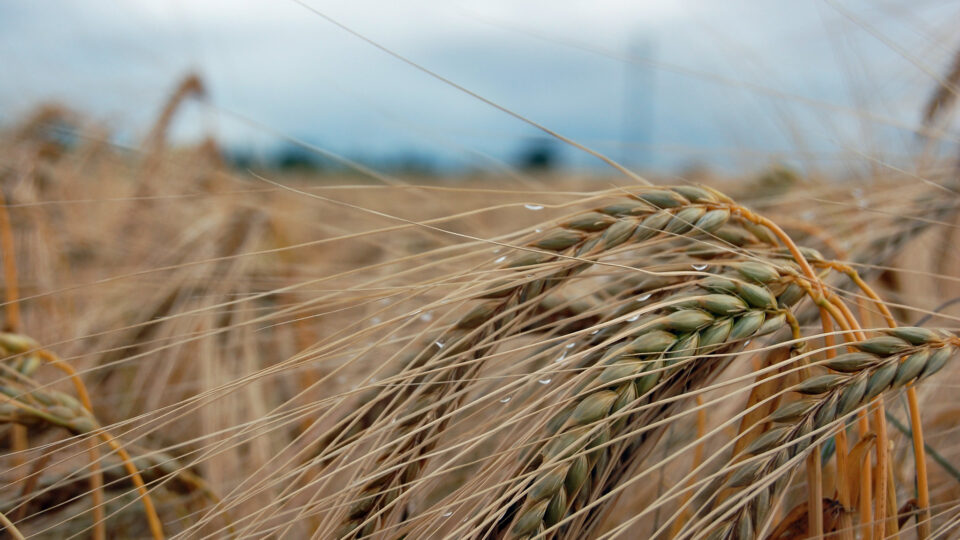
Photo, posted July 3, 2009, courtesy of Clare Black via Flickr.

Earth Wise is a production of WAMC Northeast Public Radio.

Greener Biofuel

May 17, 2018 By EarthWise Leave a Comment

https://earthwiseradio.org/wp-content/uploads/2018/05/EW-05-17-18-Greener-Biofuel.mp3

Engineers from the National University of Singapore have recently discovered that a naturally occurring bacterium is capable of directly converting cellulose to biobutanol, a promising biofuel.

[Read more…] about Greener Biofuel

Primary Sidebar

Recent Episodes

  • An uninsurable future
  • Clean energy and jobs
  • Insect declines in remote regions
  • Fossil fuel producing nations ignoring climate goals
  • Trouble for clownfishes

WAMC Northeast Public Radio

WAMC/Northeast Public Radio is a regional public radio network serving parts of seven northeastern states (more...)

Copyright © 2026 ·