• Skip to primary navigation
  • Skip to main content
  • Skip to primary sidebar

Earth Wise

A look at our changing environment.

  • Home
  • About Earth Wise
  • Where to Listen
  • All Articles
  • Show Search
Hide Search
You are here: Home / Archives for south asia

south asia

Approaching critical global temperature thresholds

January 21, 2025 By EarthWise Leave a Comment

The globe is approaching critical temperature thresholds

The Paris Climate Agreement is a global treaty adopted in 2015 to combat climate change by limiting global warming to well below 2°C above pre-industrial levels, while striving to keep it below 1.5°C.  But according to recent research, the planet is quickly approaching these critical thresholds. 

An international research team led by scientists from Colorado State University, Stanford University, and ETH-Zurich in Switzerland combined insights from 10 global climate models, and – with the help of artificial intelligence – found that regional warming thresholds are likely to be reached faster than previously thought.

In fact, the researchers found that most land regions will likely surpass the critical 1.5°C threshold by 2040 or even earlier.  Additionally, several regions are on track to exceed the 3.0°C threshold by 2060.  Regions including Central Europe, the Mediterranean, South Asia, and parts of sub-Saharan Africa are expected to reach these thresholds faster. 

The research team relied on transfer learning, a cutting-edge machine learning technique that leverages pre-trained models to tackle new, related tasks.

The research, which was recently published in the journal Environmental Research Letters, found that 34 regions are likely to exceed 1.5°C of warming by 2040.  Of those 34 regions, 31 of them are expected to reach 2°C of warming by 2040, and 26 of these 34 regions are projected to surpass 3°C of warming by 2060.

**********

Web Links

AI predicts that most of the world will see temperatures rise to 3C much faster than previously expected

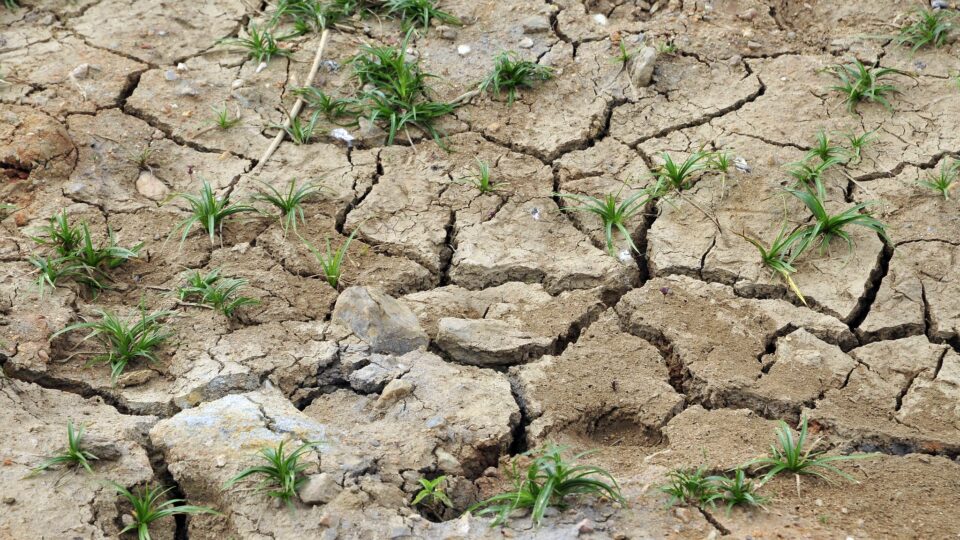
Photo, posted February 23, 2011, courtesy of 2011 CIAT / Neil Palmer via Flickr.

Earth Wise is a production of WAMC Northeast Public Radio

Nitrous Oxide Is No Laughing Matter | Earth Wise

November 10, 2020 By EarthWise Leave a Comment

nitrous oxide is a big climate problem

Carbon dioxide is the most well-known of greenhouse gases.  But there are others deserving of their own spotlight.  Nitrous oxide is one of them.  It turns out that the same “laughing gas” once used by dentists as an anesthetic is pretty bad for the environment.  In fact, it’s more than 300 times more potent as a greenhouse gas than carbon dioxide, and it can remain in the atmosphere for more than 100 years.

According to a new study by a team of international scientists, rising nitrous oxide emissions around the world are jeopardizing the climate goals of the Paris Agreement.  The growing use of nitrogen fertilizers in global food production is increasing atmospheric concentrations of nitrous oxide.

The study, which was led by Auburn University and recently published in the journal Nature, finds that nitrous oxide emissions are increasing faster than any emission scenario developed by the Intergovernmental Panel on Climate Change.  The current trajectory would lead to global mean temperature increases well above 3°C from pre-industrial levels.  The Paris Agreement aims to limit global warming to less than 2°C.    

According to the study, nitrous oxide levels have risen 20% from pre-industrial levels, with the fastest growth observed in the last 50 years due to emissions from human activities.  The largest contributors to nitrous oxide emissions come from East Asia, South Asia, South America, and Africa.  The United States, China, and India dominate nitrous oxide emissions from synthetic fertilizers, while Africa and South America dominate releases of nitrous oxide from natural sources, like livestock manure. 

Nitrous oxide emissions pose an increasing threat to the climate.  

**********

Web Links

Nitrous oxide emissions pose an increasing climate threat, study finds

Photo, posted April 22, 2012, courtesy of Bill Meier via Flickr.

Earth Wise is a production of WAMC Northeast Public Radio.

Lead Exposure Remains A Persistent Problem | Earth Wise

October 29, 2020 By EarthWise Leave a Comment

lead exposure remains a global problem

According to a new report from UNICEF and the international nonprofit Pure Earth, a staggering number of children – approximately 800 million or one out of every three globally – may have dangerously high levels of lead in their blood.    

Long-term exposure to lead can cause serious health problems, especially in children.  Children are particularly vulnerable because their early years are characterized by rapid growth and brain development. 

Lead is a powerful neurotoxin that can cause damage even at low levels of exposure.  Lead poisoning can be acute, and can cause all sorts of health issues, including stomach pain, brain damage, and even death.  Because lead accumulates in the body over time, lead poisoning can develop slowly. The most common symptom of lead poisoning is lethargy.  Lead exposure can also contribute to a lower IQ and behavioral problems that can last a lifetime.     

Lead is a naturally occurring element found in small amounts in earth’s crust.  But as a result of human activities, lead can be found in all parts of the environment, including the air, soil, and water. 

According to the report, much of the lead poisoning comes from lead-acid batteries that are not properly recycled.  Water pipes, paint, canned foods, makeup, toys, and even contaminated spices can all be sources of lead exposure.  Lead was also previously added to gasoline and traces of this remain in soil samples today. 

The report found that children in low- or middle-income countries, especially in South Asia and among marginalized groups in general, are most vulnerable to lead poisoning. 

Lead exposure remains a dangerous and persistent problem all around the world. 

**********

Web Links

The Toxic Truth: Children’s Exposure to Lead Pollution Undermines a Generation of Future Potential

800 million children still exposed to lead

Photo, posted February 11, 2017, courtesy of J. Brew via Flickr.

Earth Wise is a production of WAMC Northeast Public Radio.

How To Bend The Curve On Biodiversity Loss | Earth Wise

October 15, 2020 By EarthWise Leave a Comment

how to bend the curve on biodiversity loss

Biodiversity has been declining at an alarming rate in recent years as a result of human activities, including land use changes, pollution, and climate change.  According to a 2019 UN report, one million species – out of an estimated eight million – are threatened with extinction.  Many scientists warn we are in the middle of the sixth mass extinction event in Earth’s history.  Previous mass extinction events wiped out up to 95% of all species and took ecosystems millions of years to recover. 

Fortunately, new research indicates that it might not be too late to bend the curve on biodiversity loss.  According to the report, which was recently published in the journal Nature, more ambitious conservation measures are needed in order to  preserve biodiversity.  In addition, more efficient food production and healthier and less wasteful consumption and trade are needed to bend the curve. 

If these measures are undertaken with unprecedented ambition and coordination, the research team says the efforts will provide an opportunity to reverse biodiversity loss by 2050.

But even under the best case scenario, ongoing land conversion will lead to further biodiversity losses before the curve starts to bend.  In fact, at least one third of projected losses in the coming years are unlikely to be avoided under any scenario.  Biodiversity losses were projected to be highest in the regions richest in biodiversity, including South Asia, Southeast Asia, Sub-Saharan Africa, the Caribbean, and Latin America. 

The study, which was led by the International Institute for Applied Systems Analysis in Austria, makes it clear that urgent action is needed this decade in order to have any chance of bending the curve. 

**********

Web Links

Curbing land clearing for food production is vital to reverse biodiversity declines

Photo, posted November 1, 2017, courtesy of Rod Waddington via Flickr.

Earth Wise is a production of WAMC Northeast Public Radio.

Primary Sidebar

Recent Episodes

  • An uninsurable future
  • Clean energy and jobs
  • Insect declines in remote regions
  • Fossil fuel producing nations ignoring climate goals
  • Trouble for clownfishes

WAMC Northeast Public Radio

WAMC/Northeast Public Radio is a regional public radio network serving parts of seven northeastern states (more...)

Copyright © 2026 ·