• Skip to primary navigation
  • Skip to main content
  • Skip to primary sidebar

Earth Wise

A look at our changing environment.

  • Home
  • About Earth Wise
  • Where to Listen
  • All Articles
  • Show Search
Hide Search
You are here: Home / Archives for site

site

The dangers of deep sea mining

April 21, 2025 By EarthWise Leave a Comment

The dangers of deep sea mining are poorly understood

The White House is considering an executive order that would fast-track permitting for deep-sea mining in international waters and allow mining companies to bypass a United Nations-backed review process.

Deep sea mining is the extraction of minerals from the seabed in the deep ocean.  Most of the interest is in what are known as polymetallic nodules, which are potato-sized mineral deposits that have built up in layers over thousands of years. They are located several miles below the surface, primarily in what is called the Clarion-Clipperton zone, which is an environmental management area of the Pacific Ocean about halfway between Mexico and Hawaii.

A new multiyear study led by UK’s National Oceanography Center and published in the journal Nature found that the site of a deep-sea mining test in 1979 still showed lower levels of biodiversity than in neighboring undisturbed sites 44 years later.

Much is not known about the undersea nodules.  We know that they produce oxygen.  If the nodules are removed, will that reduce the amount of oxygen in the deep sea and affect the organisms that live there?  If mining occurs, what effect will the metal-containing sediment plumes churned up by the mining process have? 

The nodule fields sustain highly specialized animal and microbial communities.  More than 20 billion tons of nodules are estimated to lie on the seabed of the Clarion-Clipperton Zone.  If large-scale mining takes place, and there is much interest in that happening, it is important to find out what the impact will be on the ocean and its ecosystems because it is likely to be largely irreversible.

**********

Web Links

Deep sea mining for rare metals impacts marine life for decades, scientists say

Photo, posted September 4, 2014, courtesy of James St. John via Flickr.

Earth Wise is a production of WAMC Northeast Public Radio
Planting Millions Of Trees Isn’t So Easy | Earth Wise

November 11, 2022 By EarthWise Leave a Comment

Mass tree plantings are not always effective

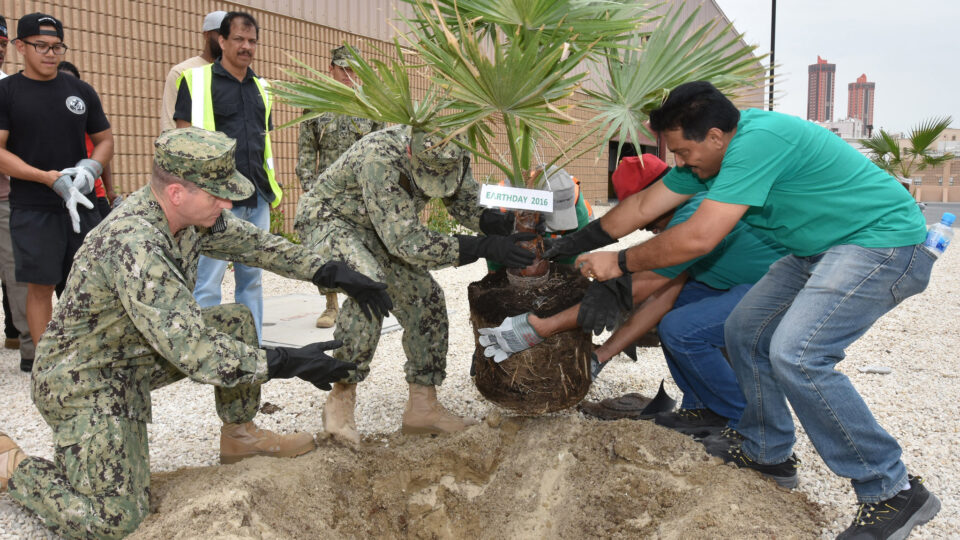
There are initiatives around the world to plant millions of trees as a way to fight climate change.  Unfortunately, scientists have observed that many of these projects are ill-conceived and poorly managed.  Some have failed to grow any forests at all.

One such project was an attempt to plant a million mangrove seedlings in coastal mud on the Filipino island of Luzon in 2012.  Ten years later, less than 2% of the trees have survived.  The other 98% have died or have washed away.  The problem was that the site of the project was ecologically unsuited to mangroves because it is too waterlogged and there is no oxygen available except in a few sheltered spots.

In 2019, the Turkish government managed the planting of 11 million trees in 2,000 sites across the country.  A later survey found that 90% had died, although the government denies that assertion.

Many other projects have also had dismal results.  The causes of failure vary but include planting single species of trees that become vulnerable to disease, competing demands for land, changing climate, planting in areas not previously forested, and lack of ongoing care for the saplings including watering them.

Nobody is opposed to mass tree planting.  There is no anti-tree lobby.  But tree planting is sometimes a form of greenwashing.  It is great for public relations but unless it is done properly with appropriate planning, it can be a waste of effort and money.  The result can be a phantom forest that does nothing for the climate.

Forest planting can work if the social and environmental conditions are right, and if planting is followed by long-term monitoring and care of the trees.

**********

Web Links

Phantom Forests: Why Ambitious Tree Planting Projects Are Failing

Photo, posted April 20, 2016, courtesy of the U.S. Navy / Mass Communication Specialist 2nd Class John Benson via Flickr.

Earth Wise is a production of WAMC Northeast Public Radio
Animals And Wildfires | Earth Wise

December 8, 2021 By EarthWise Leave a Comment

How animals cope with wildfires

More than a century of fire suppression strategies coupled with climate change has led to wildfires that are much larger and more frequent than those of the past.  A question that arises is what happens to the animals in a region when a massive wildfire sweeps through the landscape?

For the most part, we don’t have much information on what animals do when the flames are burning or in the immediate days after the fire has ended.  By chance, a group of researchers from the University of California, Berkeley, the University of California, Santa Barbara, and the University of Washington had the opportunity to get that kind of information.

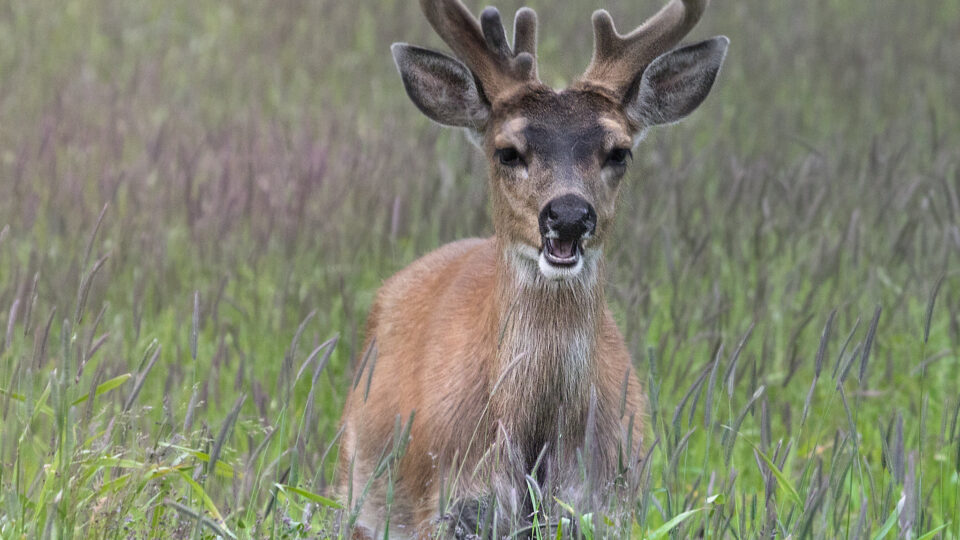
The researchers had been studying a group of black-tailed deer where the 2018 Mendocino Complex Fire occurred.  That megafire torched more than 450,000 acres in Northern California, including the site where the researchers were studying the movements and feeding patterns of the deer.

The researchers had to evacuate the area during the fire, but their cameras, tracking collars, and other equipment continued to function.  They learned that of the 18 deer studied, all survived.  Deer that had to flee the flames returned home, even though many areas were completely burned and devoid of vegetation to eat.  In fact, most of the deer returned within hours of the fire’s end while trees were still smoldering.   The researchers continue to monitor the deer to look at the long-term effects of the fire.

The researchers speculate that loyalty to home is a tactic that likely helped the species survive past wildfires.  Smaller fires encourage new vegetation growth, a tasty treat for deer.  Whether the strategy will pay off as fires get more intense and more frequent remains to be seen. 

**********

Web Links

After California’s 3rd-largest wildfire, deer returned home while trees were ‘still smoldering’

Photo, posted July 17, 2017, courtesy of C Watts via Flickr.

Earth Wise is a production of WAMC Northeast Public Radio.

Genetic Variation And Survivability | Earth Wise

January 21, 2021 By EarthWise Leave a Comment

Genetic variation leads to greater chance of survival

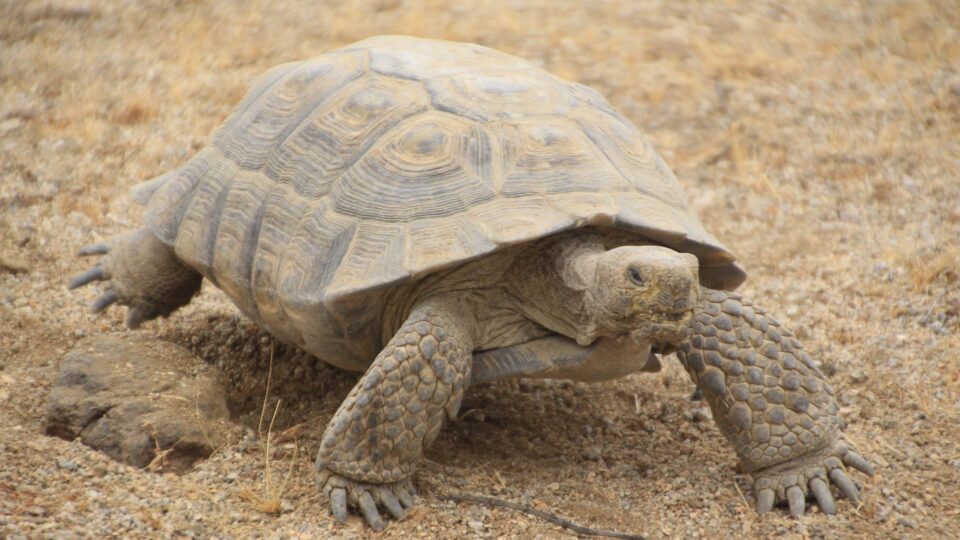
A massive but unintended experiment in animal conservation has revealed an unexpected result.  Thousands of desert tortoises moved to a translocation site in Nevada had a greater chance of surviving if they had lots of genetic variation.

From 1997 to 2014, over 9,000 Mojave desert tortoises were moved to a 39-square-mile translocation site in the Ivanpah Valley.  The tortoises were either abandoned pets or were displaced by developments in suburban Las Vegas and by solar farms in the desert.

The U.S. Fish and Wildlife service took blood samples to screen for diseases and marked each animal before releasing them into the site, enabling them to be tracked in later surveys.

When the researchers compared tortoises that lived or died over the same time period after being relocated to the site, they found that survivors averaged 23% greater heterozygosity than those that perished.  Heterozygosity is a measure of genetic variation.  Like most organisms, tortoises have two copies of their entire genome, with one from each parent.  The more those copies differ from each other, the higher the organism’s heterozygosity.

Researchers are not really sure why greater genetic variation is linked to survival rates.  Potentially, individuals with higher heterozygosity have more genomic flexibility.  It is the case that tortoises with more genetic variation have a better chance of having at least one copy of a gene that works really well in stressful or new environments.

Human activity and the changing climate are increasing the need to relocate plants and animals.  Often the chances for success in doing this are not good, so anything we can learn about things that increase the chances for survival can be very important.

**********

Web Links

UCLA study of threatened desert tortoises offers new conservation strategy

Photo, posted August 23, 2016, courtesy of the Bureau of Land Management California via Flickr. Photo by Dana Wilson, BLM.

Earth Wise is a production of WAMC Northeast Public Radio.

A Giant U.S. Offshore Wind Project Begins | Earth Wise

June 22, 2020 By EarthWise Leave a Comment

United States offshore wind project

In recent years, the Bureau of Offshore Energy Management – the agency that oversees energy projects in federal waters – has been granting leases for offshore wind projects in the waters of multiple states on the East Coast.  Up until now, none of these leases have actually resulted in the deployment of any wind turbines because the process of gaining approvals, project plans, surveys, funding and other requirements is a long and tortuous one.

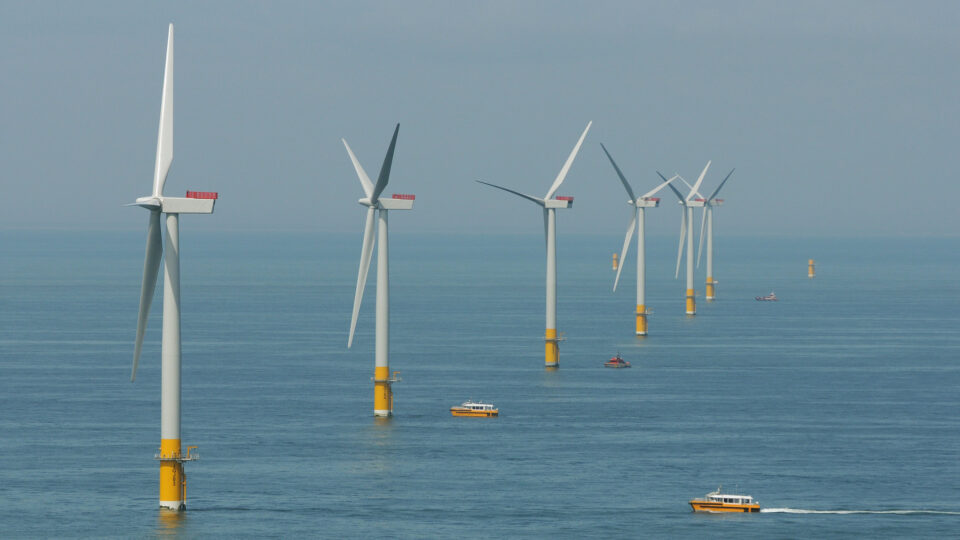
In late May, the first offshore wind turbine in U.S. federal waters was installed 27 miles offshore from Virginia.  The 6-MW Siemens turbine is one of two turbines making up the Coastal Virginia Offshore Wind pilot project.  The pilot project is expected to be operational later this year.  This project is the first to receive go-ahead approval by the BOEM.

The CVOW project is a development by Dominion Energy, a Virginia-based utility that operates in 20 states.  Dominion’s project will eventually be a 2.64 GW mega-farm that could be the largest offshore wind farm in the world.  Construction of the main project is expected to begin in 2024.  It will be sited in the seabed of a 112,800-acre lease area.  The site is currently being surveyed to determine potential impacts to ocean and sea life.

Dominion Energy has made multiple commitments to emissions reduction and the massive offshore wind farm is an important part of its efforts to meet those commitments.  The CVOW pilot project is only the second offshore wind installation in the U.S.  The first, the Block Island Wind Farm in Rhode Island, is in state waters and did not require BOEM approval.

**********

Web Links

A ‘monumental day’ for US offshore wind as first turbine is installed in federal waters

Photo, posted May 13, 2011, courtesy of the Department of Energy and Climate Change via Flickr.

Earth Wise is a production of WAMC Northeast Public Radio.

Primary Sidebar

Recent Episodes

  • An uninsurable future
  • Clean energy and jobs
  • Insect declines in remote regions
  • Fossil fuel producing nations ignoring climate goals
  • Trouble for clownfishes

WAMC Northeast Public Radio

WAMC/Northeast Public Radio is a regional public radio network serving parts of seven northeastern states (more...)

Copyright © 2026 ·