• Skip to primary navigation
  • Skip to main content
  • Skip to primary sidebar

Earth Wise

A look at our changing environment.

  • Home
  • About Earth Wise
  • Where to Listen
  • All Articles
  • Show Search
Hide Search
You are here: Home / Archives for short

short

Better Zinc Batteries | Earth Wise

May 17, 2023 By EarthWise Leave a Comment

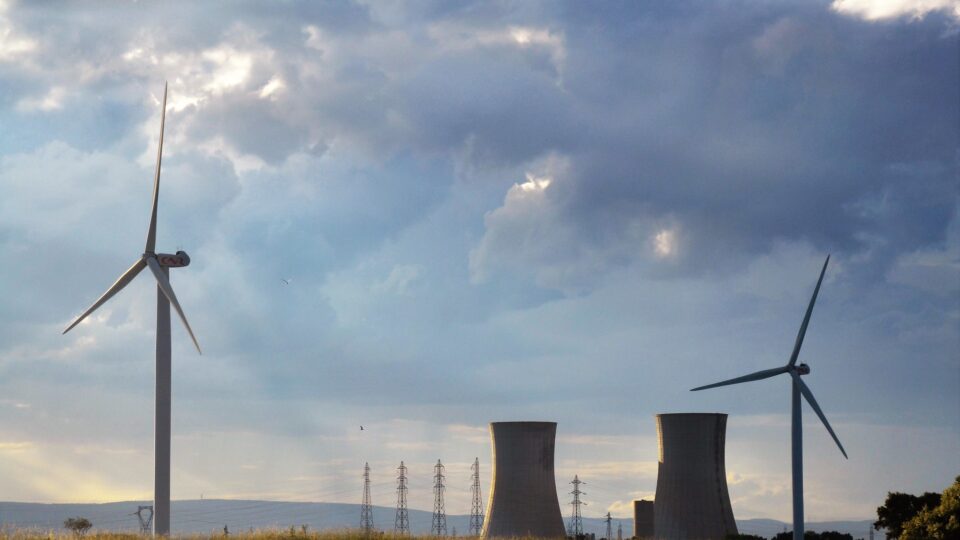
The rapid growth of wind and solar power continues to drive a global quest for new battery technologies that can be used to store the energy generated by these sources when the sun isn’t shining, and the wind isn’t blowing.

For the most part, current battery energy storage systems use lithium-ion batteries – the same sort of batteries found in cellphones and electric vehicles.  There are many other battery chemistries, but they mostly have shortcomings in performance, economy, or longevity. 

Batteries store electricity in the form of chemical energy and chemical reactions convert that energy into electrical energy. Every battery has two electrodes:  the anode, from which electrons flow into external circuits, and the cathode, which receives electrons from the external circuit.  The electrolyte is the chemical medium through which the electrons flow.

One technology that has great potential is zinc-based batteries.  Zinc itself is a metal that is safe and abundant.  Batteries based on it are energy dense. However, zinc batteries have faced the challenge of having a short cycle life.  The batteries end up plating zinc on their anodes and battery performance degrades. 

A team of researchers at Oregon State University and three other universities have recently developed a new electrolyte for zinc batteries that raises the efficiency of the zinc metal anode to nearly 100% – actually slightly better than lithium-ion batteries.

Zinc batteries have a number of potential advantages over lithium-ion.  The new hybrid electrolyte developed by the researchers is non-flammable, cost-effective, and has low environmental impact.  Lithium-ion batteries rely on the supplies of relatively rare metals that are often difficult and environmentally harmful to obtain. 

**********

Web Links

Researchers develop electrolyte enabling high efficiency of safe, sustainable zinc batteries

Photo, posted May 13, 2017, courtesy of Jeanne Menjoulet via Flickr.

Earth Wise is a production of WAMC Northeast Public Radio

Banning Short Plane Flights | Earth Wise

May 20, 2021 By EarthWise Leave a Comment

Banning short plane flights to reduce emissions

Almost everything we do ultimately results in greenhouse gases entering the atmosphere and therefore has an impact on the climate.  But some activities have much more impact than others.  The aviation industry is responsible for about 5% of global warming.

This doesn’t seem like that large a contribution, but only a very small percentage of the world’s population flies frequently and even in richer countries, only around half the population flew in any given year (at least before the pandemic.)

Flying is generally the only practical option for most long-haul trips and unless people give up on seeing the world or conducting global business in person, they are not going to give up taking air trips.

But shorter flights are a different story.  If you are planning to take a reasonably short trip in France, a plane will soon no longer be an option.  The French government says that flights will be banned on any route where the trip could be made on a train in 2.5 hours or less.  The driving force is the reduction of CO2 emissions.  A plane trip emits an average of 77 times more CO2 per passenger than taking a train on the same route.

The Netherlands and Belgium are also considering bans on short-haul flights and Austrian Airlines recently replaced its Vienna-to-Salzburg flights with train service.

Advocates of the flight bans say that not only does taking the train significantly reduce a traveler’s carbon footprint, but it can be cheaper and actually faster than a plane when factoring in the time spent getting to airports, standing in security lines, getting on and off planes, and so on.  Europe’s extensive train system makes this approach broadly practical. Unfortunately, here in the U.S., it is not quite that easy.

**********

Web Links

France Will Ban Short Flights That Could Be Replaced By a Train Trip

Photo, posted December 17, 2016, courtesy of Dylan Agbagni via Flickr.

Earth Wise is a production of WAMC Northeast Public Radio.

Which Cities To Save From The Changing Climate

October 28, 2019 By EarthWise Leave a Comment

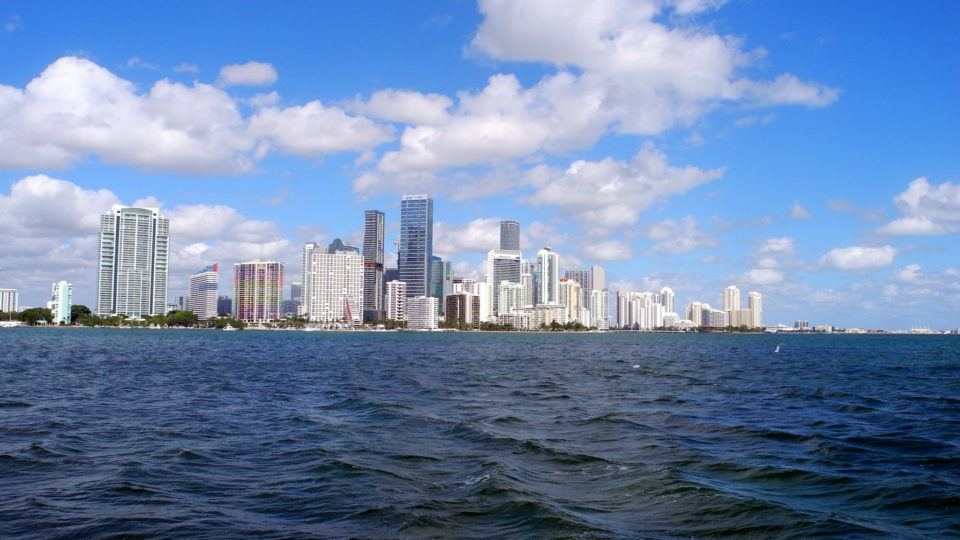
After several years of brutal flooding and hurricanes in the U.S., a distressing debate is emerging:  if there is not enough money available to protect every coastal community from the effects of global warming, how do we decide which ones to save first.

Recent research looked at the costs involved in providing basic storm-surge protection in the form of sea walls for all coastal cities with more than 25,000 residents.  That number was $42 billion.  Expanding the list to include communities smaller than 25,000 people would increase that cost to more than $400 billion.   Realistically, that is just not going to happen.

This particular study only looked at sea walls and no other methods for minimizing flood risk, such as moving homes and businesses away from the most flood-prone areas.   It also didn’t look at additional and costlier actions that will be required even with sea walls, such as revamping sewers, storm water, and drinking water infrastructure.

The facts are that many cities, especially small ones, will not be able to meet the costs facing them.  Those that can’t will depend on federal funding.  But even optimistically large proposals for federal infrastructure spending are likely to fall far short of the vast need.  Ultimately, the money will end up being spent where it can do the most good – even if it means that some places are left out.

But what criteria will be used to direct the money?  Economic value?  Historic significance?  Population?  Political influence?

This is a looming and massive issue whose chief obstacle may be that many officials refuse to acknowledge that it is happening.  This is the next wave of climate denial – denying the costs that we are all facing.

**********

Web Links

With More Storms and Rising Seas, Which U.S. Cities Should Be Saved First?

Photo, posted October 31, 2018, courtesy of Patrick Kinney via Flickr.

Earth Wise is a production of WAMC Northeast Public Radio.

Primary Sidebar

Recent Episodes

  • An uninsurable future
  • Clean energy and jobs
  • Insect declines in remote regions
  • Fossil fuel producing nations ignoring climate goals
  • Trouble for clownfishes

WAMC Northeast Public Radio

WAMC/Northeast Public Radio is a regional public radio network serving parts of seven northeastern states (more...)

Copyright © 2026 ·