• Skip to primary navigation
  • Skip to main content
  • Skip to primary sidebar

Earth Wise

A look at our changing environment.

  • Home
  • About Earth Wise
  • Where to Listen
  • All Articles
  • Show Search
Hide Search
You are here: Home / Archives for seed

seed

Trying to replace neonics

September 18, 2025 By EarthWise Leave a Comment

Neonicotinoids – often called neonics – are a class of insecticides that are among the most widely used in agriculture.  They are neuro-active, meaning that they affect the central nervous system of insects, killing or harming a wide variety of both target and non-target insects.  They are often applied to seeds before planting as a prophylactic treatment for potential insect pests.

Neonics have been linked to adverse ecological effects, especially the harm they cause to bees and other pollinators.  The Birds and Bees Protection Act in New York State, signed into law in 2023, is phasing out the sale, distribution, or purchase of certain neonic-treated corn, soybean, and wheat seeds over the next few years. 

A multi-year, multi-state study by researchers at Cornell University investigated the ability of a variety of non-neonicotinoid insecticides to protect large-seed vegetable crops including snap beans, dry beans, and sweet corn.  It is a difficult problem because insecticides kill insects, and it isn’t easy to find ones that kill pests but have minimal effects on pollinators and other beneficial insects.

The research found safer alternative insecticides with comparable effectiveness for treating snap bean seeds but not for dry beans. Much more successful was the result that five alternative seed treatments proved as effective as standard neonics for sweet corn while having far fewer negative environmental impacts.  Sweet corn is a major crop in New York state, so these results could be of great importance in improving the long-term sustainability of pest management programs.

**********

Web Links

New pesticides provide challenging alternatives to neonicotinoids

Photo, posted May 31, 2021, courtesy of Papa Piper via Flickr.

Earth Wise is a production of WAMC Northeast Public Radio

Relocating native plants

May 2, 2025 By EarthWise Leave a Comment

Relocating endangered native plants

Climate change is endangering many native plant species.  As the climate warms, many species will need to establish themselves in new places that are more hospitable than their historic ranges.  But many native plants in the U.S. cannot move themselves by natural forces quickly enough to avoid climate-change driven extinction.  For such plants to survive into the future, they will need human help to move into adjacent areas, a process called “managed relocation.”

Such a process has its problems.  There is no guarantee that a plant will thrive in a new area.  On the other hand, relocating plant species historically has often had disastrous consequences.  Consider, for example, the story of kudzu in the American south.

Researchers at the University of Massachusetts Amherst have studied this problem in detail and reported the results in the journal Global Change Biology.

The issue is how to help plants move successfully without their causing harm in their new locations.  The study found that some plant traits can lead to success and some to ecological disaster.  In some cases, the same traits that help plants to establish themselves in a new location make them powerful invasive species.  Traits like having a large size predispose a plant to not only establish itself but spread wildly. 

The study recommends that people managing relocation need to focus on plants whose traits they have determined to be conducive to successful relocation but more unlikely to cause harm in their new environment. 

**********

Web Links

If Native Plants Are Going to Survive Climate Change, They Need Our Help to Move—Here’s How to Do It Safely

Photo, posted August 17, 2012, courtesy of Joshua Mayer via Flickr.

Earth Wise is a production of WAMC Northeast Public Radio
Saving Wheat

July 3, 2018 By EarthWise Leave a Comment

https://earthwiseradio.org/wp-content/uploads/2018/07/EW-07-03-18-Saving-Wheat.mp3

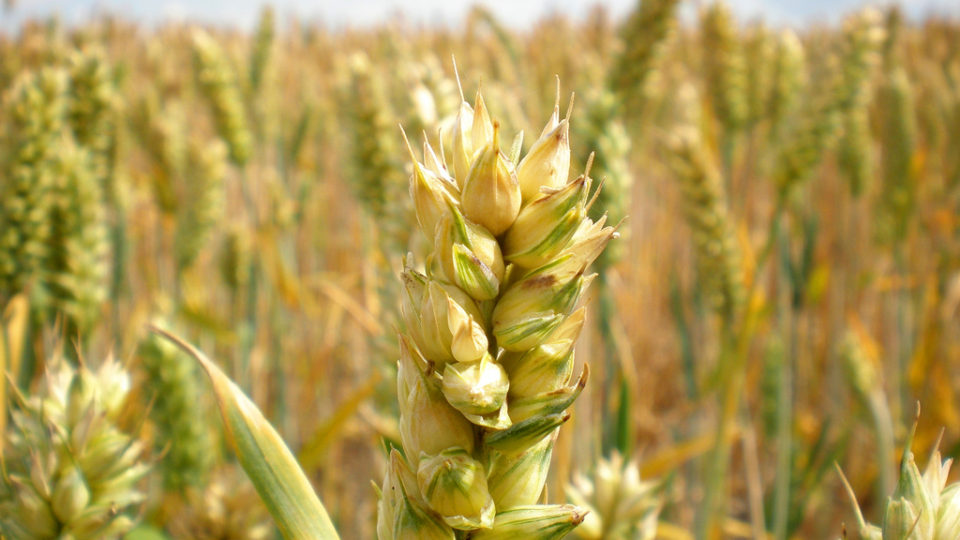
Rising temperatures, drought, pests and diseases are moving north into the U.S. heartland and are increasingly posing a threat to the wheat crop.  An insect called the Hessian fly is reducing crop yields by 10% a year in the Midwest.  Average temperatures in the Midwest have risen by 2 degrees since 2000, and periods of time between rainfalls is lengthening.  Conditions in some areas of the Midwest are getting to be more like those in the Middle East.

[Read more…] about Saving Wheat

‘Noah’s Ark’ Takes On Water

June 23, 2017 By EarthWise

https://earthwiseradio.org/wp-content/uploads/2017/06/EW-06-23-17-The-Svalbard-Global-Seed-Vault.mp3

The Svalbard Global Seed Vault, built into a hillside in the Norwegian archipelago of Svalbard far above the Arctic Circle, is often described as humanity’s last hope against extinction after some global crisis.  While there are more than 1,700 gene banks around the world that keep collections of seeds, all of them are vulnerable to war, natural disasters, equipment malfunctions, and other problems.  Except the Svalbard vault – or so we thought.  It has been dubbed the “Noah’s Ark” of seeds and a last chance for the world to regenerate if the worst should come to pass.  It’s mission is to keep the world’s seeds safe. 

[Read more…] about ‘Noah’s Ark’ Takes On Water

Primary Sidebar

Recent Episodes

  • An uninsurable future
  • Clean energy and jobs
  • Insect declines in remote regions
  • Fossil fuel producing nations ignoring climate goals
  • Trouble for clownfishes

WAMC Northeast Public Radio

WAMC/Northeast Public Radio is a regional public radio network serving parts of seven northeastern states (more...)

Copyright © 2026 ·