• Skip to primary navigation
  • Skip to main content
  • Skip to primary sidebar

Earth Wise

A look at our changing environment.

  • Home
  • About Earth Wise
  • Where to Listen
  • All Articles
  • Show Search
Hide Search
You are here: Home / Archives for salt marshes

salt marshes

The human impact on oceans

October 21, 2025 By EarthWise Leave a Comment

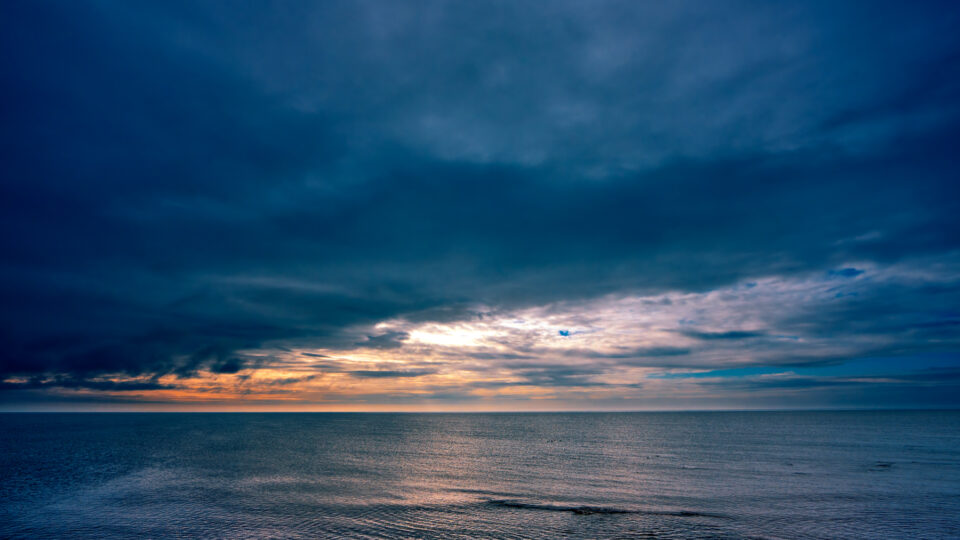
Vast and powerful, the oceans have sustained human life around the world for millennia. They provide food, natural resources, and livelihoods, supporting countless communities and economies. But despite their size and resilience, the oceans are under increasing pressure from climate change and human activity, pushing them toward a dangerous threshold.

According to a new study led by researchers from UC Santa Barbara, the cumulative human impact on the oceans is forecasted to double by 2050, which is just 25 years from now.  These impacts include ocean warming, fisheries losses, sea level rise, acidification, and pollution.

The research team, which includes collaborators from Nelson Mandela University in South Africa, found that the tropics and poles will experience the fastest rate of change.  And coastal regions, where most human activity takes place, will bear the heaviest consequences of those changes. 

The research team calls the findings sobering – not only because the impacts are increasing, but because they’re increasing so quickly. 

The study, which was recently published in the journal Science, shows that ocean warming from climate change and reductions in marine biomass from overfishing are expected to be the two largest contributors to future ocean impacts.  If ecosystems cannot cope with these pressures, human societies will also feel the consequences.

But the research team stresses that it’s not too late. Stronger climate policies, better fisheries management, and protections for vulnerable habitats like salt marshes and mangroves could help slow or even reduce human impacts.

The research serves as both a warning, and a chance to act before it’s too late.

**********

Web Links

Human impact on the ocean will double by 2050, UCSB scientists warn

Photo, posted July 11, 2018, courtesy of Ed Dunens via Flickr.

Earth Wise is a production of WAMC Northeast Public Radio
Blue Carbon Credits | Earth Wise

June 4, 2021 By EarthWise Leave a Comment

Blue carbon credits and the fight against climate change

Carbon credits have been around since the late 1990s.  The idea is to offset carbon emissions from some carbon emitting activity – anything from a wedding in California to a factory operating in Minnesota – by buying carbon credits earned from a carbon-absorbing activity, such as planting trees in the Amazon.

Blue carbon credits are credits earned by increasing the carbon stored in coastal and marine ecosystems. Coastal ecosystems such as mangroves, tidal marshes, and seagrass meadows in fact sequester and store more carbon per unit area than terrestrial forests and are increasingly being recognized for their important role in mitigating climate change. 

Blue carbon credit awards have to date been relatively few and far between and have mostly been granted for mangrove restoration efforts.  But mangrove projects are now ramping up dramatically in scope.  Scientists are working hard to analyze the amount of carbon in other ecosystem types – seagrasses, salt marshes, seaweeds, and seafloor sediments – so that these systems can also enter the carbon credit market.

Over the past 20 years, conservation scientists have spread over 70 million seeds in the bays of Virginia to restore over 9,000 acres of seagrass meadows that were devastated by disease in the 1930s.  The restored meadows are absorbing nearly half a ton of CO2 per acre. 

The rules to allow for blue carbon credits are recent and evolving, which is a big deal. The market may currently be small, but it is growing exponentially.  But as important as carbon credits are, it is still paramount to decarbonize before turning to offsets for existing emissions.

**********

Web Links

Why the Market for ‘Blue Carbon’ Credits May Be Poised to Take Off

Photo, posted July 2, 2009, courtesy of Nicolas Raymond via Flickr.

Earth Wise is a production of WAMC Northeast Public Radio.

Restoring Coastal Ecosystems | Earth Wise

February 1, 2021 By EarthWise Leave a Comment

Developing hardier corals for endangered reefs that resist the effects of climate change

Research published by CSIRO, Australia’s national science agency, examined the positive effects of restoration efforts for coastal ecosystems in terms of biodiversity, local economies, and human wellbeing.

Coastal ecosystems include saltmarshes, mangroves, seagrasses, oyster reefs, kelp beds, and coral reefs.  All of these have suffered declines of up to 85% over recent decades.  The research identified a number of successful coastal and marine restoration projects in recent years that indicate the likelihood that such efforts could be expanded by as much as a factor of ten to support human health and wellbeing, boost the adaptation response to climate change, and generate jobs. 

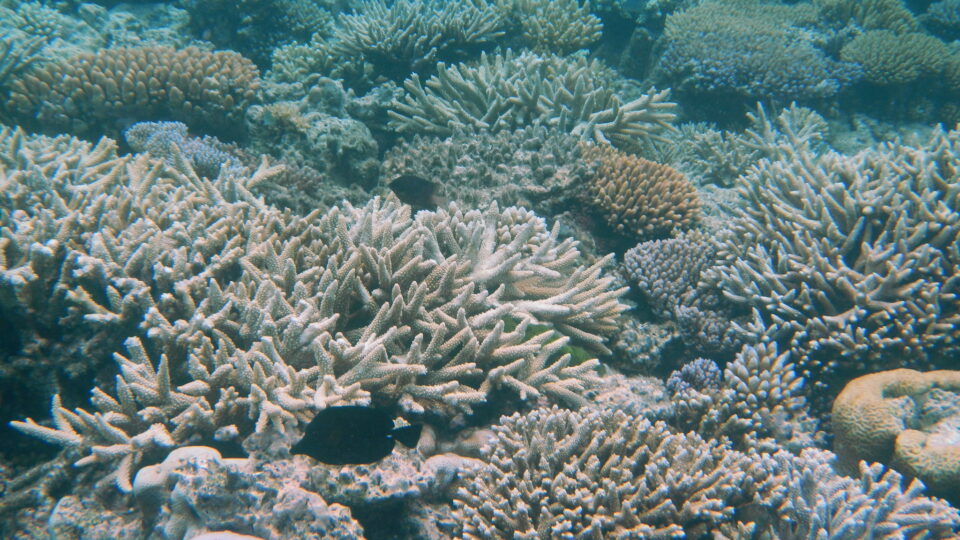
Some of the successful efforts identified included projects in the Great Barrier Reef to harvest coral larvae to boost large-scale coral restoration efforts.   Simple changes to how saltmarshes are planted have resulted in doubled survivorship and biomass.  In the U.S., the propagation of seagrass seeds has resulted in seagrass meadows recovering in areas where they had been lost decades ago.  In Indonesia, recovery of reefs impacted by blast fishing has been achieved by placing rocks or other hard structures underwater to help with coral colonization.

Investing in coral restoration creates jobs and can be used as a strategy to boost economic recovery and coastal marine health.  Restoration of marine habitats like kelp forests and oyster reefs has improved commercial and recreational fishing.

The United Nations has recognized the importance of coastal restoration and has declared the Decade on Ecosystem Restoration to start from 2021.

**********

Web Links

Scientists shine light on ‘bright spots’ to restore coastal ecosystems

Photo, posted November 29, 2012, courtesy of Robert Linsdell via Flickr.

Earth Wise is a production of WAMC Northeast Public Radio.

Coastal Plants And Climate Change | Earth Wise

March 18, 2020 By EarthWise Leave a Comment

Rising sea levels and the increased frequency and intensity of extreme weather events are leaving observable effects on beaches, cliffs, and coastal infrastructures all around the world.  But a new study suggests that the impact of climate change on coastal plant communities needs more attention. 

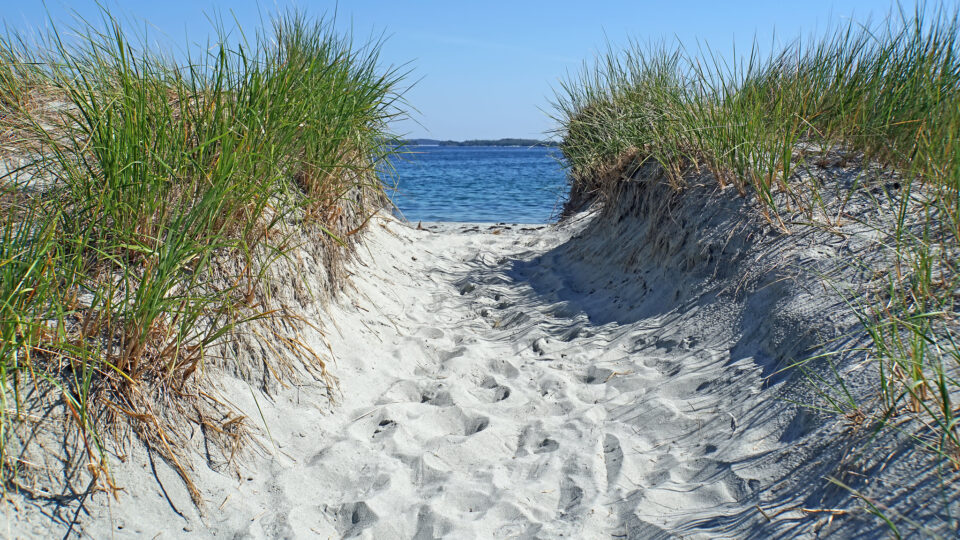
According to research recently published in the journal Annals of Botany, coastal plants are a critical element of global sea defense.  But coastal plants are increasingly under threat from flooding, erosion, and other human-induced effects of climate change.  Habitats like salt marshes, mangrove forests, sand dunes, and kelp beds make important contributions  to coastal protection.

The research was led by scientists from the University of Plymouth, in conjunction with researchers at Utrecht University and Manchester Metropolitan University.

The study follows a recent assessment by the Intergovernmental Panel on Climate Change, which found that anthropogenic climate change poses a severe threat to estuaries and coastal ecosystems.  

Conservative estimates of the capital investments needed to combat rising seas and intensifying storms run into the hundreds of billions of dollars in the coming decades.  However, coastal vegetation could offer a dynamic, natural, and relatively low-cost defense strategy at a fraction of the cost when compared with the cost of so-called hard defenses like concrete walls and barriers. 

According to the research team, identifying the key species and habitats for coastal defense and how coasts can be protected and promoted is critical.  More long-term monitoring is also needed in order to better understand and predict where and how storms and other effects of climate change will impact coastal ecosystems. 

**********

Web Links

The gathering storm: optimizing management of coastal ecosystems in the face of a climate-driven threat

Losing coastal plant communities to climate change will weaken sea defences

Photo, posted September 14, 2018, courtesy of Dennis Jarvis via Flickr.

Earth Wise is a production of WAMC Northeast Public Radio.

Deepwater Impacts Lingering

May 10, 2019 By EarthWise Leave a Comment

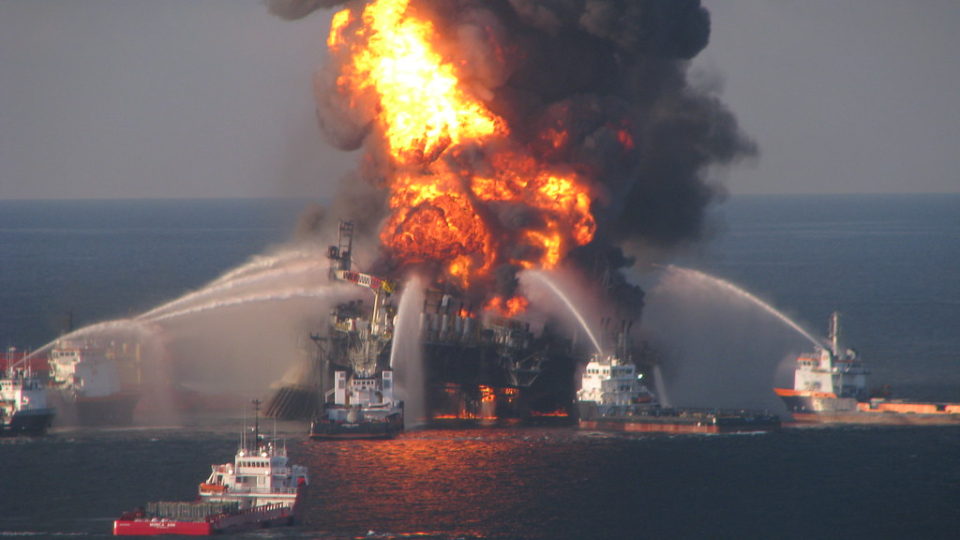
On April 20, 2010, an explosion on the BP-owned Deepwater Horizon drilling rig released an estimated 210 million of gallons of oil into the Gulf of Mexico.  Some of the oil was recovered, burned, or dispersed at sea, while some washed up onto coastal shorelines. 

Now, more than nine years later, a long-term study suggests the oil is still affecting the salt marshes of the Gulf Coast.  A multi-institutional research team began sampling in the region once the spill was contained and continue their work to this day.

The researchers found that heavily-oiled marsh areas remained less healthy than less polluted sites more than six years after the spill.  They fear that complete recovery of these oil-soaked regions will likely take more than a decade. 

But the researchers also discovered that salt marsh grasses play a key role in coastal wetland recovery.  Two plants dominate healthy salt marshes in the Gulf: smooth cordgrass and black needlerush.  Single-celled, plant-like organisms known as benthic microalgae also abound in healthy salt marshes, as do many small invertebrates. 

In heavily-oiled areas, the researchers found that nearly all the plants died, and benthic microalgae and small invertebrate populations declined significantly.  Importantly, however, they also found that it was only after smooth cordgrass started its comeback in these areas that invertebrate populations began to recover.  They noted that these salt marsh grasses provide habitat, bind soil, slow water, facilitate colonization, and fuel the food web. 

Plants are the foundation of and play a crucial role in salt marshes.  The researchers hope these findings will help shape the mitigation strategies of any future oil spills. 

**********

Web Links

Continuing impacts of Deepwater Horizon oil spill

Photo, posted April 21, 2010, courtesy of Deepwater Horizon Response via Flickr.

Earth Wise is a production of WAMC Northeast Public Radio.

Primary Sidebar

Recent Episodes

  • An uninsurable future
  • Clean energy and jobs
  • Insect declines in remote regions
  • Fossil fuel producing nations ignoring climate goals
  • Trouble for clownfishes

WAMC Northeast Public Radio

WAMC/Northeast Public Radio is a regional public radio network serving parts of seven northeastern states (more...)

Copyright © 2026 ·