• Skip to primary navigation
  • Skip to main content
  • Skip to primary sidebar

Earth Wise

A look at our changing environment.

  • Home
  • About Earth Wise
  • Where to Listen
  • All Articles
  • Show Search
Hide Search
You are here: Home / Archives for salamanders

salamanders

Amphibians and climate change

April 7, 2025 By EarthWise Leave a Comment

Amphibians are a group of vertebrate animals that include frogs, toads, and salamanders. They are unique for their ability to live both in water and on land during different stages of life. Amphibians play a crucial role in ecosystems, often serving as both predators and prey in food webs.

Amphibians are the world’s most at-risk vertebrates, with more than 40% of species listed as threatened.  They are cold-blooded creatures and rely on external sources to regulate their body temperature.  But needing to regulate their body heat this way makes amphibians particularly vulnerable to temperature change in their habitats. 

Researchers from the University of New South Wales in Australia can now predict the heat tolerance of 60% of the world’s amphibian species.  This new tool will allow scientists to better identify which amphibian species and habitats will be most impacted by climate change.  

The study’s landmark findings, which were recently published in the journal Nature, found that 2% of amphibian species are already exposed to overheating in shaded terrestrial conditions.  According to the research team, a 4°C global temperature increase could push 7.5% of amphibian species beyond their physiological limits. 

Local amphibian extinctions can trigger ecological repercussions, including reshuffling community compositions, eroding genetic diversity, and impacting the food chain and overall ecosystem health.

The researchers highlight the importance of vegetation and water bodies in protecting amphibians during heat waves, and emphasize the need to provide adequate water and shade during future conservation efforts. 

**********

Web Links

The pot is already boiling for 2% of the world’s amphibians: new study

Photo, posted October 8, 2011, courtesy of Dave Huth via Flickr.

Earth Wise is a production of WAMC Northeast Public Radio
Hope for amphibians

May 6, 2024 By EarthWise Leave a Comment

Discovery could end global amphibian pandemic

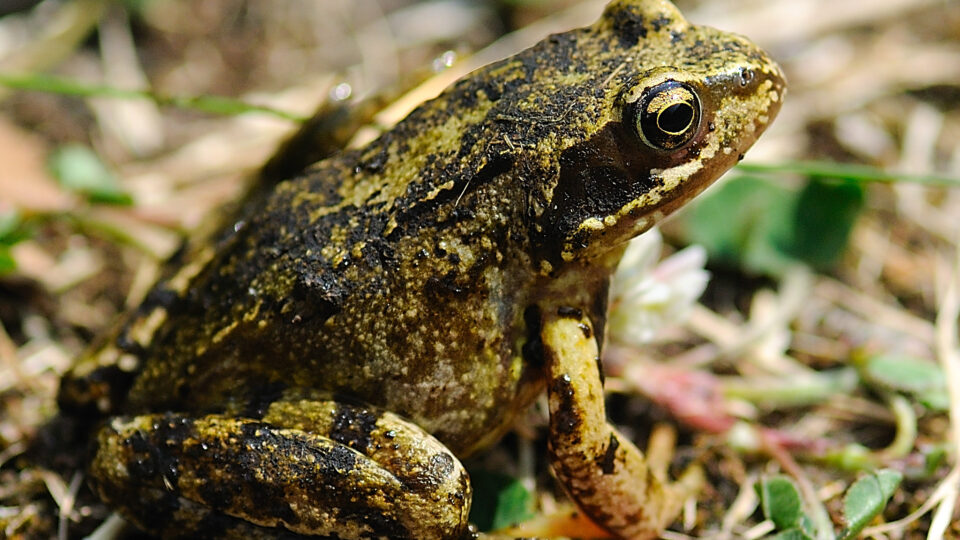
There are more than 7,000 known species of amphibians, the group of animals that includes frogs, toads, and salamanders.  Over the past 25 years, more than 90 species are believed to have gone extinct and at least 500 more have declining populations.

There are many factors contributing to the decline of amphibian populations but the most alarming is a fungus called Batrachochytrium dendrobatidis – or Bd – that ravages the skin of frogs and toads and eventually causes heart failure.  The fungus has been devastating amphibians on nearly every continent.

In a recent paper in the journal Current Biology, scientists at the University of California Riverside documented the discovery of a virus that infects Bd and could be engineered to control the fungal disease.

The researchers were studying the population genetics of the Bd fungus with DNA sequencing technology and uncovered the virus inside the fungal genome.  Some strains of the fungus are infected with the virus and others are not.  They are now looking for insights into the ways that the virus operates to see how it gets into the fungal cells.  The goal is to engineer the virus to infect more strains of the fungus and potentially end the global amphibian pandemic.

Frogs and toads control bad insects, crop pests, and mosquitos.  If their populations around the world collapse, it could be devastating.  They are already having difficulty coping with warmer temperatures, stronger UV light, and worsening water quality in many places. 

Some amphibian species are already acquiring resistance to Bd.  The UCR researchers are hoping to assist nature in taking its course.

**********

Web Links

Discovery could end global amphibian pandemic

Photo, posted August 25, 2010, courtesy of Kev Chapman via Flickr.

Earth Wise is a production of WAMC Northeast Public Radio

Skydiving Salamanders | Earth Wise

June 28, 2022 By EarthWise Leave a Comment

The redwoods of the California coast are the tallest trees in the world.  They are typically a couple of hundred feet tall and the tallest rise to a height of as much as 380 feet.  Scientists have been studying the unique world of the redwood forest canopy for years.  There are multiple animals that actually live up there.  In fact, some spend their entire lives at the top of a single tree.

Over the past 20 years, researchers have been climbing redwoods to observe, capture, and mark salamanders that live in the canopy.  The most arboreal species, called the wandering salamander, is a four-inch-long creature what moves up and down the branches of a tree where it spends its entire life.  The researchers discovered a remarkable ability for the little amphibian.

The salamander readily leaps from perches in the crowns of redwood trees and has the ability to easily maneuver in midair back to a trunk or branch before it plummets to the ground.  When the salamanders were startled by climbing researchers, they simply leap from the canopy and find their way to another perch lower in the tree.

The salamanders assume a skydiving posture with their forelimbs splayed out and can steer themselves by pumping their tails up and down.  They can flip themselves over if they end up upside down.  They have an impressive level of control.

What is most remarkable is that the salamanders, apart from having slightly larger foot pads, look no different from other salamanders that aren’t skydivers.  They have no skin flaps or other anatomical adaptations that would give them the ability to glide.  The researchers hope to eventually figure out just how these creatures have become expert skydivers.

**********

Web Links

Skydiving salamanders live in world’s tallest trees

Photo, posted August 5, 2010, courtesy of Benson Kua via Flickr.

Earth Wise is a production of WAMC Northeast Public Radio.

Fungal Diseases And Wildlife

February 18, 2016 By WAMC WEB

https://earthwiseradio.org/wp-content/uploads/2016/02/EW-02-18-16-Fungal-Diseases-and-Wildlife.mp3

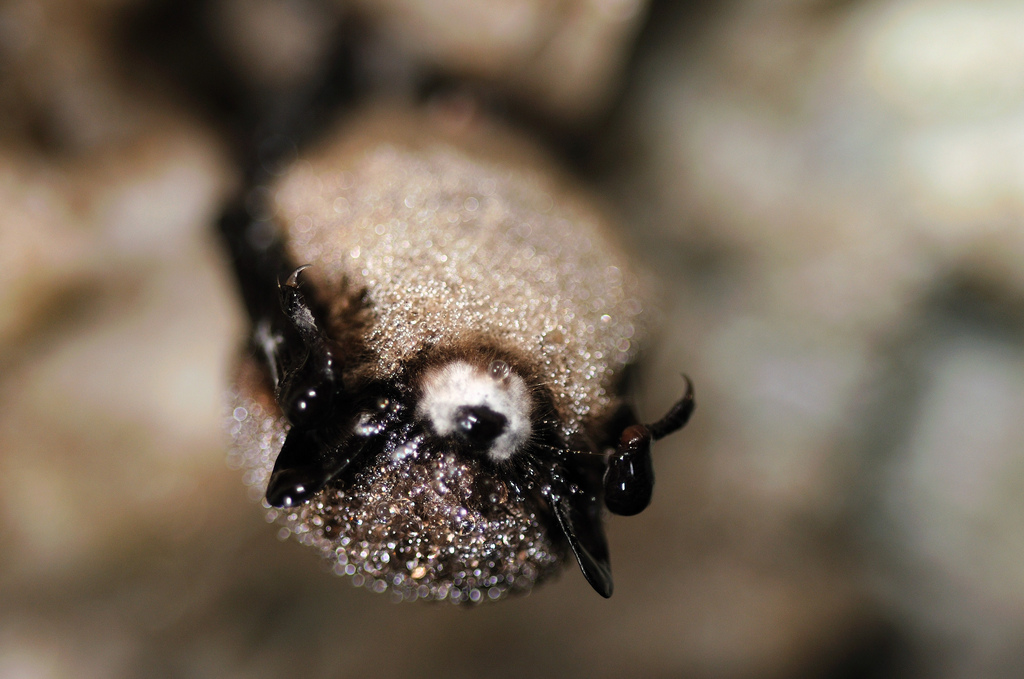
Since the late 1990s, there has been an unprecedented global wave of virulent fungal infections that has been decimating whole groups of animals from salamanders and frogs, to snakes and bats.

[Read more…] about Fungal Diseases And Wildlife

Primary Sidebar

Recent Episodes

  • An uninsurable future
  • Clean energy and jobs
  • Insect declines in remote regions
  • Fossil fuel producing nations ignoring climate goals
  • Trouble for clownfishes

WAMC Northeast Public Radio

WAMC/Northeast Public Radio is a regional public radio network serving parts of seven northeastern states (more...)

Copyright © 2026 ·