• Skip to primary navigation
  • Skip to main content
  • Skip to primary sidebar

Earth Wise

A look at our changing environment.

  • Home
  • About Earth Wise
  • Where to Listen
  • All Articles
  • Show Search
Hide Search
You are here: Home / Archives for roof

roof

Colorful Solar Panels | Earth Wise

September 22, 2022 By EarthWise Leave a Comment

Creating color solar panels

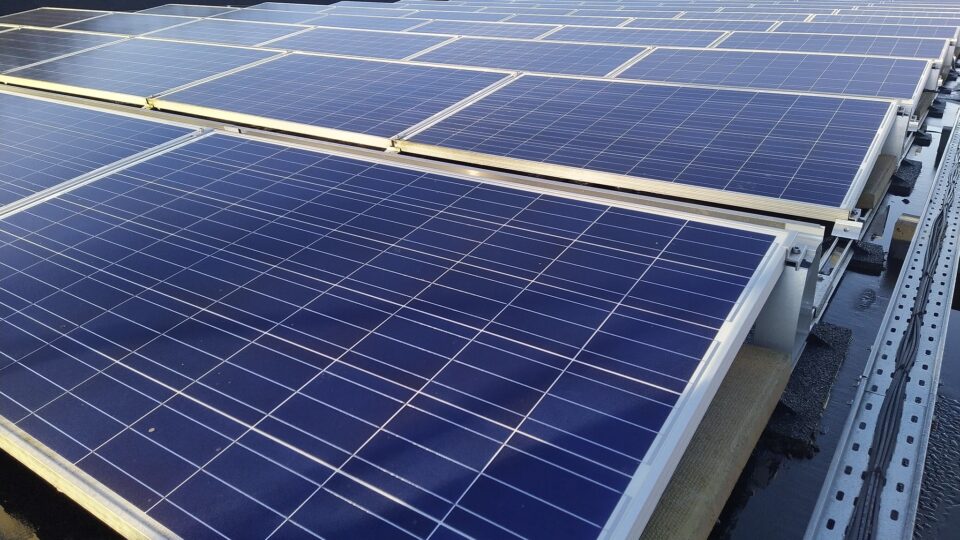
More and more buildings and public spaces are incorporating solar panels and not only just on rooftops.  Some buildings are incorporating power-generating structures all over their facades.

Using solar panels in this way puts some design constraints on buildings because solar panels are typically a deep black color.  This is because solar panels need to absorb light and making them any other color decreases their ability to do so and generate power.  But the problem is that people don’t necessarily want a black building.

One alternative to traditional solar panel design is to use structural sources of color that include microscopic shapes that only reflect specific light frequencies, like the scales on butterfly wings.  But this approach generally leads to iridescence – which might not be what is wanted – and is often quite expensive to implement.

A team of researchers at a university in Shanghai has now demonstrated a way to give solar panels color that is easy and inexpensive to apply and that does not reduce their ability to produce energy efficiently.

The technique involves spraying a thin layer of a material called a photonic glass onto the surface of solar cells.  The photonic glass is made of a thin, disorderly layer of dielectric microscopic zinc sulfide spheres.  Even though most light can pass through the photonic glass, certain colors are reflected back, depending on the sizes of the spheres.  By varying that size, the researchers created solar panels that were blue, green, or purple with only a very small drop in solar panel efficiency.

The solar panels made this way maintained their color and performance under durability testing.  With this new technology, there may soon be colorful solar panels on our buildings.

***********

Web Links

Colorful solar panels could make the technology more attractive

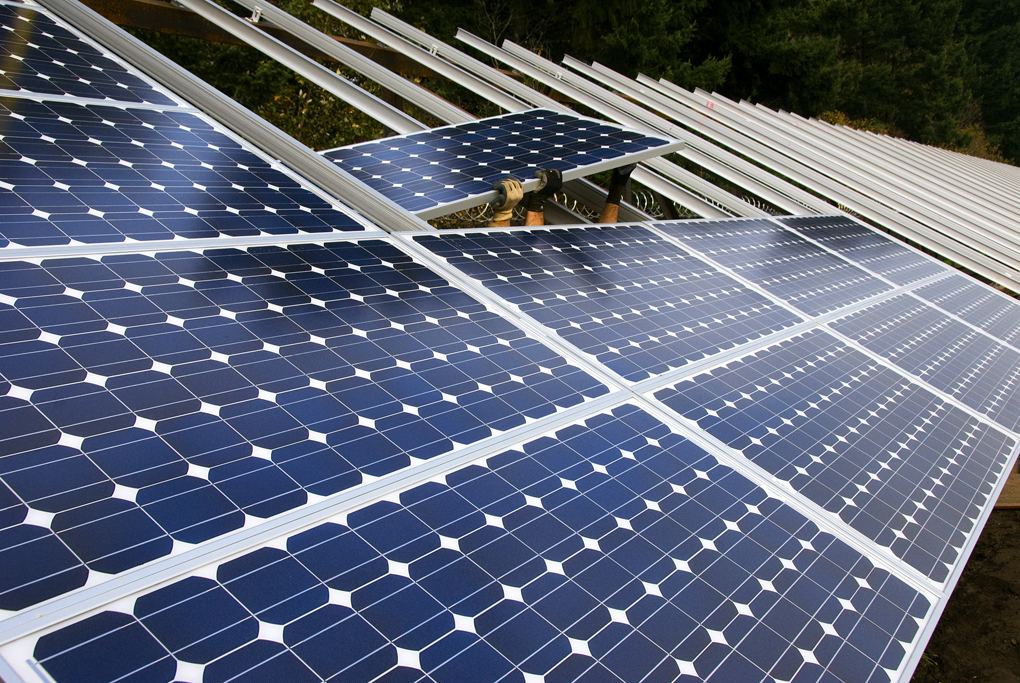
Photo, posted December 15, 2021, courtesy of Pete via Flickr.

Earth Wise is a production of WAMC Northeast Public Radio
A Smart Roof | Earth Wise

January 21, 2022 By EarthWise Leave a Comment

Scientists are working on smart roof technology

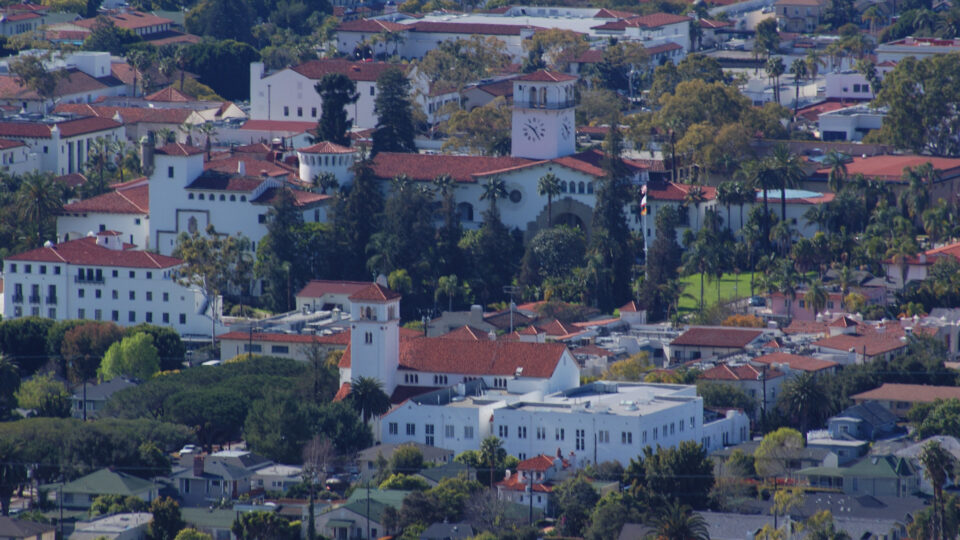
Scientists at the Lawrence Berkeley Laboratory have developed an all-season smart roof coating that can keep homes warm during the winter and cool during the summer, and the coating does not consume any gas or electricity.

Existing cool roof systems consist of reflective coatings, membranes, shingles, or tile that lower house temperatures by reflecting sunlight as well as emitting some of the absorbed solar heat away from the roof as infrared radiation.  The problem with such systems is that they continue to radiate heat during the winter, which actually drives up heating costs.

The new material is called a temperature-adaptive radiative coating or TARC.  It enables energy savings by automatically turning off the radiative cooling in the winter.  TARC reflects about 75% of sunlight year-round, but its thermal emittance is high when the temperature is warm – promoting heat loss to the sky – but decreases in cooler weather, helping to retain the heat in a building.

The researchers produced thin-film TARC material that looks like Scotch tape that could be affixed to a surface like a rooftop.  They applied the material to a balcony alongside a sample of commercial dark roof material and a sample of commercial white roof material.

In experiments simulating 15 different climate zones across the US, they found that the TARC material outperforms existing roof coatings for energy savings in 12 out of the 15 zones, particularly in regions with wide temperature variations between day and night, such as in the San Francisco Bay Area, or between winter and summer, such as New York City.

The researchers believe that installing TARC coatings on roofs would save the average U.S. household about 10% in utility costs.

**********

Web Links

New Smart-Roof Coating Enables Year-Round Energy Savings

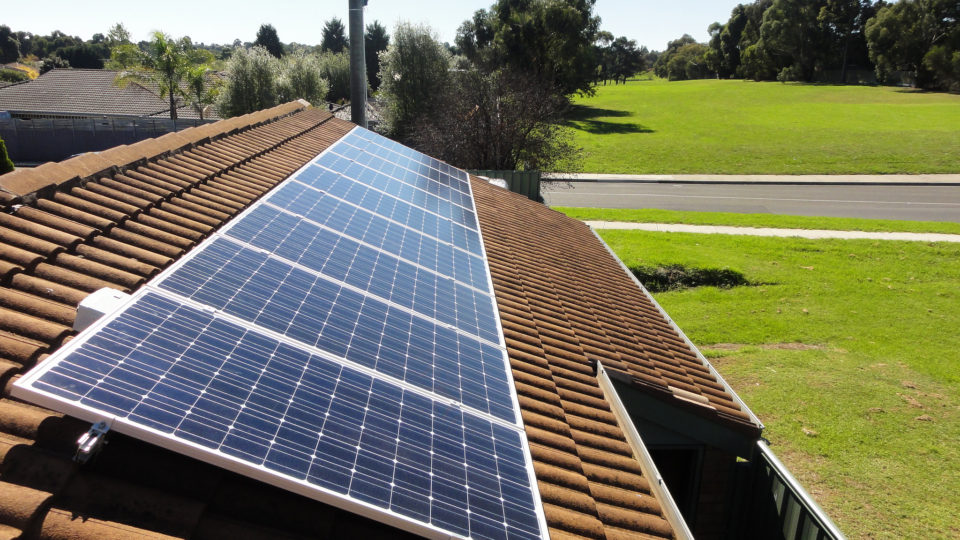
Photo, posted May 18, 2017, courtesy of Damian Gadal via Flickr.

Earth Wise is a production of WAMC Northeast Public Radio.

Mass Timber

June 10, 2019 By EarthWise Leave a Comment

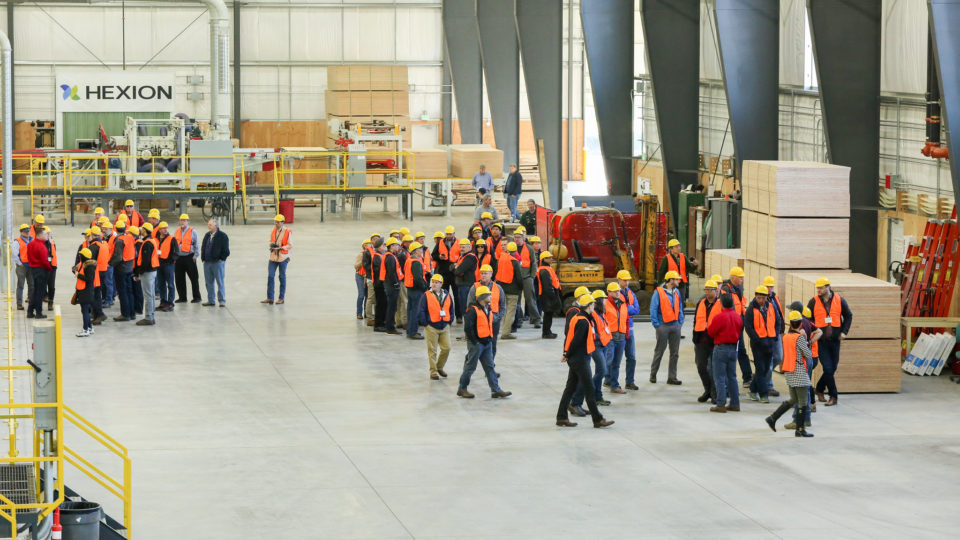
Mass timber is a type of construction typically characterized by the use of large solid wood panels for wall, floor, and roof construction. Large structural panels, posts, and beams glued under pressure or nailed together in layers, with the wood’s grain stacked perpendicular for extra strength – are prized as innovative building materials, superior to concrete and steel in many ways.  Mass timber has pushed the perceived boundaries of wood construction, leading to building heights and spans that traditionally have required concrete, steel or masonry for structural support. The move to mass timber has become something of a construction revolution and many see it as a significant part of a climate change solution. 

The question is just how green is mass timber construction?  How sustainable is it in terms of the forest management, logging, manufacture and transportation of wood products involved?

A number of environmental groups are very skeptical.  There is not yet comprehensive data on the subject.  Only recently have interdisciplinary scientists begun to study the potential climate impacts of the wide use of mass timber.

Despite these questions, the mass timber industry is taking off.  Demand for mass timber posts and beams has led to new sawmills opening in the U.S. Northwest and many new jobs for loggers.

The aesthetics and economics of mass timber are both very attractive compared with conventional large-scale construction materials.  The real unknowns relate to the environmental impact of its widespread use.  If that can take place in a sustainable and environmentally conscientious way, it would be very important in the fight against climate change.  Carbon dioxide emissions from the building industry account for more than a third of global emissions, primarily from the concrete and steel industries.

**********

Web Links

As Mass Timber Takes Off, How Green Is This New Building Material?

Photo, posted March 19, 2018, courtesy of Freres Lumber Co via Flickr.

Earth Wise is a production of WAMC Northeast Public Radio.

Building For Climate Change

May 13, 2019 By EarthWise Leave a Comment

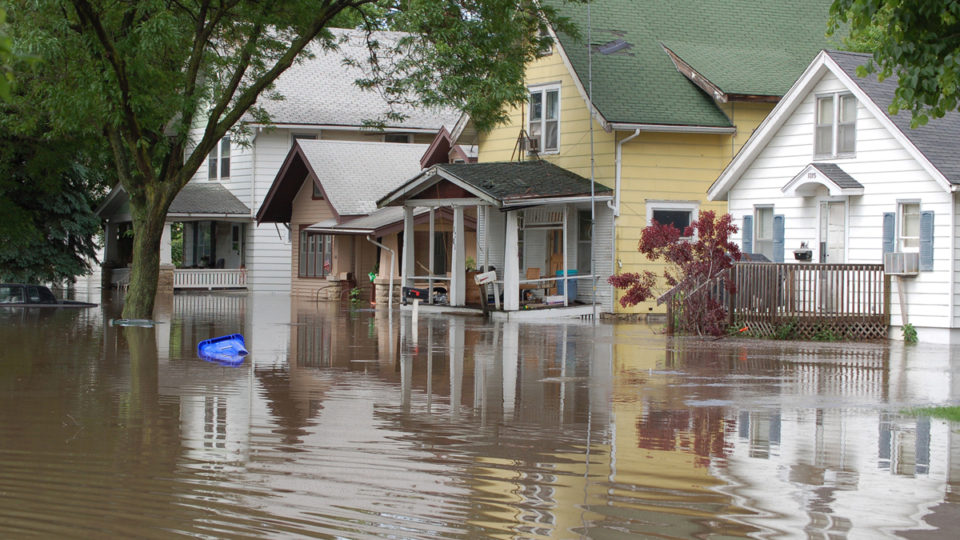
The manifestations of climate change are creating increasingly familiar images:  floodwaters rising up house windows, charred buildings in the wake of wildfires, and homes and businesses demolished by storm winds. As these sorts of calamities become ever more common, changes to how houses are built are going to be necessary.

How can homes become more resilient against severe and unpredictable weather?

Research at Carlton University’s Sprott School of Business looks at this issue.

As an example, houses can be framed and finished in certain ways that help protect them from wind and flooding.  But such methods are currently only happening in the custom-build fringes of the housing sector.  Widespread adoption will require, at the minimum, significant changes to building codes.

Revising building codes is not an easy matter.  The codes themselves are highly technical and complex, and beyond that, the process Is often politicized.

Even simple things like hurricane ties, which are small pieces of hardware that prevent a roof from lifting during a severe wind are not now included in building codes.  Insurance companies support their use as inexpensive protection for houses.  But even though the overall cost is relatively minor, the building industry pushes back at the additional expense.

The need to reduce carbon emissions has created a push for sustainable housing.  But the increasingly erratic weather means that houses also need resilience and adaptation.  These features will inevitably add costs and incorporating them into building codes requires producing convincing business cases.

The U.S. experienced 394 natural catastrophe events last year costing $225 billion in damage.  Finding ways to make homes and businesses more resilient is not just a good idea; it is essential.

**********

Web Links

How to Start Weather-Proofing Homes for Unpredictable Weather

Photo, posted June 12, 2008, courtesy of U.S. Geological Survey via Flickr.

Earth Wise is a production of WAMC Northeast Public Radio.

Mandatory Solar In California

May 30, 2018 By EarthWise Leave a Comment

https://earthwiseradio.org/wp-content/uploads/2018/05/EW-05-30-18-Mandatory-Solar-in-California.mp3

In May, California became the first state in the U.S. to require solar panels on almost all new homes.  Under new standards adopted by the California Energy Commission, most new homes, condos and apartment buildings built after January 1, 2020 will be required to include solar systems.

[Read more…] about Mandatory Solar In California

Community Solar On The Rise

January 22, 2016 By WAMC WEB

https://earthwiseradio.org/wp-content/uploads/2016/01/EW-01-22-16-Community-Solar-on-the-Rise.mp3

Most Americans are bullish on solar power.  However, the majority of Americans are unable to install their own rooftop solar system because either they don’t own the place where they live or because their home is unsuitable for installing solar panels for one reason or another.

[Read more…] about Community Solar On The Rise

Primary Sidebar

Recent Episodes

  • An uninsurable future
  • Clean energy and jobs
  • Insect declines in remote regions
  • Fossil fuel producing nations ignoring climate goals
  • Trouble for clownfishes

WAMC Northeast Public Radio

WAMC/Northeast Public Radio is a regional public radio network serving parts of seven northeastern states (more...)

Copyright © 2026 ·