• Skip to primary navigation
  • Skip to main content
  • Skip to primary sidebar

Earth Wise

A look at our changing environment.

  • Home
  • About Earth Wise
  • Where to Listen
  • All Articles
  • Show Search
Hide Search
You are here: Home / Archives for rich

rich

Mining extinct volcanoes

December 2, 2024 By EarthWise Leave a Comment

Rare earth elements are a group of 17 elements that are used to improve the performance, efficiency, and durability of a wide range of products.  More than 200 products across a diverse set of applications make use of rare earth elements.  Although the amount of rare earth used in a particular product may not be very much of its weight, volume, or monetary value, it may often be necessary for the device even to function.  Rare earth elements react with other elements to form compounds that are essential because of their specific chemical behaviors. 

Rare earth elements are not actually rare; in fact, they are fairly common.  But they are mostly not found in their pure form and are generally difficult to refine.  China accounts for more than 90% of global production of rare earth elements and this represents a strategic problem for the rest of the world.

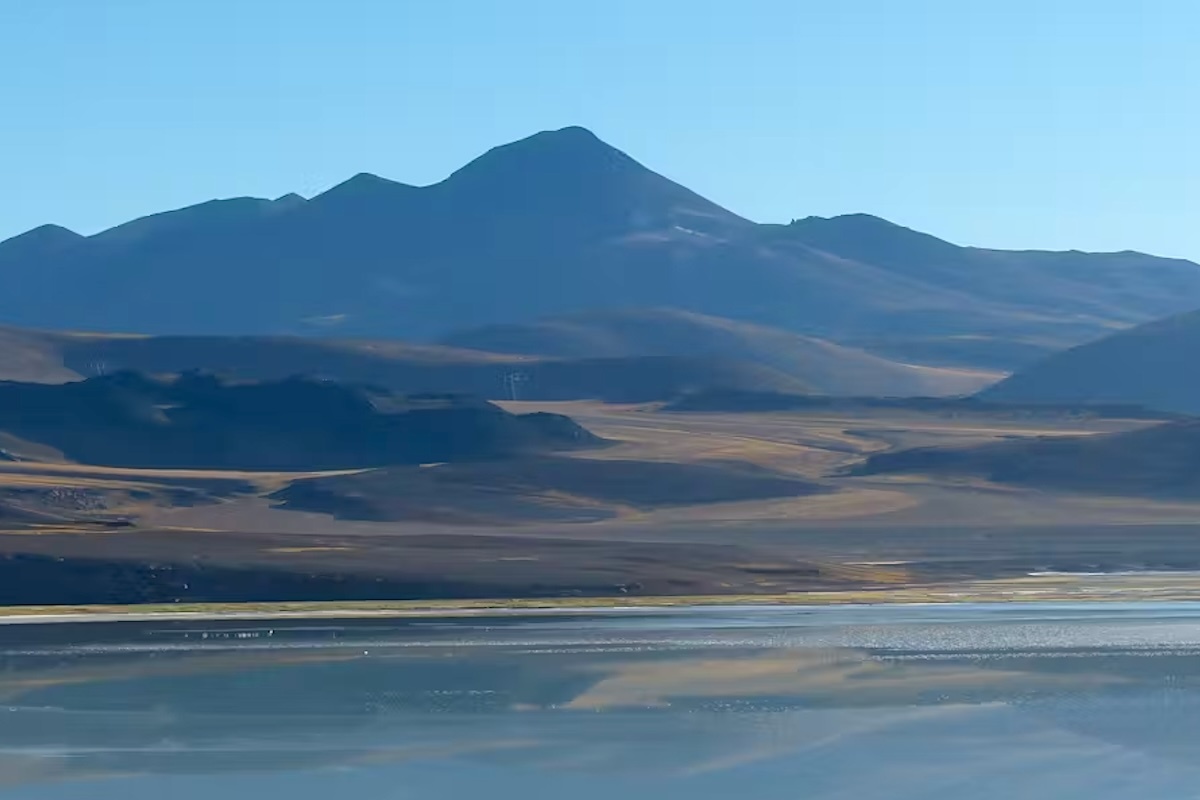
New research by scientists from the Australian National University has found that some extinct volcanoes, which have not erupted for thousands or even millions of years, may be rich sources of rare earth elements.  Furthermore, those elements may be easier to extract than the ones from other sources because the iron-rich magma that formed the volcanoes could be up to 100 times more efficient at concentrating rare-earths than magma found in active volcanoes today.

The clean tech industry uses rare earths for wind turbines, solar panels, and electric cars.  The demand for rare earths may grow fivefold by the end of this decade.  Relying on just one country for the world’s supply is a major concern.  There are ancient volcanoes all over the planet and they may represent a solution to a global problem.

**********

Web Links

Extinct Volcanoes Could Be Source of Key Metals Needed for Clean Tech

Photo, posted June 6, 2020, courtesy of Dennis Jarvis via Flickr.

Earth Wise is a production of WAMC Northeast Public Radio
Deep sea mining

August 19, 2024 By EarthWise Leave a Comment

Deep sea mining is a threat to the environment

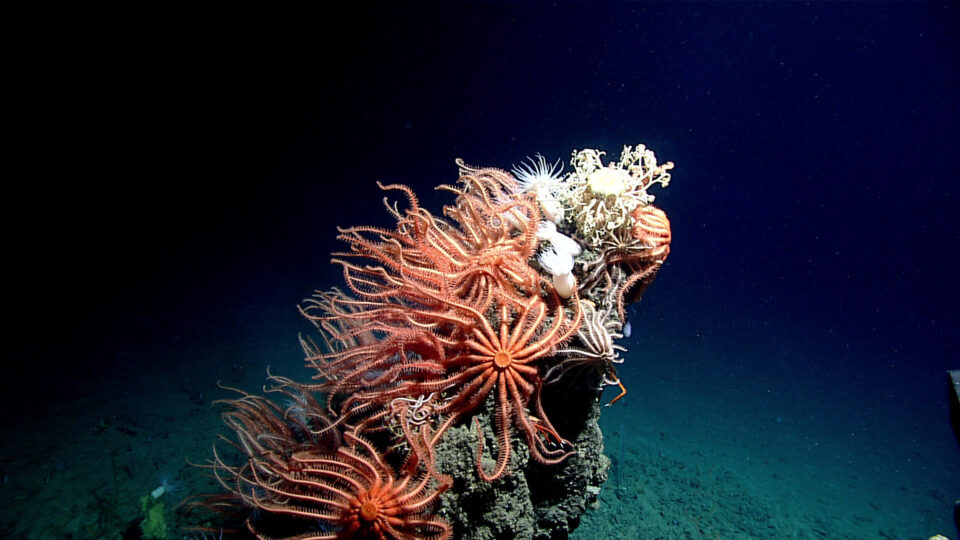
Deep sea mining is the extraction of minerals from the ocean floor at depths greater than 660 feet and as much as 21,000 feet below the surface.  Active or extinct hydrothermal vents on the ocean floor create sulfide deposits which collect metals such as silver, gold, copper, manganese, cobalt, and zinc.  This forms polymetallic nodules – potato-sized rocklike deposits containing these valuable minerals.  There are literally trillions of these things scattered over wide areas of ocean floor.  The largest of these deposits are in the Pacific Ocean between Hawaii and Mexico in the Clarion Clipperton Fracture Zone.

Mining companies argue that land-based sources for valuable metals are running out and are critically needed for green technologies like batteries for electric vehicles and manufacturing solar panels and wind turbines.  They also claim that mining in the deep sea will be less environmentally damaging than land-based mining.

The deep sea is viewed by many as kind of a watery desert but there are actually diverse and rich ecosystems down there.  Most of the animals living in the depths are tiny, but that doesn’t make them any less important.  Many can live for a very long time.  Some invertebrates live for thousands of years.

There are currently no commercial deep sea mining operations underway.  Many countries have outlawed them.

The deep seas are the last mostly unexplored part of the Earth.  Deep sea mining will unquestionably be highly destructive to these environments.  We don’t really know what the impact of widespread deep sea mining might be, but the world continues to edge ever closer to allowing it to happen.

**********

Web Links

Can We Mine the World’s Deep Ocean Without Destroying It?

Photo, posted March 30, 2018, courtesy of the NOAA Office of Ocean Exploration and Research via Flickr.

Earth Wise is a production of WAMC Northeast Public Radio

Averting a mass extinction

July 19, 2024 By EarthWise Leave a Comment

Averting a sixth mass extinction

There has been widespread concern that biodiversity is under siege and that we are in the beginnings of a sixth mass extinction in the long history of the Earth, this time caused by the actions of humanity.  There has been considerable debate about what can be done about it and solutions generally involve protecting large areas of the planet from human disruptions.  Some countries have set a target of protecting 30% of land and sea.

A new study by a broad coalition of conservation organizations and published in Frontiers in Science, concludes that humans can preserve much of the great diversity of life on Earth by setting aside just 1.2% of the planet for protection.

The experts mapped the wilderness available to rare and threatened plants and animals.  They then identified specific hotspots for rare wildlife that have yet to be protected.  They found a total of 16,825 such sites which nevertheless all together add up an area smaller than the state of Wisconsin.

Some scientists have been warning that by focusing too much on the size of protected lands, we are not necessarily safeguarding areas that are especially rich in wildlife.  The new study pushes for prioritizing hotspots for rare species, which the authors claim would be sufficient to stave off a sixth mass extinction.  The truth is that most species on Earth are rare, meaning that they are few in number or cover a small range, or both.

The study estimated that the cost of protecting the identified hotspot sites would be $263 billion, which is certainly a large amount of money.  But the authors point out that this sum to save global biodiversity is less than the yearly revenue of Shell Oil.

**********

Web Links

To Avert a Mass Extinction, Protect 1 Percent of Earth

Photo, posted April 20, 2018, courtesy of Per Harald Olsen / AfricanBioServices via Flickr.

Earth Wise is a production of WAMC Northeast Public Radio

Marine carbon dioxide removal

May 23, 2024 By EarthWise Leave a Comment

Marine CO2 removal

About 30% of the carbon dioxide emitted by human activity is absorbed by the oceans.  As a result, they are getting warmer and more acidic, and the currents that help shape global weather are shifting.  To try to reduce global warming, people want to be able to store even more carbon dioxide in the oceans without the negative effects of doing so.

There are multiple efforts across the globe to achieve effective marine carbon dioxide removal.  Some are based on sinking carbon-rich materials to the bottom of the sea.  This is the marine equivalent of capturing CO2 from the air and storing it underground.  Other efforts involve increasing the alkalinity of the ocean, which increases its ability to chemically react with carbon dioxide as well as lowers its acidity, which is desirable in many ways.

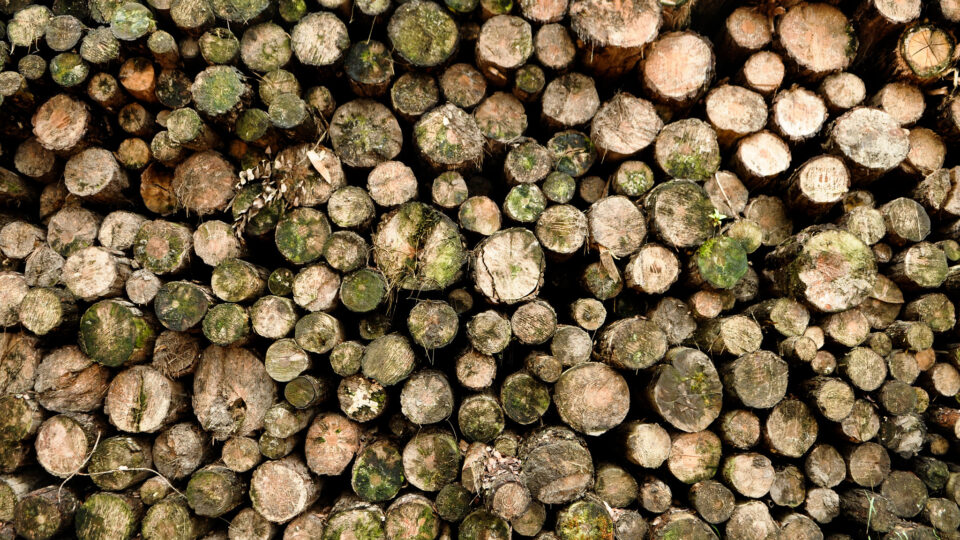
Running Tide, a U.S.-based company, has been dumping thousands of tons of wood-industry waste 190 miles off the coast of Iceland.  The company has also been experimenting with dumping algae and kelp and sinking it deep below the ocean.  Such materials on land either get burned or decay, in both cases releasing CO2 into the atmosphere.  On the deep-sea bottom, the carbon is trapped.

Other efforts involve pumping seawater through electrodialysis filter systems to remove excess acidity or adding alkaline rocks to increase water alkalinity.

All of these efforts are a form of geoengineering, and like proposed ideas to cool the atmosphere, pose potential risks.  There is no silver bullet to solve the climate crisis.  It will take a combination of many solutions to address the issue of excess carbon dioxide in the atmosphere.  Marine carbon dioxide removal is one of the solutions that may play a role.

**********

Web Links

Scientists Are Trying to Coax the Ocean to Absorb More CO2

Photo, posted February 22, 2018, courtesy of Bobbie Halchishak/USFWS via Flickr.

Earth Wise is a production of WAMC Northeast Public Radio

Major species turnover forecasted for North American cities

May 2, 2024 By EarthWise Leave a Comment

Major species turnover is forecasted for cities in North America

Climate change affects animal species in many ways.  It induces habitat loss, disrupts migration and breeding patterns, threatens marine life, and facilitates an increased spread of disease.  It may also affect where animals can be found in the future. 

According to a new study led by researchers from the University of Toronto Mississauga and Apex Resource Management Solutions in Canada, climate change may dramatically affect the animal species observed in North American cities by the end of the century.

The researchers used species distribution data combined with machine learning to study the impact of human-caused climate change on more than 2,000 animal species historically found in the 60 most populous North American cities. 

According to the research team, changes in biodiversity are brewing for almost every city it studied by the year 2100.  In fact, cities with a rich history of biodiversity are predicted to have the largest declines and fewest gains in species. Cooler and wetter cities like Quebec, Ottawa, Winnipeg, Kansas City, and Omaha are expected to welcome the most new species.  Warmer cities with higher precipitation – like cities in coastal California – are projected to lose the most species. 

More than 95% of bird and insect species are predicted to experience a change in the number of cities they call home.  Canines, most amphibians, and aquatic birds are expected to experience the greatest losses.  Toads, turtles, mice and pelicans are projected to become more common overall. 

The researchers hope their findings will encourage more efforts to protect biodiversity.

**********

Web Links

North American cities may see a major species turnover by the end of the century

Photo, posted September 29, 2013, courtesy of Jonathan Kriz via Flickr.

Earth Wise is a production of WAMC Northeast Public Radio
Climate Promises | Earth Wise

November 23, 2022 By EarthWise Leave a Comment

Countries are making climate promises, but are they following through?

The United Nations climate change conference that recently took place in Egypt is an annual event.  Last year, the conference was in Glasgow, Scotland, and the participants – heads of state and business leaders – produced a long list of promises aimed at fighting global warming.  How have the countries and companies making those promises done so far?  Unfortunately, not very well.

Participants made pledges for progress in several major areas.

Countries promised to cut greenhouse gas emissions faster, but only 24 countries out of the 140 participants have actually done so.

Countries agreed to expedite the deployment of clean energy and the phasing out of government subsidies for fossil fuels.  There has been considerable progress on green power, but coal use actually reached record highs this year primarily because of Russia’s invasion of Ukraine, which caused natural gas prices to spike.

Countries pledged $100 billion a year to help poorer countries shift to cleaner energy sources.  There has been lots of effort in this area, but the target has not been met and it isn’t clear that all the money is going where it is supposed to.

More than 100 countries pledged to slash methane emissions, but most nations are only getting started.

More than 130 countries pledged to halt and reverse deforestation by 2030.  Deforestation is slowly declining, but not fast enough to meet the goals of the pledge.

An important goal for this year’s climate conference was to try to find a way to not just set admirable and valuable climate goals, but to actually accomplish them.  It isn’t easy, but it is essential.

**********

Web Links

Countries Made Bold Climate Promises Last Year. How Are They Doing?

Photo, posted July 25, 2009, courtesy of Wagner T. Cassimiro via Flickr.

Earth Wise is a production of WAMC Northeast Public Radio

Carbon Inequality | Earth Wise

November 4, 2022 By EarthWise Leave a Comment

Everyone contributes to climate change, but not equally

Everyone contributes to climate change through the generation of greenhouse gas emissions, but individual contributions vary greatly.   A study at the Paris School of Economics has determined that just 1 percent of the population is responsible for nearly a quarter of global carbon emissions growth since 1990.

The study estimated emissions from individuals’ consumption and their financial investments, and also from government spending in their country.  Individuals are responsible for carbon emissions as a result of their own activities, but they also bear their share of responsibility for the emissions of the firms that they own or invest in. 

In 2019, people living in sub-Saharan Africa produced an average of 1.8 tons of CO2 equivalent per capita.  In North America, the average per capita was more than 10 times higher.  Meanwhile, the top 10% of North America’s emitters produced more than 75 tons each.

From 1990 to 2019, the bottom 50% of emitters was responsible for just 16% of emissions growth, while the top 1% was responsible for 23%.  The top 0.1% saw emissions growth of 80%.

The inequality between rich and poor is driven more by inequality within countries than by inequality between countries.  This is particularly true for wealthy countries.  For example, over the study period, the top 1% saw their emissions grow by 26% while emissions actually declined 5-15% among low and middle earners even in wealthy nations.

Economic inequality drives a lot of the dynamics taking place within many countries around the world, and this even applies to pollution and greenhouse gas emissions.

**********

Web Links

Global carbon inequality over 1990–2019

Photo, posted December 11, 2017, courtesy of Bernal Saborio via Flickr.

Earth Wise is a production of WAMC Northeast Public Radio
Removing Lead From Water With Beer Yeast | Earth Wise

July 14, 2022 By EarthWise Leave a Comment

An innovative solution for removing lead from freshwater

Lead and other heavy metals in water are a serious global problem that is worsening because of electronic waste and discharges from mining operations.  In the U.S., over 12,000 miles of waterways are impacted by mine-drainage water that is rich in heavy metals.

Lead in particular is highly toxic, especially to children.  The European Union established a standard for allowable lead in drinking water of only 5 parts per billion.  In the US, the EPA has declared that no level of lead at all is safe.

Researchers at MIT have recently discovered that inactive yeast can be effective as an inexpensive, abundant, and simple material for removing lead contamination from drinking water supplies.  The MIT study shows that the method works even at parts-per-billion levels of contamination.

The method is called biosorption, in which inactive biological material is used to remove heavy metals from water.  Previously, it has been studied at parts-per-million contaminant levels, but the MIT study shows that it works at much lower levels as well.

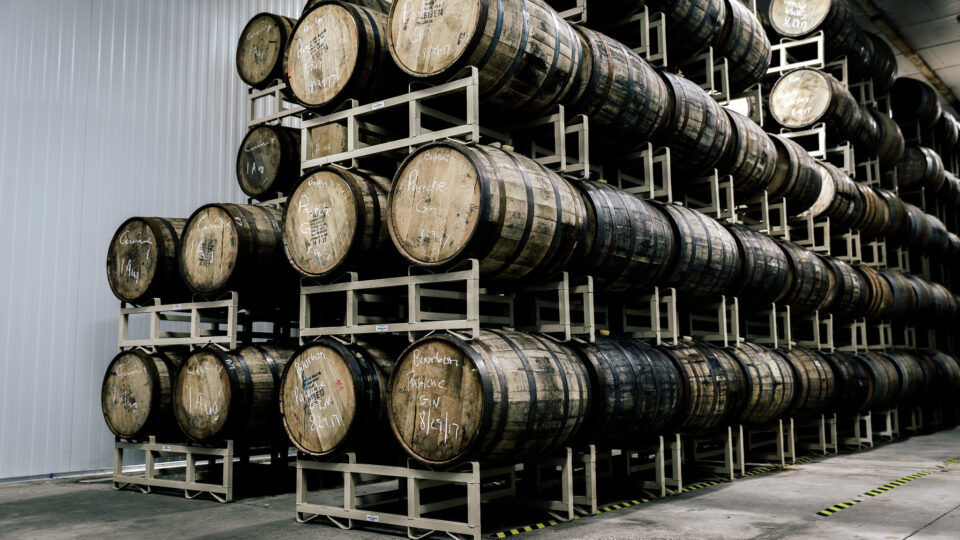
The team studied a type of yeast widely used in brewing.   The yeast cells used are inactive and desiccated and require no special care.  Such yeast is abundantly available as a waste product from beer brewing and various other fermentation-based industrial processes. 

The researchers estimate that to clean a water supply for a city the size of Boston would require about 20 tons of yeast a day, or 7,000 tons a year.  That seems like a lot, but one single brewery, the Boston Beer Company, generates 20,000 tons a year of surplus yeast that is no longer useful for fermentation.

**********

Web Links

Could used beer yeast be the solution to heavy metal contamination in water?

Photo, posted September 5, 2017, courtesy of Allagash Brewing via Flickr.

Earth Wise is a production of WAMC Northeast Public Radio.

Perennials To Attract Pollinators | Earth Wise

November 26, 2021 By EarthWise Leave a Comment

Perennial plants to help support insects and pollinators

There has been a decline in the abundance of insect and other animal pollinators in many ecosystems worldwide that began being observed at the end of the 20th century.  Pollinators and their health have become growing concerns for the public and many states have enacted legislation related to pollinator decline.

In many places, the pollinator decline has largely been driven by a loss of flowering plants in the landscape, the primary source of food for the pollinators.  A new study by Penn State researchers looked at the attractiveness to pollinators of various species of perennial flowering plants that people can plant in their gardens and other landscapes.

It turns out that there is considerable variation in how attractive different flowering plants are to pollinators.  Greenspaces such as parks and gardens have the potential to support very rich pollinator communities, even including rare or vulnerable species.

People generally select ornamental plants because of their appearance and growth habit, not because of their pollinator attraction.

The Penn State study looked at a variety of perennials and identified the most attractive plant cultivars, which can attract 4 times the number of pollinator species than the least attractive plants studied.

The most appealing plant is the ‘Blue Fortune’ giant hyssop.  Other highly attractive plants are the anise hyssop, the ‘Black Adder’ Agastache, the Cat’s Meow and Walker’s Low Nepetas, and the Triloba and Herbstonne Rudbeckias.

Many of these plants produce large floral displays and the researchers suggest that they should be prioritized when planting a pollinator garden amongst other species with comparably small floral displays and lower attractiveness to pollinators.

**********

Web Links

Popular perennial flowering plants can attract diverse mix of pollinators

Photo, posted September 7, 2019, courtesy of KM via Flickr.

Earth Wise is a production of WAMC Northeast Public Radio.

Banning Short Plane Flights | Earth Wise

May 20, 2021 By EarthWise Leave a Comment

Banning short plane flights to reduce emissions

Almost everything we do ultimately results in greenhouse gases entering the atmosphere and therefore has an impact on the climate.  But some activities have much more impact than others.  The aviation industry is responsible for about 5% of global warming.

This doesn’t seem like that large a contribution, but only a very small percentage of the world’s population flies frequently and even in richer countries, only around half the population flew in any given year (at least before the pandemic.)

Flying is generally the only practical option for most long-haul trips and unless people give up on seeing the world or conducting global business in person, they are not going to give up taking air trips.

But shorter flights are a different story.  If you are planning to take a reasonably short trip in France, a plane will soon no longer be an option.  The French government says that flights will be banned on any route where the trip could be made on a train in 2.5 hours or less.  The driving force is the reduction of CO2 emissions.  A plane trip emits an average of 77 times more CO2 per passenger than taking a train on the same route.

The Netherlands and Belgium are also considering bans on short-haul flights and Austrian Airlines recently replaced its Vienna-to-Salzburg flights with train service.

Advocates of the flight bans say that not only does taking the train significantly reduce a traveler’s carbon footprint, but it can be cheaper and actually faster than a plane when factoring in the time spent getting to airports, standing in security lines, getting on and off planes, and so on.  Europe’s extensive train system makes this approach broadly practical. Unfortunately, here in the U.S., it is not quite that easy.

**********

Web Links

France Will Ban Short Flights That Could Be Replaced By a Train Trip

Photo, posted December 17, 2016, courtesy of Dylan Agbagni via Flickr.

Earth Wise is a production of WAMC Northeast Public Radio.

How To Bend The Curve On Biodiversity Loss | Earth Wise

October 15, 2020 By EarthWise Leave a Comment

how to bend the curve on biodiversity loss

Biodiversity has been declining at an alarming rate in recent years as a result of human activities, including land use changes, pollution, and climate change.  According to a 2019 UN report, one million species – out of an estimated eight million – are threatened with extinction.  Many scientists warn we are in the middle of the sixth mass extinction event in Earth’s history.  Previous mass extinction events wiped out up to 95% of all species and took ecosystems millions of years to recover. 

Fortunately, new research indicates that it might not be too late to bend the curve on biodiversity loss.  According to the report, which was recently published in the journal Nature, more ambitious conservation measures are needed in order to  preserve biodiversity.  In addition, more efficient food production and healthier and less wasteful consumption and trade are needed to bend the curve. 

If these measures are undertaken with unprecedented ambition and coordination, the research team says the efforts will provide an opportunity to reverse biodiversity loss by 2050.

But even under the best case scenario, ongoing land conversion will lead to further biodiversity losses before the curve starts to bend.  In fact, at least one third of projected losses in the coming years are unlikely to be avoided under any scenario.  Biodiversity losses were projected to be highest in the regions richest in biodiversity, including South Asia, Southeast Asia, Sub-Saharan Africa, the Caribbean, and Latin America. 

The study, which was led by the International Institute for Applied Systems Analysis in Austria, makes it clear that urgent action is needed this decade in order to have any chance of bending the curve. 

**********

Web Links

Curbing land clearing for food production is vital to reverse biodiversity declines

Photo, posted November 1, 2017, courtesy of Rod Waddington via Flickr.

Earth Wise is a production of WAMC Northeast Public Radio.

An Environmental Victory In Cameroon | Earth Wise

September 23, 2020 By EarthWise Leave a Comment

Preserving biodiversity in Cameroon

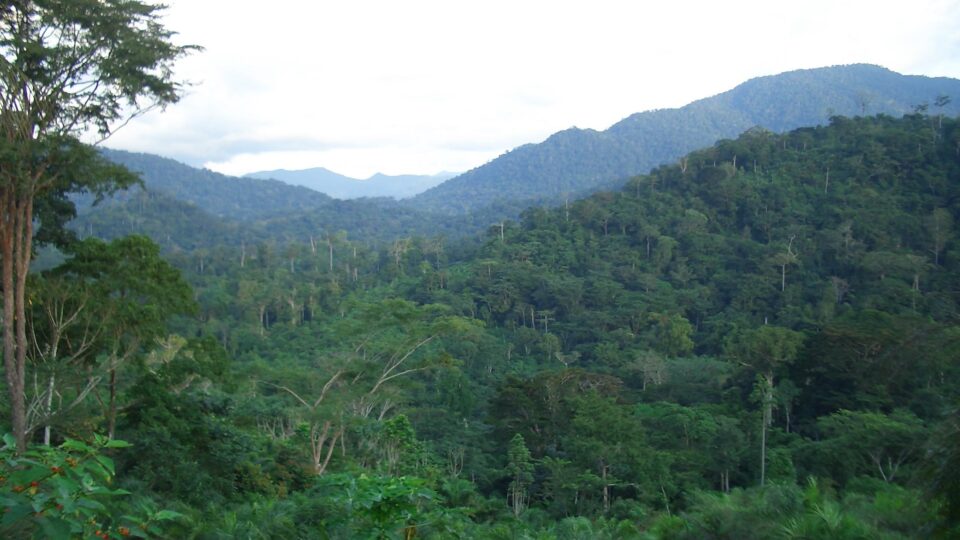
The Ebo Forest in Cameroon is one of the last intact forests in central Africa and is a biodiversity hotspot, home to hundreds of rare plants and animal species, including tool-using Nigeria-Cameroon chimpanzees, western gorillas, forest elephants, red colobus monkeys, and giant goliath frogs.  The 600 square miles of mountain slopes and river valleys are covered by thick tree canopies that shelter a fascinating array of species.

This past July, Cameroon Prime Minister Joseph Dion Ngute signed a decree that turned half of the Ebo Forest into a so-called forest management unit, meaning that the government could begin to sell logging concessions.

However, on August 11, Ngute, at the direction of President Paul Biya, withdrew the decree, suspending any logging plans.  President Biya also ordered a delay to reclassify an additional 160,000 acres of the Ebo, which might have opened up even more forest for logging.

Apart from its rich biodiversity, the Ebo Forest is culturally and societally important for the Banen Indigenous people, who consider it to be their sacred ancestral home.  The Banen were ousted from the forest in the 1960s but took up settlements just a few miles from its borders.  They still rely on the forest for food and medicines.  Meanwhile, the proximity of the forest to big cities makes it an easy target for bushmeat poachers.

Both conservation groups and indigenous leaders welcomed the withdrawal of the decree but remain concerned about the future of the Ebo Forest.  Conservation groups hope that the international community will seize the opportunity to work with the government of Cameroon to make the Ebo Forest a permanent showcase for long-term conservation in harmony with very challenged communities.

**********

Web Links

Cameroon Cancels Plan to Log Half of the Ebo Forest, a Key Biodiversity Hotspot in Central Africa

Photo, posted September 17, 2005, courtesy of Salva le Foreste via Flickr.

Earth Wise is a production of WAMC Northeast Public Radio.

Climate Change And Economic Inequality

June 3, 2019 By EarthWise 1 Comment

A new study by Stanford University looked at the effects of climate change on global economic inequality.  The study found that the gap between the economic output of the world’s richest and poorest countries is larger today than it would have been without global warming.

The warming climate has enriched cooler countries like Norway and Sweden while dragging down economic growth in warm countries such as India and Nigeria.  The results of the study showed that most of the poorest countries on Earth are considerably poorer than they would have been in the absence of rising temperatures.  At the same time, the majority of rich countries are richer than they would have otherwise been.

Detailed analysis of 50 years of annual temperature and GDP measurements for 165 countries demonstrated that growth during warmer than average years has accelerated in cool nations and slowed in warm nations.  Historical data clearly show that crops are more productive, people are healthier, and they are more productive at work when temperatures are neither too hot nor too cold.  That means that in cold countries, a little bit of warming can help but the opposite is true in places that are already hot.

For most counties, whether global warming has helped or hurt economic growth is pretty certain.  Tropical countries in particular tend to have temperatures far outside the ideal for economic growth and they are already among the poorest countries.  It is less clear how warming has influenced growth in countries in the middle latitudes, such as here in the United States.  Some of the largest economies are near the perfect temperature for economic output but continued warming in the future is likely to push them away from the temperature optimum.

**********

Web Links

Climate change has worsened global economic inequality

Photo, posted November 1, 2011, courtesy of CIAT via Flickr.

Earth Wise is a production of WAMC Northeast Public Radio.

Climate Change And Biodiversity

April 19, 2018 By EarthWise Leave a Comment

https://earthwiseradio.org/wp-content/uploads/2018/04/EW-04-19-18-Climate-Change-and-Biodiversity.mp3

According to a new study recently published in the journal Climatic Change, up to half of the plant and animal species in the world’s most naturally-rich areas could face local extinction by the turn of the century due to climate change.  This projection, jeopardizing the biodiversity in places like the Amazon and the Galapagos, assumes carbon emissions continue to rise unchecked. 

[Read more…] about Climate Change And Biodiversity

Primary Sidebar

Recent Episodes

  • An uninsurable future
  • Clean energy and jobs
  • Insect declines in remote regions
  • Fossil fuel producing nations ignoring climate goals
  • Trouble for clownfishes

WAMC Northeast Public Radio
WAMC/Northeast Public Radio is a regional public radio network serving parts of seven northeastern states (more...)

Copyright © 2026 ·