• Skip to primary navigation
  • Skip to main content
  • Skip to primary sidebar

Earth Wise

A look at our changing environment.

  • Home
  • About Earth Wise
  • Where to Listen
  • All Articles
  • Show Search
Hide Search
You are here: Home / Archives for refining

refining

A better way to produce green hydrogen

September 9, 2024 By EarthWise Leave a Comment

Hydrogen has great potential as a fuel and an energy carrier for many applications.  Burning it or consuming it in fuel cells does not produce carbon emissions.  As a result, there has long been the vision for a future hydrogen economy.  Whether the hydrogen economy would ever come about given how various other technologies have evolved over time is questionable.  But regardless, hydrogen is valuable for many industrial and commercial applications including the manufacture of ammonia and the refining of metals.

Hydrogen is produced in industrial quantities from natural gas by a carbon-dioxide-producing process known as methane-steam reforming.  To take its place as a green energy source, hydrogen needs to be produced by splitting water into its constituent oxygen and hydrogen components by the process of electrolysis. 

The problem is economic.  Methane-steam reforming produces hydrogen at a cost of about $1.50 per kilogram.  Green hydrogen costs about $5 a kilogram.

Researchers at Oregon State University have developed a new photocatalyst that enables the high-speed, high-efficiency production of hydrogen.  The material, called RTTA, is a metal organic framework containing ruthenium oxide and titanium oxide.  Ruthenium oxide is expensive, but very little is needed.  For industrial applications, if the catalyst shows good stability and reproducibility, the cost of the small amount of this exotic material becomes less important.

The photocatalyst, when exposed to sunlight, quickly and efficiently splits water yielding hydrogen.  The Oregon State discovery has real potential.

**********

Web Links

Oregon State University research uncovers better way to produce green hydrogen

Photo, posted July 7, 2023, courtesy of Bill Abbott via Flickr.

Earth Wise is a production of WAMC Northeast Public Radio
Where do states get their electricity?

September 3, 2024 By EarthWise Leave a Comment

Exploring how states produce their electricity

How the United States produces its electricity has changed dramatically over the past few decades.  Coal used to be the dominant source of power in this country, but natural gas surpassed it in 2016, and coal’s share has been shrinking ever since.  Fossil fuel still generates the majority of America’s electricity, but renewable power is increasing its contribution all the time.

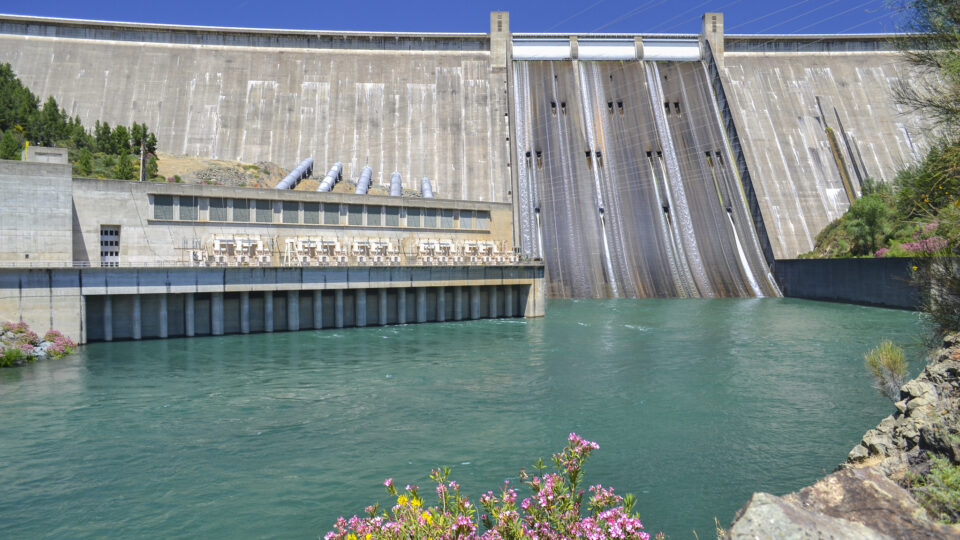
On a state-by-state basis, there are very large variations in the mix of power sources.  Ten states still get their largest amount of power from coal, but this is down from 32 states in 2001.  Four states have hydroelectric power as their largest source, including Vermont which gets more than half of its power that way. 

Texas produces more electricity than any other state by a wide margin.  It’s not just because it has a large population. It is because it uses huge amounts of power to refine petroleum products.  Coal produces only 13% of Texas’ electricity and the state is by far the country’s largest producer of wind power.

New York gets nearly half of its power from natural gas, 21% from hydroelectric power, and 21% from nuclear power.  Wind and solar power are still small, but both are growing in the state.

When people try to assess the climate impact of driving electric cars, based on the origins of the electricity they use to power the car, the results can vary dramatically based on what state they live in.  Nationwide, electricity is getting cleaner and greener, but the process is by no means uniform across the country.

**********

Web Links

How Does Your State Make Electricity?

Photo, posted March 17, 2021, courtesy of Bureau of Reclamation via Flickr.

Earth Wise is a production of WAMC Northeast Public Radio
Iceland power

March 15, 2024 By EarthWise Leave a Comment

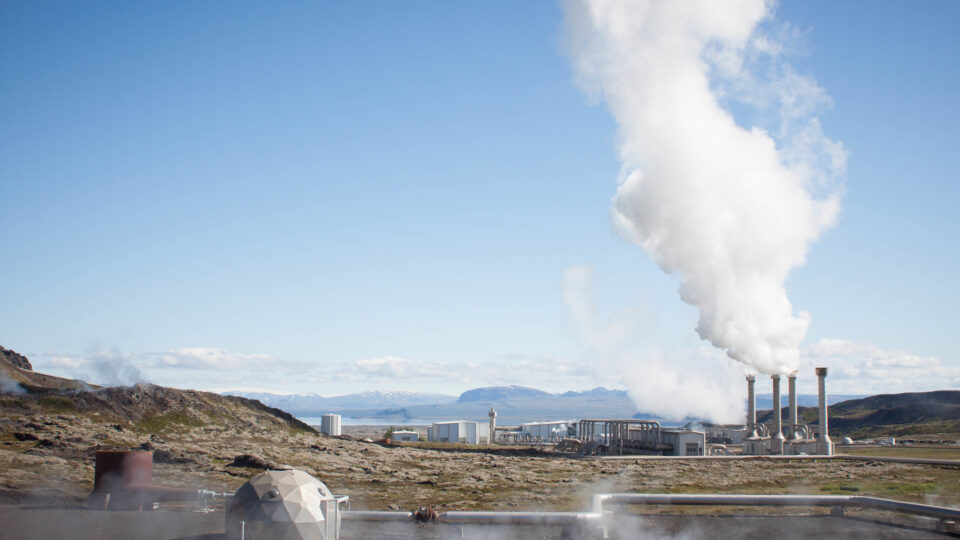
Iceland burns very little fossil fuel to power its economy and heat its homes.  About 85% of its energy comes from geothermal power and hydropower.  Its unique geology provides it with the highest percentage of renewable energy in the world.  The fossil fuel that Iceland does burn is primarily used to power cars and trucks as well as boats in its fishing fleet.  And Iceland is rapidly embracing the use of electric vehicles.

Iceland can make far more electricity than its 373,000 people can use.  The majority of its electricity is essentially exported as bars of aluminum.  Iceland is one of the world’s largest refiners of aluminum.  The aluminum ore comes from other countries but gets shipped to Iceland where electricity is cheap.  Refining aluminum is so energy-intensive that some say that aluminum is basically just pure electricity in solid metal form.

Electricity-rich Iceland is finding other ways to make use of its resources.  There is a proposed project called Icelink, which is an electricity interconnector between Iceland and Great Britain.  The high-voltage direct current link would run between 620 and 750 miles and would be the longest sub-sea power interconnector in the world.  It is controversial in Iceland and it may or may not happen.

Another technology that is establishing an early foothold in Iceland is carbon capture.  An Icelandic company called Carbix is doing leading work on taking captured carbon dioxide and sequestering it underground.  Capturing and storing carbon dioxide is energy-intensive and the promise of cheap, clean geothermal power makes Iceland an attractive place to do it.

**********

Web Links

Iceland Is Living in our Future

Photo, posted July 2, 2012, courtesy of  Emily Qualey / PopTech via Flickr.

Earth Wise is a production of WAMC Northeast Public Radio
Hydrogen hubs

November 2, 2023 By EarthWise Leave a Comment

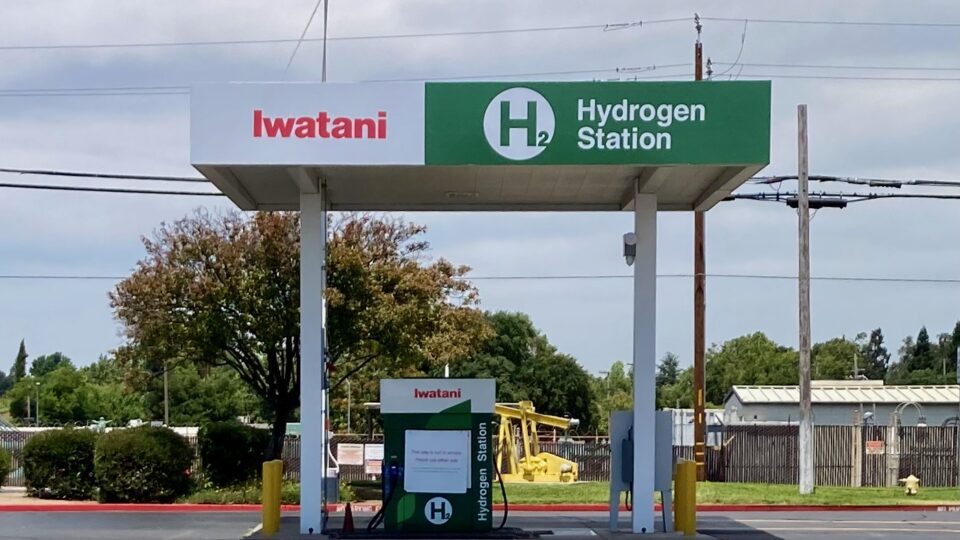
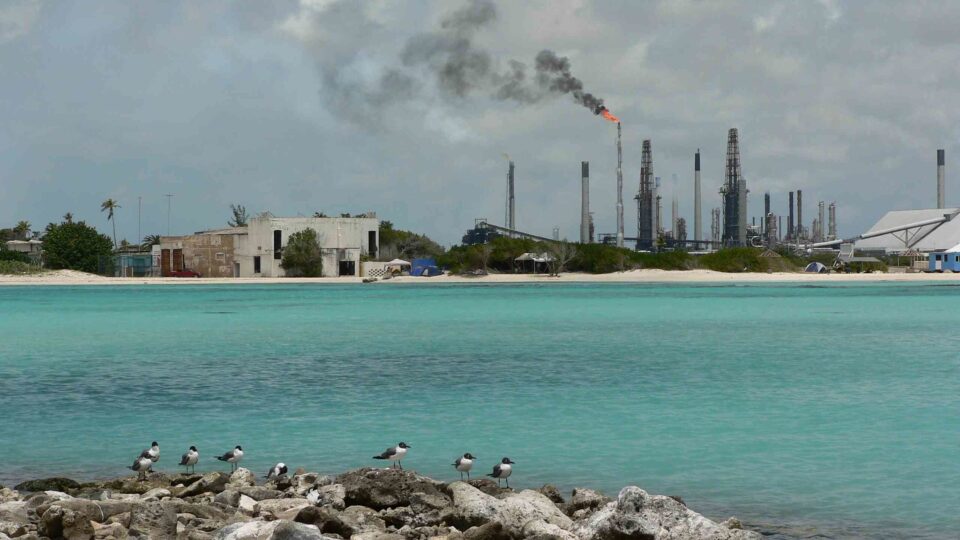
The Infrastructure Investment and Jobs Act of 2021 earmarked $7 billion in federal funding aimed at accelerating the commercial-scale deployment of hydrogen as well as driving down its cost.  Clean hydrogen is considered to be a key technology for cleaning up hard-to-decarbonize industrial sectors like refining, chemicals, and heavy-duty transport. 

On October 13th, the Department of Energy named seven regional clean hydrogen hubs which will provide clean hydrogen production, storage, delivery, and end-use components.  The so-called H2Hubs are expected to collectively produce three million metric tons of hydrogen annually. 

One selected project is the Appalachian Hydrogen Hub that includes West Virginia, Ohio, Kentucky, and Pennsylvania.  Another is the California Hydrogen Hub, that will produce hydrogen exclusively from renewable energy and biomass.  Then there is the Gulf Coast Hydrogen Hub, centered in the Houston, Texas region.  A fourth hub is the Heartland Hydrogen Hub, which includes Minnesota, North Dakota, and South Dakota.  A fifth hub is the Mid-Atlantic Hydrogen Hub, that includes Pennsylvania, Delaware, and New Jersey.  The sixth is the Midwest Hydrogen Hub that includes Illinois, Indiana, and Michigan.  Finally, there is the Pacific Northwest Hydrogen Hub that includes Washington, Oregon, and Montana.

Each of these hubs involve multiple partner organizations in their regions and each has specific goals and strategies. The seven centers are located all around the country and are intended to jumpstart a national network of clean hydrogen producers, consumers, and connective infrastructure.

**********

Web Links

Hydrogen hubs have arrived. Here are the big winners of the $7 billion sweepstakes

Photo, posted August 17, 2010, courtesy of David Stanley via Flickr.

Earth Wise is a production of WAMC Northeast Public Radio
Record Renewable Use In California | Earth Wise

May 19, 2022 By EarthWise Leave a Comment

California, the most populous state, is the second largest electricity user.  Only Texas, the second most populous state, uses more energy, in part because it consumes large amounts in refining fossil fuels. Overall, California uses about 8% of the electricity generated in the U.S.

Thus, it was a significant milestone when briefly, on April 3, a record 97.6% of the energy on California’s statewide grid came from renewable energy resources.  (The previous record of 96.4% was set just a few days earlier).

Renewable energy’s share of the power typically peaks in the spring when mild temperatures keep demand relatively low and higher sun angles drive greater solar energy production.

On April 8, a record peak solar power production was set at 13,628 megawatts just after noon.  On March 4, the state set an all-time wind generation record of 6,265 megawatts. 

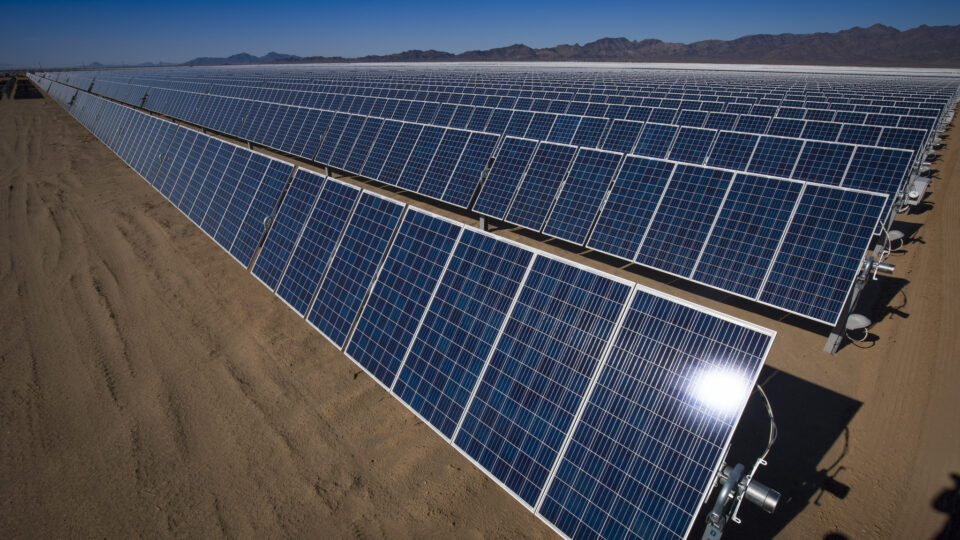
California now has over 15,000 MW of grid-connected solar power and 8,000 MW of wind.  Another 600 MW of solar and 200 MW of wind are coming online by June.  The state also has about 2,700 MW of energy storage online and that will climb to 4,000 MW by June.

In 2020, 34.5% of the state’s retail electricity sales came from wind and solar sources.  Adding in hydropower and nuclear power, nearly 60% of the state’s electricity came from non-fossil fuel.  Despite the effects of drought on hydropower generation and the impact of the pandemic on the pace of renewable energy projects, California continues its dramatic transition to sustainable energy.

**********

Web Links

Solar and wind notched records as renewables met California’s energy demand

Photo, posted September 20, 2016, courtesy of Tom Brewster Photography / BLM via Flickr.

Earth Wise is a production of WAMC Northeast Public Radio.

Emissions From Electric Buses

September 12, 2018 By EarthWise Leave a Comment

https://earthwiseradio.org/wp-content/uploads/2018/09/EW-09-12-18-Emissions-from-Electric-Buses.mp3

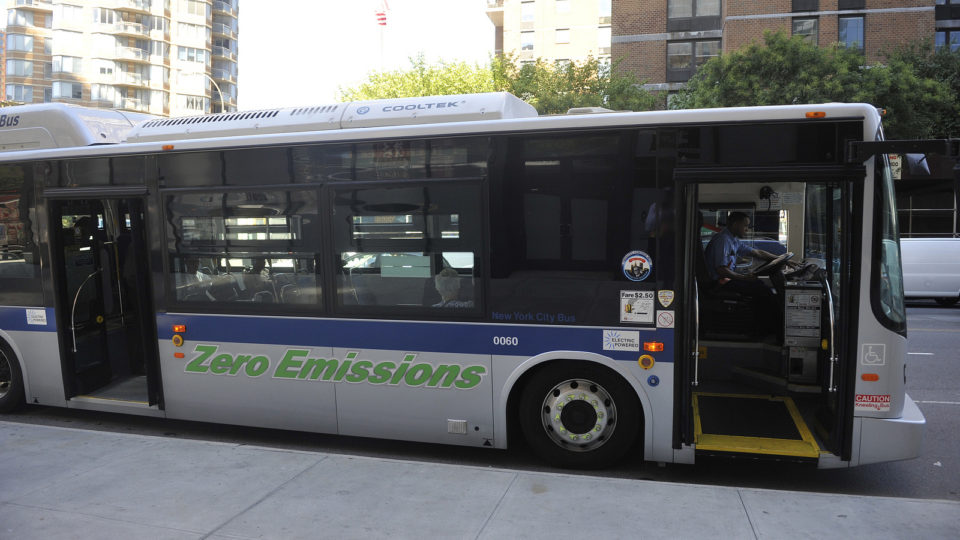
Municipalities and transit agencies are gradually replacing conventional diesel buses with cleaner alternatives such as natural-gas-powered, diesel-electric hybrid, or fully electric buses.  The goal is to reduce the substantial carbon emissions associated with buses as well as reducing unhealthy air pollution. Diesel buses on average get less than 5 miles per gallon as they transport passengers around, so there is plenty of motivation to find more efficient ways to power them.

[Read more…] about Emissions From Electric Buses

Primary Sidebar

Recent Episodes

  • An uninsurable future
  • Clean energy and jobs
  • Insect declines in remote regions
  • Fossil fuel producing nations ignoring climate goals
  • Trouble for clownfishes

WAMC Northeast Public Radio

WAMC/Northeast Public Radio is a regional public radio network serving parts of seven northeastern states (more...)

Copyright © 2026 ·