• Skip to primary navigation
  • Skip to main content
  • Skip to primary sidebar

Earth Wise

A look at our changing environment.

  • Home
  • About Earth Wise
  • Where to Listen
  • All Articles
  • Show Search
Hide Search
You are here: Home / Archives for rebounding

rebounding

Wildlife rebounding in Uganda

December 6, 2023 By EarthWise Leave a Comment

Wildlife making a comeback in Uganda

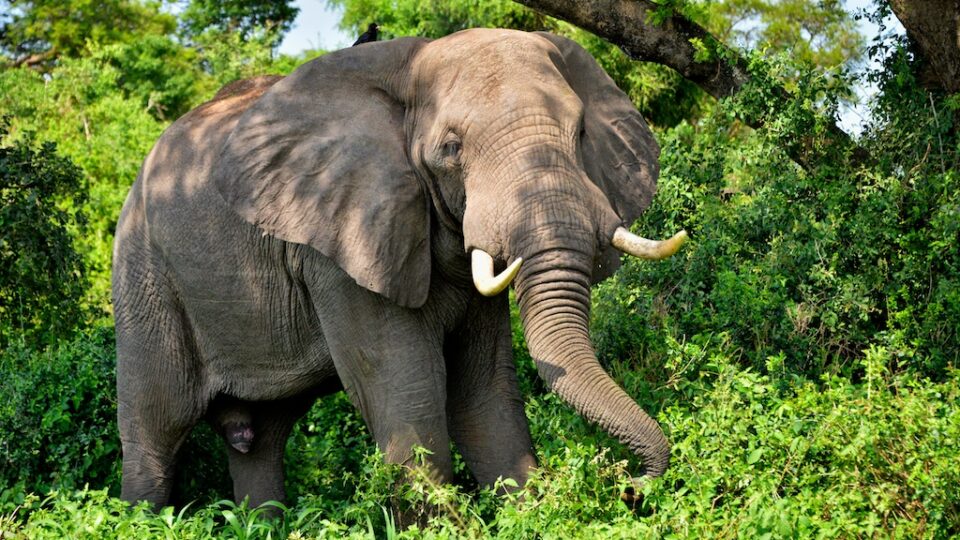
The numbers of elephants, rhinos, and other animals in Uganda’s nature preserves is steadily improving, reversing the trend of steady declines previously caused by poachers, wildlife traffickers, and conflict.

Between the 1960s and 1980s, political conflict and lawlessness in Uganda led to massive declines in some species as poaching, trafficking, and encroachment ran rampant.

Uganda’s population of over 700 northern white and eastern black rhinos was completely wiped out in the early 1980s by people hunting them for their horns.  A charity brought four rhinos in 2005 to a sanctuary called the Ziwa Rhino and Wildlife Ranch and, according to the Uganda Wildlife Authority, there are now 33 in the facility.

Increased conservation efforts have allowed the population of buffalos to increase 77% to over 44,000 since 1983.  The number of elephants has surged almost 300% to nearly 8,000 over that same time period.  There has also been an increase in the number of mountain gorillas in dense forests.

Over the years, the Ugandan government has brought in a string of conservation policies including lengthy jail terms for violations.  As a result, wildlife populations have been on a steady recovery.

It is typical to think about species in terms of how close to extinction they are, but the ultimate goal of conservation is to recover species.  This means not only gaining distance from extinction but also resuming a species’ role in its ecosystem and repopulating its former range.  Whether the wildlife in Uganda is achieving this status remains to be seen, but the trends are very positive.

**********

Web Links

Uganda Sees Resurgence of Rhinos, Elephants, Buffaloes

Photo, posted September 15, 2014, courtesy of Rod Waddington via Flickr.

Earth Wise is a production of WAMC Northeast Public Radio
Some Good Monarch News | Earth Wise

July 8, 2022 By EarthWise Leave a Comment

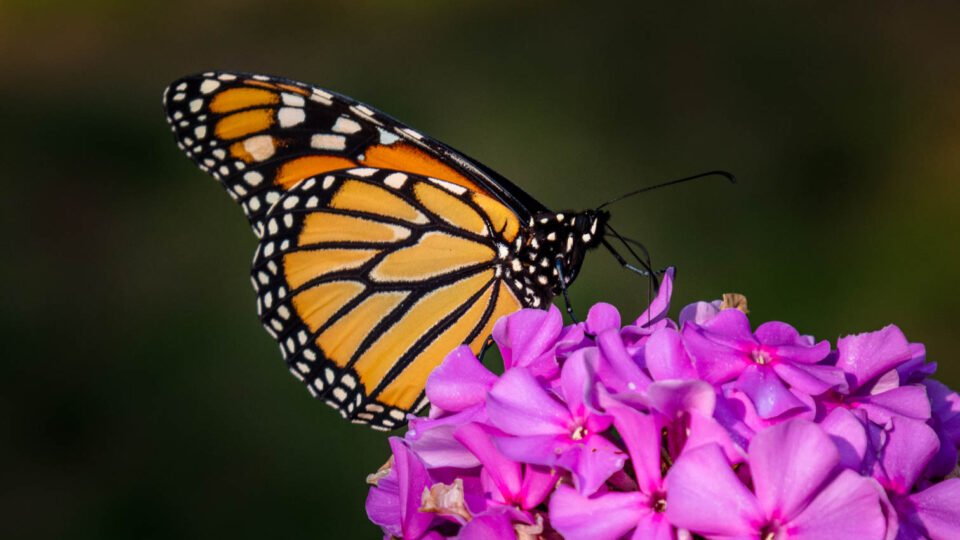
Eastern monarch butterflies spend their winter months in central Mexico.   Every spring, they embark on a lengthy, multigenerational migration that takes them into the United States and even into southern Canada, where they breed.  The butterflies go through several generations before they eventually migrate back to Mexico.

Twenty-five years ago, overwintering monarchs in Mexico blanketed nearly 45 acres of forest.  The acreage covered, which has been surveyed annually since 1993, is a rough indicator for the actual number of butterflies that survive the difficult migration process. In 2013, the monarchs occupied only 1.6 acres of Mexican forest.  The butterflies were deemed to be on the edge of extinction.

Last December, the monarch survey found 7 acres covered by the butterflies, an increase of 35% over the previous winter.  The population appears to be steadily rebounding, although the numbers are still substantially lower than the levels seen in the 1990s.

The butterflies are struggling with multiple problems.  There continues to be a lack of milkweed, the only food source for the caterpillars, in their breeding grounds along their migratory route.  More extreme weather driven by climate change is another challenge, and illegal logging in their overwintering habitat in Mexico has also become a threat.

After the butterfly population crashed in 2013, conservation efforts shifted into high gear with lots of milkweed planting in the US and Canada, and crackdowns on timber poachers in Mexico.

The remarkable multigenerational migration of monarchs is a delicate phenomenon that can be disrupted by many different things.  Eastern monarchs are still in serious danger, but the current trend seems to be positive.

**********

Web Links

Warming Trends: Butterflies Bounce Back, Growing Up Gay Amid High Plains Oil, Art Focuses on Plastic Production

Photo, posted August 12, 2021, courtesy of Paul VanDerWerf via Flickr.

Earth Wise is a production of WAMC Northeast Public Radio.

Sea Turtle Populations Are Rebounding

November 7, 2017 By EarthWise Leave a Comment

https://earthwiseradio.org/wp-content/uploads/2017/11/EW-11-07-17-Sea-Turtle-Populations.mp3

The increasing disappearance of so many plants and animals around the world has made many scientists believe that we are experiencing a sixth mass extinction.  Despite ongoing conservation efforts, living things are struggling with habitat loss, climate change, and many other natural and man-made pressures.  Conservation success stories seem to be rare events.

[Read more…] about Sea Turtle Populations Are Rebounding

Some Good News For Monarchs

April 20, 2016 By WAMC WEB

https://earthwiseradio.org/wp-content/uploads/2016/04/EW-04-20-16-Good-News-for-Monarchs.mp3

Spring is the time of the great monarch migration when the butterflies leave their wintering grounds in Mexico and head north to Canada.  As we have been saying for quite some time, fewer and fewer butterflies have been making the trek each year.  Twenty years ago, a billion monarchs swarmed the winter site in Mexico.  In 2013, the number was down to 33 million.

[Read more…] about Some Good News For Monarchs

Primary Sidebar

Recent Episodes

  • An uninsurable future
  • Clean energy and jobs
  • Insect declines in remote regions
  • Fossil fuel producing nations ignoring climate goals
  • Trouble for clownfishes

WAMC Northeast Public Radio

WAMC/Northeast Public Radio is a regional public radio network serving parts of seven northeastern states (more...)

Copyright © 2026 ·