• Skip to primary navigation
  • Skip to main content
  • Skip to primary sidebar

Earth Wise

A look at our changing environment.

  • Home
  • About Earth Wise
  • Where to Listen
  • All Articles
  • Show Search
Hide Search
You are here: Home / Archives for predation

predation

Climate change and an iconic Florida bird

December 31, 2024 By EarthWise Leave a Comment

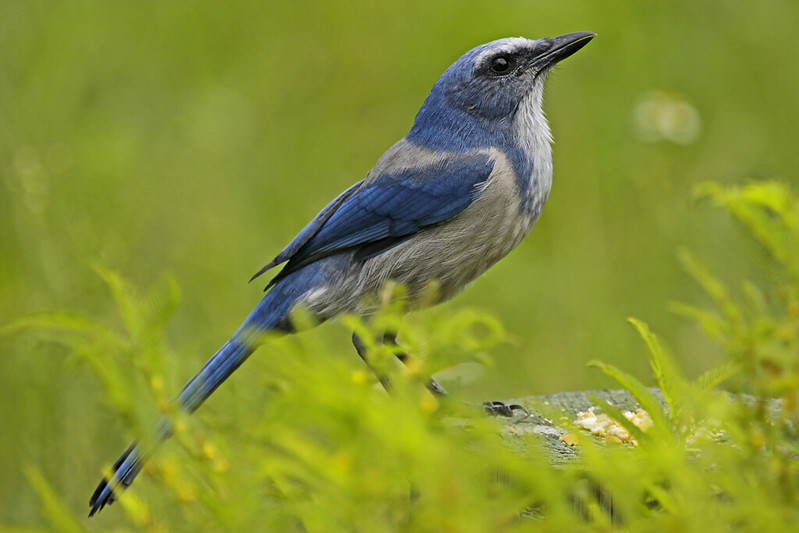
The Florida scrub-jay is a medium-sized bird native to Florida, known for its striking blue plumage and distinctive call. It is the only bird species that is entirely endemic to Florida, found mainly in the scrubby, sandy habitats of the central and southern part of the Sunshine State.

But extensive development, habitat fragmentation, and habitat degradation have caused the scrub-jay population to decline significantly over the past century. 

Another threat facing the Florida scrub-jay is climate change.  According to a new study by researchers from the Archbold Biological Station and the Cornell Lab of Ornithology, warmer winters driven by climate change are causing Florida scrub-jays to nest one week earlier than they did in 1981.  This seemingly innocuous change has reduced the number of offspring raised annually by 25% since 1981. 

The research team examined 37 years of data to assess the impacts of warming on reproductive efforts.  From 1981 to 2018, the average winter temperature at Archbold Biological Station in Florida increased by 2.5 degrees Fahrenheit.  Despite increases in the number of nests built and eggs laid over the longer breeding season, Florida scrub-jays are not producing more young. 

The researchers hypothesize that warmer temperatures make the nests susceptible to predation by snakes for a longer period of the Florida spring than in the past.  The findings, which were recently published in the journal Ornithology, suggest that climate change could dampen the success of conservation efforts for this threatened species.

**********

Web Links

Long-term study reveals warming climates threaten Florida scrub-jay

Florida Scrub-Jay

Photo, posted October 15, 2018, courtesy of Judy Gallagher via Flickr.

Earth Wise is a production of WAMC Northeast Public Radio
Assessing The Planet’s Most Unique Birds | Earth Wise

January 11, 2023 By EarthWise Leave a Comment

Birds come in a huge variety of shapes, sizes and plumages.  The physical attributes of birds are adaptations that have taken countless millennia to develop, and physical attributes are closely related to the roles birds play in their environment.   

According to a new study led by researchers from the University College London in the U.K., bird species with extreme or uncommon combinations of traits have the highest risk of extinction.  Losing these bird species and the unique roles they play in the environment, including seed dispersal, pollination and predation, could have severe consequences on the health of ecosystems.

In the study, which was recently published in the British Ecological Society journal Functional Ecology, the researchers analyzed the extinction risk and physical attributes of 99% of all living bird species.  The research team used a dataset of measurements collected from living birds and museum specimens.  The measurements included things like beak size and shape, and the length of wings, tails and legs.  The researchers combined this data with extinction risk, and then ran simulations to see what would happen if the most threatened birds were to go extinct.

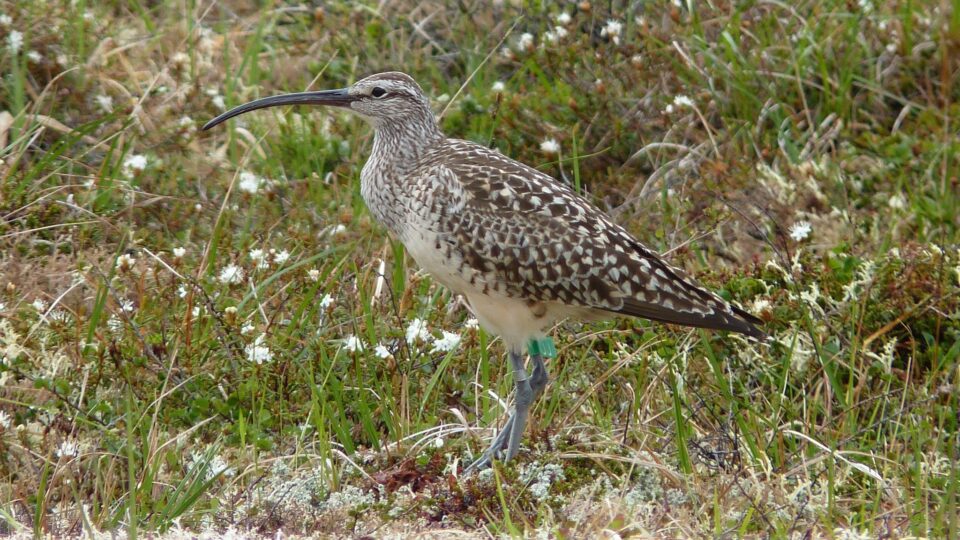
Some of the bird species that are both most unique and most threatened include the Christmas Frigatebird and the Bristle-thighed Curlew.  Kiwis were excluded from the study because the researchers viewed them as extreme morphological outliers.

While most unique birds were also classified as threatened on the Red List, the research was unable to show what links uniqueness in birds to extinction risk

The research team warns that if more isn’t done to protect these threatened species and avoid extinctions, the functioning of ecosystems will be dramatically disrupted.

*********

Web Links

Planet’s most unique birds at higher risk of extinction

Photo, posted June 25, 2012, courtesy of Kristine Sowl / USFWS via Flickr.

Earth Wise is a production of WAMC Northeast Public Radio.

Marine Predation And Climate Change | Earth Wise

July 11, 2022 By EarthWise Leave a Comment

Climate change is taking a toll on forests, farms, freshwater resources, and economies all around the world.  But ocean ecosystems remain the center of global warming.

Despite their vast ability to absorb heat and carbon dioxide, oceans are warming.  In fact, according to scientists, the oceans have absorbed 90% of all the warming that has occurred during the past 50 years. 

The ocean’s surface layer, which is home to most marine life, takes most of this heat.  As a result, the top 2,300 feet of global ocean water has warmed approximately 1.5°F since 1901.

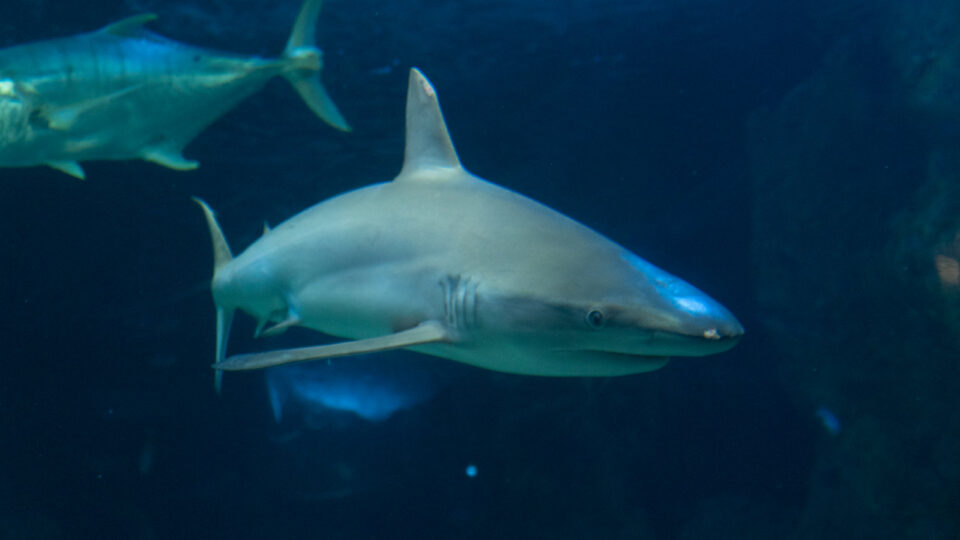
Well it turns out that a hotter ocean is also a hungrier ocean.  According to a new study recently published in the journal Science, researchers discovered that predator impacts in the Atlantic and Pacific oceans peak at higher temperatures.  The effects of more intense marine predation could disrupt ecosystem balances that have existed for millennia. 

An international research team led by the Smithsonian Institution and Temple University analyzed predator and prey data collected from 36 sites, running along the Atlantic and Pacific coasts from Alaska in the north to Tierra de Fuego at the tip of South America.  The research team found that, in warmer waters, predators’ more voracious appetites left outsized marks on the prey community.  Total prey biomass plunged in warmer waters when prey were left unprotected.  However, in the coldest zones, leaving prey exposed or protected made nearly no difference at all.  

As the oceans continue to warm, more intense predation will create winners and losers and could jeopardize the overall health of marine ecosystems.  

***********

Web Links

As the ocean heats up hungrier predators take control

Photo, posted July 14, 2017, courtesy of Jonathan Chen via Flickr.

Earth Wise is a production of WAMC Northeast Public Radio.

Invasive Species On Ships In Antarctica | Earth Wise

February 23, 2022 By EarthWise Leave a Comment

Invasive species threaten Antarctica

The Southern Ocean around Antarctica is the most isolated marine environment on Earth.  Antarctica’s native species have been isolated for the last 15-30 million years.  As a result, wildlife there has not evolved the ability to tolerate the presence of many groups of species.

New research by the University of Cambridge and the British Antarctic Survey has traced the global movements of all the ships entering Antarctic water and has found that Antarctica is connected to all regions of the globe via ship activity to an extent much greater than previously thought.  Fishing, tourism, research, and supply ships are exposing Antarctica to invasive, non-native species that threaten the existing ecosystems.

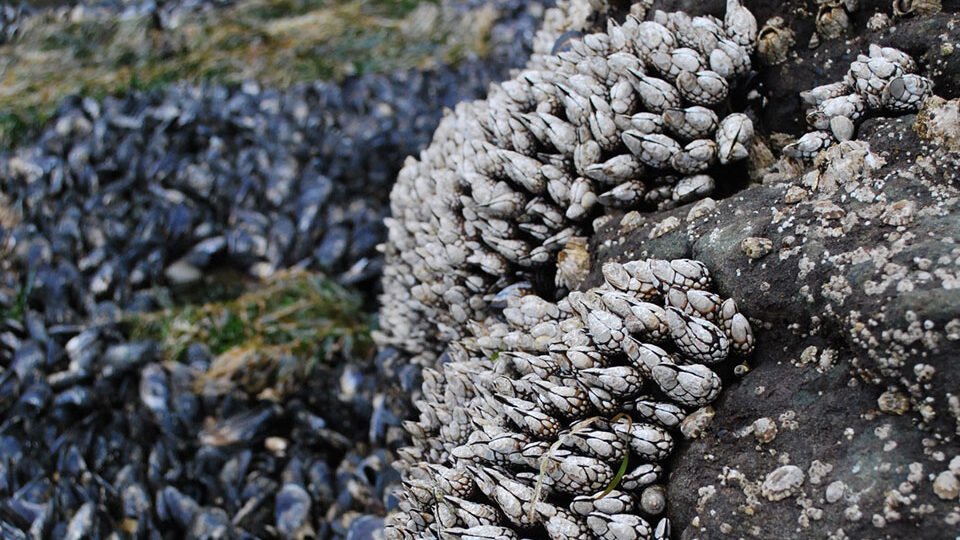
In all, the research identified over 1,500 ports with links to Antarctica.  From all these places, non-native species including mussels, barnacles, crabs, and algae attach themselves to ships’ hulls.  The process is known as biofouling. 

The greatest concern is the movement of species from pole to pole.  These species are already cold-adapted.  They may come on tourist or research vessels that spend the northern hemisphere summer in the Arctic before traveling south for the Antarctic summer season.

Mussels have no competitors in Antarctica should they be accidentally introduced.  Shallow water crabs would introduce a new form of predation that Antarctic animals have never encountered before.

Current biosecurity measures to protect Antarctica, such as cleaning ships’ hulls, focus on a small group of so-called gateway ports.  The new findings indicate that these measures need to be expanded to protect Antarctic waters from non-native species.

**********

Web Links

Invasive species ‘hitchhiking’ on ships threaten Antarctica’s unique ecosystems

Photo, posted April 12, 2016, courtesy of NOAA’s National Ocean Service via Flickr.

Earth Wise is a production of WAMC Northeast Public Radio.

Exotic Pets Can Become Problems

August 26, 2019 By EarthWise Leave a Comment

Each year, millions of exotic animals are sold as pets around the world.  The term “exotic” lacks a set definition but is generally used to refer to an animal that’s wild or more unusual than standard pets, like cats and dogs. 

The exotic pet trade is a multi-billion dollar industry,  involving tens of millions of individual animals from thousands of species, including reptiles, amphibians, fish, birds, and mammals.

Some of the exotic pet trade is legal, but a lot of it isn’t.  Many animals are illegally captured from the wild to meet the global demand for exotic pets. 

People often purchase exotic animals without completely understanding the consequences.  Some exotic pets, for example, can live nearly twice as long as the average dog.  Caring for exotic pets can be both expensive and risky, since they are largely undomesticated (and therefore can have unpredictable behavior).

As a result, it’s not uncommon for owners to release exotic pets intentionally.  When this happens, the consequences can be catastrophic.  Sometimes the animal dies from starvation or predation, but in other instances, the animal proliferates and becomes an invasive species.

Invasive species are the second largest driver of biodiversity loss worldwide, and they cost the U.S. $120 billion a year. 

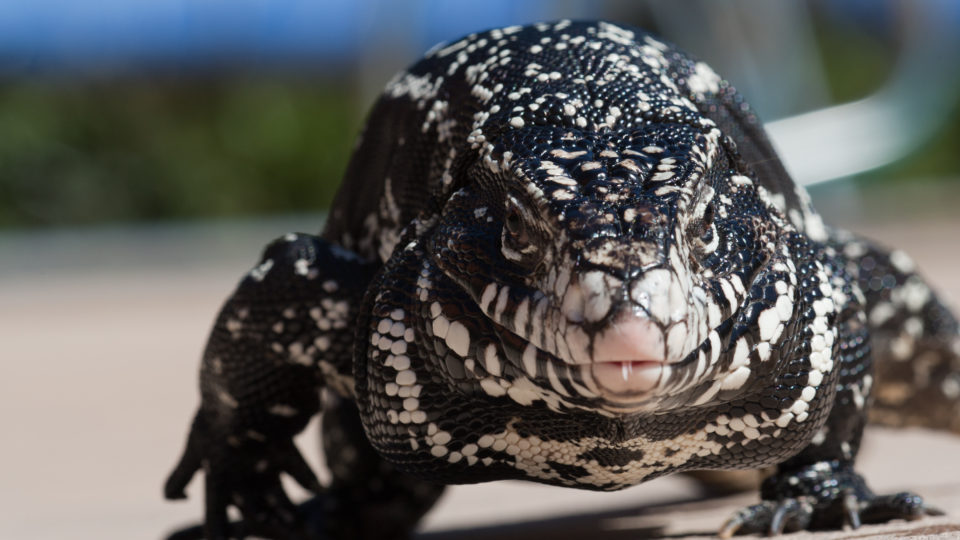
According to an academic review recently published in the journal Frontiers in Ecology and the Environment, the exotic pet trade is one of the primary causes of the spread of invasive species and has fueled the establishment of hundreds of them.  Tegus, Burmese pythons, and red lionfish are examples of pets-turned-pests. 

The best way to combat this trend is through education, detection, and rapid response. 

**********

Web Links

Why you should never release exotic pets into the wild

Photo, posted September 19, 2010, courtesy of Mike Baird via Flickr.

Earth Wise is a production of WAMC Northeast Public Radio.

Extreme Botany

December 17, 2018 By EarthWise Leave a Comment

https://earthwiseradio.org/wp-content/uploads/2018/12/EW-12-17-18-Extreme-Botany.mp3

The threat of extinction of many animal species is something that makes headlines.  But there are also thousands of critically endangered plants in the world and that situation has not generated nearly the same sense of urgency.  Some biologists have used the term “plant blindness” to describe humanity’s inability to appreciate the ecological and economic importance of plants.

[Read more…] about Extreme Botany

Primary Sidebar

Recent Episodes

  • An uninsurable future
  • Clean energy and jobs
  • Insect declines in remote regions
  • Fossil fuel producing nations ignoring climate goals
  • Trouble for clownfishes

WAMC Northeast Public Radio

WAMC/Northeast Public Radio is a regional public radio network serving parts of seven northeastern states (more...)

Copyright © 2026 ·