• Skip to primary navigation
  • Skip to main content
  • Skip to primary sidebar

Earth Wise

A look at our changing environment.

  • Home
  • About Earth Wise
  • Where to Listen
  • All Articles
  • Show Search
Hide Search
You are here: Home / Archives for positive

positive

Coexisting birds and solar energy

June 23, 2025 By EarthWise Leave a Comment

Floating photovoltaic systems – known as floatovoltaics – are becoming increasingly popular.  These are arrays of solar panels installed over artificial water bodies such as irrigation ponds, wastewater treatment plants, and reservoirs.  These projects maximize the space for producing clean energy while not taking up natural lands.

Wherever there are bodies of water, there are waterbirds.  A recent study by researchers at the University of California, Davis looked at the potential impact of floating solar projects on birds and other wildlife. 

Birds face many threats from habitat loss, climate change, pollution, and disease.  Many bird populations are in decline.  So, it is important to consider the effects of floating solar projects on birds. 

The researchers have observed birds resting on floating solar structures before dawn, birds jockeying for favorable sites on the structures, and some nesting under the panels.  These are positive interactions.  On the other hand, it is possible that pollutants could be released or leached from floating solar infrastructure.  Such risks must be mitigated.

Floating solar on irrigation ponds and reservoirs can reduce evaporation and reduce algae growth, which benefits both humans and wildlife.

The researchers will continue to monitor bird behavior at floating solar installations using expertise in ecology and energy system science to identify risks and solution pathways so that negative impacts are avoided, and potential ecological benefits are realized.  It is important that as floating solar continues to become more popular, it and waterbirds can coexist.

**********

Web Links

Helping Birds and Floating Solar Energy Coexist

Photo, posted February 28, 2019, courtesy of Renee Grayson via Flickr.

Earth Wise is a production of WAMC Northeast Public Radio

More eco-friendly desalination

May 14, 2025 By EarthWise Leave a Comment

There are about 16,000 operational desalination plants, located across 177 countries, which generate an estimated 25 billion gallons of fresh water daily.

For every gallon of drinking water produced at a typical desalination plant, one and a half gallons of brine are produced.  Much of it is stored in ponds until the water evaporates, leaving behind solid salt or concentrated brine for further treatment.  There are various other techniques for concentrating brines, but they are energy-intensive and environmentally problematic.  The process called electrodialysis uses electrified membranes to concentrate salts. 

Water flows into many channels separated by membranes, each of which has the opposite electrical charge of its neighbors.  Positive salt ions move towards negatively charged electrodes and negative ions move toward positive electrodes.  Two streams result, one containing purified water and one containing concentrated brine.

This eliminates the need for evaporation ponds, but existing electrodialysis membranes either result in leakage of salts into the environment or are too slow, making the process impractical for large-scale use.

Researchers at the University of Michigan have developed a new kind of membrane for electrodialysis.  The new membranes don’t leak and are ten times more conductive than those on the market today which means that they can move more salt using less power.  The membranes can be customized to suit a broad range of water types, which may help make desalination a more sustainable solution to the world’s growing water crisis.

**********

Web Links

Making desalination more eco-friendly: New membranes could help eliminate brine waste

Photo, posted February 4, 2012, courtesy of David Martinez Vicente via Flickr.

Earth Wise is a production of WAMC Northeast Public Radio
Thermal batteries for heavy industry

January 3, 2025 By EarthWise Leave a Comment

Researchers are developing thermal batteries for heavy industry

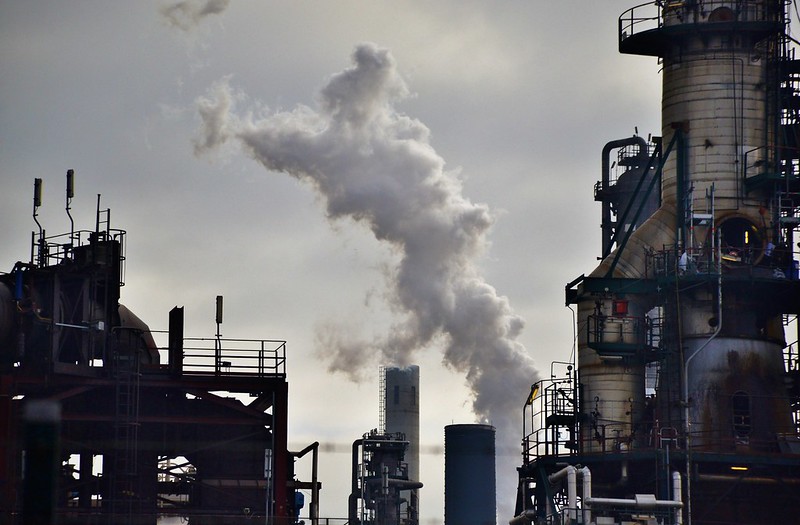
Heavy industries like cement, steel, chemicals, and paper require large amounts of heat and, for the most part, that heat comes from burning fossil fuels.  Other sectors of the economy have been making progress in reducing carbon emissions, but heavy industry has not found easy answers for supplying the heat it needs for manufacturing.

Researchers at MIT have developed a way to supply heat that only uses electricity, which in principle can come from carbon-free sources.  The idea is to use thermal batteries.  These are basically an electrically conductive equivalent of ceramic firebricks, which have been used to store heat for centuries in fireplaces and ovens.

A spinout company called Electrified Thermal Solutions has demonstrated that its firebricks can store heat efficiently for hours and release it by heating air or gas up to 3,272 degrees Fahrenheit. 

The firebrick arrays are contained in insulated, off-the-shelf metal boxes.  The standard system can collect and release about 5 megawatts of energy and store about 25 megawatt-hours.  The thermal battery can run hotter and last longer than any other electric heating solution on the market.

Using this technology can be a way to take advantage of the low cost of electricity in off-peak hours.  In the so-called wind belt in the middle of the U.S., electricity prices can even be negative at times.  Using the firebrick technology – called the Joule Hive Thermal Battery – it can be possible to provide industrial heating capability at very competitive prices, and that doesn’t even factor in the positive climate impact.

**********

Web Links

Decarbonizing heavy industry with thermal batteries

Photo, posted April 19, 2019, courtesy of Hans M. via Flickr.

Earth Wise is a production of WAMC Northeast Public Radio

Positive tipping points and climate

January 29, 2024 By EarthWise Leave a Comment

We often hear about tipping points and climate change.  Tipping points are critical thresholds that, when crossed, lead to large, accelerating, and often irreversible changes.  Some of the ones of concern with the climate are thawing permafrost, melting glaciers and ice sheets, and global temperatures reaching certain levels.  These are all tipping points that are essential to avoid.

A study published in the journal One Earth by researchers at the University of Exeter in the UK contends that in order to avoid the severe consequences of climate change, we need to trigger some positive tipping points.

Many climate-friendly changes are happening too slowly.  Triggering positive tipping points is a way to rapidly reach the high levels of decarbonization required to avoid triggering the negative tipping points of great concern.

Reaching a positive tipping point is a way that beneficial changes can rapidly gain momentum.  One example is the adoption of electric vehicles.  It has clearly reached a tipping point across Scandinavia and has happened rapidly.  Norway has managed to transition the market share of electric vehicles from under 10% to nearly 90% in less than 10 years.  At some point, everybody wanted an electric car.  This is evidence that positive tipping points can happen.

Many of the other forms of decarbonization need to move from their current level of adoption to rapid expansion.  A combination of affordability, attractiveness, availability, and political will are needed to trigger tipping points.  Exactly what those tipping point are is not necessarily known, but unless something accelerates the current pace of change, it will be very difficult to prevent negative climate tipping points from changing the world in destructive ways.

**********

Web Links

Positive tipping points must be triggered to solve climate crisis

Photo, posted July 8, 2023, courtesy of Michael Swan via Flickr.

Earth Wise is a production of WAMC Northeast Public Radio

Sustainable New Year’s resolutions

December 29, 2023 By EarthWise Leave a Comment

Sustainable resolutions for the new year

Every year, millions of people around the world make resolutions to spark positive change in the new year.  Popular resolutions include improving health and fitness, traveling more, spending less, and so on. With 2024 just around the corner, here are six resolution ideas to reduce our climate impact: 

Shop More Sustainably.  Choose eco-friendly brands and products with minimal environmental impact, including locally-produced goods and reusable items whenever possible. 

Switch To Clean Energy.  Purchase green power, install renewable energy systems to generate electricity, or switch to renewable resources for home and water heating and cooling needs. 

Reduce Food Waste.  Food waste is a significant global issue with environmental, economic, and social implications.  In the U.S., an estimated 30-40% of the total food supply is never eaten.  Meal plan and only shop for what you need.  And freeze any leftovers.   

Adopt A More Plant-Based Diet.  Transition to a more plant-based diet in order to shrink the ecological footprint of food production.  Resource-intensive animal-based foods like meat, dairy, and eggs are one of the chief contributors to climate change. 

Reduce the Carbon Footprint of Transportation.  Opt for eco-friendly transportation and energy-efficient practices in order to lower emissions.  Examples include driving a battery-electric car and utilizing public transportation. 

Get Involved In Conservation Advocacy.  Support and engage in environmental causes, and help promote conservation and sustainable practices. 

As we ring in the new year, let’s raise our glasses to a cleaner and greener 2024.

**********

Web Links

Photo, posted August 3, 2018, courtesy of Ella Olsson via Flickr.

Earth Wise is a production of WAMC Northeast Public Radio

Glacier Loss Day | Earth Wise

October 9, 2023 By EarthWise Leave a Comment

Glaciers are sensitive indicators of climate change

Glaciers are sensitive indicators of climate change that respond to changes in both temperature and precipitation.  But they are not only affected by climate change, they also affect climate change.  As glaciers melt, they contribute to sea level rise, alter regional hydrology, and influence the global energy balance.

A group of glacier experts from the University of Innsbruck in Austria introduced a concept called “Glacier Loss Day” or GLD as a way to measure the annual mass balance of glaciers.  Mass balance is the difference between the amount of snow and ice that accumulates on a glacier and the amount that melts or sublimates.  If the mass balance is positive, the glacier is growing.  If the mass balance is negative, the glacier is shrinking.

GLD is the day during the year when the glacier has lost all the mass it gained during previous winter.  This is a similar concept to Earth Overshoot Day, which marks the date when humankind’s demand for ecological resources exceeds the amount the planet can regenerate during the year.

The Hintereisferner, a glacier in the Tyrolean Alps, has been monitored for more than 100 years and there are continuous records of its mass balance since 1952.  In 2022, the GLD on the Hintereisferner was measured on the 23rd of June.  In the two previous years, it was reached in the middle of August.  Even in years with large negative balances, such as 2003 and 2018, GLD did not occur until the end of July.

Every summer in the future may not be like 2022, but the trend is clear.  Climate change is taking its toll on glaciers.  Experts project that the Hintereisferner will lose half of its volume in the next 10 to 20 years.

**********

Web Links

Glacier Loss Day indi­cates record break­ing glacier melt

Photo, posted July 20, 2023, courtesy of Pedro Szekely via Flickr.

Earth Wise is a production of WAMC Northeast Public Radio

A Green New Year | Earth Wise

December 30, 2022 By EarthWise Leave a Comment

Every year, millions of people around the world make resolutions in hopes of sparking positive changes in the new year.  Popular resolutions include improving health and fitness, traveling more, spending less, and so on.  With the New Year just around the corner, here are seven resolutions we all could make that would collectively have a major impact on the planet: 

1) Eat less meat.  Resource-intensive animal-based foods like meat, dairy, and eggs are one of the chief contributors to climate change. 

2) Get a home energy audit.  It’s a great way to understand your home’s energy footprint and discover ways to improve the energy efficiency of your home. 

3) Buy local whenever possible.  Shopping locally supports the local economy and dramatically cuts down on the carbon emissions associated with shipping.

4) Carry reusable shopping bags on errands. While disposable shopping bags are convenient, they are difficult to recycle and are often thrown away. 

5) Air dry your laundry whenever possible.  Drying clothes outside or using an indoor drying rack can save money and energy.  Americans spend about $9 billion a year on electricity to dry clothing. 

6) Purchase used or pre-owned items.  The market for second-hand items is booming, making it possible to purchase pretty much anything you want at thrift stores or online. 

7) Bring a reusable water bottle everywhere.  According to the EPA, Americans throw away enough plastic bottles each year to circle the earth five times.  Carrying your own bottle helps reduce this waste and will save you money.

As we ring in the new year this weekend, let’s raise our glasses to a cleaner and greener 2023. 

**********

Web Links

10 Sustainable New Year’s Resolutions!

New Year’s Resolutions

Photo, posted December 31, 2014, courtesy of Doug Anderson via Flickr.

Earth Wise is a production of WAMC Northeast Public Radio

Trees Are Growing Bigger | Earth Wise

November 3, 2022 By EarthWise Leave a Comment

The alarming rate of carbon dioxide flowing into the atmosphere is having a real and actually positive effect on plant life. Higher concentrations of carbon dioxide make plants more productive because photosynthesis makes use of the sun’s energy to synthesize sugar out of carbon dioxide and water.  Plants make use of the sugar both as a source of energy and as the basic building block for growth.  When carbon dioxide levels go up, plants can take it up faster, supercharging the rate of photosynthesis.

In a new study published in the journal Nature Communications, scientists at Ohio State University found that trees are feasting on decades of carbon dioxide emissions and are growing bigger as a result. 

The researchers tracked wood volume in 10 different tree groups from 1997 to 2017 and found that all of them except aspens and birches grew larger.  Over that time period, carbon dioxide levels climbed from 363 parts per million to 405 parts per million.  According to the study, each 1% increase in lifetime CO2 exposure for trees has led to more than a 1% increase in wood volume.

In the big picture, the news isn’t so positive.  The global warming caused by increasing carbon dioxide levels increasingly threatens the forests of the world.  It has led to worsening droughts, insect infestations, and wildfires.  So overall, increasing levels of carbon dioxide are by no means a good thing for the world’s trees.  However, since trees are growing bigger more quickly, it means that planting them is an increasingly cost-effective method for fighting climate change because the same number of trees can sequester more carbon.

**********

Web Links

As Carbon Dioxide Grows More Abundant, Trees Are Growing Bigger, Study Finds

Photo, posted September 12, 2015, courtesy of Nicholas A. Tonelli via Flickr.

Earth Wise is a production of WAMC Northeast Public Radio

Some Good Monarch News | Earth Wise

July 8, 2022 By EarthWise Leave a Comment

Eastern monarch butterflies spend their winter months in central Mexico.   Every spring, they embark on a lengthy, multigenerational migration that takes them into the United States and even into southern Canada, where they breed.  The butterflies go through several generations before they eventually migrate back to Mexico.

Twenty-five years ago, overwintering monarchs in Mexico blanketed nearly 45 acres of forest.  The acreage covered, which has been surveyed annually since 1993, is a rough indicator for the actual number of butterflies that survive the difficult migration process. In 2013, the monarchs occupied only 1.6 acres of Mexican forest.  The butterflies were deemed to be on the edge of extinction.

Last December, the monarch survey found 7 acres covered by the butterflies, an increase of 35% over the previous winter.  The population appears to be steadily rebounding, although the numbers are still substantially lower than the levels seen in the 1990s.

The butterflies are struggling with multiple problems.  There continues to be a lack of milkweed, the only food source for the caterpillars, in their breeding grounds along their migratory route.  More extreme weather driven by climate change is another challenge, and illegal logging in their overwintering habitat in Mexico has also become a threat.

After the butterfly population crashed in 2013, conservation efforts shifted into high gear with lots of milkweed planting in the US and Canada, and crackdowns on timber poachers in Mexico.

The remarkable multigenerational migration of monarchs is a delicate phenomenon that can be disrupted by many different things.  Eastern monarchs are still in serious danger, but the current trend seems to be positive.

**********

Web Links

Warming Trends: Butterflies Bounce Back, Growing Up Gay Amid High Plains Oil, Art Focuses on Plastic Production

Photo, posted August 12, 2021, courtesy of Paul VanDerWerf via Flickr.

Earth Wise is a production of WAMC Northeast Public Radio.

Positive Tipping Points And Climate | Earth Wise

February 15, 2021 By EarthWise Leave a Comment

Tipping points that could help mitigate climate change

A tipping point is a moment when a small change triggers a large and possibly irreversible response.

There has been much discussion of various tipping points that could accelerate climate change in catastrophic ways.  A recent paper from researchers at the University of Exeter in the UK discusses a couple of tipping points that could accelerate positive progress on mitigating climate change.

Electric vehicles account for only 2-3% of new car sales globally. In Norway, this figure is more than 50%, mostly thanks to policies that make electric cars the same price to buy as conventional cars.   According to the Exeter study, when EVs cost the same to manufacture as conventional cars, it will be a global tipping point.  China, the EU, and California together are responsible for half of the world’s car sales and each of these has targets to rapidly decarbonize their economies and policies in place to speed the transition to electric vehicles. 

Decarbonizing electric power is the other potential positive tipping point.  In Europe, carbon taxes on top of increasing renewable energy generation have tipped coal into unprofitability as they have led to the irreversible destruction of coal plants.  Globally, renewables are already generating electricity cheaper than fossil fuels in many countries.  Decarbonizing global power generation would in turn help accelerate decarbonization of large parts of transportation, heating and cooling, and industry.

These potential positive tipping points are by no means inevitable.  Appropriate policies are needed to overcome various barriers to the clean energy transition.  But major changes in transportation and electric power would have a tremendous impact on the global effort to combat climate change.

**********

Web Links

Positive ‘tipping points’ offer hope for climate

Photo, posted July 14, 2020, courtesy of Jim Champion via Flickr.

Earth Wise is a production of WAMC Northeast Public Radio.

Science And False Beliefs

January 21, 2019 By EarthWise Leave a Comment

There are sizeable numbers of people who hold to beliefs that run counter to overwhelming contrary evidence. Flat Earthers and Holocaust deniers are well-known examples and, more recently, people – some of them in high places – who reject the evidence for climate change.

New research published in the journal Open Mind by developmental psychologists at UC Berkeley suggest that feedback, rather than hard evidence, boosts people’s sense of certainty when learning new things or trying to tell right from wrong.  People’s beliefs are more likely to be reinforced by the positive or negative reactions they are exposed to than by logic, reasoning, and scientific data.

People’s learning habits can limit one’s intellectual horizons.  According to the study, if you think you know a lot about something, even though you don’t, you’re less likely to be curious enough to explore the topic further and will fail to learn how little you know.

This phenomenon plays out in social media and cable-news echo chambers and explains how some people are easily duped by charlatans.  Receiving positive feedback for what they are saying can make people believe they know more than they actually do.  This confidence makes them less likely to seek out and learn more information about the subject, as well as take into account contradicting opinions or facts.

Another factor is that what influences people’s certainty is that their confidence tends to depend on what they heard most recently rather than on long-term cumulative data.  A few pieces of recent information tend to get much more attention than an extensive body of data.  If a crazy theory is able to make a correct prediction a few times, people tend to get fixed in their belief in that theory and be less open to other information.

**********

Web Links

Here’s Why People Advocate False Beliefs, Conspiracy Theories Despite Evidence

Photo, posted February 2, 2007, courtesy of Tim J. Keegan via Flickr. 

Earth Wise is a production of WAMC Northeast Public Radio.

Measuring Earth’s Outgoing Energy

October 2, 2017 By EarthWise Leave a Comment

https://earthwiseradio.org/wp-content/uploads/2017/10/EW-10-02-17-Measuring-Earths-Outgoing-Energy.mp3

The earth’s energy imbalance is the difference between the amount of solar energy absorbed by the earth and the amount of energy the planet radiates back into space as heat.  If the imbalance is positive, that is, if more energy is coming in than going out, then the earth will get warmer over time.  If the imbalance is negative, then the planet will get cooler. 

[Read more…] about Measuring Earth’s Outgoing Energy

Positive Environmental News

March 2, 2017 By EarthWise

https://earthwiseradio.org/wp-content/uploads/2017/03/EW-03-02-17-Positive-Environmental-News.mp3

From melting Arctic ice to dying coral reefs to rising sea levels, there was no shortage of grim environmental news in 2016.  But the news wasn’t all bad.  There were several bright spots for the environment last year as well.

[Read more…] about Positive Environmental News

Primary Sidebar

Recent Episodes

  • An uninsurable future
  • Clean energy and jobs
  • Insect declines in remote regions
  • Fossil fuel producing nations ignoring climate goals
  • Trouble for clownfishes

WAMC Northeast Public Radio
WAMC/Northeast Public Radio is a regional public radio network serving parts of seven northeastern states (more...)

Copyright © 2026 ·