• Skip to primary navigation
  • Skip to main content
  • Skip to primary sidebar

Earth Wise

A look at our changing environment.

  • Home
  • About Earth Wise
  • Where to Listen
  • All Articles
  • Show Search
Hide Search
You are here: Home / Archives for plumes

plumes

Tracking emissions by satellite

June 20, 2025 By EarthWise Leave a Comment

Carbon dioxide and nitrogen oxides are two of the most problematic human-generated air pollutants that negatively impact air quality, the climate, and human health.  Satellites are an important tool for monitoring emissions of these pollutants, but they have limitations.  For the most part, satellites have limited spatial resolution, meaning that they can’t reliably narrow down the source of emissions sufficiently to pin down a specific location such as a power plant. 

Until now, there have been no instruments that can detect both carbon dioxide and nitrogen oxide simultaneously with high spatial resolution.  Often just nitrogen oxide measurements are made, and carbon dioxide levels estimated based on the fact that both are emitted together with typical ratios.

A German research team from the Max Planck Institute and the Heidelberg Institute have developed a technology for the EnMAP environmental satellite to detect both gases with an unprecedented spatial resolution of 30 meters.  Data from the satellite makes it possible to track multiple sources of emission plumes over several tens of kilometers.

The EnMAP system was originally designed for remote sensing of land surfaces.  The new research demonstrates that reliable measurements of trace gases are possible even with an instrument not specifically designed for atmospheric observations.  When using it, it’s possible to determine the distribution of carbon dioxide and nitrogen oxide in emission plumes from individual power plants.  The ability to measure both gases individually means that conclusions can be drawn about the technology, efficiency, and operating mode of the systems being measured.

**********

Web Links

German satellite measures CO2 and NO2 simultaneously from power plant emissions for the first time

Photo, posted September 19, 2020, courtesy of Sandor Somkuti via Flickr.

Earth Wise is a production of WAMC Northeast Public Radio

Wildfire Smoke And Global Weather | Earth Wise

June 1, 2023 By EarthWise Leave a Comment

In 2019 and 2020, wildfires burned 72,000 square miles in Australia, roughly the same area as the entire country of Syria. During the nine months when the fires raged, persistent and widespread plumes of smoke filled the atmosphere.

These aerosols brightened a vast area of clouds above the subtropical Pacific Ocean.  Beneath these clouds, the surface of the ocean and the atmosphere cooled.  The effect of this was an unexpected and long-lasting cool phase of the Pacific’s La Niña-El Niño cycle.

A new modeling study by the National Center for Atmospheric Research in Boulder, Colorado quantified the extent to which aerosols from the Australian wildfires made clouds over the tropical Pacific reflect more sunlight back towards space.  The resultant cooling shifted the cloud and rain belt known as the Intertropical Convergence Zone northward.  These effects may have helped trigger the unusual three-year-long La Niña, which lasted from late 2019 through 2022.

The impacts of that La Niña included intensifying drought and famine in Eastern Africa and priming the Atlantic Ocean for hurricanes.  2020 was the most active tropical storm season on record, with 31 storm systems, including 11 that made landfall in the U.S.

The study highlights widespread multi-year climate impacts caused by an unprecedented wildfire season.  The wildfires set off a chain of events that influenced weather far from where the fires occurred.  In the future, climate experts will need to include the potential effects of wildfires in their forecasts.

**********

Web Links

How Wildfire Smoke from Australia Affected Climate Events Around the World

Photo, posted December 19, 2019, courtesy of Simon Rumi via Flickr.

Earth Wise is a production of WAMC Northeast Public Radio
Saving Water At Power Plants | Earth Wise

September 21, 2021 By EarthWise Leave a Comment

Reducing the water needs of power plants

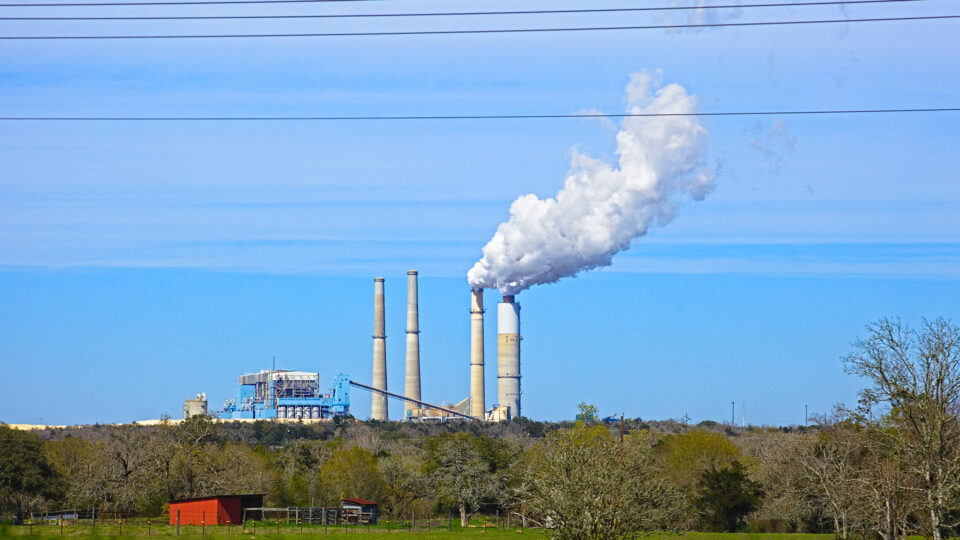
Nearly 40% of all the water taken from lakes, rivers, and wells in the U.S. isn’t used for agriculture, drinking, or sanitation.  It is used to cool power plants that produce electricity by burning fossil fuels or with nuclear reactors.   Two-thirds of these power plants use evaporative cooling, which produces huge white plumes billowing from cooling towers.

A new company using technology developed at MIT has the goal of reducing the water needs of power plants and helping to alleviate water shortages in areas where power plants strain the capacity of local water systems.

The technology is relatively simple in principle but developing it to the point where it can be applied at full scale at industrial power plants was a greater challenge. 

The basic idea is to capture water droplets from both natural fog and from the plumes from power plant cooling towers.  The MIT researchers had to improve the efficiency of fog-harvesting systems, which previously captured only 1-3% of the water droplets that pass through them.  They found that water vapor collection could be made much more efficient by zapping the tiny droplets of water with an ion beam, giving them a slight electric charge, thereby making it easy to capture them with the metal mesh of the harvesting system.

The system can essentially eliminate cooling tower plumes and produce large quantities of high-purity water in the process, which has uses at many power plants.  The new company, called Infinite Cooling, has arranged to install their equipment on two operating commercial power plants later this year.  They expect the system to reduce the overall need for water by 20%.

**********

Web Links

Vapor-collection technology saves water while clearing the air

Photo, posted March 5, 2019, courtesy of Sam LaRussa via Flickr.

Earth Wise is a production of WAMC Northeast Public Radio.

Another Problem For Coral Reefs

April 5, 2019 By EarthWise Leave a Comment

Coral reefs around the world have been suffering in recent years from warming ocean temperatures as well as from increasing ocean acidification.  Corals are very sensitive organisms that can only tolerate relatively slight changes in their environment.  Thus, the majority of reef-building corals are found in tropical and subtropical waters with favorable conditions.

New research has confirmed that drastic changes in ocean salinity from, for example, severe freshwater flooding, provoke similar stress responses in corals as the heating that has resulted in freshwater bleaching and, eventually, coral death.

The coast of northeast Queensland in Australia has experienced abnormal monsoon-related freshwater flooding that caused extreme and sudden changes in the ocean salt concentration.  In places, nearshore reefs were exposed to water with only half the normal ocean salinity.  The result has been a shock response in corals that prevents normal cell function.  Unlike their response to heat stress, corals exposed to reduced salinity experience a complete collapse of their internal cellular protein balance.

The central Great Barrier Reef has actually been relatively free from mass thermal bleaching events this Australian summer, but many coastal reefs instead have been battling dramatic changes in water conditions as a result of massive plumes of floodwater.

The wild weather in Australia is undoubtedly associated with the changing climate and this new research shows that it is leading to yet another threat to the world’s coral reefs.  With the frequency and severity of heavy rainfall and runoff events predicted to continue to increase over the next few decades, proactive measures to increase the resiliency of coral reefs are needed more than ever.

**********

Web Links

Reduced salinity of seawater wreaks havoc on coral chemistry

Photo, posted December 12, 2010, courtesy of Gareth Williams via Flickr.

Earth Wise is a production of WAMC Northeast Public Radio.

Finding Methane Leaks

September 21, 2016 By WAMC WEB

https://earthwiseradio.org/wp-content/uploads/2016/09/EW-09-21-16-Finding-Methane-Leaks.mp3

The boom in natural gas drilling by conventional methods and by fracking has led to a spike in methane emissions from pipelines, storage tanks, processing facilities, and other parts of the natural gas system.   Natural gas is mostly composed of methane, so these emissions constitute waste and lost revenues.  But they also represent a serious environmental problem because methane is 25 times more effective in trapping atmospheric heat than carbon dioxide.

[Read more…] about Finding Methane Leaks

Primary Sidebar

Recent Episodes

  • An uninsurable future
  • Clean energy and jobs
  • Insect declines in remote regions
  • Fossil fuel producing nations ignoring climate goals
  • Trouble for clownfishes

WAMC Northeast Public Radio

WAMC/Northeast Public Radio is a regional public radio network serving parts of seven northeastern states (more...)

Copyright © 2026 ·