• Skip to primary navigation
  • Skip to main content
  • Skip to primary sidebar

Earth Wise

A look at our changing environment.

  • Home
  • About Earth Wise
  • Where to Listen
  • All Articles
  • Show Search
Hide Search
You are here: Home / Archives for platforms

platforms

Artificial reefs

May 8, 2024 By EarthWise Leave a Comment

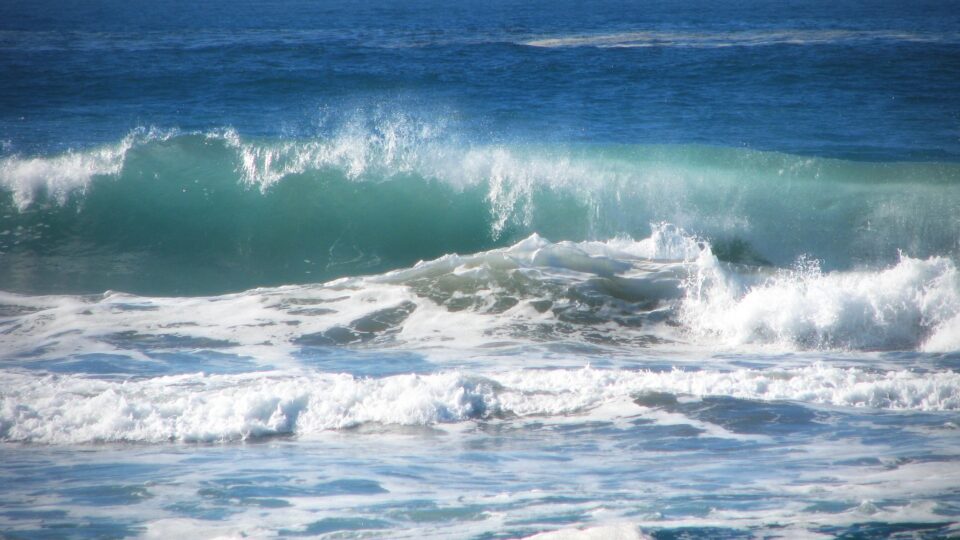
The coral reefs that surround tropical islands are a refuge for a wide variety of marine life and also form a natural buffer against stormy seas.  The changing climate is bleaching coral reefs and breaking them down.  Extreme weather events are becoming more common and are threatening coastal communities with flooding and erosion.

Researchers at MIT are designing architected reefs – sustainable offshore structures that mimic the wave-buffering effects of natural reefs and can also provide habitats for fish and other marine life.

There are already artificial reefs in a number of places used to protect coastlines.  These are typically made from sunken ships, retired oil and gas platforms, and even assemblies of concrete, metal, car tires, and stones.  Generally, it takes quite a lot of material to form an effective barrier to waves.

The MIT group has developed a cylindrical structure surrounded by four rudder-like slats.  Their experiments have shown that when this structure stands in the way of a wave, it efficiently breaks the wave and creates turbulent jets that dissipate the energy in the wave.  The engineers calculated that the new design could reduce as much wave energy as existing artificial reefs but use 10 times less material.

Based on the initial experiments with lab-scale prototypes, these artificial reefs would reduce the energy of incoming waves by more than 95%.

Coral reefs are only found in tropical waters, whereas these artificial reefs don’t depend on temperature and could be placed along any coastline for protection.  In a time of rising seas and increasingly frequent storms, these artificial reefs may be just what coastlines need.

**********

Web Links

Artificial reef designed by MIT engineers could protect marine life, reduce storm damage

Photo, posted December 9, 2010, courtesy of Phoenix Wolf-Ray via Flickr.

Earth Wise is a production of WAMC Northeast Public Radio
Floating Offshore Wind | Earth Wise

April 21, 2022 By EarthWise Leave a Comment

Floating offshore wind becoming a reality

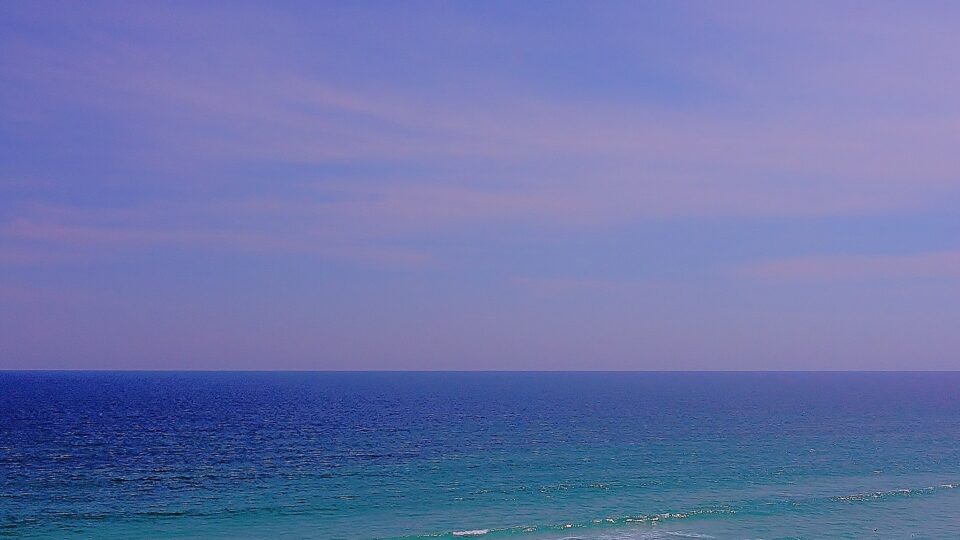
According to a new report by the Global Wind Energy Council, floating offshore wind technology is on track to grow from a miniscule market to a substantial contribution to the world’s energy supply over the next decade.  Furthermore, the United States represents one of the countries with the greatest potential.

Wind power is stronger and steadier in the ocean than on land, so the use of offshore wind is rapidly expanding.  However, because most installations are based on fixed structures attached to the sea bottom, they cannot be installed in very deep or complex seabed locations.

Floating offshore wind is based on structures that are anchored to the seabed only by means of flexible anchors, chains, or steel cables.  Apart from making it feasible to place wind turbines in deeper and more distant locations, floating turbines and platforms can also be built and assembled on land and then towed to the offshore installation site.

The floating offshore wind industry is currently in a pre-commercial phase but has great potential.  Many offshore locations with great potential in terms of their wind resources are unsuitable for conventional installations either because of the depth of the seabed or its complex structure.  This is particularly true of the waters off the coasts of California, Oregon, and the Gulf Coast, which otherwise offer excellent wind resources.

There are many issues to deal with in expanding the use of floating offshore wind, including transporting the power to shore and the ability of the local power grids to handle the incoming power.  On the other hand, distantly placed floating offshore wind reduces environmental concerns and eliminates issues associated with the visual impact of wind farms for coastal residents.

**********

Web Links

What’s the potential of floating offshore wind?

Photo, posted May 10, 2015, courtesy of Olin Gilbert via Flickr.

Earth Wise is a production of WAMC Northeast Public Radio.

Floating Renewable Energy | Earth Wise

July 22, 2021 By EarthWise Leave a Comment

The next generation of offshore energy is under development

A team of researchers at Texas A&M University believes that the next generation of offshore energy could come in the form of a synergistic combination of multiple renewable energy generators installed on a floating offshore platform.

Their concept for the ocean renewable energy station comprises wind, wave, ocean current, and solar energy elements that could generate electricity for anything from a coastal or island community to a research lab or military unit.  The station would be tethered to the sea bottom and could be used in locations where the water depth increases quickly, such as along the U.S. Pacific Coast or Hawaii.

Offshore wind is already commercially competitive, while wave-energy converters so far have been less cost-effective and only useful for specialized, smaller-scale applications.  The proposed ocean renewable energy station would make use of multiple different methods of electricity generation and incorporate innovative smart materials in the wave energy converters that respond to changes in wave height and frequency and allow for more consistent power production.

Denmark is already building a huge multi-source, multi-purpose ocean energy island.  This world’s first energy island will be 30 acres in area and serve as a hub for 200 giant offshore wind turbines generating 3 GW of electric power.  It is the largest construction project in Danish history, and will cost an estimate $34 billion.  As well as supplying other European countries with electricity, the goal is to use the new offshore island to produce green hydrogen from seawater, which can also be exported.  Large battery banks on the island will store surplus electricity for use in times of high demand.

**********

Web Links

Research Underway On Floating Renewable Energy Station

Photo, posted September 27, 2014, courtesy of Eric Gross via Flickr.

Earth Wise is a production of WAMC Northeast Public Radio.

Rigs To Reefs

March 29, 2019 By EarthWise Leave a Comment

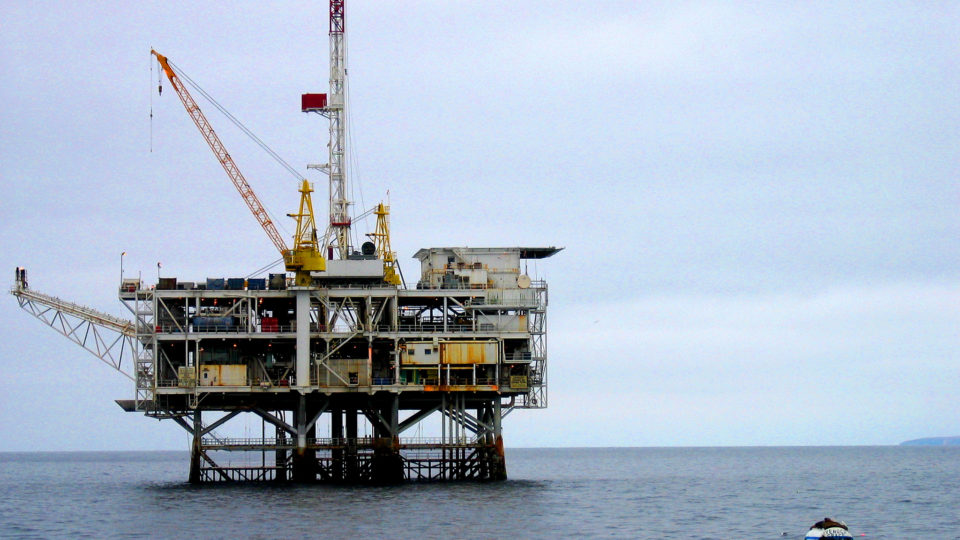
There are about 6,000 offshore oil platforms in the world’s oceans.  They have an immense presence physically, financially and environmentally.  As these massive structures extract hydrocarbons from deep beneath the sea, they also undergo a remarkable transformation under the water.  The enormous substructures that support the platforms become vertical reefs, home to millions of individual plants and animals.

Over time, many oil platforms are decommissioned, and their owners are faced with the choice of either removing them entirely or transitioning them into permanent reefs.   Traditional practice was to restore the site to its original condition, but more recently the idea of “reefing” old platforms has gained popularity.  As of 2016, more than 11% of decommissioned platforms in the U.S. portion of the Gulf of Mexico have become permanent reefs.

Decommissioning and completely removing a platform is a daunting and pricey proposition.  The most recent estimate for removing all platforms off the coast of California alone totals $8 billion.  Modifying the platforms to serve as permanent reefs cuts these costs significantly, especially those associated with hauling, cleaning and disposing of the underwater support structure, which will have thousands of tons of sea-life clinging to it by the time it is removed.

Converting the structure into a permanent reef means making it free of any hydrocarbons or other hazardous materials. But this is still a far cheaper venture than total removal.  Studies of oil rigs as underwater habitats have shown them to be some of the most productive in the world.  They are 3-dimensional reefs whose open construction allows currents to pass through bringing lots of nutrients.

Over time, more and more oil platforms will be decommissioned. Many may end up remaining as permanent homes for undersea life.

**********

Web Links

Rigs to Reefs

Photo, posted August 21, 2011, courtesy of Marianne Muegenburg via Flickr

Earth Wise is a production of WAMC Northeast Public Radio.

Primary Sidebar

Recent Episodes

  • An uninsurable future
  • Clean energy and jobs
  • Insect declines in remote regions
  • Fossil fuel producing nations ignoring climate goals
  • Trouble for clownfishes

WAMC Northeast Public Radio

WAMC/Northeast Public Radio is a regional public radio network serving parts of seven northeastern states (more...)

Copyright © 2026 ·