• Skip to primary navigation
  • Skip to main content
  • Skip to primary sidebar

Earth Wise

A look at our changing environment.

  • Home
  • About Earth Wise
  • Where to Listen
  • All Articles
  • Show Search
Hide Search
You are here: Home / Archives for pipes

pipes

Hot water in Boise

May 9, 2025 By EarthWise Leave a Comment

Geothermal water systems in Boise form the foundation of what is the largest municipally-run geothermal system in the country

Boise is the capital of Idaho, and the Idaho Statehouse is the only one in the United States to use geothermal heat.  Geothermal heating is possible in Boise because of fault lines that expose its groundwater to hot rocks.  The underground water supply in Boise is heated to around 170 degrees Fahrenheit.  It is the basis of the largest municipally-run geothermal system in the country.

People in Boise began using this natural resource to supply heat to buildings in the 1890s by drilling wells into aquifers that yielded hundreds of thousands of gallons of piping hot water a day.  The water heated pools and public baths, a Victorian mansion, and, eventually, hundreds of homes in what was called the Boise Warm Springs Water District.

The number of buildings that the city of Boise heats with its geothermal resource has grown more than sixfold over the past 40 years.  The water is drawn from wells in the nearby foothills and pumped into a closed-loop network of pipes that reach into buildings.  In each building, the geothermal heat is transferred to water in separate adjoining pipes that distribute the heat throughout the building.  The well water goes back to the aquifer to be heated again.

Today, there are four separately run geothermal water systems in Boise.  One is run by the city, another by the Boise Warm Springs District, and two others that serve the Capitol and Veterans Affairs Buildings.

In 2024, city officials calculated that using geothermal heat reduced annual carbon dioxide emissions by 7,000 tons, the equivalent of removing 1,500 gas-powered cars from the road each year.

**********

Web Links

They’re in Hot Water in Idaho. Here’s Why That’s a Good Thing.

Photo, posted May 26, 2010, courtesy of Jason W via Flickr.

Earth Wise is a production of WAMC Northeast Public Radio

Microplastics and birds

March 19, 2025 By EarthWise Leave a Comment

Microplastics are tiny plastic particles, less than 5 millimeters in size, that come from the breakdown of larger plastics, synthetic fibers, microbeads, and tire wear.  Microplastics are found in oceans, rivers, soil, and even the air we breathe. These particles can take hundreds of years to degrade, spreading across ecosystems and accumulating in unexpected places, such as deep-sea sediments and Arctic sea ice.

According to a new study by researchers from the University of Texas at Arlington, microscopic plastic pollutants drifting through the air are lodging in the lungs of birds.  These findings raise  significant concerns about the impact on their respiratory health, but also raise alarms about potential risks to human health.

Birds were chosen for the study because they are found in almost every corner of the world and often share environments with humans. 

In the study, the research team examined 56 different wild birds from 51 distinct species, all sampled from the Tianfu airport in western China.  The researchers found high concentrations of microplastics in bird lungs, with an average of 221 particles per species.  The most common types identified were chlorinated polyethylene, which is used for insulating pipes and wires, and butadiene rubber, which is a synthetic material in tires.

Although there is no established “safe” level of plastic particles in lung tissue, high levels of microplastics have been linked to serious health risks, including heart disease, cancer, respiratory issues, and fertility problems.

The study highlights an urgent need to tackle plastic pollution in the environment because of its far-reaching impact on ecosystems and human health.  

**********

Web Links

Birds breathe in dangerous plastics—and so do we

Photo, posted January 28, 2017, courtesy of Pete Richman via Flickr.

Earth Wise is a production of WAMC Northeast Public Radio
Cities and rainwater

September 24, 2024 By EarthWise Leave a Comment

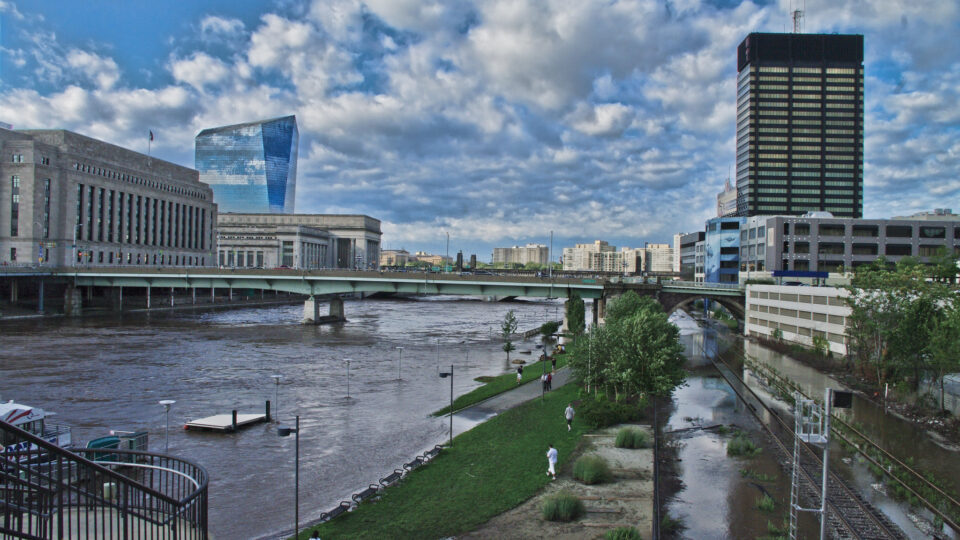
Cities across the country are grappling with the problem that bigger, more frequent rainstorms occurring as a result of climate change are overtaxing the systems put in place to handle stormwater.  Cities use a combination of so-called green infrastructure – such as rain gardens and porous pavements – and traditional gray infrastructure, such as pipes, tunnels, and pump stations.

In 2011, Philadelphia drew national attention for its Green City, Clean Waters program that was designed to manage the increasing amount of storm water using mostly green infrastructure.  Thirteen years later, the city is experiencing billions of gallons of polluted stormwater overflowing its sewage outfall pipes each year.  Green infrastructure is cheaper and faster to build, but it is not coping with increasing rainfall.

About 700 U.S. municipalities, mostly in the Northeast and around the Great Lakes, rely on these combined sewer systems.  Based on updated climate projections, many are having to greatly increase gray infrastructure projects that include concrete holding tanks, tunnels, and pipes that can divert and hold onto flows until the rain stops, and water treatment plants can recover.  These projects can take decades to implement and cost billions of dollars.

All across the country, cities are going to need to bite the bullet and make large-scale investments in conventional sewage infrastructure and repairs to stop billions of gallons of raw sewage from running into rivers.  The increased storms present a daunting challenge for America’s cities.

**********

Web Links

Faced With Heavier Rains, Cities Scramble to Control Polluted Runoff

Photo, posted August 29, 2011, courtesy of Reggie via Flickr.

Earth Wise is a production of WAMC Northeast Public Radio
Rain Gardens And Residential Pollution | Earth Wise

July 12, 2023 By EarthWise Leave a Comment

Rain gardens are a solution to residential pollution of waterways

Stormwater runoff has become the largest source of residential pollution for waterways.  As rainwater runs down roofs, over driveways and patios, and off other hard surfaces, it can pick up pollutants as it flows directly into streams, wetlands, lakes, and groundwater aquifers.  That water is typically routed directly through stormwater pipes and ditches with little filtering or treatment.  The main emphasis is on getting the water off of people‘s property as quickly and efficiently as possible to avoid flooding.

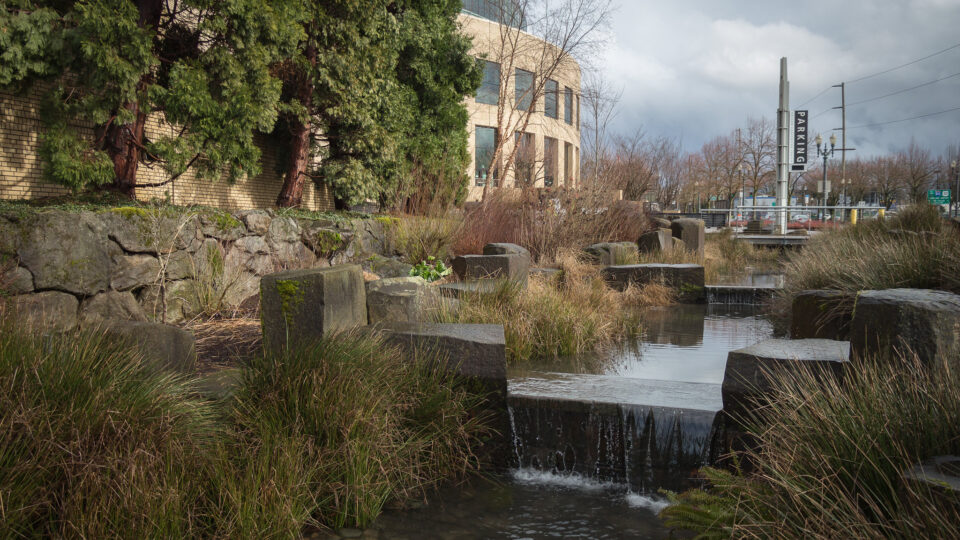
Many municipalities are dealing with the problem by installing rain gardens, which are a type of green infrastructure in commercial spaces that slow down and treat water before it enters streams, wetlands, and other bodies of waters.  When designed and installed properly with appropriate plants, rain gardens are like miniature water treatment facilities   Water gathers in the rain garden, soaks into the soil, and is taken up by plants.  The plants filter nutrients, sediments, and toxic materials from the runoff before excess water ever gets to waterways.

Homeowners are being encouraged to build their own rain gardens.  They need to familiarize themselves with how runoff from their roof, driveway, sidewalk, and roads is currently being routed and treated.  The idea is to try to incorporate that runoff into a rain garden design with sufficient area and infiltration rates.  The runoff would ultimately flow out from a safe, designated location into storm drains at a slower rate than from the previous impervious surfaces.  Homeowners would need to work with their local jurisdictions to find out the requirements for re-routing water in their area and make sure any modifications prevent erosion and protect nearby homes, roads, and other infrastructure.

**********

Web Links

Rain gardens help keep pollutants out of waterways

Photo, posted March 3, 2017, courtesy of Jeremy Jeziorski / Oregon Convention Center via Flickr.

Earth Wise is a production of WAMC Northeast Public Radio
El Paso’s Water Future | Earth Wise

November 21, 2022 By EarthWise Leave a Comment

The water future of El Paso uncertain as the Rio Grande river dries up

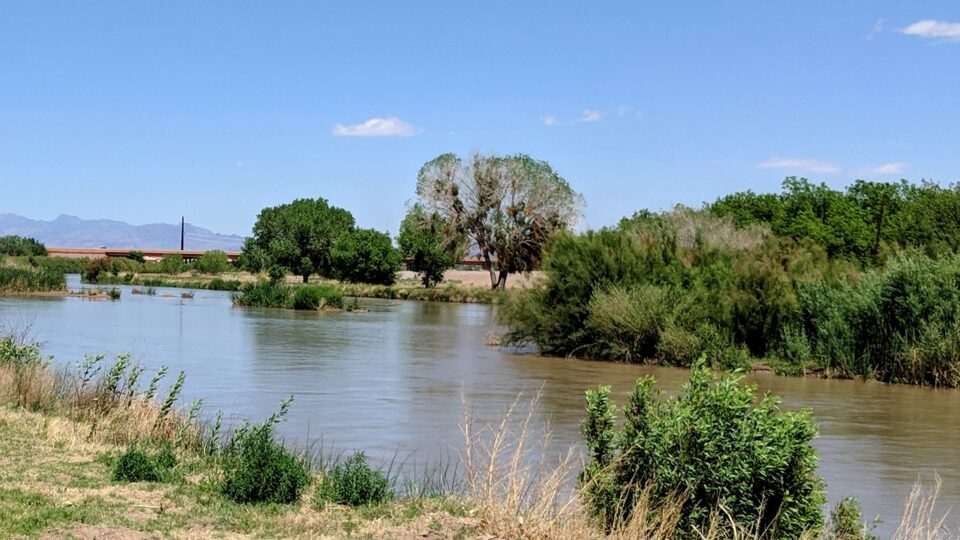
El Paso, Texas is part of the Paso del Norte region, which includes Ciudad Juarez in Mexico and Las Cruces, New Mexico.  The population on both sides of the border is booming, approaching 3 million people.  The region’s primary water source is the Rio Grande River.  But that river is declining.

Rising temperatures and decreasing rainfall have led to diminishing flow in the river.  Eighty percent of the river’s flow has historically been diverted to agriculture, but the reduced flow of the Rio Grande has forced many farmers to reduce planting or change to less water-hungry crops.  The river is expected to continue to decrease its flow as time goes by.

The city of El Paso gets 40% of its water supply directly from the Rio Grande.  Urban water authorities in the region are scrambling to find ways to provide cities with alternative supplies of water.

El Paso now gets some of its water from a desalination plant, which is the world’s largest inland municipal desalination plant.  The water comes from brackish groundwater rather than from the sea.  The briny waste from the plant is piped to an injection well many miles way and is permanently stored 4,000 feet underground.

El Paso continues to seek new water sources and reduce its water use.  It gets much of its water from wells drilled in nearby aquifers.  It is working to make this use of groundwater more sustainable.  The city recycles used residential water through its so-called purple pipe system, which cleans up waste water and delivers it for non-potable use on golf courses and park lawns. 

Like many places in the increasingly dry west, El Paso’s water future is uncertain. 

**********

Web Links

As Rio Grande Shrinks, El Paso Plans for Uncertain Water Future

Photo, posted April 29, 2018, courtesy of R. Baire via Flickr.

Earth Wise is a production of WAMC Northeast Public Radio
A New Fishway Technology | Earth Wise

February 5, 2021 By EarthWise Leave a Comment

A new fishway technology to improve passageways for fish

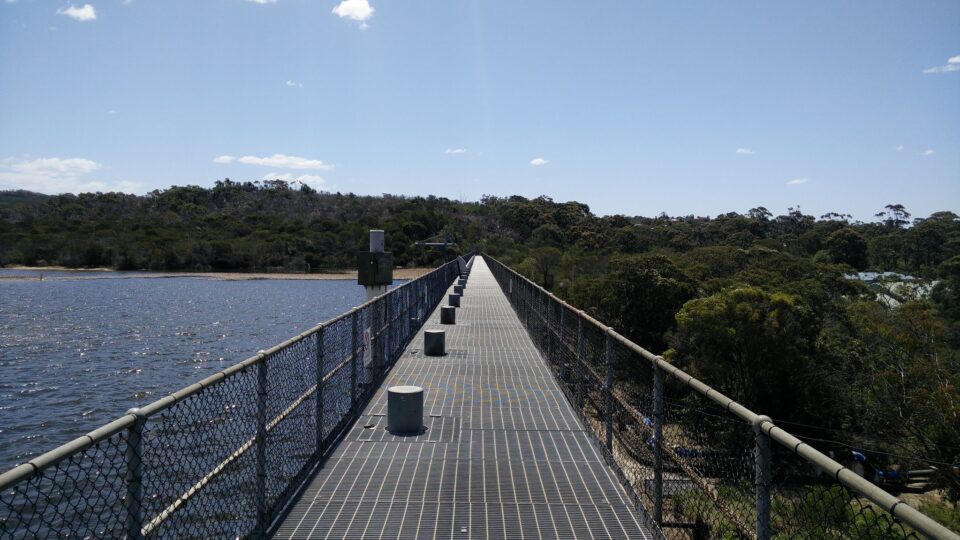
Freshwater fish populations have declined by more than 80% over the past forty years across the globe.  This is in part due to hundreds of thousands of dams, weirs, and barriers stopping their movements.  These river barriers have disrupted fish reproduction cycles the world over by preventing river fish from migrating to spawn.

Fishways or fish ladders are waterways constructed on or around obstructions in order to provide passageways for fish and other aquatic species.  Often, they consist of a series of small overflow weirs and pools constructed in the form of steps.  Fish need to jump from one pool to another to migrate to the upstream.  Such fish ladders require a large space to construct.  These and several other types of fishways tend to be expensive to install and maintain and are not always successful in allowing fish to get to where they need to go.

Researchers at the University of New South Wales in Australia have come up with an ingenious new type of fishway.  Called a “tube fishway”, it is a low-cost and low-energy installation that works by pumping fish at high velocity – protected by a cushion of bubbly water – through a tube running over the obstructing barrier to deliver them safely into the water on the other side.

They successfully demonstrated a prototype system on a rugged slope behind a campus building that transported fish from one tank to another about 25 feet up the slope.

Fish are attracted into the chamber by suitable geometry and the system uses the energy available from the upper reservoir to lift the fish.  Modeling shows that the system will work for pipes as large as three feet in diameter and could lift fish more than 300 feet vertically. 

**********

Web Links

New fishway technology to get fish up and over those dam walls

Photo, posted October 19, 2019, courtesy of Andrew Harvey via Flickr.

Earth Wise is a production of WAMC Northeast Public Radio.

Fumes From Gas Stations

November 15, 2018 By EarthWise Leave a Comment

https://earthwiseradio.org/wp-content/uploads/2018/11/EW-11-15-18-Fumes-from-Gas-Stations.mp3

A study by environmental health scientists at Columbia University examined the release of vapors from gas station vent pipes and found that emissions were 10 times higher than the estimates used to establish setback regulations that determine how close schools, playgrounds, and parks can be to the facilities.

[Read more…] about Fumes From Gas Stations

Green Solutions To Storm Water Runoff

July 5, 2018 By EarthWise Leave a Comment

https://earthwiseradio.org/wp-content/uploads/2018/07/EW-07-05-18-Green-Storm-Water-Solutions.mp3

Philadelphia, America’s fifth largest city, has struggled with storm water runoff problems since the days of Benjamin Franklin.  The city’s numerous streams that run into the Schuylkill and Delaware Rivers were eventually covered with brick arches or cemented into underground sewers.  The network of underground-to-riverfront outfalls through increasingly-larger pipes is pretty much how all U.S. cities have been coping with storm water for over 200 years.

[Read more…] about Green Solutions To Storm Water Runoff

Primary Sidebar

Recent Episodes

  • An uninsurable future
  • Clean energy and jobs
  • Insect declines in remote regions
  • Fossil fuel producing nations ignoring climate goals
  • Trouble for clownfishes

WAMC Northeast Public Radio

WAMC/Northeast Public Radio is a regional public radio network serving parts of seven northeastern states (more...)

Copyright © 2025 ·