• Skip to primary navigation
  • Skip to main content
  • Skip to primary sidebar

Earth Wise

A look at our changing environment.

  • Home
  • About Earth Wise
  • Where to Listen
  • All Articles
  • Show Search
Hide Search
You are here: Home / Archives for ph

ph

Reducing emissions from ocean shipping

August 13, 2025 By EarthWise Leave a Comment

A new process could help reduce emissions from ocean shipping

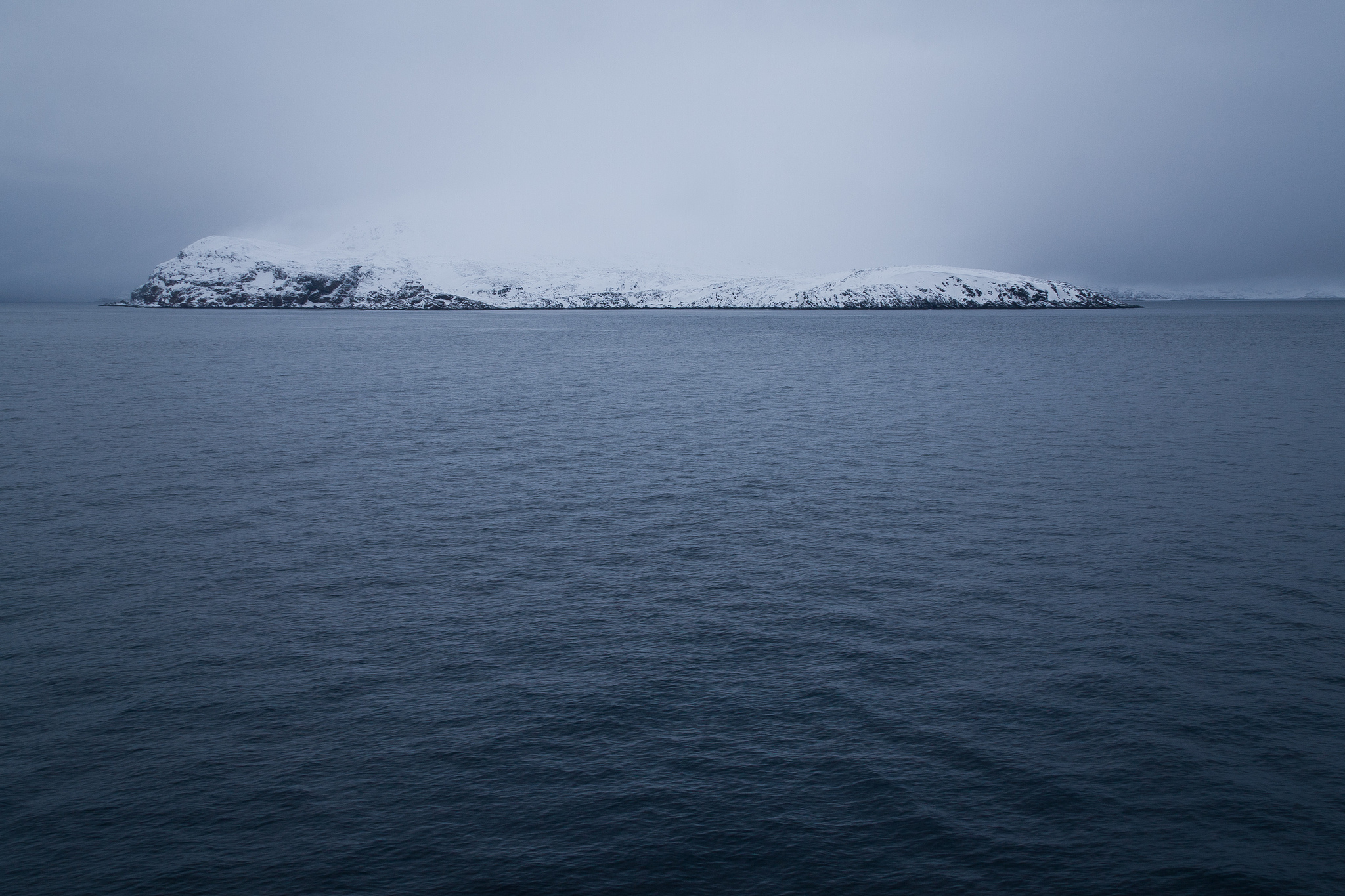
Ocean shipping is a significant contributor to global carbon emissions, accounting for about 3% of the total.  It is a key part of international trade, moving goods like electronics, automobiles, and oil.  It relies on fossil fuels, and, without significant changes, shipping’s emissions could more than double by 2050.  Ocean shipping is one of the world’s most difficult to decarbonize industrial sectors.

Scientists at the University of Southern California and Caltech, collaborating with a startup company called Calcarea, have developed a shipboard system that could remove up to half of the carbon dioxide emitted by shipping vessels. The system is fairly simple and scalable.

The process mimics a natural chemical reaction that takes place in the ocean.  As a cargo ship moves through seawater, the CO2 from the ship’s exhaust is absorbed into water that is pumped onboard.  This makes the water more acidic.  The treated water is then passed through a bed of limestone, where it reacts with the rock to form bicarbonate, which is a stable compound that already exists naturally in seawater.  The treated seawater, now stripped of the carbon dioxide, is dumped back into the ocean.

Sophisticated ocean modeling examined what would happen when the bicarbonate-rich water is released back into the sea over a hypothetical 10-year period.  The model showed a negligible impact on ocean pH and chemistry.

The researchers estimate that widespread adoption of the technique could reduce shipping-related carbon dioxide emissions by 50%.  The startup company Calcarea is working to bring the technology to market and is in early discussions with commercial shippers.

**********

Web Links

USC technology may reduce shipping emissions by half

Photo, posted November 14, 2017, courtesy of Bernard Spragg via Flickr.

Earth Wise is a production of WAMC Northeast Public Radio
Why Do Trees Change Color? | Earth Wise

December 24, 2020 By EarthWise Leave a Comment

Explaining the magnificent spectacle of fall foliage

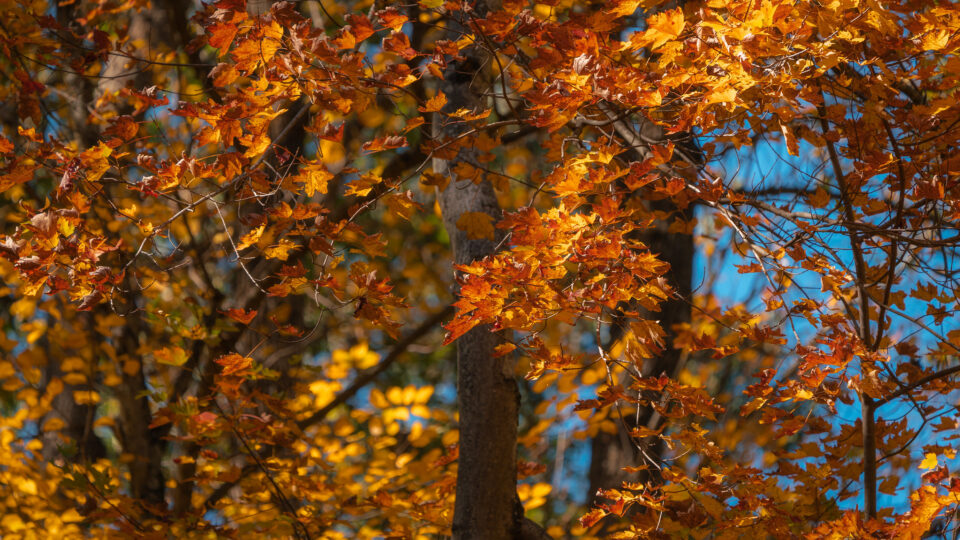
We had a particularly colorful fall in the Northeast this year.  Almost everywhere you looked, there were brilliant displays of yellow, orange, and red.  The colors of fall are a result of chemistry and environmental events that may have taken place many months in the past.

The color of leaves comes from 4 pigments whose effects are governed by photosynthesis.  The one that is actually used in photosynthesis is chlorophyll and it causes leaves to be green.  But when a tree begins to prepare for dormancy, it stops producing chlorophyll, the green pigmentation fades, and the other pigments that were already in the leaves become visible.

There are xanthoplylls, which are the yellow pigments that are seen the most in fall trees.  They are the same pigments that color egg yolks and sometimes parts of the human eye.  They are only produced by plants and appear in humans and animals only through consumption.

There are carotenes, which are the orange pigments found in fruits and vegetables, such as carrots, oranges, some bell peppers and squashes.

And there is anthocyanin, which is the pigment found in blueberries, blackberries, and red or violet roses.  Its color depends on the pH level of the plant; higher pH leads to darker color.  This is the pigment seen in red maples, black cherry trees, Shumard oaks, and more.  Only 10% of trees in temperate climates produce anthocyanin and its red pigmentation and most of those trees are in New England.

All these pigments serve purposes.  They help trees absorb light energy, prevent sun damage, and even regulate how much energy chlorophyll produces.

There are complicated chemical and environmental factors at play in fall foliage but when they come together like they did this year, it’s a magnificent spectacle.

**********

Web Links

Why Do Trees Change Color?

Photo, posted October 17, 2020, courtesy of John Brighenti via Flickr.

Earth Wise is a production of WAMC Northeast Public Radio.

Ocean Acidification And Mass Extinction

November 26, 2019 By EarthWise Leave a Comment

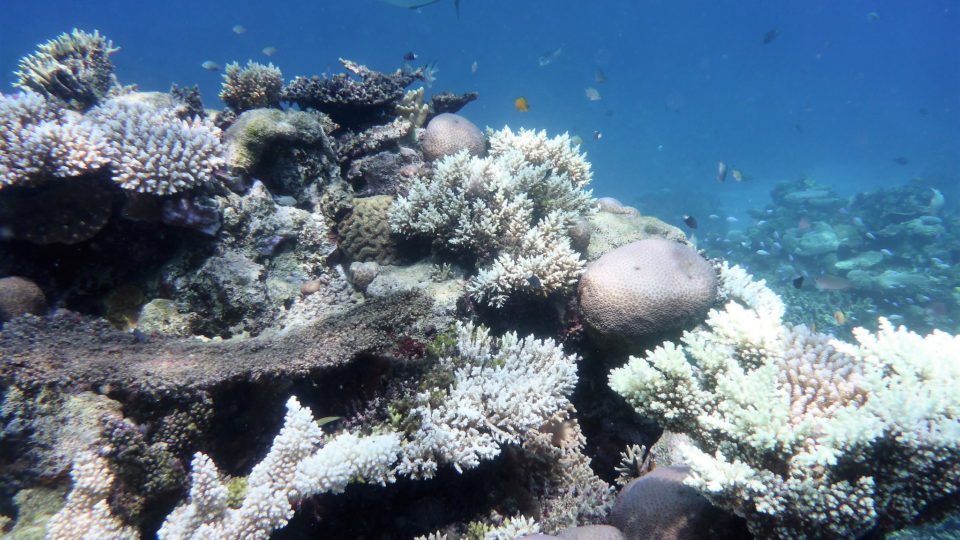
Since the industrial revolution, the concentration of carbon dioxide in the atmosphere has increased due to the burning of fossil fuels and land use changes.  The ocean absorbs about 30% of the CO2 that is released in the atmosphere.  As the levels of atmospheric CO2 increase, so do the levels in the ocean.

When CO2 is absorbed by the ocean, a series of chemical reactions occur, resulting in seawater becoming more acidic.  Ocean acidification threatens calcifying organisms, such as clams and corals, as well as other marine animals, like fish.  When these organisms are at risk, the entire marine ecosystem may also be at risk.

In fact, according to research recently published in the journal Proceedings of the National Academy of Sciences, fossil evidence from 66 million years ago has revealed that ocean acidification can cause the mass extinction of marine life.  Researchers analyzed seashells in sediment laid down shortly after a giant meteorite hit earth.  This strike wiped out the dinosaurs and 75% of marine species.  Chemical analysis of the shells revealed a sharp drop in the PH of the ocean over hundreds of years after the meteorite strike.  The meteorite impact vaporized rocks, causing carbonic acid and sulphuric acid to rain down, acidifying the ocean.  The strike also resulted in mass die-off of plants on land, increasing atmospheric CO2.  

Researchers found that the pH dropped by 0.25 pH units in the 100 to 1,000 years after the meteorite strike.  Alarmingly, scientists expect the pH of the ocean to drop by 0.4 pH units by 2100 if our carbon emissions continue as projected. 

**********

Web Links

Ocean acidification can cause mass extinctions, fossils reveal

Photo, posted March 16, 2017, courtesy of Zachary Martin via Flickr.

Earth Wise is a production of WAMC Northeast Public Radio.

Climate Change And Fish

November 23, 2016 By WAMC WEB

https://earthwiseradio.org/wp-content/uploads/2016/11/EW-11-23-16-Climate-Change-and-Fish.mp3

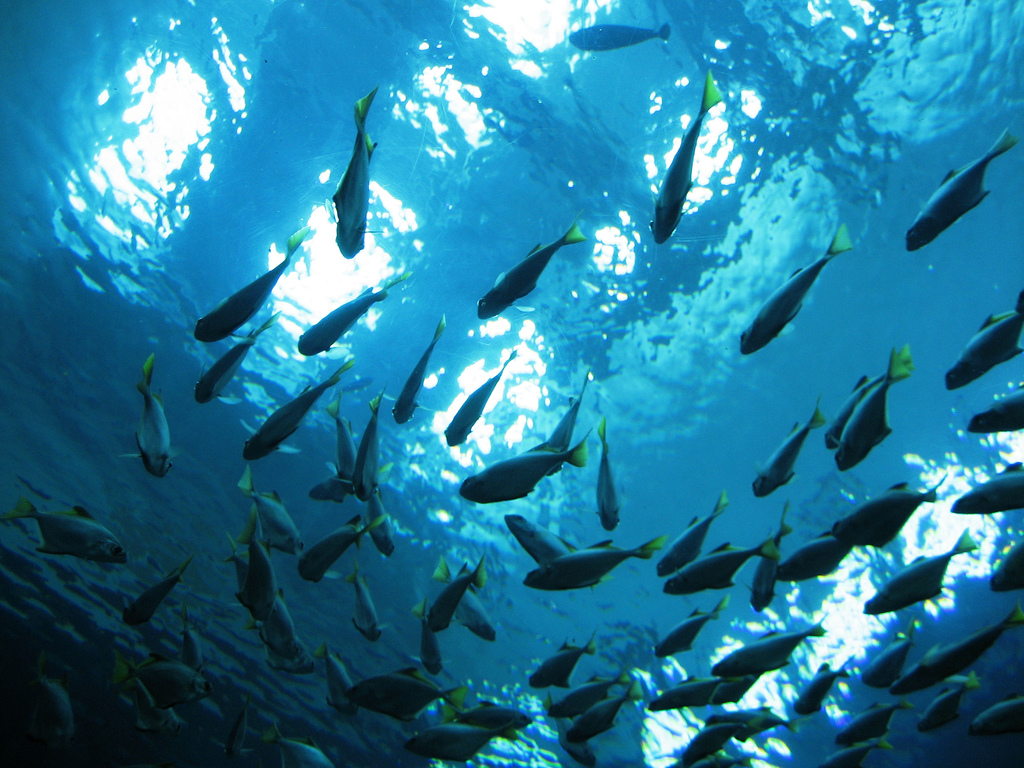
According to a recent study published in the journal Global Change Biology, rising CO2 levels in the ocean can disrupt the sensory systems of fish and can even make them swim toward predators and ignore the sounds that normally deter them from risky habitats.

[Read more…] about Climate Change And Fish

Arctic Ecosystems

February 11, 2016 By WAMC WEB

https://earthwiseradio.org/wp-content/uploads/2016/01/EW-02-11-16-Brighter-Oceans.mp3

Most of us are aware that shrinking ice cover is bad news for Arctic wildlife, with animals like polar bears and seals losing important breeding, nursery, and feeding grounds. What has received less attention is the impact ice loss has on life in Arctic waters. [Read more…] about Arctic Ecosystems

Primary Sidebar

Recent Episodes

  • An uninsurable future
  • Clean energy and jobs
  • Insect declines in remote regions
  • Fossil fuel producing nations ignoring climate goals
  • Trouble for clownfishes

WAMC Northeast Public Radio

WAMC/Northeast Public Radio is a regional public radio network serving parts of seven northeastern states (more...)

Copyright © 2026 ·