• Skip to primary navigation
  • Skip to main content
  • Skip to primary sidebar

Earth Wise

A look at our changing environment.

  • Home
  • About Earth Wise
  • Where to Listen
  • All Articles
  • Show Search
Hide Search
You are here: Home / Archives for permits

permits

Empire Wind resumes

June 17, 2025 By EarthWise Leave a Comment

In April, the Trump Administration issued a stop order for the Empire Wind offshore wind project in New York, pushing the $5 billion project to the brink of collapse.  The project is being built by the giant Norwegian energy company Equinor.  When completed, the wind farm is expected to deliver enough electricity to power 500,000 New York homes.

Equinor had obtained all the necessary permits for the project after a four-year federal environmental review and work had begun on laying foundations for the wind turbines on the ocean floor. 

Interior Secretary Doug Burgum claimed that the permits for the project been rushed and ordered the work stopped.  The stoppage was costing Equinor $50 million a week as well as jeopardizing an additional 1,000 jobs. 

Weeks of intensive interactions between New York Governor Kathy Hochul, Equinor officials, and the White House finally resulted in a decision by the administration to lift the stop work order and allow the project to move forward. 

The collapse of the project would have created major problems for New York.  The state’s grid operators have been counting on the construction of several new offshore wind farms to provide large additional amounts of electricity without producing greenhouse gas emissions.  New York has aggressive targets for using renewable energy.

Empire Wind is expected to have 816 megawatts of capacity.  Another offshore project in New York, Sunrise Wind, which is under construction 30 miles east of Montauk Point on Long Island, would have 924 megawatts of capacity.

**********

Web Links

In Reversal, Trump Officials Will Allow Huge Offshore N.Y. Wind Farm to Proceed

Photo, posted August 9, 2022, courtesy of the Scottish Government via Flickr.

Earth Wise is a production of WAMC Northeast Public Radio

The dangers of deep sea mining

April 21, 2025 By EarthWise Leave a Comment

The dangers of deep sea mining are poorly understood

The White House is considering an executive order that would fast-track permitting for deep-sea mining in international waters and allow mining companies to bypass a United Nations-backed review process.

Deep sea mining is the extraction of minerals from the seabed in the deep ocean.  Most of the interest is in what are known as polymetallic nodules, which are potato-sized mineral deposits that have built up in layers over thousands of years. They are located several miles below the surface, primarily in what is called the Clarion-Clipperton zone, which is an environmental management area of the Pacific Ocean about halfway between Mexico and Hawaii.

A new multiyear study led by UK’s National Oceanography Center and published in the journal Nature found that the site of a deep-sea mining test in 1979 still showed lower levels of biodiversity than in neighboring undisturbed sites 44 years later.

Much is not known about the undersea nodules.  We know that they produce oxygen.  If the nodules are removed, will that reduce the amount of oxygen in the deep sea and affect the organisms that live there?  If mining occurs, what effect will the metal-containing sediment plumes churned up by the mining process have? 

The nodule fields sustain highly specialized animal and microbial communities.  More than 20 billion tons of nodules are estimated to lie on the seabed of the Clarion-Clipperton Zone.  If large-scale mining takes place, and there is much interest in that happening, it is important to find out what the impact will be on the ocean and its ecosystems because it is likely to be largely irreversible.

**********

Web Links

Deep sea mining for rare metals impacts marine life for decades, scientists say

Photo, posted September 4, 2014, courtesy of James St. John via Flickr.

Earth Wise is a production of WAMC Northeast Public Radio
A record year for solar and batteries

March 20, 2025 By EarthWise Leave a Comment

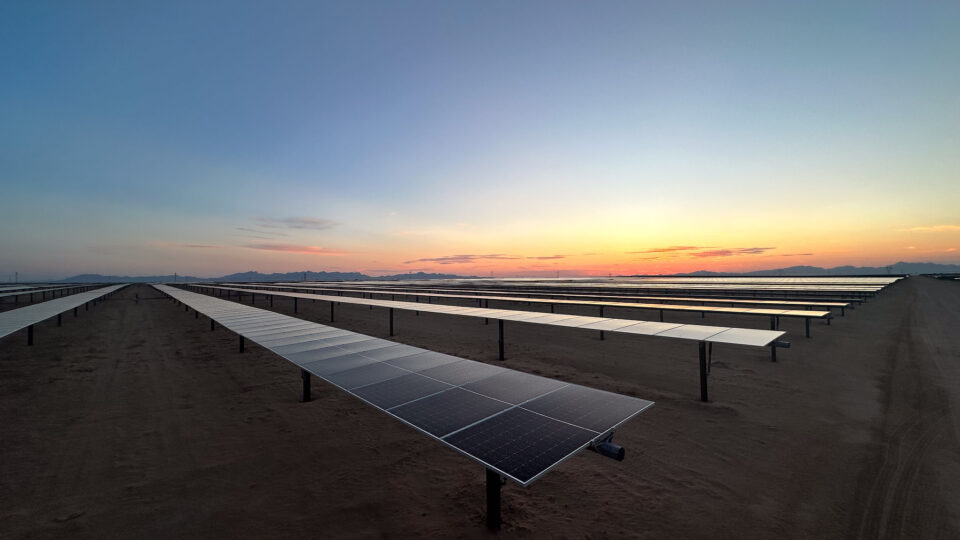
According to a recent forecast from the U.S. Energy Information Administration, solar panels and batteries will account for more than 80% of new power capacity installed in the U.S. this year.  The record growth of these technologies is hastening the decline of coal power in this country.

Solar power alone will account for more than half of the country’s new power capacity and most of it will be in Texas and California.

Wind power is expected to provide only 12% of new capacity this year.  Wind is facing rising costs, lengthy permitting, public backlash, and clear opposition from the Trump administration which is determined to stifle its growth.

As renewable energy grows, coal power continues to decline.  The U.S. will retire twice as much coal power this year as it did last year, closing about 5% of the country’s capacity.  Not only are older coal plants shutting down; the remaining plants are generating less power.

One of the most significant changes in technology over the last few decades has been the massive drop in the cost of clean energy.  Solar photovoltaic costs have fallen by 90% in the past decade, onshore wind by 70%, and batteries by more than 90%.  The connection between cost reduction and volume has been very strong:  costs of these technologies have fallen by around 20% every time global cumulative capacity doubles.   Over the past 40 years, solar power has transformed from one of the most expensive electricity sources to the cheapest in many countries.  That trend is likely to continue.  Setting politics aside, market forces generally are the strongest driver.

**********

Web Links

U.S. Solar and Batteries Headed for Record Year

Photo, posted December 16, 2024, courtesy of Bureau of Land Management California via Flickr.

Earth Wise is a production of WAMC Northeast Public Radio
Solar energy on federal land

October 15, 2024 By EarthWise Leave a Comment

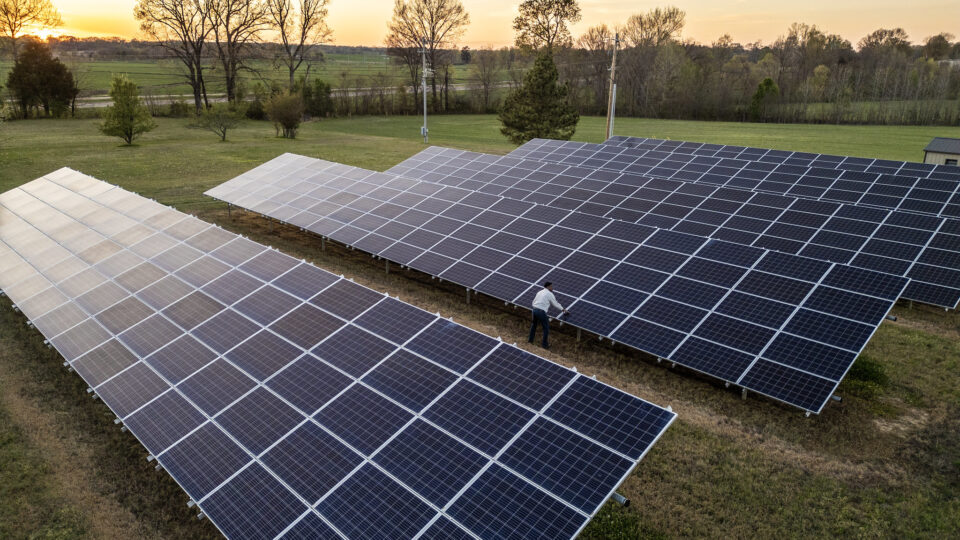
Officials at the federal Bureau of Land Management announced late in August that they had finalized a plan to add Oregon, Idaho, Montana, Washington, and Wyoming to the Western Solar Plan, which started during the Obama era.   The plan, created in 2012, provides permitting for solar projects on federal land.  The original plan included Arizona, California, Colorado, Nevada, New Mexico, and Utah.

The Western Solar Plan is a major expansion for clean energy production in the Bureau of Land Management’s land leasing portfolio.  For decades, the BLM has leased tens of millions of acres of federal land to fossil fuel companies for oil, coal, and natural gas exploration and production.

The new addition includes 1.1 million acres of land in Oregon, an area larger than the entire state of Rhode Island.  The land selected is deemed to be of low risk for any adverse environmental effects from solar installation, and the plots of land are all within 15 miles of existing or planned electrical transmission lines.  A little over 50% of Oregon’s land is owned by the federal government and is managed primarily by the Bureau of Land Management and the U.S. Forest Service.

The publication of the finalized plan at the end of August initiated a 30-day period for any participants in the initial planning to voice objections.  The governors of the 5 new states are reviewing the plan.  Final approval and adoption are expected later this year.

Western states need to expand solar and other clean energy production to meet their climate goals and federal lands will have to play an important role.

**********

Web Links

Plan would make 1 million acres of federal land in Oregon available for solar energy projects

Photo, posted May 20, 2024, courtesy of the U.S. Department of Agriculture via Flickr.

Earth Wise is a production of WAMC Northeast Public Radio
Offshore Wind In Maine | Earth Wise

June 15, 2023 By EarthWise Leave a Comment

Offshore wind is coming to Maine

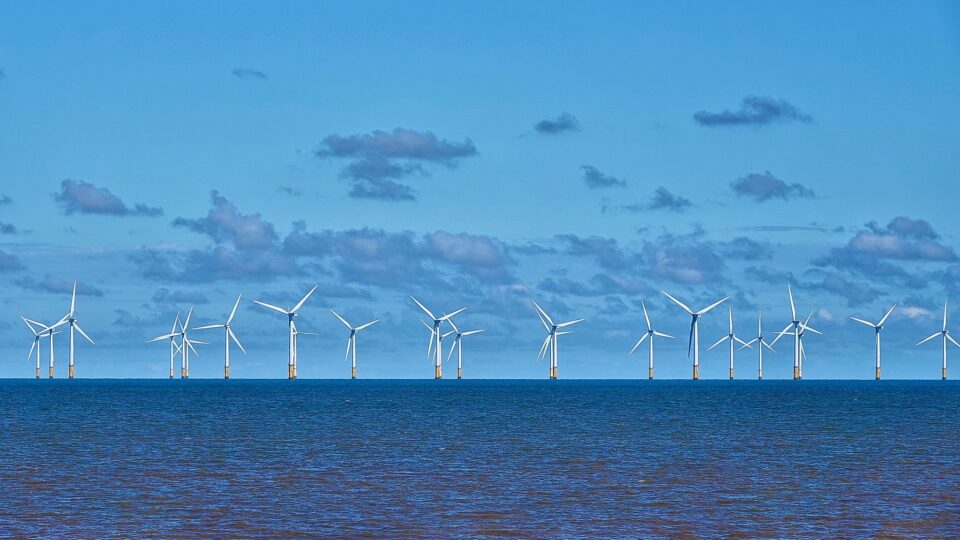
There are currently only two small offshore wind farms operating in the United States, but there are now several more under construction or in the permitting process.  Substantial wind farms are expected to come online over the next five years off the coasts of Virginia, New Jersey, Massachusetts. North Carolina, Delaware, Rhode Island, and New York.   There has been a recent auction for offshore wind sites off the California coast as well.

In April, the Bureau of Ocean Energy Management issued its Gulf of Maine Call for Information and Nominations, inviting public comment and assessing the interest in areas offshore of Maine, New Hampshire, and Massachusetts.  This is the first official step in the lengthy process that leads to offshore wind development in new areas.  Last year, the Department of the Interior defined an area of about 13.7 million acres in the Gulf of Maine that could end up providing energy leases for windfarm development.

The Biden administration has set a goal of deploying 30 gigawatts of offshore wind electricity generation by 2030, which is enough to power more than 10 million homes. It would also create thousands of jobs across manufacturing, shipbuilding, port operations, construction, and other industrial sectors.  Existing offshore wind projects have been structured to develop American-based supply chains for the offshore wind industry.

The European Union currently has over 15 gigawatts of installed offshore wind, has a target of 60 gigawatts by 2030, and 300 gigawatts by 2050.  The EU has five substantial sea basins which have tremendous potential for wind energy generation.  As a result, offshore wind is the centerpiece of the ambitious European Green Deal.

**********

Web Links

U.S. moves to develop offshore wind in the Gulf of Maine

Photo, posted August 31, 2022, courtesy of Nina Ali via Flickr.

Earth Wise is a production of WAMC Northeast Public Radio

Stranded Coal Assets In Japan

November 25, 2019 By EarthWise Leave a Comment

Japan is facing a looming financial problem as a result of heavy investments in coal technology that may quickly become stranded assets as renewable energy sources become increasingly inexpensive.

Japan is gradually adding more ambitious policies with regard to climate change including goals to reduce emissions and to have renewables become the main source of power over the next three decades.  But despite these policy efforts, Japan is still investing heavily in coal power.  Japan currently has 21 new coal projects with over 11 GW of under-construction, permitted or pre-permitted coal capacity.  But these tens of billions of dollars in assets would have to be closed prematurely in order to remain consistent with the goals of the Paris Climate Agreement.

According to a new report by the Carbon Tracker Initiative, a financial think tank, and the University of Tokyo, offshore wind power will be cheaper than coal in Japan by 2022, new solar cheaper by 2023, and onshore wind less expensive by 2025.  The price of offshore wind is already comparable to existing coal power in Japan.  Japan had a total of 55.5 GW of solar capacity last year and has the potential to reach 150 GW by 2030.

The report notes that 42% of the global coal fleet likely became unprofitable last year and this could rise to 72% by 2040.  The authors contend that building coal power today equals high-cost power and financial liabilities tomorrow.  The planned and operating coal capacity in Japan is partially protected by regulations that give coal generators an unfair advantage in the marketplace.  Ultimately, the stranded coal assets are likely to be passed down to consumers through higher power prices.

**********

Web Links

Land of the Rising Sun and Offshore Wind

Photo, posted April 25, 2019, courtesy of Jen via Flickr.

Earth Wise is a production of WAMC Northeast Public Radio.

The Rosewood Trade

April 3, 2019 By EarthWise Leave a Comment

Illegal trafficking in endangered flora and fauna is a topic of great interest and concern.  We hear a lot about elephant ivory, rhino horn, and even pangolin scales.  It turns out that the most trafficked form of flora or fauna in the world is actually rosewood.  According to the United Nations Office on Drugs and Crime, rosewood is traded more than ivory, rhino horn, and pangolin scales put together as measured either by volume or economic value.  According to Earthsight, a London-based nonprofit that investigates environmental crime, rosewood might account for 40% of overall illegal species trade.

Almost all rosewood is headed to China, where the beautiful wood is used in traditional hongmu furniture.   A single bed made from particularly desirable Madagascar rosewood can cost a million dollars.

The illegal rosewood trade has decimated many species of the trees around the world.  A tiny village in Madagascar has seen its population grow by 5,000 in recent years because of migrants coming to work as rosewood loggers.  The rosewood trade has been banned in Madagascar for decades, but a well-established system of bribes has effectively eliminated that problem.  Corruption at all levels allows Madagascar rosewood to find its way onto ships and off to China.

In 2017, the Convention on International Trade in Endangered Species of Wild Fauna and Flora listed all of the world’s rosewood species under its Appendix II, prohibiting all trade except in the rare cases where a local CITES authority issues sustainability permits.

As is the case for other trafficked endangered species, until the demand for the products disappears, people will find a way to make them available.  And meanwhile, these beautiful trees are rapidly disappearing.

**********

Web Links

The Rosewood Trade: An Illicit Trail from Forest to Furniture

Photo, posted November 17, 2007, courtesy of Larry Jacobsen via Flickr.

Earth Wise is a production of WAMC Northeast Public Radio.

Renewable Energy Projects In The Northeast

June 2, 2017 By EarthWise

https://earthwiseradio.org/wp-content/uploads/2017/06/EW-06-02-17-Renewable-Energy-Projects-in-the-Northeast.mp3

The seven northeastern U.S. states that make up the Regional Greenhouse Gas Initiative have all set ambitious emissions reduction goals and renewable energy targets that will be difficult to meet.   For example, New York has the goal of getting 50% of its electricity from renewable sources by the year 2030.

[Read more…] about Renewable Energy Projects In The Northeast

A Threat to Rhinos

May 31, 2017 By EarthWise

https://earthwiseradio.org/wp-content/uploads/2017/05/EW-05-31-17-A-Threat-to-Rhinos.mp3

A South African court recently overturned a national ban on the trade of rhinoceros horns – a decision that was celebrated by the country’s commercial rhino breeders but slammed by animal preservation groups.  A moratorium on rhino horn trade had been in effect in South Africa since 2009. 

[Read more…] about A Threat to Rhinos

Primary Sidebar

Recent Episodes

  • An uninsurable future
  • Clean energy and jobs
  • Insect declines in remote regions
  • Fossil fuel producing nations ignoring climate goals
  • Trouble for clownfishes

WAMC Northeast Public Radio

WAMC/Northeast Public Radio is a regional public radio network serving parts of seven northeastern states (more...)

Copyright © 2025 ·