• Skip to primary navigation
  • Skip to main content
  • Skip to primary sidebar

Earth Wise

A look at our changing environment.

  • Home
  • About Earth Wise
  • Where to Listen
  • All Articles
  • Show Search
Hide Search
You are here: Home / Archives for passengers

passengers

Airplanes and climate change

May 26, 2025 By EarthWise Leave a Comment

Climate change poses all sorts of issues for the aviation industry

The aviation industry is a powerful force in the global economy.  In fact, according to some estimates, the industry transports the equivalent of nearly half the world’s population every year.  But the world’s airports were largely designed for an older era – a cooler one.

As air warms, it becomes less dense, which makes it harder for airplanes to generate lift, which is the force that enables them to fly.

According to a new study by scientists from the University of Reading in the U.K., rising temperatures due to climate change may force aircraft at some airports to reduce passenger numbers in the coming decades.

The research team examined how warmer air affects aircraft performance during takeoff at 30 sites across Europe.  The study, which was recently published in the journal Aerospace, focused on the Airbus A320, which is a common aircraft used for short and medium-distance flights across Europe.

By the 2060s, the research team found that some airports with shorter runways may need to reduce their maximum take-off weight by the equivalent of approximately 10 passengers per flight during summer months.

Of the sites included in the study, Chios in Greece, Pantelleria and Rome Ciampino in Italy, and San Sebastian in Spain will be the four most affected popular tourist destinations.

Climate change is also making air travel increasingly turbulent, and the aviation industry itself remains a growing contributor to global greenhouse gas emissions. 

Taking meaningful action to curb greenhouse gas emissions, including those from the aviation industry, is one of the most crucial ways to mitigate global climate change.

**********

Web Links

Holiday flights could carry fewer passengers as world warms

Photo, posted September 29, 2017, courtesy of Hugh Llewelyn via Flickr.

Earth Wise is a production of WAMC Northeast Public Radio

Electric trains are healthier

May 7, 2025 By EarthWise Leave a Comment

Electric trains are better for human health

The majority of commuter trains in the U.S. are powered by diesel fuel.  This is despite the fact that electric trains are quieter, more reliable, and produce fewer greenhouse gases than diesel locomotives.  A new study has found that electric trains are healthier for passengers as well.

Caltrain carries millions of passengers a year along a 47-mile route between San Francisco and San Jose.  It is the busiest commuter rail system in the western U.S.  Over a six-week period beginning in August 2024, Caltrain retired all 29 of its diesel locomotives and replaced them with electric trains.

As the process began, an environmental engineering and environmental health professor at UC Berkeley noticed the rapid change in the air aboard the trains and decided to study its potential health impacts.  With the support of Caltrain, he installed black carbon detectors aboard the trains and tracked the improvements in air quality as old diesel locomotives were being replaced by new electric trains.

Statistical analysis of the reduction in black carbon exposure achieved by the change predicted a reduction in excess cancer deaths by 51 per million people for passengers and 330 per million people for train conductors.  EPA policy states that any exposure that increases the average individual’s cancer risk by more than one per million is considered unacceptable.

In the context of the whole U.S. where millions of people commute by rail every day, the study predicts that hundreds of cases of cancer could be prevented each year.  California has long-term plans to electrify most of its rail systems.  The study indicates that the process shouldn’t be carried over the next 25 years but rather be sped up.

**********

Web Links

Electric trains are quieter, more reliable than diesel. New study finds they’re healthier, too.

Photo, posted September 4, 2024, courtesy of J. Kehoe via Flickr.

Earth Wise is a production of WAMC Northeast Public Radio
Hydrogen-powered aviation

December 16, 2024 By EarthWise Leave a Comment

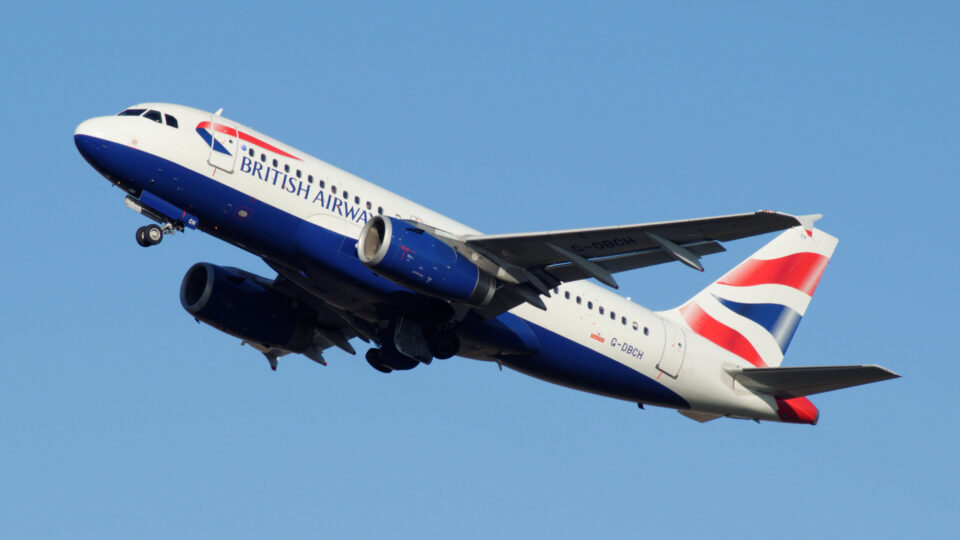
The transportation sector is responsible for about a quarter of human-generated greenhouse gas emissions.  Most of the energy used by transport systems comes from fossil fuels.  The transition to electric vehicles – cars, trucks, and buses – is making a real difference.  However, the emissions from the aviation industry have continued to grow faster than those of other forms of transportation.  There have been increased efforts to develop hydrogen-powered aircraft, but the challenges are substantial.

Hydrogen can be used for aviation both as a directly combusted fuel, or to power electric fuel cells.  Its advantages are that its use produces no carbon dioxide, and, in fact, hydrogen produces more energy per pound than jet fuel.

A study by researchers at MIT looked at the prospects for hydrogen use in aircraft and what needs to be done to make it practical.  The biggest issue is that the extra bulk of a hydrogen fuel tank and fuel cells in a plane would have to be offset by weight reductions elsewhere, such as reducing payload (cargo or passengers).  This would mean there would need to be more flights, thereby reducing the gains made.  The researchers argued that improvements in fuel cell power and more weight efficient fuel systems could eliminate the need for additional flights.

The bigger challenge is the infrastructure for generating and distributing hydrogen.  There needs to be green hydrogen – hydrogen produced without carbon emissions – and the infrastructure for getting it to planes where it is needed has to also not produce substantial emissions.

The study suggests that the rollout of hydrogen-based aviation should start at locations that have favorable conditions for hydrogen production.

**********

Web Links

Fueling greener aviation with hydrogen

Photo, posted December 20, 2016, courtesy of Dylan Agbagni via Flickr.

Earth Wise is a production of WAMC Northeast Public Radio
Electric planes: Fantasy or reality?

December 1, 2023 By EarthWise Leave a Comment

Airplanes have been around for over a century, but the idea of powering them with electricity rather than with liquid fuels has been little more than a fantasy.  Over the years, billions of dollars have been invested trying to make electric planes practical.  In recent times, progress on battery technology has provided a much-needed boost for the field.

Electric planes are nowhere near becoming competitive with long distance commercial aircraft.  The weight and power requirements for such craft are far beyond what electric plane technology can do.  But electric planes could offer a very practical solution for transporting relatively small numbers of passengers over relatively short distances.

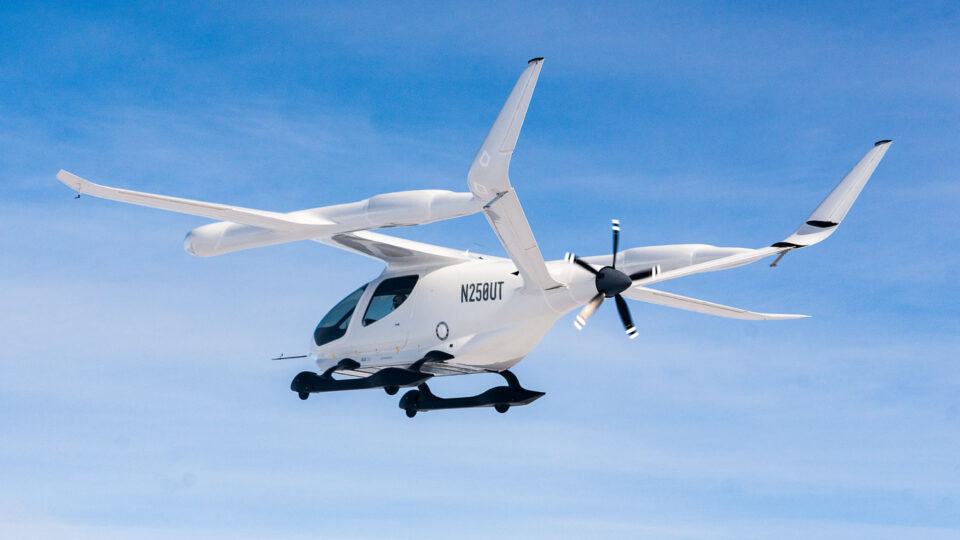
A plane built by the well-funded private company Beta Technologies has flown as far as 386 miles on a single battery charge.  The company envisions such planes to be mostly used for trips of 100 to 150 miles.  These planes could open new opportunities, like better connecting rural areas that have little or no direct air service.

Their latest model was tested on a trip between Burlington, Vermont and Florida, making multiple stops and flying through congested airspace over Boston, New York, and Washington.

Commercial versions of the planes will likely have lift rotors to take off and land like helicopters, making them deployable in a wide range of places.  Many companies are working on electric aviation, and they have backers like major automakers, major airlines, and large investment firms. 

Electric planes are not likely to replace conventional aircraft but are likely to have a meaningful impact how we move goods and services and reconnect rural parts of the country.

**********

Web Links

Electric Planes, Once a Fantasy, Start to Take to the Skies

Photo courtesy of Beta Technologies.

Earth Wise is a production of WAMC Northeast Public Radio
Airplane Turbulence And Climate Change | Earth Wise

July 4, 2023 By EarthWise Leave a Comment

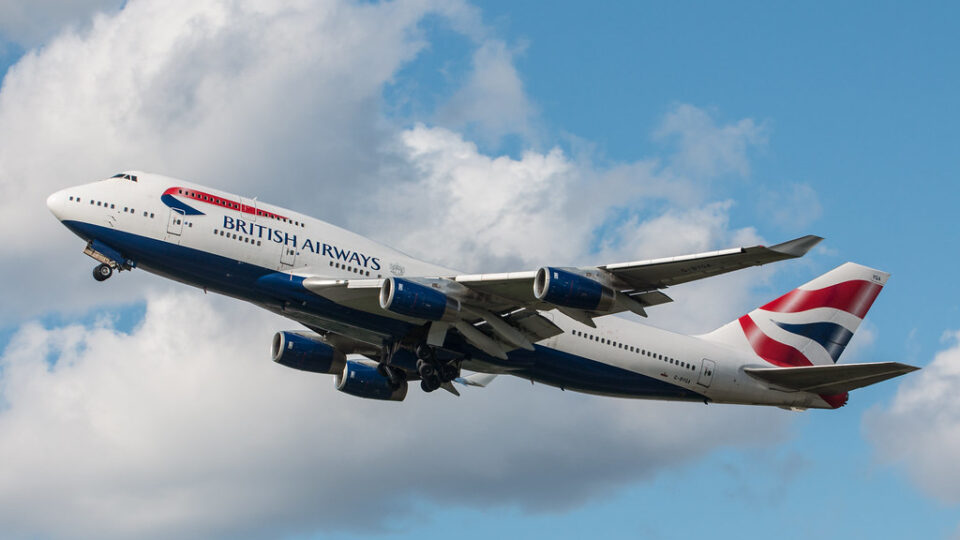
If you’ve ever been on an airplane, chances are pretty good that you’ve experienced turbulence.  As the busy summer travel season kicks off, travelers are being encouraged to brace themselves for a bumpier-than-usual ride. 

There has been a major increase in the number of severe turbulence cases on both domestic and international flights.  According to a new study by researchers from the University of Reading in the U.K., climate change is leading to this increase in turbulence, driving up costs (via wear and tear on aircrafts), and increasing the risks for passengers and flight attendants.  In the United States alone, turbulence costs the airline industry $150-$500 million annually. 

The study, which was recently published in the journal Geophysical Research Letters, found that warmer air, caused by carbon emissions, is creating bumpier flights around the world.  In fact, the study found that severe turbulence in the North Atlantic is up by 55% since 1979. 

The changing climate is affecting air travel in other ways as well.  A faster jet stream across the Atlantic is altering travel times.  Rising temperatures are reducing the weight that aircraft can carry.  Rising seas are threatening low-lying coastal airports around the world. 

But carbon emissions from aviation are also a significant driver of the climate crisis.  Air travel accounts for approximately 3% of global greenhouse gas emissions, and is one of the fastest growing sources of emissions. According to the International Civil Aviation Organization, emissions from international air travel are expected to triple by 2050.

The future is shaping up to be a bumpy ride.

**********

Web Links

Climate crisis leading to more turbulence during flights, says study

Evidence for Large Increases in Clear-Air Turbulence Over the Past Four Decades

Climate Scientist Explains Increase In Airplane Turbulence

Airports and Rising Seas

Photo, posted May 9, 2018, courtesy of Steve Lynes via Flickr.

Earth Wise is a production of WAMC Northeast Public Radio

Banning Short Plane Flights | Earth Wise

May 20, 2021 By EarthWise Leave a Comment

Banning short plane flights to reduce emissions

Almost everything we do ultimately results in greenhouse gases entering the atmosphere and therefore has an impact on the climate.  But some activities have much more impact than others.  The aviation industry is responsible for about 5% of global warming.

This doesn’t seem like that large a contribution, but only a very small percentage of the world’s population flies frequently and even in richer countries, only around half the population flew in any given year (at least before the pandemic.)

Flying is generally the only practical option for most long-haul trips and unless people give up on seeing the world or conducting global business in person, they are not going to give up taking air trips.

But shorter flights are a different story.  If you are planning to take a reasonably short trip in France, a plane will soon no longer be an option.  The French government says that flights will be banned on any route where the trip could be made on a train in 2.5 hours or less.  The driving force is the reduction of CO2 emissions.  A plane trip emits an average of 77 times more CO2 per passenger than taking a train on the same route.

The Netherlands and Belgium are also considering bans on short-haul flights and Austrian Airlines recently replaced its Vienna-to-Salzburg flights with train service.

Advocates of the flight bans say that not only does taking the train significantly reduce a traveler’s carbon footprint, but it can be cheaper and actually faster than a plane when factoring in the time spent getting to airports, standing in security lines, getting on and off planes, and so on.  Europe’s extensive train system makes this approach broadly practical. Unfortunately, here in the U.S., it is not quite that easy.

**********

Web Links

France Will Ban Short Flights That Could Be Replaced By a Train Trip

Photo, posted December 17, 2016, courtesy of Dylan Agbagni via Flickr.

Earth Wise is a production of WAMC Northeast Public Radio.

Fighting Smog

June 8, 2016 By WAMC WEB

https://earthwiseradio.org/wp-content/uploads/2016/05/EW-06-08-16-Fighting-Smog.mp3

There are 35 megacities in the world – metropolitan areas with more than 10 million people.  Fifteen of them have populations above 20 million.   And many of these teeming metropolises have to contend with some of the worst air pollution on the planet.

[Read more…] about Fighting Smog

Primary Sidebar

Recent Episodes

  • An uninsurable future
  • Clean energy and jobs
  • Insect declines in remote regions
  • Fossil fuel producing nations ignoring climate goals
  • Trouble for clownfishes

WAMC Northeast Public Radio

WAMC/Northeast Public Radio is a regional public radio network serving parts of seven northeastern states (more...)

Copyright © 2026 ·