• Skip to primary navigation
  • Skip to main content
  • Skip to primary sidebar

Earth Wise

A look at our changing environment.

  • Home
  • About Earth Wise
  • Where to Listen
  • All Articles
  • Show Search
Hide Search
You are here: Home / Archives for papua new guinea

papua new guinea

Potential for floating solar

July 16, 2024 By EarthWise Leave a Comment

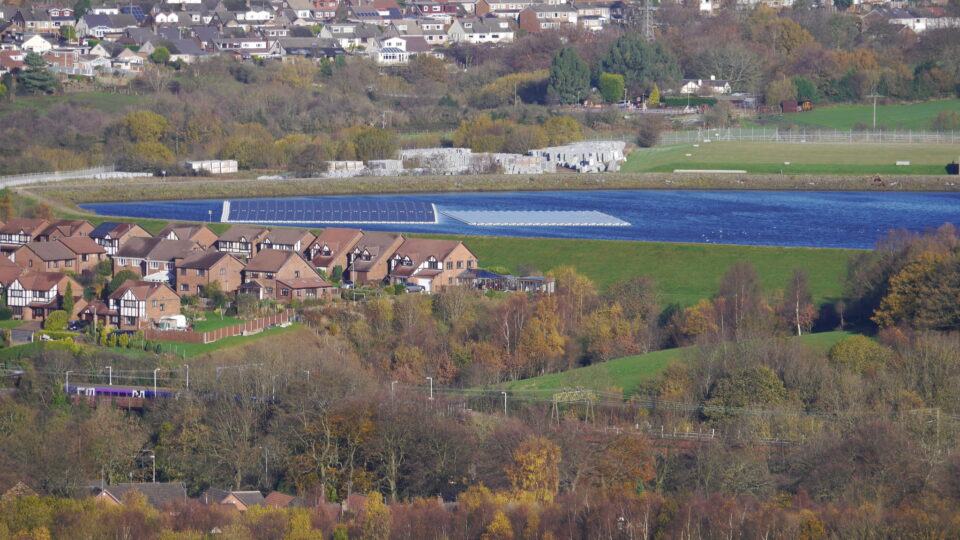
As installations of utility-scale solar power continue to expand around the world, there is the issue of where to put them.  They do take up considerable amounts of space and, in many places, available land is at a premium.

An alternative to taking up available land with solar panels is to deploy them on the surfaces of lakes and reservoirs.  A study by researchers at Bangor and Lancaster Universities in the UK calculated the potential electrical output for floating photovoltaic installation on nearly 68,000 lakes and reservoirs around the world.  The lakes and reservoirs selected were no more than 6 miles from a population center, were not in a protected area, and didn’t dry up and didn’t freeze for more than six months each year.  The calculations were based on covering just 10% of the surface area of the bodies of water.

The calculations were evaluated country-by-country.  Five countries could meet their entire electricity needs by floating installations including Papua New Guinea, Ethiopia, and Rwanda.  Many countries, mostly in Africa, South America, and Central Asia, could get between 40% and 70% of their electricity this way.  Most European countries could only meet a few percent of their electricity needs from floating solar, but even that could be significant. 

There are other benefits to floating solar apart from freeing up land.  The panels stay cooler, making them more efficient, and reservoirs lose less water through evaporation and the growth of algal blooms is reduced because there is less light reaching the water.

**********

Web Links

Some countries could meet their total electricity needs from floating solar panels, research shows

Photo, posted November 25, 2015, courtesy of Smabs Sputzer via Flickr.

Earth Wise is a production of WAMC Northeast Public Radio
Turning Carbon Into Stone | Earth Wise

January 31, 2023 By EarthWise Leave a Comment

Start-up plans to turn carbon into stone

A start-up company in Oman called 44.01 was recently awarded a $1.2 million Earthshot Prize by Prince William of the U.K.  The company, whose name corresponds to the molecular weight of carbon dioxide, is working on speeding up natural chemical reactions that take carbon from the air and lock it into solid mineral form.

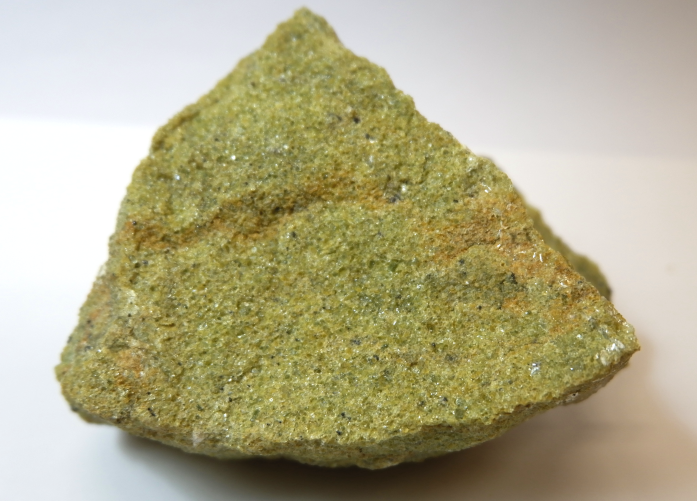
The company’s location in Oman is no random occurrence.  The mountains of northern Oman and along the coast of the United Arab Emirates are the site of a huge block of oceanic crust and upper mantle that was thrust upward some 96 million years ago.  The tilted mass of rock is over 200 miles long and is the largest surface exposure of the Earth’s mantle in the world.

This type of rock, called peridotite, is rich in olivine and pyroxene, which react with water and carbon dioxide to form calcium-based minerals like serpentine and calcite that permanently lock in carbon. Other kinds of rock also are capable of carbon-storing mineralization, but this mantle rock is the most effective for the purpose. It only exists at the Earth’s surface in a few places, including Papua New Guinea and some spots in California and Oregon.

The 44.1 company is planning to use solar-powered direct air capture devices to remove CO2 from the air, use it to produce carbonated water, and inject the water into the reactive rocks.  The company will operate a couple of pilot systems during 2023.  Ultimately, the company believes it can scale up the process to be able to permanently sequester as much as a billion tons of CO2 a year by the year 2040 without needing to inject the gas into deep caverns or find other places to store it.

**********

Web Links

With Major Prize, a Project to Turn Carbon Emissions to Stone Gains Momentum

Photo, posted August 10, 2018, courtesy of JM McBeth via Flickr.

Earth Wise is a production of WAMC Northeast Public Radio
Disappearing Mountaintop Glacier Ice | Earth Wise

August 30, 2021 By EarthWise Leave a Comment

Climate changing is shrinking glaciers all around the world

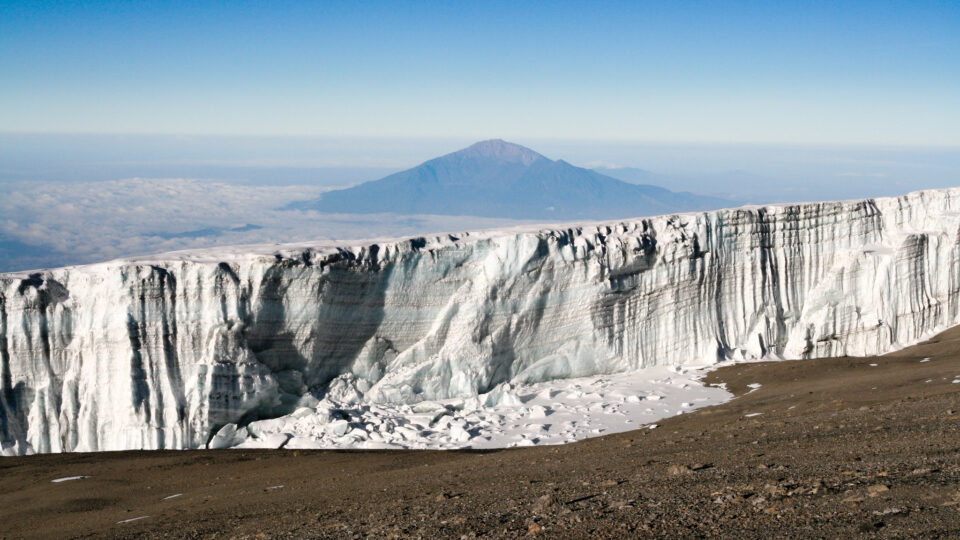
A newly released study has found that mountaintop glacier ice in the tropics of all four hemispheres has diminished dramatically over the past 50 years.  Among the findings of the study, published in the journal Global and Planetary Change, are that a glacier near Puncak Jaya, in Papua New Guinea, lost about 93% of its ice between 1980 and 2018.  Between 1986 and 2019, the area covered by glaciers on top of Mt. Kilimanjaro in Africa decreased by nearly 75%.

The study combined NASA satellite imagery with data from ice cores drilled during field expeditions on tropical glaciers around the world.  The combination of measurements demonstrated that climate change is causing these glaciers to disappear and that the ice loss has accelerated in recent years.

The study looked at glacier ice in Kilimanjaro in Tanzania, the Andes in Peru and Bolivia, the Tibetan Plateau and the Himalayas, and ice fields in Papua, New Guinea.  Collecting ice cores from these places provides information on the climate in these regions over the centuries and millennia.  As snow falls on a glacier each year, it is buried and compressed to form layers that preserve the chemistry of snow, pollutants from the atmosphere, and biological material such as plants and pollen.

Glaciers in the tropics respond more quickly to climate change because they exist in the warmest areas of the world and survive only at very high altitudes. For many of these tropical glaciers, it is too late to prevent their demise.  It is not too late to attempt the slow down the buildup of greenhouse gases in the atmosphere that is causing the planet to warm, but we don’t have unlimited time to act.

**********

Web Links

Mountaintop glacier ice disappearing in tropics around the world

Photo, posted February 12, 2009, courtesy of Christoph Strassler via Flickr.

Earth Wise is a production of WAMC Northeast Public Radio.

Community Action And Coral Reefs

January 1, 2020 By EarthWise Leave a Comment

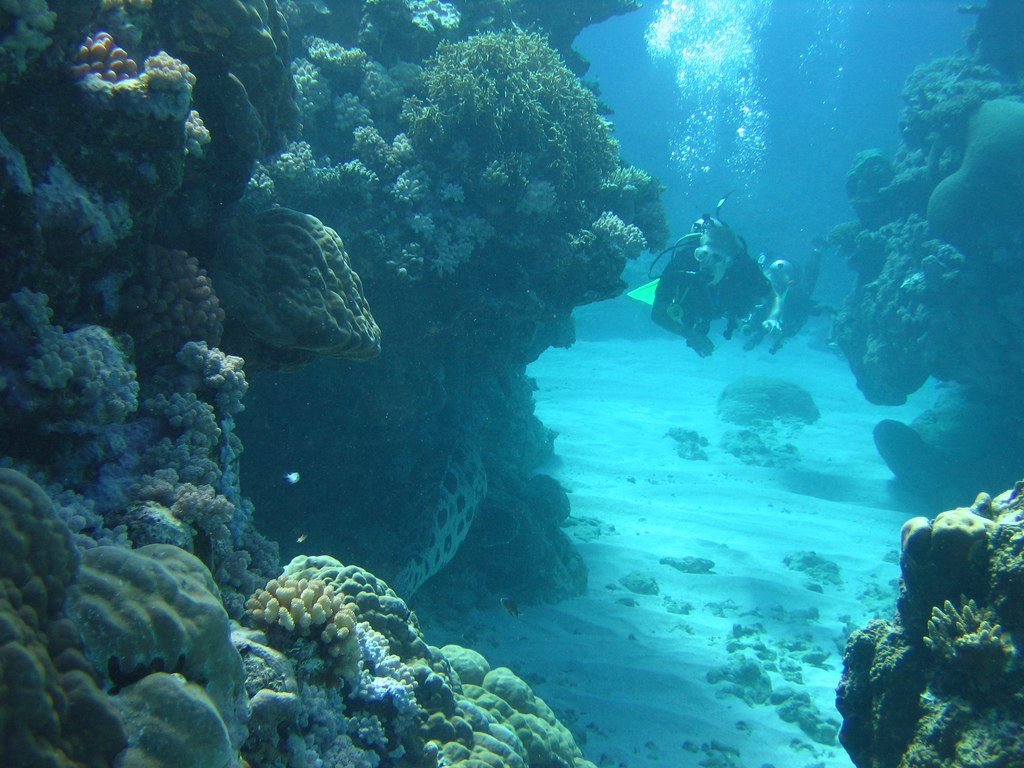
Coral reef habitats are some of the densest and most varied ecosystems on earth.  While coral reefs cover just 0.2% of the ocean floor, scientists estimate that nearly one million different species of fish, invertebrates, and algae can be found in or around coral reefs. 

However, climate change is wreaking havoc on the health of coral reefs.  Warming and acidifying oceans are resulting in enormous coral losses.  Overfishing, development, and pollution are also threatening coral reef health.

According to new research, positive community action can help boost fish populations in coral reefs and safeguard future fish numbers.  The paper, which was recently published in the journal Proceedings of the National Academy of Sciences, details the social and ecological outcomes of work being done in Papua New Guinea since 2001. 

These communities have established a traditional system of rotational fishing closures in order to manage their fisheries resources.   They ban fishing on part of their reefs for a few years, and then open these closures when village elders believe fish behavior has changed and fish populations have recovered.  They then close a different part of their reefs, and repeat the process. 

The researchers found that these rotational practices resulted in more than twice as many fish on the closed reefs as compared to open ones, and the closures made fish less scared of people and easier to catch.  But the researchers did caution that this short term boost in fish numbers may not be enough to stop the overall impact of fishing.

Globally, more than 500 million people depend on coral reefs for food, income, and coastal protection.  Balancing community needs with environmental needs can be tricky business.  

**********

Web Links

Positive community action can help coral reef health

Photo, posted October 11, 2011, courtesy of Paul Toogood via Flickr.

Earth Wise is a production of WAMC Northeast Public Radio.

Air Pollution And Diabetes

August 9, 2018 By EarthWise 3 Comments

https://earthwiseradio.org/wp-content/uploads/2018/08/EW-08-09-18-Air-Pollution-and-Diabetes.mp3

Air pollution is deadly.  Studies have found that fine particulate matter, such as airborne pieces of dust, dirt, smoke, soot, and other microscopic particles can enter our lungs and bloodstream, contributing to major health conditions such as heart disease, stroke, cancer, and kidney disease.

[Read more…] about Air Pollution And Diabetes

Oman’s Rocks

June 13, 2018 By EarthWise Leave a Comment

https://earthwiseradio.org/wp-content/uploads/2018/05/EW-06-13-18-Omans-Rocks.mp3

There is growing interest in the idea of capturing and storing carbon dioxide.  Reducing the amount of it we are putting into the atmosphere is essential for limiting the effects of climate change, but even eliminating emissions entirely is not enough because the CO2 already there stays in the atmosphere for decades or more.

[Read more…] about Oman’s Rocks

Some Good News For Coral Reefs

August 12, 2016 By WAMC WEB

https://earthwiseradio.org/wp-content/uploads/2016/08/EW-08-12-16-Good-News-for-Coral-Reefs.mp3

Most recent news about coral reefs around the world has been bad news.  There has been unprecedented coral bleaching in places like Australia’s Great Barrier Reef.   The effects of climate change – including warming temperatures and rising seas – as well as the recent El Niño event have led to damaged reefs across the globe.

[Read more…] about Some Good News For Coral Reefs

Primary Sidebar

Recent Episodes

  • An uninsurable future
  • Clean energy and jobs
  • Insect declines in remote regions
  • Fossil fuel producing nations ignoring climate goals
  • Trouble for clownfishes

WAMC Northeast Public Radio

WAMC/Northeast Public Radio is a regional public radio network serving parts of seven northeastern states (more...)

Copyright © 2025 ·