• Skip to primary navigation
  • Skip to main content
  • Skip to primary sidebar

Earth Wise

A look at our changing environment.

  • Home
  • About Earth Wise
  • Where to Listen
  • All Articles
  • Show Search
Hide Search
You are here: Home / Archives for ontario

ontario

Attack of the giant goldfish

January 15, 2024 By EarthWise Leave a Comment

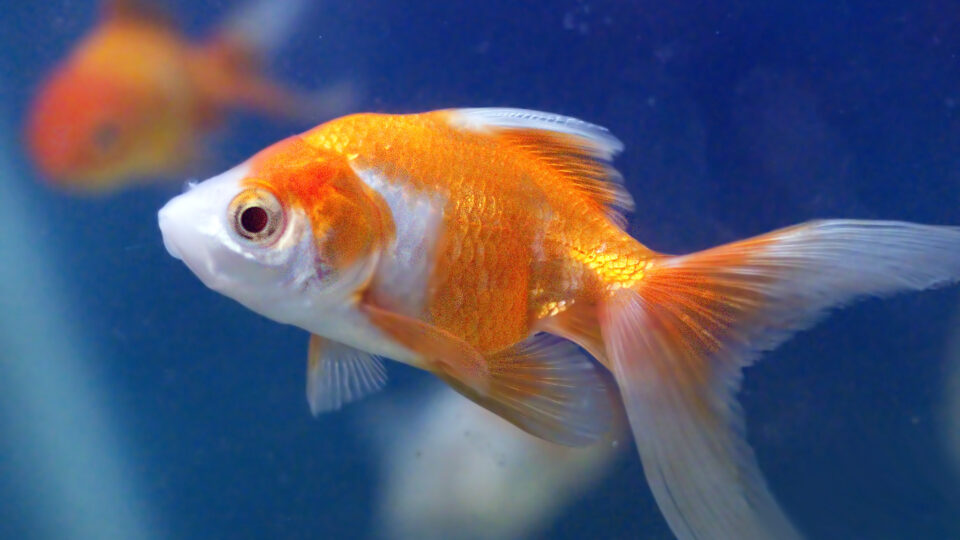
Giant goldfish are an invasive species

Goldfish are just about the easiest pets to keep.  A species of carp native to East Asia, they have been bred to look pretty and are generally little more than home décor.  We keep them in little glass bowls and feed them mysterious flakes out of a container.  With these confined quarters and meager meals, they remain small, harmless creatures.  But released into the wild, it is a very different story.

People dump pet goldfish into lakes and ponds with some frequency.  Once they are in the wild, these humble creatures can grow to monstrous proportions.  They can eat nearly anything, including algae, aquatic plants, eggs, and invertebrates.  They can kill off native marine wildlife and damage or even destroy fragile and economically valuable ecosystems.

For a few years, Canadian researchers have been tracking invasive goldfish in Hamilton Harbour, at the western tip of Lake Ontario, about 35 miles southwest of Toronto.  That part of the lake has been decimated by industrial and urban development as well as by invasive species.

Goldfish were first spotted in the harbor in the 1960s, mostly died off in the 70s because of industrial contamination, but then recovered in the 2000s.  Goldfish can tolerate a wide range of water temperatures, reach sexual maturity quickly, and can reproduce several times in one season.  In resource-rich places, they can grow up to 16 inches long, making them too large a meal for many predators.

There are literally millions of goldfish in the Great Lakes and not only there.  Feral goldfish are a problem in Australia and in the United Kingdom.  Invasive species are a big problem, even if they start out small and cute.

**********

Web Links

Once They Were Pets. Now Giant Goldfish Are Menacing the Great Lakes.

Photo, posted September 20, 2015, courtesy of Watts via Flickr.

Earth Wise is a production of WAMC Northeast Public Radio
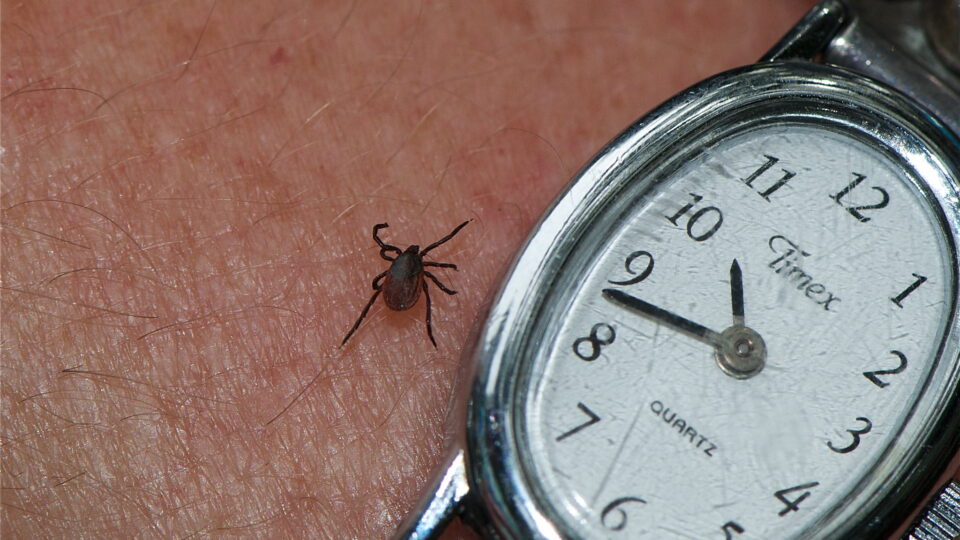
Tick-Borne Pathogens In Canada | Earth Wise

December 27, 2022 By EarthWise Leave a Comment

Ticks spreading disease in Central Canada

Measuring only three to five millimeters in size, tiny ticks are a big problem.  They are widely distributed in many parts of the world, especially in warm and humid climates.  Ticks are arachnids – not insects – meaning they’re more closely related to spiders than to flies or mosquitos.  They are external parasites that feast on the blood of birds, reptiles, amphibians, and mammals – including humans.

In the United States, ticks are responsible for spreading potentially life-threatening infectious diseases.  According to estimates from the Centers for Disease Control and Prevention, ticks infect more than 300,000 people with Lyme disease in the U.S. every year, and the numbers continue to rise.  Other common tick-borne diseases include anaplasmosis, babesiosis, Rocky Mountain Spotted Fever, and powassan encephalitis.

Ticks are becoming a problem in Canada as well.  According to a new study by researchers from McGill University and the University of Ottawa, tick-borne pathogens are on the rise in Central Canada – a region where ticks were never previously detected. 

In the study, the researchers collected ticks across Ontario and Quebec.  They found that five emerging pathogens were present across their study sites, including the pathogens that cause Lyme disease and babesiosis.  The researchers also found that pathogens can transmit in different ways.  Typically, pathogens are transmitted to a tick after feeding from the blood of an infected host, like a small mammal.  But the research team found evidence of pathogens that could be directly transmitted from adult female ticks to larval ticks.

According to the researchers, more comprehensive testing and tracking is needed to detect the spread and risks of tick-borne pathogens to humans and wildlife in Canada.

**********

Web Links

Tick-borne pathogens increasingly widespread in Central Canada

Photo, posted May 4, 2009, courtesy of Jerry Kirkhart via Flickr.

Earth Wise is a production of WAMC Northeast Public Radio

Compressed Air Energy Storage

October 23, 2019 By EarthWise Leave a Comment

The increasing use of solar and wind power has created a growing need for technology to store up the energy they generate for use when it is most needed.

Historically, pumped hydropower has provided the largest amount of storage capacity, but it is limited to only certain geographic locations.   Battery energy storage has been growing rapidly, with the technology becoming better and cheaper over time.  But there are various other ways to store energy that have potential and may well find their place in the changing energy infrastructure.

One of these is compressed air energy storage, which has been around for more than a century.  It has been used as a backup method for restarting power plants.  But to date, the economic viability of using it at a large scale has been lacking.

A Canadian startup company called Hydrostor is developing compressed air energy storage technology that it believes can be used on a utility scale.

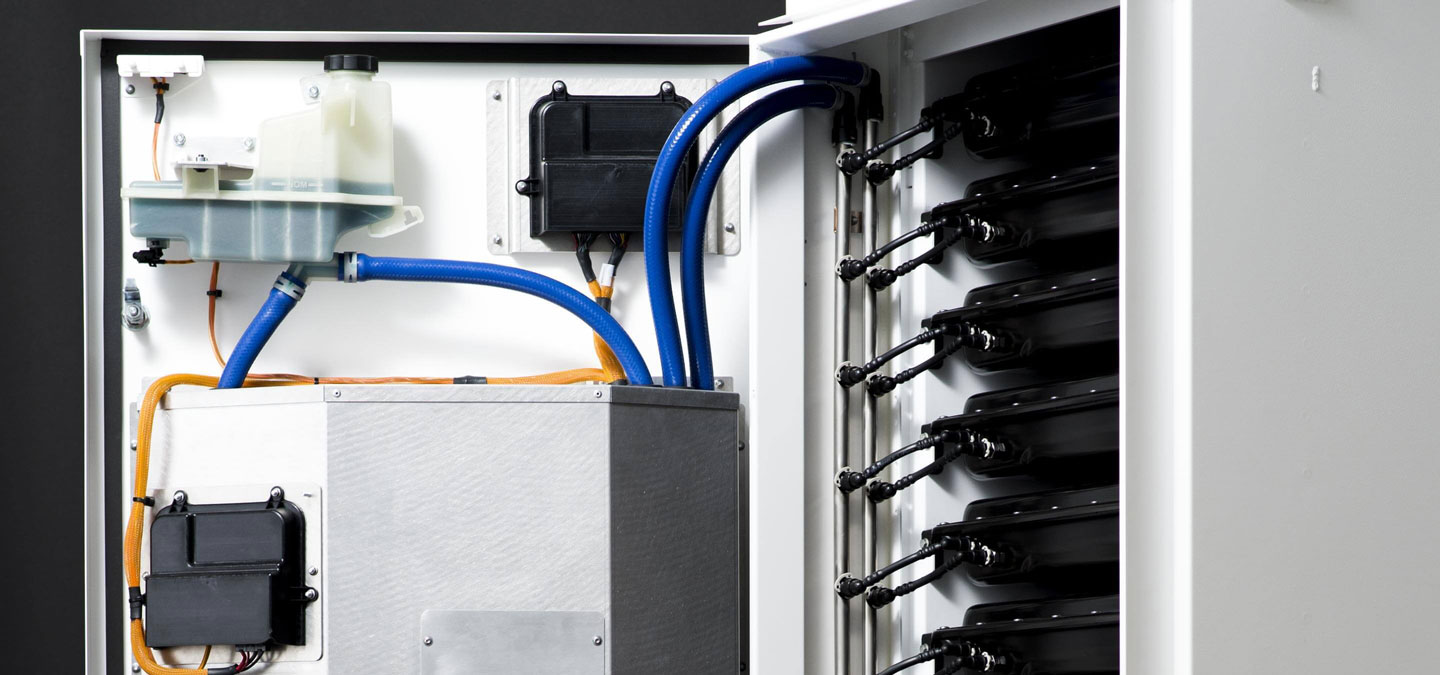
The way it works is excess renewable energy is used to run compressors that compress air.  Compressing the air heats it up and the heat is captured and stored in insulated hot water tanks.  The compressed gas is then injected into underground caverns.  When energy is needed, the compressed air is released, the stored heat is added, and the warmed gas is run through turbines to generate electricity.  Additional features improve the system’s efficiency.

Hydrostore has built a 1 MW pilot project in Ontario, Canada and is now commissioning a 2MW system as well.  It is funded to build a 5 MW system in Australia next year and it is bidding for 300 MW and 500 MW systems in North America.  The company has received equity funding from Baker Hughes, a large oil-and-gas services and equipment company.

**********

Web Links

Storing energy in compressed air could finally become cheap enough for the big time

Photo courtesy of Hydrostor.

Earth Wise is a production of WAMC Northeast Public Radio.

From Coal Plant To Solar Farm

June 5, 2019 By EarthWise Leave a Comment

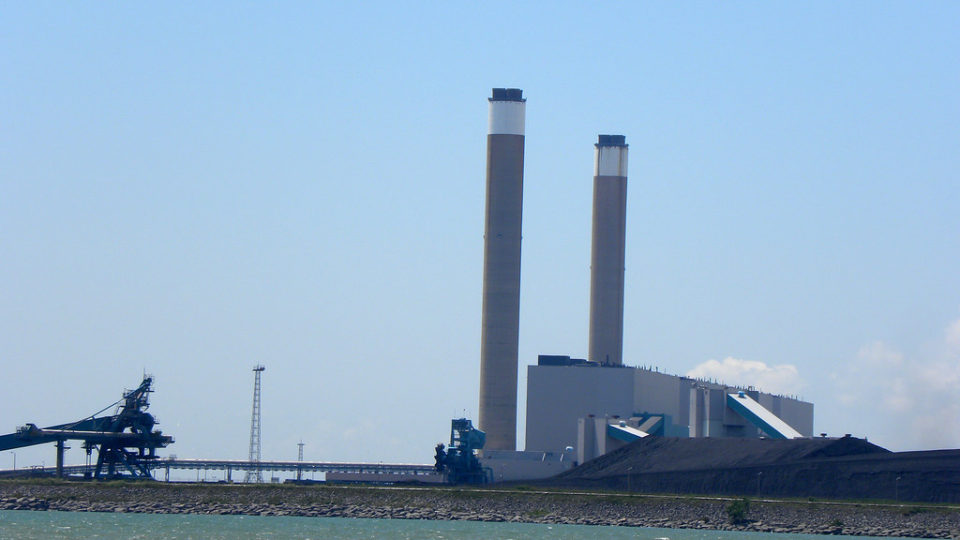
The Nanticoke Generating Station in Ontario, Canada was the largest coal-fired power plant in North America.  It was commissioned in 1972 and was capable of providing nearly 4,000 megawatts of electrical power into the southern Ontario power grid.  At peak, the plant consumed nearly 40,000 tons of coal per day.

The government of Ontario eventually decided to phase out all of its coal plants about ten years ago but the decommissioning was delayed for a time because of the lack of replacement sources of energy.  The plant began to shut down its individual generating units starting in 2010.  By the end of 2013, the Nanticoke plant was shut down for good.

In 2016, a 44 MW solar power station was contracted for the site and construction began last year.  The plant opened at the beginning of April coinciding with the one-year anniversary of the demolition of Nanticoke’s smokestacks, which once stood 650 feet tall.

The new solar farm has 192,431 solar panels spread across 260 acres.  The facility, situated on the shores of Lake Erie in Ontario, will generate enough electricity to power more than 7,200 homes. 

The idea to use part of the retired coal plant’s property for a new solar farm was spearheaded and paid for by Ontario Power Generation, the Six Nations of the Grand River Development Corporation, and the Mississaugas of the Credit First Nation.

The Chief of the Mississaugas called the solar project an important economic development in the region and for tribal nations that sets the stage for future mutually-beneficial partnerships between Ontario Power Generation and others.

**********

Web Links

Canadian Coal-Fired Power Plant Transformed into Solar Farm

Photo, posted July 26, 2009, courtesy of Jason Paris via Flickr.

Earth Wise is a production of WAMC Northeast Public Radio.

The Southern Pine Beetle

October 13, 2017 By EarthWise Leave a Comment

https://earthwiseradio.org/wp-content/uploads/2017/10/EW-10-13-17-The-Southern-Pine-Beetle.mp3

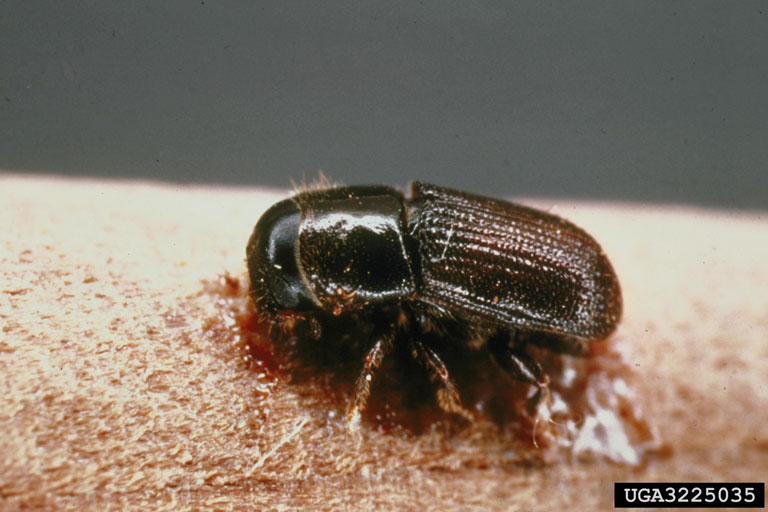
Recent sightings of a destructive tree-eating beetle in northeast pine forests have been alarming.  And a new study from Columbia University has confirmed what ecologists had feared all along:  they’re here to stay.

[Read more…] about The Southern Pine Beetle

The Largest Battery Storage Substation

March 10, 2017 By EarthWise

https://earthwiseradio.org/wp-content/uploads/2017/02/EW-03-10-17-The-Largest-Battery-Storage-Substation.mp3

At the end of last year, Southern California Edison turned on the largest lithium-ion battery storage facility in the world in Ontario, California.   It is a substation with 80 megawatt-hours of capacity, enough energy to power 2,500 households or charge 1,000 Tesla cars a day.

[Read more…] about The Largest Battery Storage Substation

Geothermal Heating

July 27, 2016 By WAMC WEB

https://earthwiseradio.org/wp-content/uploads/2016/07/EW-07-27-16-Geothermal-Heating.mp3

Geothermal heat pumps use the heat stored in the earth’s surface to heat homes and buildings.  Even in the dead of winter, the temperature not very far below ground remains at a temperature typically in the 50s.  Geothermal systems tap into this immense thermal resource.  Conversely, this same temperature sink can be used to provide cooling during the summer.  It takes electricity to run the heat pumps, but is vastly more efficient than using electricity directly to produce heat or to cool air.

[Read more…] about Geothermal Heating

Primary Sidebar

Recent Episodes

  • An uninsurable future
  • Clean energy and jobs
  • Insect declines in remote regions
  • Fossil fuel producing nations ignoring climate goals
  • Trouble for clownfishes

WAMC Northeast Public Radio

WAMC/Northeast Public Radio is a regional public radio network serving parts of seven northeastern states (more...)

Copyright © 2026 ·