• Skip to primary navigation
  • Skip to main content
  • Skip to primary sidebar

Earth Wise

A look at our changing environment.

  • Home
  • About Earth Wise
  • Where to Listen
  • All Articles
  • Show Search
Hide Search
You are here: Home / Archives for ocean water

ocean water

How much nanoplastic is in the oceans?

August 1, 2025 By EarthWise Leave a Comment

There is a shocking amount of nanoplastics in the world's oceans

It is unfortunately well-known that microplastics are pretty much everywhere on Earth.  They are also increasingly found in living things like birds and dolphins as well as in human brains and placentas.  The oceans are polluted with plastic, and for the first time, there is now an estimate for the volume of nanoplastics – which are even smaller than microplastics and invisible to the human eye – found in the North Atlantic.

According to a study published in the journal Nature by the microplastics and nanoplastics research group at the Helmholtz Center for Environmental Research in Germany, there are at least 30 million tons of nanoplastics in the North Atlantic, which is more than the weight of all wild land mammals on Earth.

The same researchers have analyzed plastic in lakes, urban air, and even the air in very remote places, but the new study reveals a missing part of the plastics story.

Nanoplastics are microscopic fragments smaller than one micron, about the size of small bacteria.  There has been ongoing concern about nanoplastics in ocean water, but there wasn’t the technology available to really investigate it.  While nanoplastics were expected to be found in the ocean, the sheer amount of it was surprising.

The average concentration of nanoplastics near coastlines is about 25 milligrams per cubic meter of water, about the weight of a single large bird feather.   Nanoplastics are tiny enough that they can easily infiltrate the bodies of living creatures.  For fish and other ocean animals, that means constant exposure that builds up over time.

It is highly unlikely that plastic pollution is going to stop any time soon, but there is a United Nations meeting on the subject in August in Geneva.

**********

Web Links

Tons of Invisible Plastic Pieces Lurk in Ocean Water

Photo, posted June 24, 2020, courtesy of G.P. Schmal / NOAA via Flickr.

Earth Wise is a production of WAMC Northeast Public Radio
An ice-free Arctic

April 9, 2024 By EarthWise Leave a Comment

A future ice-free Arctic is very likely as the climate warms

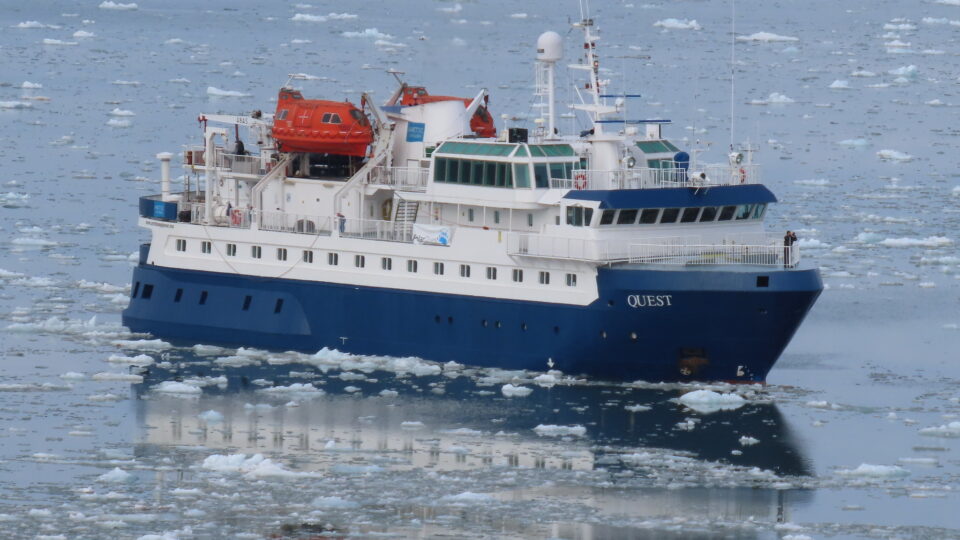
According to a new study by Colorado University, Boulder, the Arctic could see summer days with practically no sea ice as soon as sometime in the next few years.  Earlier predictions for when the first ice-free day in the Arctic could occur were sometime well into the 2030s.

By mid-century, the Arctic is likely to see an entire month without floating sea ice.  This would likely be in September, when ice coverage is at its minimum.  By the end of the century, the ice-free season could last for many months during the year.

Technically, an ice-free Arctic does not mean zero ice in the water.  The working definition is less than 386,000 square miles of ice, which represents less than 20% of what the minimum ice coverage was in the 1980s. In recent years, the coverage has been about 1.25 million square miles.

Sea ice coverage is a big deal because many Arctic animals rely on sea ice for survival, including seals and polar bears.  With warmer ocean water, invasive fish species could move into the Arctic Ocean, upsetting local ecosystems.  Sea ice loss also is a risk for coastal communities because the ice buffers the impact of ocean waves on the coastal land.  As the ice retreats, ocean waves would get bigger, eroding the coasts.

At this point, an ice-free Arctic is basically inevitable, but its annual duration will depend on society’s efforts to reduce carbon emissions.  Lengthy periods of minimal sea ice would transform the Arctic into a completely different environment with global effects that are mostly highly undesirable.  However, Arctic sea ice is resilient and could return fairly quickly if the atmosphere cools down.

**********

Web Links

The Arctic could become ‘ice-free’ within a decade

Photo, posted July 9, 2022, courtesy of Reiner Ehlers via Flickr.

Earth Wise is a production of WAMC Northeast Public Radio

Pulling Carbon Dioxide Out Of Seawater | Earth Wise

April 17, 2023 By EarthWise Leave a Comment

Researchers are developing method to pull CO2 out of seawater

The world’s largest sink for carbon dioxide from the atmosphere is the ocean.  The world’s oceans soak up 30-40% of all the gas produced by human activities.  Dissolving carbon dioxide in water produces carbonic acid.   This is the reason that oceans are becoming increasingly acidic, which is causing serious damage to ocean ecosystems.

There are many efforts underway aimed at directly removing carbon dioxide from the air as a way to mitigate the effects of ongoing emissions.  But another possibility is to remove CO2 directly from ocean water.  Existing methods for doing it involve the use of expensive membranes and complex chemicals. The economics of such methods are quite unfavorable.

Recently, a team of researchers at MIT has identified what they claim is a truly efficient and inexpensive removal mechanism. It involves a reversible process based on membrane-free electrochemical cells.  Electrodes in the cells release protons that are introduced to seawater which drive the release of carbon dioxide dissolved in the water. The carbon dioxide can be collected and the processed water ends up being alkaline.

Running this process at a site that is already collecting seawater – such as at a desalination plant – would be an effective way to collect carbon dioxide as well as help mitigate ocean acidification.

Once the carbon dioxide is removed from the water, it still needs to be disposed of, just as is the case for other carbon removal processes.  It could be turned into useful chemicals or it could be stored in underground caverns.  But this approach is fairly unique in that the carbon dioxide has already been captured by the ocean.  The issue remains what to do with it.

**********

Web Links

How to pull carbon dioxide out of seawater

Photo, posted January 19, 2016, courtesy of Judy Dean via Flickr.

Earth Wise is a production of WAMC Northeast Public Radio
Marine Predation And Climate Change | Earth Wise

July 11, 2022 By EarthWise Leave a Comment

Climate change is taking a toll on forests, farms, freshwater resources, and economies all around the world.  But ocean ecosystems remain the center of global warming.

Despite their vast ability to absorb heat and carbon dioxide, oceans are warming.  In fact, according to scientists, the oceans have absorbed 90% of all the warming that has occurred during the past 50 years. 

The ocean’s surface layer, which is home to most marine life, takes most of this heat.  As a result, the top 2,300 feet of global ocean water has warmed approximately 1.5°F since 1901.

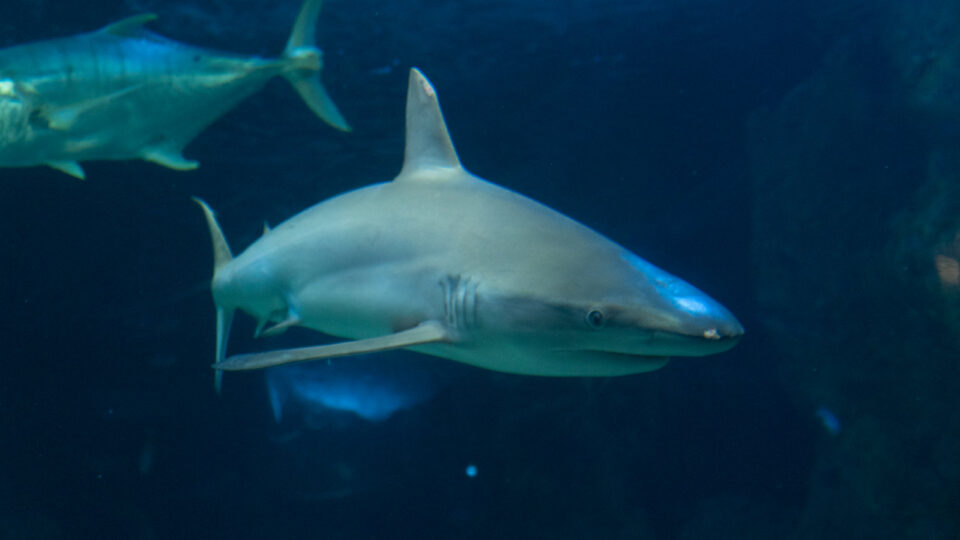
Well it turns out that a hotter ocean is also a hungrier ocean.  According to a new study recently published in the journal Science, researchers discovered that predator impacts in the Atlantic and Pacific oceans peak at higher temperatures.  The effects of more intense marine predation could disrupt ecosystem balances that have existed for millennia. 

An international research team led by the Smithsonian Institution and Temple University analyzed predator and prey data collected from 36 sites, running along the Atlantic and Pacific coasts from Alaska in the north to Tierra de Fuego at the tip of South America.  The research team found that, in warmer waters, predators’ more voracious appetites left outsized marks on the prey community.  Total prey biomass plunged in warmer waters when prey were left unprotected.  However, in the coldest zones, leaving prey exposed or protected made nearly no difference at all.  

As the oceans continue to warm, more intense predation will create winners and losers and could jeopardize the overall health of marine ecosystems.  

***********

Web Links

As the ocean heats up hungrier predators take control

Photo, posted July 14, 2017, courtesy of Jonathan Chen via Flickr.

Earth Wise is a production of WAMC Northeast Public Radio.

The Threat From Thwaites | Earth Wise

January 20, 2022 By EarthWise Leave a Comment

The Thwaites Glacier is melting

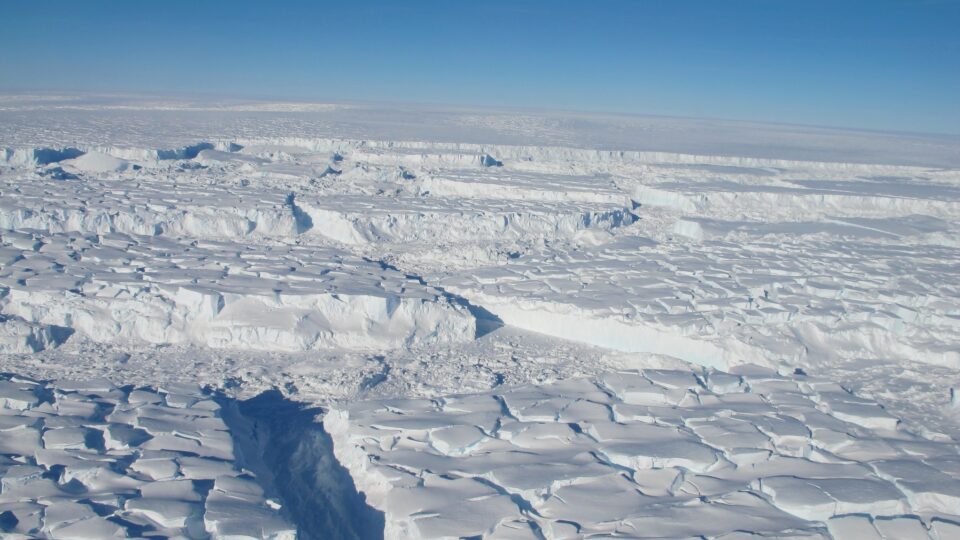
The Thwaites Glacier in Antarctica is the widest glacier in the world. It is about 80 miles across and in places extends to a depth of about 2,600 to 3,900 feet.  The glacier is roughly the size of Florida, and it currently contributes 4% of annual global sea level rise as it continues to retreat from a warming ocean.

The International Thwaites Glacier Collaboration is a team of nearly 100 scientists dedicated to studying the glacier.  According to the scientists, Thwaites has doubled its outflow speed within the last 30 years.  The glacier in its entirety holds enough water to raise global sea levels by over two feet, which would be catastrophic.

A third of the glacier flows more slowly than the rest because it is braced by a floating ice shelf that is held in place by an underwater mountain.  The concern is that the brace of ice slowing the glacier may not last for long.

Beneath the surface, warmer ocean water is attacking the glacier from all angles.  The water is melting the ice directly beneath the glacier causing it to lose its grip on the underwater mountain.  Massive fractures have formed and are growing.

Warm water is also a threat for what is called the grounding zone, which is the area where the glacier lifts off the seabed. There are many possible scenarios under which there could be a major ice loss from the glacier.  It is unclear how quickly it could occur.  It might take decades, or it could be centuries.  The threat is large enough and real enough that continued observation and research is essential.

**********

Web Links

The Threat from Thwaites: The Retreat of Antarctica’s Riskiest Glacier

Photo, posted October 16, 2012, courtesy of J. Yungel / NASA Ice via Flickr.

Earth Wise is a production of WAMC Northeast Public Radio.

Rapid Antarctic Melting

June 28, 2019 By EarthWise 1 Comment

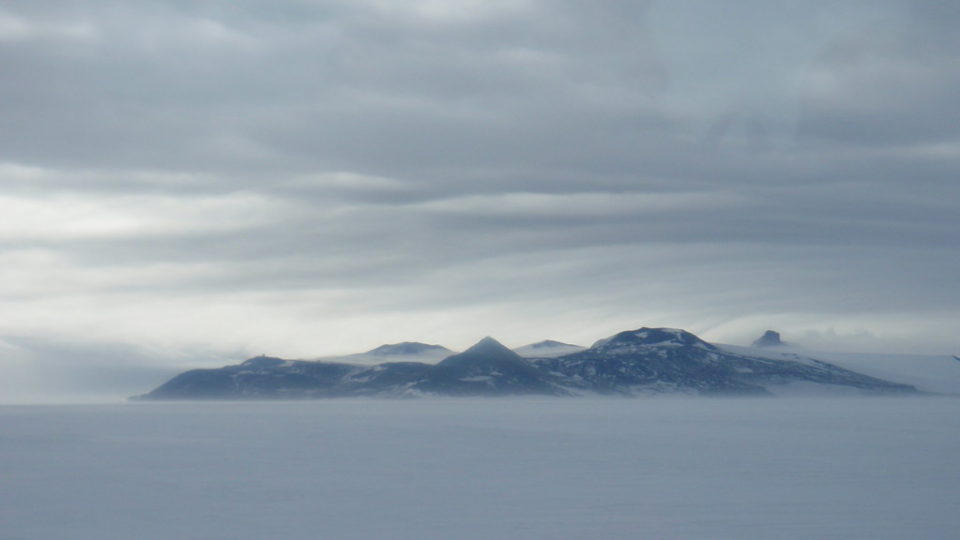
The Ross Ice Shelf in Antarctica is the world’s largest ice shelf, covering an area roughly the size of France.  Scientists have spent several years building up a record of how the northwest sector of the enormous ice shelf interacts with the ocean beneath it.  Their results show that the ice is melting much more rapidly than previously thought because of in-flowing warm water.

In general, the stability of ice shelves is thought to be mostly influenced by their exposure to warm deep ocean water.  But the new research has found that surface water heated by the sun also plays a crucial role in melting ice shelves.

The interactions between ice and ocean water that occur hundreds of meters below the surface of ice shelves have a direct impact on long-term sea level.  The Ross Ice Shelf stabilizes the West Antarctic ice sheet by blocking the ice that flows into it from some of the world’s largest glaciers.

When ice shelves collapse, the glaciers that feed them can speed up by a factor of two or three.  None of the collapsing shelves in the past have come anywhere close to the size of the Ross Ice Shelf, which is more than 100 times bigger.

The new study by New Zealand’s National Institute of Water and Atmospheric Research showed that sun-heated surface water flowing into the cavity under the ice shelf near Ross Islands caused melt rates to nearly triple during the summer months.  This indicates that the loss of sea ice resulting from climate change is likely to increase melt rates in the future.  While the Ross Ice Shelf is still considered to be relatively stable, the new findings show that it may be more vulnerable than previously thought.

**********

Web Links

Rapid melting of the world’s largest ice shelf linked to solar heat in the ocean

Photo, posted February 15, 2009, courtesy of Alan Light via Flickr.

Earth Wise is a production of WAMC Northeast Public Radio.

Primary Sidebar

Recent Episodes

  • An uninsurable future
  • Clean energy and jobs
  • Insect declines in remote regions
  • Fossil fuel producing nations ignoring climate goals
  • Trouble for clownfishes

WAMC Northeast Public Radio

WAMC/Northeast Public Radio is a regional public radio network serving parts of seven northeastern states (more...)

Copyright © 2026 ·