• Skip to primary navigation
  • Skip to main content
  • Skip to primary sidebar

Earth Wise

A look at our changing environment.

  • Home
  • About Earth Wise
  • Where to Listen
  • All Articles
  • Show Search
Hide Search
You are here: Home / Archives for northern

northern

Mixed news for the Great Barrier Reef

August 27, 2024 By EarthWise Leave a Comment

Mixed news about the Great Barrier Reef

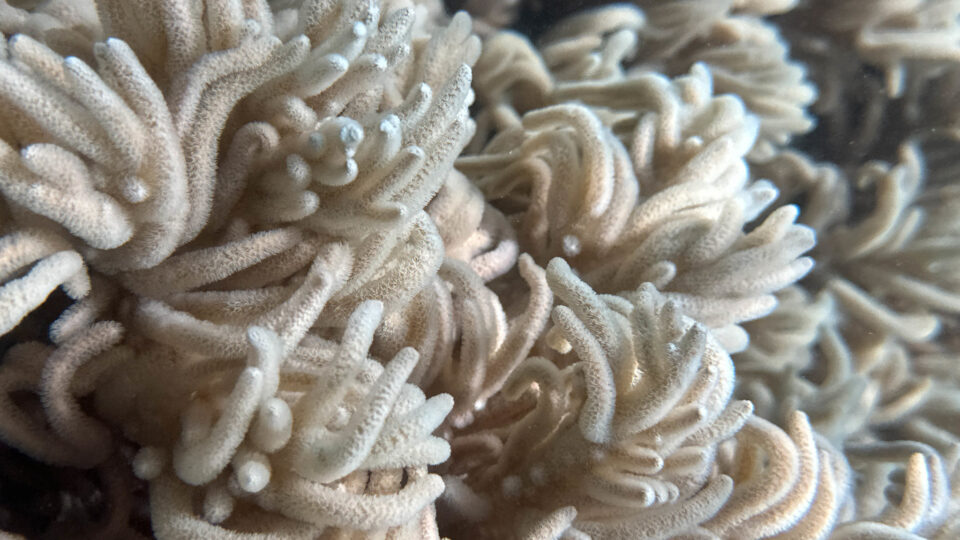
A prolonged and widespread coral bleaching event in Australia’s Great Barrier Reef has taken place this year.  It is the fifth such event over the past eight years and appears to be one of the worst ever.  According to preliminary analysis, 97% of corals in some areas of the northern part of the reef died as a result of the bleaching.  Over the entire length of the reef – which is more than 1,200 miles long – bleaching was observed on 74% of the more than 1,000 individual reefs that make up the Great Barrier Reef.  Half of those observed recorded high or very high levels of bleaching, although less than 10% had extreme levels of bleaching.

Prior to this mass bleaching event, an extensive survey of the reef was conducted, and it provided some good news.  Coral cover had increased in all three regions on the Great Barrier Reef and was actually at regional highs in two of the three regions.  The surveys were completed before the passage of Tropic Cyclone Jasper in December 2023.

Bleached corals are very stressed, but they still remain alive for at least some period of time.  Some types of corals can remain bleached for months, hanging on like a hospital patient in critical condition, but then recover.  Depending upon water conditions going forward, it remains to be seen how much of the reef will survive the latest bleaching event.  The next survey season by the Australian Institute of Marine Science will commence in September.

In many ways, the reef has had some lucky escapes in recent years.  As marine heatwaves become increasingly common, its luck may eventually run out.

**********

Web Links

New report on Great Barrier Reef shows coral cover increases before onset of serious bleaching, cyclones

Photo, posted 8, 2023, courtesy of Chris Hoare via Flickr.

Earth Wise is a production of WAMC Northeast Public Radio

Geoengineering could create winners and losers

November 13, 2023 By EarthWise Leave a Comment

Geoengineering – deliberate interventions to alter the climate and curb climate change – is a controversial topic, to say the least.  Once practically considered taboo even to discuss, there in increasing interest in at least exploring various ideas about how to halt or reverse climate change through direct actions that impact global temperatures.

Putting aside the very real concerns about the risks and dangers associated with such action, there is also the issue that climate interventions may create dramatically different effects across the globe, benefitting some areas and adversely affecting others.

A recent study by scientists at Rutgers University tackled this very issue.  Published in the journal Nature Food, it described the results of computer models simulating the impacts of stratospheric aerosol intervention (SAI), which is spraying sulfur dioxide into the stratosphere, where it would partially shield the Earth from the Sun, lowering temperatures.

The study looked at 11 different SAI scenarios and found that none of them benefitted everyone.  Uncontrolled global warming favors crop production in cold, high-latitude areas such as Canada, Russia, Scandinavia, and our northern border states.  Moderate amounts of SAI favors food production in the mid-latitudes (such as in the US and Europe.)  Large amounts of intervention favors agricultural production in the tropics. 

Even if geoengineering might not have dire consequences – which is by no means certain – it would create winners and losers.  Nations may have different ideas of what constitutes an optimal global temperature.  So, who gets to decide where to set the global thermostat?  The prospects for conflict loom large. 

**********

Web Links

Climate Intervention Technologies May Create Winners and Losers in World Food Supply

Photo, posted November 18, 2021, courtesy of Conall via Flickr.

Earth Wise is a production of WAMC Northeast Public Radio
Finding Homes For Rhinos | Earth Wise

October 6, 2023 By EarthWise Leave a Comment

White rhino conservation

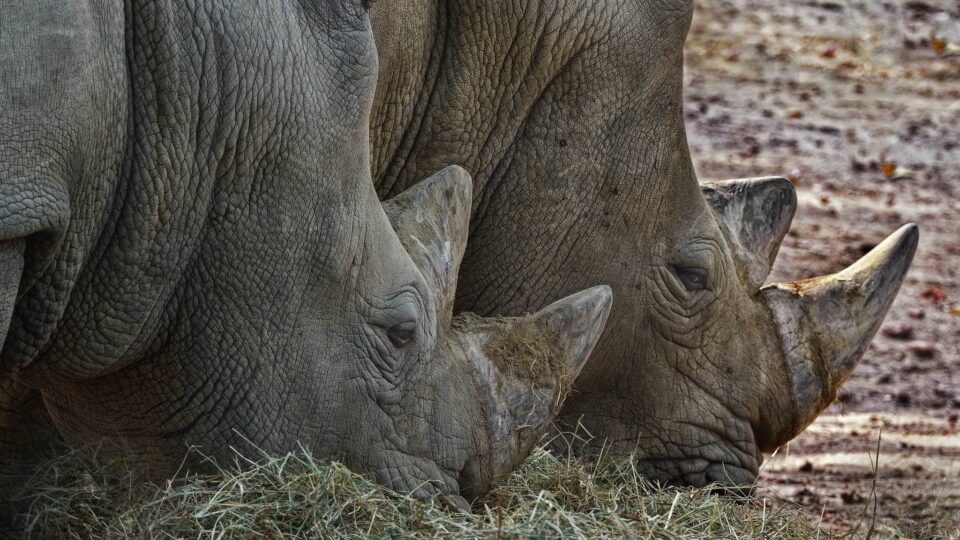
Northern White Rhinos are virtually extinct; only two female individuals survive in Kenya.  Southern White Rhinos also nearly vanished early in the 20th century, mostly because of excessive hunting.   A surviving group of fewer than 100 animals was identified in South Africa, and ongoing conservation efforts led to the existing population of southern white rhinos, which now numbers more than 16,000.

Among the most successful conservation efforts took place at a 30-square-mile farm, Platinum Rhino, that was set up in 2009 about 100 miles southwest of Johannesburg.  The owner of the farm did a great job of maintaining genetic diversity of the herd and protecting it from poachers.  Eventually, it was costing $175,000 a month just for security against illegal hunters seeking rhino horns.

Faced with unsustainable expenses, the farm put the herd of 2,000 rhinos up for auction in April with a starting price of $10 million.  No bidders came forward. 

Fortunately, in September, the conservation group African Parks announced that it had reached a deal to take over the herd.  African Parks partners with 12 countries in Africa to manage 77,000 square miles of protected areas.

The plan is to start moving the rhinos into a series of new sites in the wild starting next year.  Moving the 5,000-pound animals to new locations will be complicated and expensive, costing anywhere from $1,500 to move a single rhino by land within South Africa to $50,000 for far afield air transport.  African Parks is now raising funds to relocate the animals.

**********

Web Links

Now Available: 2,000 Rhinos, Free to Good Homes With Plenty of Space

Photo, posted September 4, 2023, courtesy of Eric Huybrechts via Flickr.

Earth Wise is a production of WAMC Northeast Public Radio
California Offshore Wind | Earth Wise

November 16, 2022 By EarthWise Leave a Comment

California has tremendous potential offshore wind resources.  The state set a preliminary target of 15 GW of offshore wind by 2045 earlier this year and may increase that number to 25 GW.  But installing offshore wind on the West Coast is much more challenging than it is on the East Coast.  The reason is that the ocean floor drops off rapidly on the Pacific Coast and it is simply not practical to attach wind turbines to the sea bottom.  Instead, floating turbine technology will be required.  That is more complicated and more expensive.

Despite the challenges, offshore wind in California is moving forward.  The federal Bureau of Ocean Energy Management announced that the auction for rights to develop waters off central and northern California will be held on December 6.  This will be the first wind auction ever along the U.S. Pacific Coast.

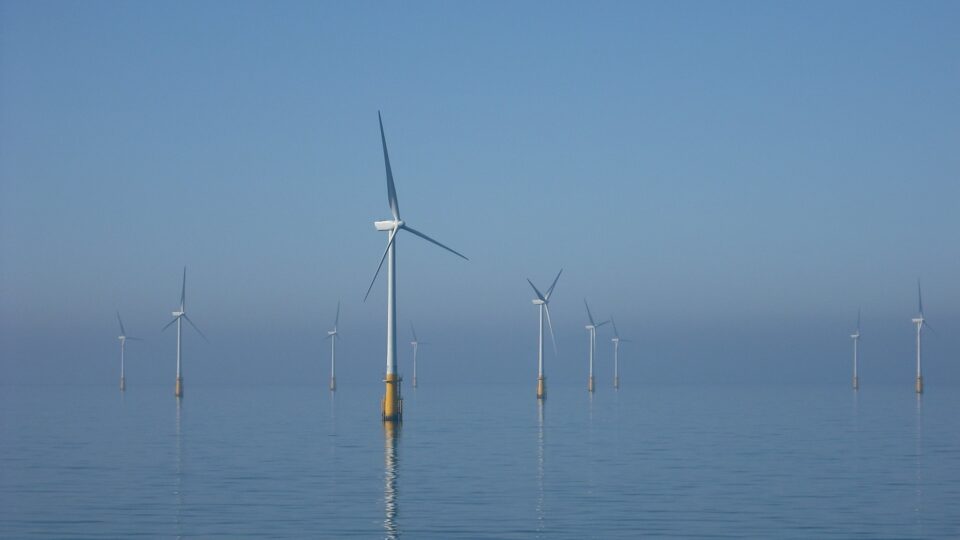
The auction will include three lease areas in the Morro Bay Wind Energy Area and two proposed areas in the Humboldt Wind Energy Area.  Combined, the two areas cover over 370,000 acres and could potentially host over 4.5 GW of wind generating capacity.  The projects developed in these areas are likely to become the first floating offshore wind projects in operation in the U.S.

Apart from the challenges of building floating wind installations, there will be the issue of the electric grid in the proposed regions being able to support the added generation from the wind farms.  Substantial grid upgrades will be needed to accommodate all the power coming from the offshore facilities.  In addition, California offshore wind projects will need to jump-start new supply chains in the U.S.

**********

Web Links

Date is set for California offshore wind lease auction

Photo, posted March 24, 2016, courtesy of Andy Dingley / TEIA via Flickr.

Earth Wise is a production of WAMC Northeast Public Radio
The Return Of The Bald Ibis

September 6, 2018 By EarthWise 1 Comment

https://earthwiseradio.org/wp-content/uploads/2018/08/EW-09-06-18-The-Return-of-the-Bald-Ibis.mp3

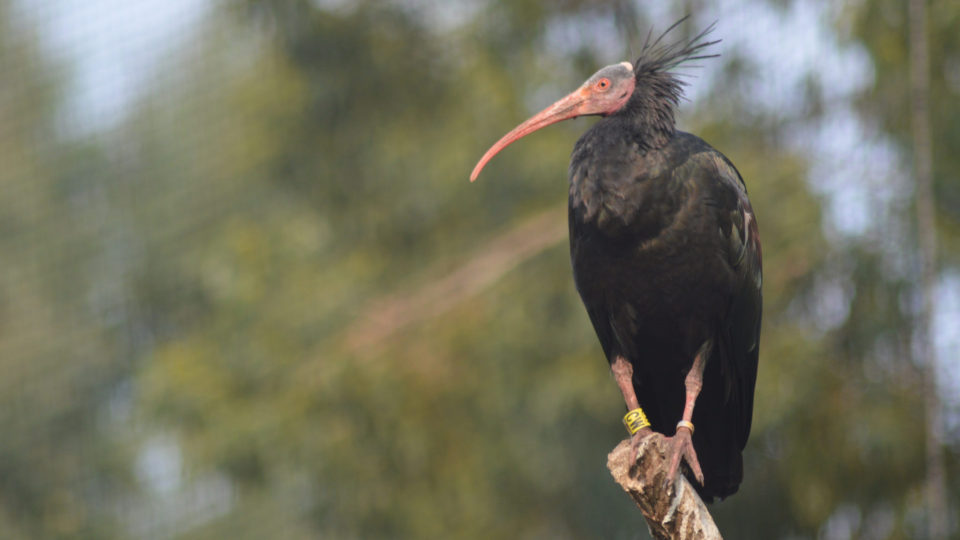
The northern bald ibis, also known as the waldrapp, is a strange-looking bird with a long, curved beak, a naked head, and feathers that point straight into the air like a Mohawk haircut.  In former centuries, it occurred widely in northern and eastern Africa, Asia Minor, Arabia, and parts of Europe.  The ancient Egyptians considered it to be an afterworld divinity and its likeness can be seen in hieroglyphs dating back thousands of years.

[Read more…] about The Return Of The Bald Ibis

Primary Sidebar

Recent Episodes

  • An uninsurable future
  • Clean energy and jobs
  • Insect declines in remote regions
  • Fossil fuel producing nations ignoring climate goals
  • Trouble for clownfishes

WAMC Northeast Public Radio

WAMC/Northeast Public Radio is a regional public radio network serving parts of seven northeastern states (more...)

Copyright © 2026 ·