• Skip to primary navigation
  • Skip to main content
  • Skip to primary sidebar

Earth Wise

A look at our changing environment.

  • Home
  • About Earth Wise
  • Where to Listen
  • All Articles
  • Show Search
Hide Search
You are here: Home / Archives for nitrate

nitrate

How to reduce pollution from food production

January 17, 2024 By EarthWise Leave a Comment

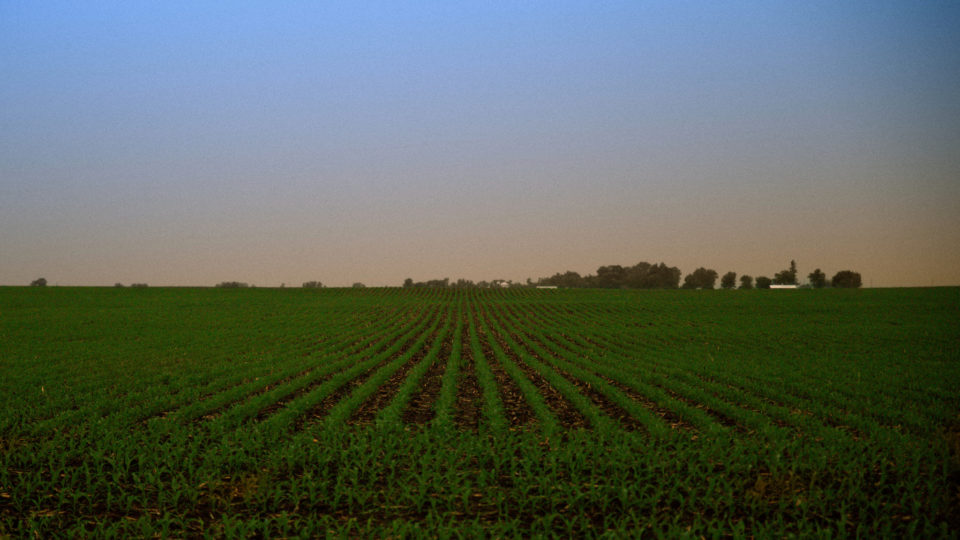
Present in animal manure and synthetic fertilizers, nitrogen is an essential nutrient for plant growth and is a critical input to enhance agricultural productivity on farms around the world.  But excessive and inefficient use of this nutrient is widespread.  In fact, up to 80% of it leaks into the environment, mostly in various polluting forms of nitrogen: ammonia and nitrogen oxides (which are harmful air pollutants), nitrous oxide (a potent greenhouse gas), and nitrate (which affects water quality).

A new report prepared for the United Nations has put forth some solutions to greatly reduce nitrogen pollution from agriculture in Europe.  A group of researchers coordinated by the U.K. Centre for Ecology & Hydrology, the European Commission, the Copenhagen Business School, and the National Institute for Public Health and the Environment of The Netherlands produced the report.

In it, the research team puts forth its recipe to reduce nitrogen pollution in Europe.  The report’s ingredients include:

  • Reducing by 50% the average European meat and dairy consumption
  • More efficient fertilizer application and manure storage
  • Reducing food production demand by reducing food waste by retailers and consumers
  • Better wastewater treatment to capture nitrogen from sewage
  • Adopting policies addressing food production and consumption to transition them towards more sustainable systems

Taking action to reduce nitrogen pollution will require a holistic approach involving farmers, policymakers, retailers, water companies, and individuals. 

Do Europeans have an appetite for change?

**********

Web Links

Scientists provide recipe to halve pollution from food production

Photo, posted March 10, 2022, courtesy of USDA NRCS Montana via Flickr.

Earth Wise is a production of WAMC Northeast Public Radio
A Below-Average Dead Zone In The Gulf of Mexico | Earth Wise

July 20, 2023 By EarthWise Leave a Comment

The Gulf of Mexico dead zone, or hypoxic area, is an area of low oxygen content that can kill fish and other marine life.  It occurs every summer and is mostly a result of excess nutrient pollution from human activities in cities and farms throughout the Mississippi River watershed.  The nutrients carried by the river into the gulf stimulate an overgrowth of algae, which eventually die and decompose, which depletes oxygen in the water as the algae sink to the bottom.

The resultant low oxygen levels near the bottom of the gulf cannot support most marine life.  Fish and shrimp often leave the area seeking better places to be.  Animals that can’t swim away – like mussels and crabs – can be stressed by the low oxygen level or even killed.

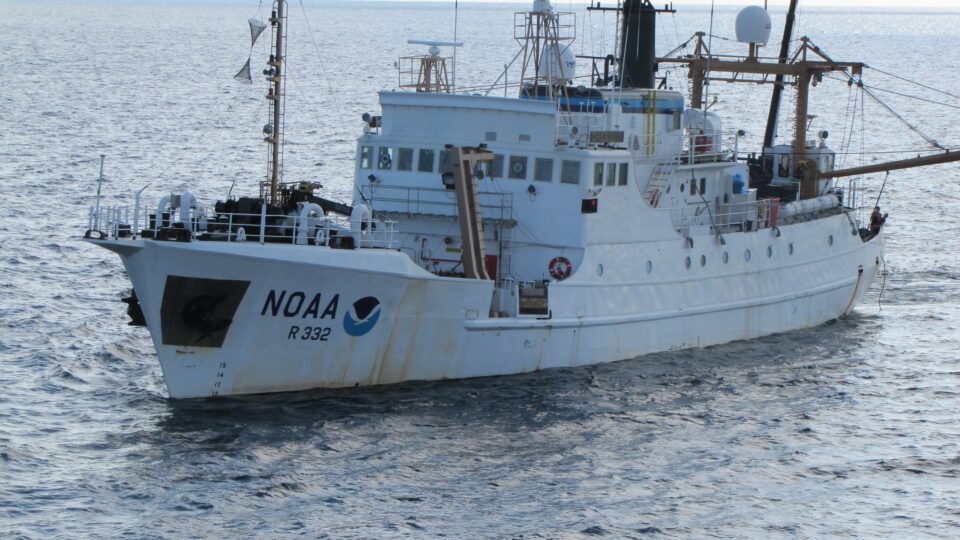
The National Oceanic and Atmospheric Administration produces a dead zone forecast each year based on a suite of models developed by NOAA and partners at multiple universities. 

The latest forecast, completed in May, found that the discharge of nutrients in the rivers was about one-third below the long-term average between 1980 and 2022.  Nitrate loads were down 42% and phosphorous levels down 5%.

Based on these measurements, the scientists forecast a summer dead zone that will cover an estimated 4,155 square miles, which is 22% lower than the 36-year average of 5,364 square miles.  Ongoing efforts by the Interagency Mississippi River and Gulf of Mexico Hypoxia Task Force to reduce nutrient levels seem to be paying off.

**********

Web Links

NOAA forecasts below-average summer ‘dead zone’ in Gulf of Mexico

Photo, posted September 6, 2013, courtesy of NOAA Photo Library via Flickr.

Earth Wise is a production of WAMC Northeast Public Radio
Wastewater And Ammonia | Earth Wise

October 22, 2021 By EarthWise Leave a Comment

Ammonia is the second most produced chemical in the world.  More than half of it is used in agriculture to produce various kinds of fertilizer, to produce cotton defoliants that make cotton easier to pick, and to make antifungal agents for fruits.  Globally, ammonia represents more than a $50 billion a year market.

Current methods to make ammonia require enormous amounts of heat – generated by burning fossil fuels – to break apart nitrogen molecules so that they can bind to hydrogen to form the compound. Ammonia production accounts for about 2% of worldwide fossil energy use and generates over 400 million tons of CO2 annually.

Engineers at the University of Illinois Chicago have created a solar-powered electrochemical reaction that uses wastewater to make ammonia and does it with a solar-to-fuel efficiency that is 10 times better than previous comparable technologies.

The process uses nitrate – which is one of the most common groundwater contaminates – to supply nitrogen and uses sunlight to power the reaction.  The system produces nearly 100% ammonia with almost no hydrogen side reactions.  No fossil fuels are needed, and no carbon dioxide or other greenhouse gases are produced.  The new method makes use of a cobalt catalyst that selectively converts nitrate molecules into ammonia.

Not only is the reaction itself carbon-neutral, which is good for the environment, but if it is scaled up for industrial use, it will consume wastewater, thereby actually being good for the environment.  The new process is the subject of a patent filing and the researchers are already collaborating with municipal corporations, wastewater treatment centers, and others in industry to further develop the system.

**********

Web Links

Combining sunlight and wastewater nitrate to make the world’s No. 2 chemical

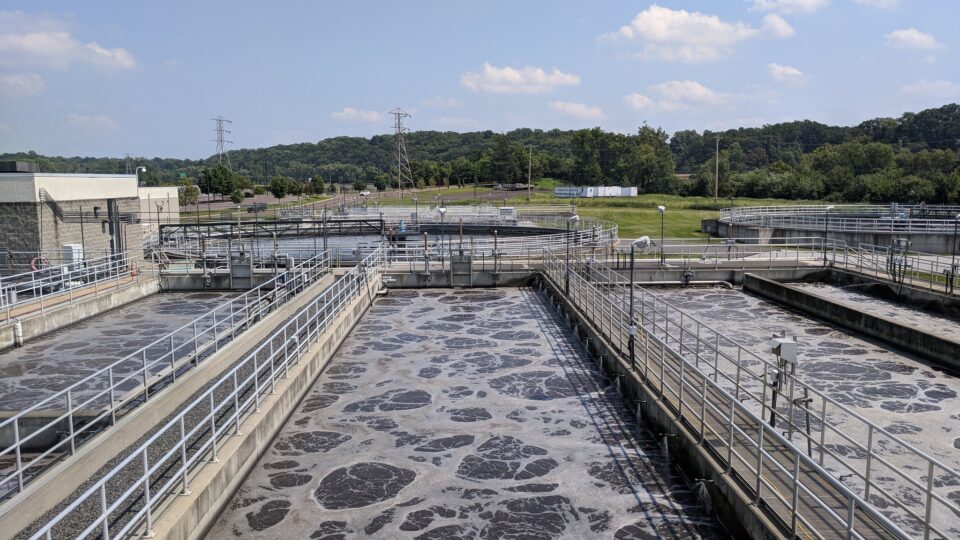
Photo, posted August 29, 2018, courtesy of Montgomery County Planning Commission via Flickr.

Earth Wise is a production of WAMC Northeast Public Radio.

Forecasting A Massive Dead Zone

June 18, 2019 By EarthWise Leave a Comment

The Gulf of Mexico dead zone occurs every summer, and is considered one of the largest dead zones in the world.  This cyclical event occurs where the Mississippi River empties into the Gulf of Mexico, just off the coast of Louisiana and Texas. 

This annual dead zone is primarily caused by excess nutrient pollution from human activities, such as urbanization and agriculture, occurring throughout the Mississippi River watershed.  Washed off the land by spring rains, these excess nutrients stimulate an overgrowth of algae once they reach the Gulf of Mexico.  The algae in the Gulf eventually die, and then sink and decompose in the water. The resulting area of the ocean ends up with a condition known as hypoxia, which is an insufficient amount of oxygen to support most marine life.  In hypoxic or dead zones, animals that can’t swim away will often suffocate and die. 

Scientists from the National Oceanic and Atmospheric Administration estimate that this year the dead zone in the Gulf of Mexico will be approximately 8,000 square miles, which is roughly the size of Massachusetts.  The research team uses U.S. Geological Survey river flow and nutrient data to make its forecast. 

According to NOAA, the abnormally high amount of spring rainfall is a major factor contributing to this year’s dead zone.  Last month, nitrate loads entering the Mississippi River watershed were 18% above the long-term average, and phosphorus loads were about 49% above the long-term average. 

While the 2019 forecast is slightly less than the record size of more than 8,700 square miles set in 2017, it’s still much larger than the five year average size of 5,700. 

**********

Web Links

Very large dead zone forecast for the Gulf of Mexico

Massive 8,000-mile ‘dead zone’ could be one of the gulf’s largest

Photo, posted May 22, 2009, courtesy of Michael McCarthy via Flickr.

Earth Wise is a production of WAMC Northeast Public Radio.

Clean Water In The Corn Belt

October 26, 2018 By EarthWise Leave a Comment

https://earthwiseradio.org/wp-content/uploads/2018/10/EW-10-26-18-Clean-Water-in-the-Corn-Belt.mp3

Iowa is grappling with a growing battle over the integrity of its water.  Nitrogen and phosphates have been flowing in ever-increasing quantities into Iowa’s public water supplies and dealing with the problem has become a major political issue in the state.

[Read more…] about Clean Water In The Corn Belt

Primary Sidebar

Recent Episodes

  • An uninsurable future
  • Clean energy and jobs
  • Insect declines in remote regions
  • Fossil fuel producing nations ignoring climate goals
  • Trouble for clownfishes

WAMC Northeast Public Radio

WAMC/Northeast Public Radio is a regional public radio network serving parts of seven northeastern states (more...)

Copyright © 2026 ·