
• Skip to primary navigation
  • Skip to main content
  • Skip to primary sidebar

Earth Wise

A look at our changing environment.

  • Home
  • About Earth Wise
  • Where to Listen
  • All Articles
  • Show Search
Hide Search
You are here: Home / Archives for neurotoxin

neurotoxin

Americans And Lead Exposure | Earth Wise

April 4, 2022 By EarthWise Leave a Comment

The legacy of lead remains a problem

Long-term exposure to lead can cause serious health problems, especially in children.  Children are particularly vulnerable because their early years are characterized by rapid growth and brain development.

Lead is a powerful neurotoxin that can cause damage even at low levels of exposure.  Lead poisoning can be acute, and can cause all sorts of health issues, including stomach pain, brain damage, and even death.  Because lead accumulates in the body over time, lead poisoning can develop slowly. Exposure to lead can also contribute to a lower IQ and behavioral problems that can last a lifetime.

Lead is a naturally occurring element found in small amounts in earth’s crust.  But as a result of human activities, lead can be found in all parts of the environment, including the air, soil, and water.

According to a new study recently published in the journal Proceedings of the National Academy of Sciences, approximately half of U.S. adults alive today were exposed to harmful levels of lead as children from the burning of leaded gasoline.  The research team estimates that lead contamination has lowered those Americans’ IQ scores by more than two points on average.

In the study, the researchers used data on childhood blood-lead levels, leaded gasoline use, and population to gauge the lifetime exposure of every American adult in 2015.  They found that more than 170 million Americans had exposure to concerning levels of lead as children.  Those who grew up in the 60s and 70s, when the burning of leaded gasoline was at its peak, had the greatest exposure, losing up to six IQ points on average. 

The legacy of lead exposure remains a persistent problem.

**********

Web Links

Half of Americans Exposed to Harmful Levels of Lead as Children

Lead Exposure Remains A Persistent Problem

Photo, posted February 13, 2010, courtesy of Steve Snodgrass via Flickr.

Earth Wise is a production of WAMC Northeast Public Radio.

Lead Exposure Remains A Persistent Problem | Earth Wise

October 29, 2020 By EarthWise Leave a Comment

lead exposure remains a global problem

According to a new report from UNICEF and the international nonprofit Pure Earth, a staggering number of children – approximately 800 million or one out of every three globally – may have dangerously high levels of lead in their blood.    

Long-term exposure to lead can cause serious health problems, especially in children.  Children are particularly vulnerable because their early years are characterized by rapid growth and brain development. 

Lead is a powerful neurotoxin that can cause damage even at low levels of exposure.  Lead poisoning can be acute, and can cause all sorts of health issues, including stomach pain, brain damage, and even death.  Because lead accumulates in the body over time, lead poisoning can develop slowly. The most common symptom of lead poisoning is lethargy.  Lead exposure can also contribute to a lower IQ and behavioral problems that can last a lifetime.     

Lead is a naturally occurring element found in small amounts in earth’s crust.  But as a result of human activities, lead can be found in all parts of the environment, including the air, soil, and water. 

According to the report, much of the lead poisoning comes from lead-acid batteries that are not properly recycled.  Water pipes, paint, canned foods, makeup, toys, and even contaminated spices can all be sources of lead exposure.  Lead was also previously added to gasoline and traces of this remain in soil samples today. 

The report found that children in low- or middle-income countries, especially in South Asia and among marginalized groups in general, are most vulnerable to lead poisoning. 

Lead exposure remains a dangerous and persistent problem all around the world. 

**********

Web Links

The Toxic Truth: Children’s Exposure to Lead Pollution Undermines a Generation of Future Potential

800 million children still exposed to lead

Photo, posted February 11, 2017, courtesy of J. Brew via Flickr.

Earth Wise is a production of WAMC Northeast Public Radio.
Controlling Malaria Without Chemicals

August 28, 2019 By EarthWise Leave a Comment

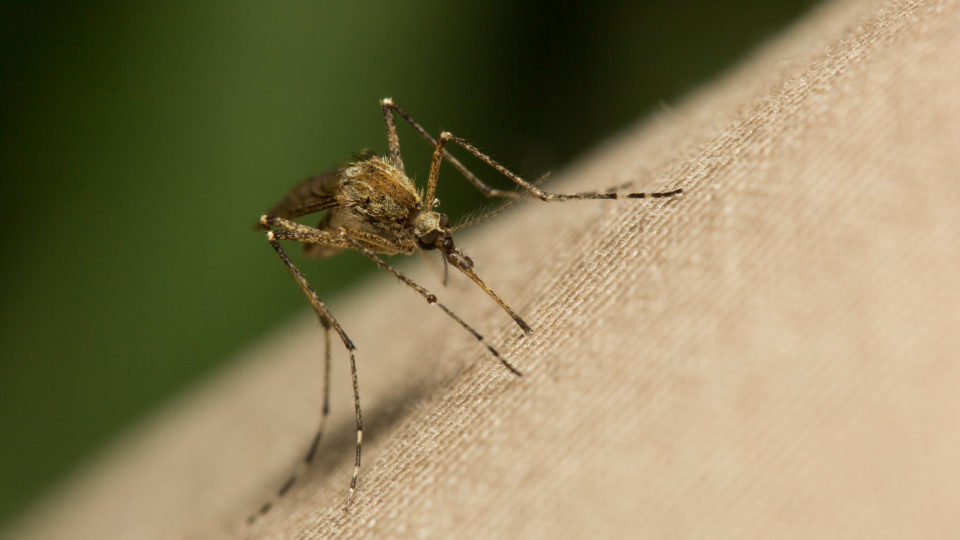
Nearly half of the world’s population lives in areas vulnerable to malaria.  The disease kills roughly 450,000 people each year, most of them children and pregnant women.  Malaria is spread by Anopheles mosquitoes and, over time, the mosquitoes have been developing resistance to the chemical insecticides that are used to control them.  In addition, there is great concern about the toxic side effects of the chemicals used on the mosquitoes.

About 30 years ago, scientists identified a type of bacteria that kills Anopheles, but the mechanism was not understood.  As a result, the bacteria could not be replicated or used as an alternative to chemical insecticides.

But now, an international research team, headed by researchers at UC Riverside, has identified the neurotoxin produced by the bacteria and has determined how it kills Anopheles.  The work is described in a paper published in Nature Communications.

It took the team 10 years to achieve a breakthrough in understanding the bacteria.  Modern gene sequencing techniques were the key.

While many neurotoxins target vertebrates and are highly toxic to humans, the neurotoxin that kills Anopheles mosquitoes does not affect humans, vertebrates, fish, or even other insects.  Known as PMP1, the substance is not even toxic to mice when given by direct injection.

The team has applied for a patent on this discovery and hopes to find partners to help them develop the bacteria-based insecticide.

There is a high likelihood that PMP1 actually evolved to kill the Anopheles mosquito.  This finding opens the door to new avenues of research into other environmentally friendly insecticides that would be targeted at other disease-spreading pests.

**********

Web Links

Controlling deadly malaria without chemicals

Photo, posted June 9, 2018, courtesy of Mario Yardanov via Flickr.

Earth Wise is a production of WAMC Northeast Public Radio.

Primary Sidebar

Recent Episodes

  • An uninsurable future
  • Clean energy and jobs
  • Insect declines in remote regions
  • Fossil fuel producing nations ignoring climate goals
  • Trouble for clownfishes

WAMC Northeast Public Radio

WAMC/Northeast Public Radio is a regional public radio network serving parts of seven northeastern states (more...)

Copyright © 2026 ·