• Skip to primary navigation
  • Skip to main content
  • Skip to primary sidebar

Earth Wise

A look at our changing environment.

  • Home
  • About Earth Wise
  • Where to Listen
  • All Articles
  • Show Search
Hide Search
You are here: Home / Archives for nest

nest

Climate change and an iconic Florida bird

December 31, 2024 By EarthWise Leave a Comment

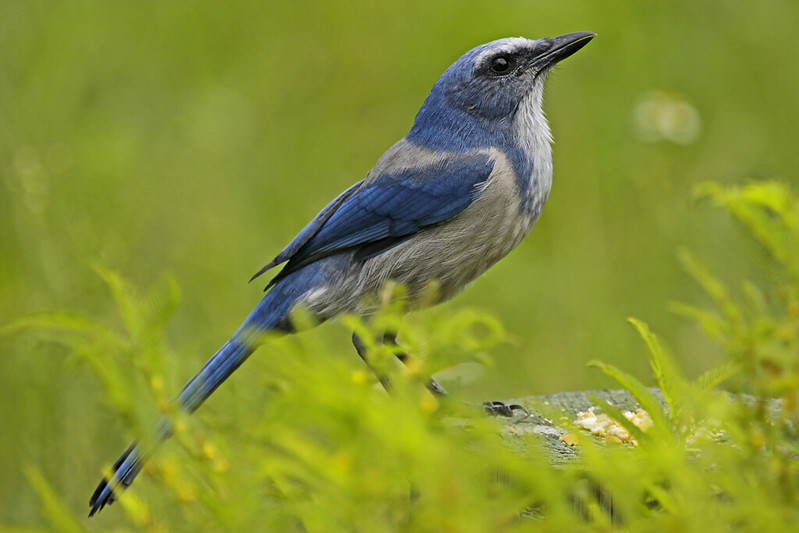
The Florida scrub-jay is a medium-sized bird native to Florida, known for its striking blue plumage and distinctive call. It is the only bird species that is entirely endemic to Florida, found mainly in the scrubby, sandy habitats of the central and southern part of the Sunshine State.

But extensive development, habitat fragmentation, and habitat degradation have caused the scrub-jay population to decline significantly over the past century. 

Another threat facing the Florida scrub-jay is climate change.  According to a new study by researchers from the Archbold Biological Station and the Cornell Lab of Ornithology, warmer winters driven by climate change are causing Florida scrub-jays to nest one week earlier than they did in 1981.  This seemingly innocuous change has reduced the number of offspring raised annually by 25% since 1981. 

The research team examined 37 years of data to assess the impacts of warming on reproductive efforts.  From 1981 to 2018, the average winter temperature at Archbold Biological Station in Florida increased by 2.5 degrees Fahrenheit.  Despite increases in the number of nests built and eggs laid over the longer breeding season, Florida scrub-jays are not producing more young. 

The researchers hypothesize that warmer temperatures make the nests susceptible to predation by snakes for a longer period of the Florida spring than in the past.  The findings, which were recently published in the journal Ornithology, suggest that climate change could dampen the success of conservation efforts for this threatened species.

**********

Web Links

Long-term study reveals warming climates threaten Florida scrub-jay

Florida Scrub-Jay

Photo, posted October 15, 2018, courtesy of Judy Gallagher via Flickr.

Earth Wise is a production of WAMC Northeast Public Radio
Why Do Woodpeckers Peck? | Earth Wise

October 21, 2022 By EarthWise Leave a Comment

Scientists understand why woodpeckers peck

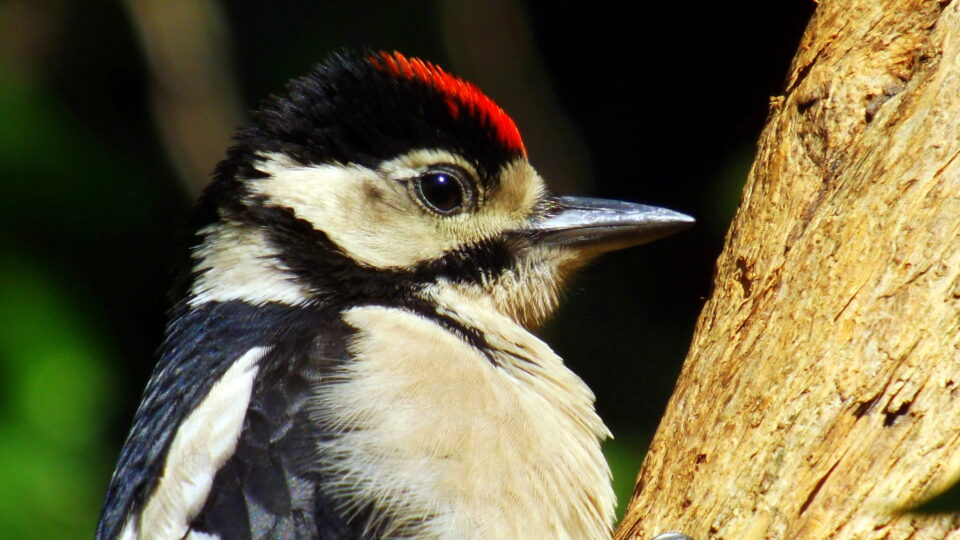
Most of us have heard the sound of a woodpecker drumming on a nearby tree, or unfortunately, on the walls of our house where it can be very destructive.  We were often told that the birds were hunting for insects inside the wood, or perhaps trying to open up a nest. But a new study at Brown University has found evidence that woodpeckers are just additional musicians in the bird orchestra who happen to be percussionists.

The researchers studied the forebrains of birds and found characteristic gene expression specializations in songbirds.  Songbirds sing to communicate for various reasons – such as staking out territory or seeking mates.  The study looked at birds that are not known to sing, such as the emu, penguin, flamingo, and woodpeckers.  It turns out that among these, only woodpeckers had forebrains that anatomically resembled those of songbirds.  The study is the first time a neural basis has been identified for the communication activities of animals other than primates.

There are over 200 species of woodpeckers around the world and each species has its own characteristic drumming speed and rhythms.  Woodpecker drumming may well have evolved through a form of vocal learning, which is the way songbirds learn to make their own melodious sounds.  And like the calls of songbirds, these drumming patterns change depending on what the birds want to communicate and to whom.

So, the little downy woodpecker that is poking holes in your walls is probably not hunting for insects.  It is more likely to be telling another woodpecker to get out of its territory.

**********

Web Links

Why do woodpeckers peck? New discovery about bird brains sheds light on intriguing question

Photo, posted June 15, 2021, courtesy of Tony Oldroyd via Flickr.

Earth Wise is a production of WAMC Northeast Public Radio
visit site by the doctor who prescribed the drug. Prescription. If the drug is sold in Russia without a prescription, it is necessary to make sure that the drug will also be sold abroad without it. You can find out in advance and, for example, write a letter to a specific pharmacy abroad, or you can be reinsured and ask to make a prescription form for the drug from your doctor.

Not All Eggs In One Basket | Earth Wise

March 2, 2021 By EarthWise Leave a Comment

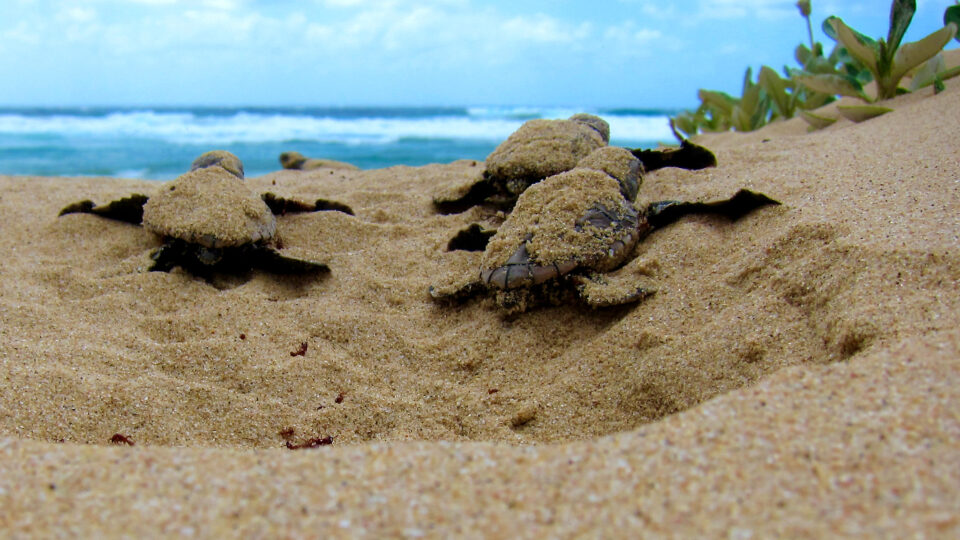
Loggerhead turtles don't put all their eggs in one basket

Sea turtles lay their eggs in burrows on sandy beaches.  Many species lay their eggs on the exact same beach year after year.  On average, sea turtles lay over 100 eggs in a nest and produce between 2 and 8 nests per season.

Animals that produce such large numbers of eggs have this reproductive strategy because so few survive to adulthood.   Sea turtle eggs and hatchlings face numerous threats including powerful storms, poachers, marauding birds, and more.  Estimates are that only one in thousand sea turtle eggs leads to an adult turtle.

A recent study by the University of South Florida looked at the reproductive strategy of loggerhead sea turtles nesting on Keewaydin Island off the southwestern Gulf coast of Florida.  The researchers found that individual females lay numerous clutches of eggs in locations as much as six miles apart from each other to increase the chance that some of their offspring will survive.

As the saying goes, nesting loggerhead turtles don’t lay all their eggs in one basket.  The researchers compare the turtles’ strategy to investing in a mutual fund.  The female turtles divide their resources among many stocks rather than investing everything in a single stock.

During their 50-year lifetime, a single female loggerhead will produce over 4,000 eggs and scatter them at 40 different sites.  This strategy helps reduce the risk of complete reproductive failure caused by hurricanes and thunderstorms that could wash out or flood all their clutches.  The combination of unpredictable patterns of nests over time and space results in nearly two-thirds of loggerhead sea turtle hatchlings making it into the Gulf of Mexico.  The species still faces significant challenges but it is doing its part to try to survive.

**********

Web Links

Not all in one basket: Loggerhead sea turtles lay eggs in multiple locations to improve reproductive success

Photo, posted January 27, 2012, courtesy of Jeroen Looye via Flickr.

Earth Wise is a production of WAMC Northeast Public Radio.

Global Warming And Sea Turtle Births | Earth Wise

January 11, 2021 By EarthWise Leave a Comment

Climate change poses a serious threat to sea turtles

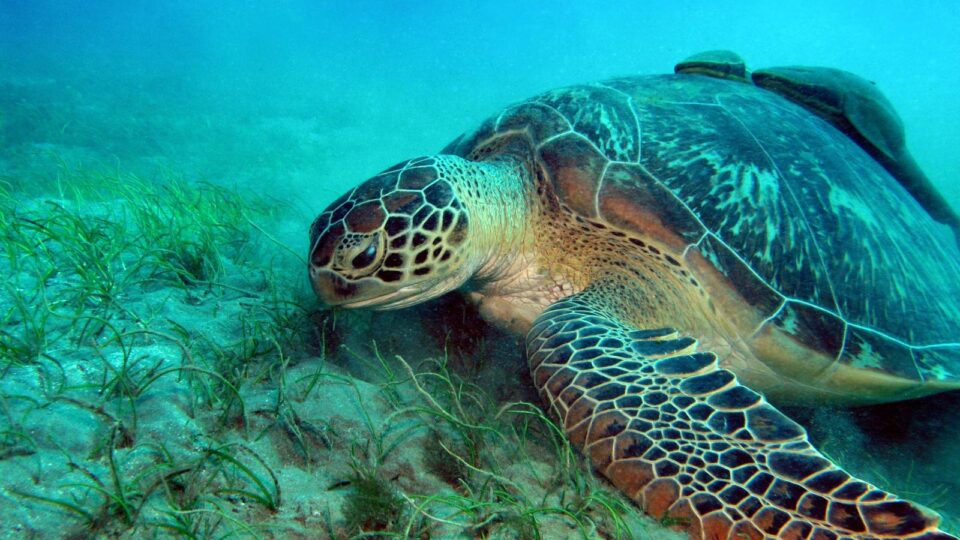
Climate change is a serious threat to species whose sex is determined by temperature.  Among these are sea turtles.  Whether marine turtles are born male or female turns out to depend on the temperature of their nest during incubation.

Sea turtle nests need to be around 84.6 degrees Fahrenheit on average to produce a 50:50 sex ratio for embryos developing in eggs.  If temperatures are higher, embryos predominantly become female.  There is a transitional range of temperatures over which both males and females are produced.  Below that range, only males are produced; above that range, only females are produced.

According to recent research published in the journal Conservation Science and Practice, sand temperatures along the Red Sea exceeded the 84.6-degree threshold in all but one of the sites studied.  Some sites measured nearly 96 degrees.  The Red Sea region is home to five of the world’s seven species of sea turtles, including endangered green turtles and critically endangered hawksbill turtles.

Skewing the sex distribution of a species is a serious threat to the future survival of the population.

The Red Sea findings are similar to observations around the world.  In Florida, sea turtle hatchlings were born 100% female in seven out the past 10 years, and in the other three years, males only made up 10-20% of the brood.  In Australia’s Raine Island, the largest green turtle nesting ground in the Pacific Ocean, the ratio of female to male turtle hatchlings in 2018 was 116:1.

Marine turtles have been around since the late Triassic period and have adapted to previous climate shifts.  But the rapid pace of human-driven climate change is threatening the future survival of these creatures.

**********

Web Links

Rising Temperatures Driving a Shift to All-Female Sea Turtle Populations

Photo, posted in October, 2005, courtesy of Frank_am_Main via Flickr.

Earth Wise is a production of WAMC Northeast Public Radio.

Native Bees In A Honeybee World | Earth Wise

September 21, 2020 By EarthWise Leave a Comment

native bees are in trouble

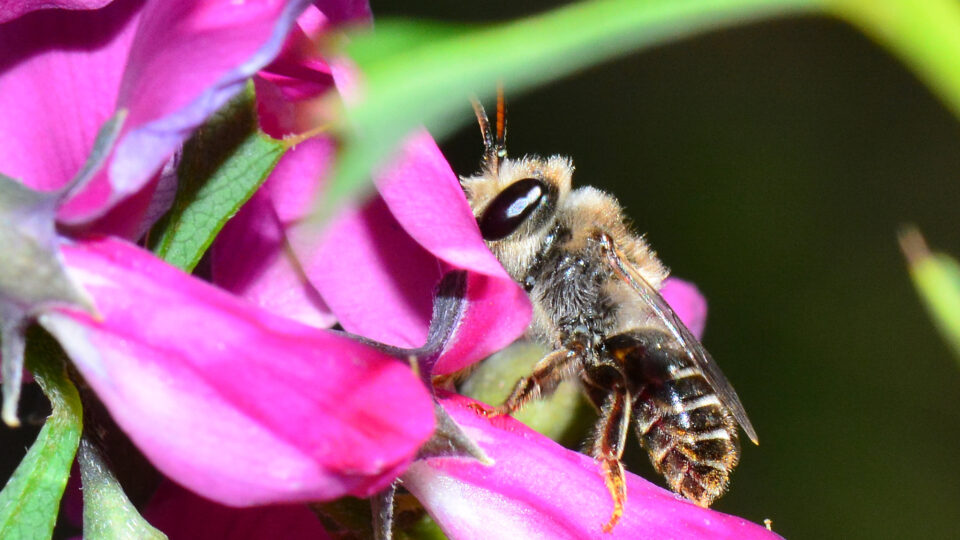
There is a great deal of attention on the plight of bees and other pollinators.  Much of that focuses on the problems plaguing the large, domesticated honeybee colonies that are trucked from region to region to pollinate everything from almonds to fruit trees.  Managed bee colonies have recently been losing more than 40% of their population over the course of a year.  But overall, honeybees are still relatively safe. They are a globally distributed, domesticated species and are not remotely threatened with extinction.

But another group of bees – native bees – faces a different range of threats, most linked to habitat loss.   Worldwide, roughly 20,000 native bee species have evolved over millions of years to thrive in countless habitats, where they have specialized in pollinating specific flowers and plants – in some cases just a single plant.

Scientists have estimated that, globally, 1 in 6 bee species is regionally extinct. In the United States there are about 4,000 native bee species, most of which are solitary bees that nest in the ground or cavities, with many that require just one or a few plant species for sustenance. At least 23 percent of U.S. native bees have declined, with bees in areas with heavy commodity-crop production particularly hard hit due to habitat loss and pesticide use. Other threats to native bees include climate-driven sea-level rise and increased temperatures, loss of host plants, and competition and disease from non-native honeybees. 50% of Midwestern native bee species disappeared from their historic ranges in the last 100 years.   Four of our bumblebee species declined 96% in the last 20 years, and three species are believed to already be extinct. 

Native bees are in big trouble.

**********

Web Links

Backyard Battle: Helping Native Bees Thrive in a Honeybee World

Photo, posted December 2, 2017, courtesy of Flickr.

Earth Wise is a production of WAMC Northeast Public Radio.

Bring The Wild Back Into Farmlands

December 4, 2018 By EarthWise Leave a Comment

https://earthwiseradio.org/wp-content/uploads/2018/11/EW-12-04-18-Bring-the-Wild-Back.mp3

A recent study published in Science looks at the effects of maintaining at least a little bit of the wild on working lands including farmland, rangeland and forests.  The study concludes that doing so may be a key to preserving biodiversity in the face of climate change.

[Read more…] about Bring The Wild Back Into Farmlands

Primary Sidebar

Recent Episodes

  • An uninsurable future
  • Clean energy and jobs
  • Insect declines in remote regions
  • Fossil fuel producing nations ignoring climate goals
  • Trouble for clownfishes

WAMC Northeast Public Radio

WAMC/Northeast Public Radio is a regional public radio network serving parts of seven northeastern states (more...)

Copyright © 2026 ·