• Skip to primary navigation
  • Skip to main content
  • Skip to primary sidebar

Earth Wise

A look at our changing environment.

  • Home
  • About Earth Wise
  • Where to Listen
  • All Articles
  • Show Search
Hide Search
You are here: Home / Archives for migratory

migratory

The American butterfly census

April 15, 2025 By EarthWise Leave a Comment

New butterfly census in the United States reveals butterfly populations are crashing

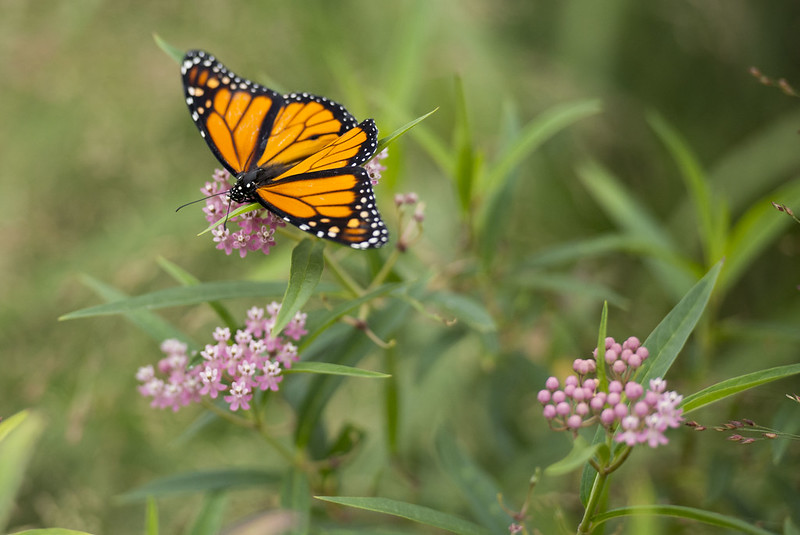
There has been a great deal of interest in the plight of monarch butterflies in this country.  Monarchs’ population and migratory habits are closely watched, and many people have been planting milkweed in their gardens to help their caterpillars.  But other butterfly species have received much less attention despite the fact that many butterfly populations are in decline.

A groundbreaking new study has provided comprehensive answers about the status of butterflies in America.  Over the past 20 years, the contiguous US has lost 22 percent of its butterflies.

The study is based on over 12 million individual butteries counted in 77,000 surveys across 35 monitoring programs from 2000 to 2020.  Three hundred forty-two butterfly species in total were analyzed.  Thirty three percent showed statistically significant declines while less than 3% displayed statistically significant increases.  Overall, 13 times as many species decreased as increased.

Why are butterfly populations crashing?  Experts point to a combination of factors:  habitat loss as land in converted for agriculture or development, climate change, and pesticide use.  It is not clear which factor is most important and may well vary by location.  Pesticide use – especially neonicotinoids – has been shown to play a particularly lethal role in studies. 

Insects including butterflies play a huge role in supporting life on earth.  They pollinate plants, feed birds and many other creatures in the food web.  Nature collapses without them.  And butterflies are clearly in trouble.

**********

Web Links

See How Butterflies Are Surviving, or Not, Near You

Photo, posted August 9, 2016, courtesy of Rachel Larue/Arlington National Cemetery via Flickr.

Earth Wise is a production of WAMC Northeast Public Radio
Aphids And Monarchs | Earth Wise

September 15, 2023 By EarthWise Leave a Comment

Aphids are negatively impacting monarch butterfly populations

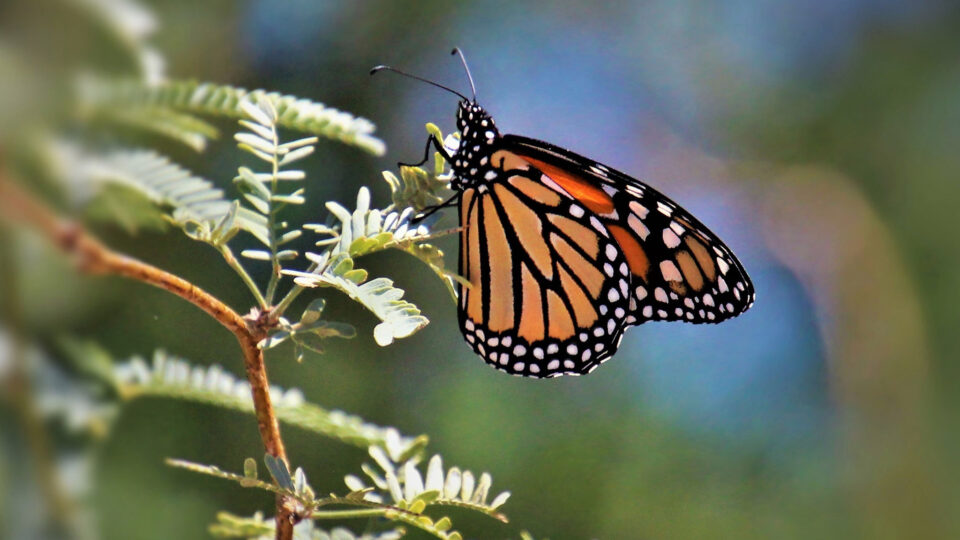
Last year, the monarch butterfly was officially designated as endangered by the International Union for Conservation of Nature.  Estimates are that the overall population of the species has dropped between 20% and 90% over the past several decades. 

The migratory western population of monarchs is at the greatest risk of extinction, having declined by as much as 99.9% between the 1980s and 2021.  Legal and illegal logging and deforestation to make space for agriculture and urban development has destroyed much of the butterflies’ winter shelter in Mexico and California and pesticides and herbicides throughout the butterflies’ range kills both the butterflies and the milkweed that their larvae feed on.

A new study by the University of Florida has found that aphids feeding on the milkweed that grows across the southern portions of the US causes the butterflies to lay fewer eggs on the plants and the caterpillars developing on those plants were slower to mature.  The study showed that monarch laid three times as many eggs on aphid-free plants as they did on aphid-infested plants.

For years, there have been efforts to plant milkweed in urban areas to support monarch populations.  However, aphids and other insect pests often reach high densities on plants in urban settings. 

The researchers are advising home gardeners in the southern U.S. who want to conserve monarch butterflies to make use of safe techniques to limit aphid populations such as insecticidal soap.  This may not always be an option and the researchers are investigating other options to keep aphids at low levels that aren’t harmful to monarchs.

**********

Web Links

Aphids make tropical milkweed less inviting to monarch butterflies, study finds

Photo, posted October 12, 2018, courtesy of Renee Grayson via Flickr.

Earth Wise is a production of WAMC Northeast Public Radio
Bird Migration And Climate Change | Earth Wise

January 22, 2020 By EarthWise Leave a Comment

bird migration climate change

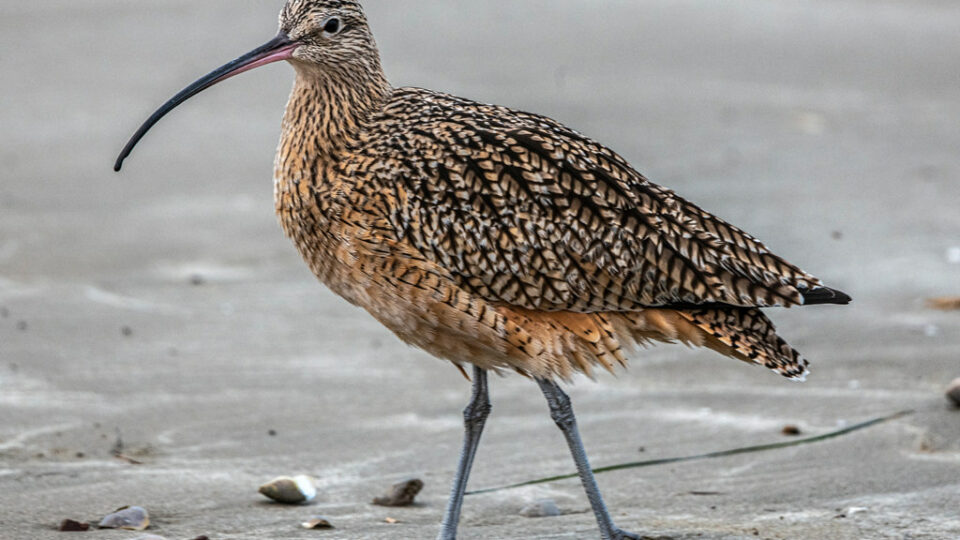
A new study of bird migration shows the migration patterns are shifting as a result of climate change.   Researchers at Colorado State University, the University of Massachusetts, and the Cornell Lab of Ornithology, looked at the impacts of climate change on a continental scale.

The team looked at the nocturnal migratory behaviors of hundreds of species representing billions of birds using radar and other data.  They found that spring migrants are likely to pass certain stops earlier now than they would have 20 years ago.  Temperature and migration timing are closely aligned and the greatest changes in migration timing are occurring in regions warming most rapidly.  During the fall, shifts in migration were less apparent.

Migratory birds play an important role in ecosystems.  They consume insects, disperse seeds, and perform various other significant functions. Birds serve as critical metrics of the health of ecosystems.

Bird migration is a global phenomenon that can provide unique visibility into changes in the climate.  The ability to look at it on a global scale has only recently become practical as a result of big data technology and cloud computing.  The team was able to crunch the numbers for the study in 48 hours, a task that previously would have taken over a year of continuous computing.

The findings have implications for understanding future patterns of bird migration because birds depend on food and other resources as they travel.  As the climate changes, the timing of blooming vegetation or the emergence of insects may end up out of sync with the passage of migratory birds.  This could have negative consequences for the health of migratory birds.

**********

Web Links

Bird migration timing skewed by climate, new research finds

Photo, posted November 5, 2019, courtesy of Jerry Kirkhart via Flickr.

Earth Wise is a production of WAMC Northeast Public Radio.

Making Room For Wildlife

February 28, 2018 By EarthWise Leave a Comment

https://earthwiseradio.org/wp-content/uploads/2018/01/EW-02-28-18-Making-Room-for-Wildlife.mp3

Protecting biodiversity is a critical challenge facing humanity.  Global vertebrate populations – from elephants to amphibians – declined by 58% from 1970 to 2012 and losses are expected to reach 67% in the next two years.  Think about it:  at least two-thirds of all vertebrate animals on earth have vanished over the lifetime of anyone fifty years old or over.

[Read more…] about Making Room For Wildlife

Size Matters

August 10, 2016 By WAMC WEB

https://earthwiseradio.org/wp-content/uploads/2016/08/EW-08-10-16-Open-Space.mp3

One of the crowning achievements for wildlife protection in the US was the establishment of the National Wildlife Refuge system in the 1930s, when the populations of waterfowl were perilously low. Refuges provided breeding and migratory habitat that has allowed a remarkable recovery of many species of ducks and geese.

[Read more…] about Size Matters

Noise Pollution And Wildlife

November 11, 2015 By WAMC WEB

https://earthwiseradio.org/wp-content/uploads/2015/11/EW-11-11-15-Noise-Pollution-and-Wildlife.mp3

Traffic noise is something nobody likes.  We shy away from homes too close to highways and major roads.  We soundproof our houses.  We build noise abatement walls.

[Read more…] about Noise Pollution And Wildlife

Primary Sidebar

Recent Episodes

  • An uninsurable future
  • Clean energy and jobs
  • Insect declines in remote regions
  • Fossil fuel producing nations ignoring climate goals
  • Trouble for clownfishes

WAMC Northeast Public Radio

WAMC/Northeast Public Radio is a regional public radio network serving parts of seven northeastern states (more...)

Copyright © 2026 ·