• Skip to primary navigation
  • Skip to main content
  • Skip to primary sidebar

Earth Wise

A look at our changing environment.

  • Home
  • About Earth Wise
  • Where to Listen
  • All Articles
  • Show Search
Hide Search
You are here: Home / Archives for melting glaciers

melting glaciers

New Orleans is sinking

August 14, 2025 By EarthWise Leave a Comment

As climate change accelerates, rising sea levels are putting coastal communities at greater risk of flooding and storm surge. Driven by melting glaciers and warming oceans, global sea levels are rising at an increasing rate. For low-lying cities like New Orleans, even small increases can have serious consequences. And that risk is compounded by another factor: the land itself is sinking.

Much of New Orleans already sits at or below sea level, and parts of the city and its surrounding wetlands are gradually sinking. While most of the city remains stable, a new study by researchers from Tulane University suggests that sections of the region’s $15 billion post-Katrina flood protection system may require ongoing upgrades to keep pace with long-term subsidence.

The study, recently published in the journal Science Advances, used satellite data to track changes in ground elevation across Greater New Orleans between 2002-2020.  The researchers found that some areas – including neighborhoods, wetlands, and even concrete floodwalls – are sinking by more than an inch each year. In some spots, the land is dropping by nearly two inches annually.

Alarmingly, some of the concrete floodwalls and levees built to protect the city after Hurricane Katrina are themselves sinking. In a few cases, they are losing elevation faster than sea levels are rising, reducing their capacity to block storm surges.

The study highlights how satellite monitoring can play a critical role in guiding infrastructure maintenance and urban planning – not just in New Orleans – but in vulnerable coastal cities around the world.

**********

Web Links

Vertical land motion in Greater New Orleans: Insights into underlying drivers and impact to flood protection infrastructure

Photo, posted September 22, 2010, courtesy of U.S. Army Corps of Engineers via Flickr.

Earth Wise is a production of WAMC Northeast Public Radio
Heatwaves And Alpine Mountain Climbing | Earth Wise

August 25, 2022 By EarthWise Leave a Comment

From June to August, there were persistent heat waves affecting parts of Europe that caused wildfires, evacuations, and heat-related deaths.  Nearly 12,000 people died from heat stroke or other causes associated with the high temperatures.  The highest temperature recorded during this period was 116.6 degrees F in Pinhao, Portugal on July 14th.  The RAF base in Coningsby, Lincolnshire recorded a temperature over 104 degrees on July 19th, the highest ever recorded in the United Kingdom.

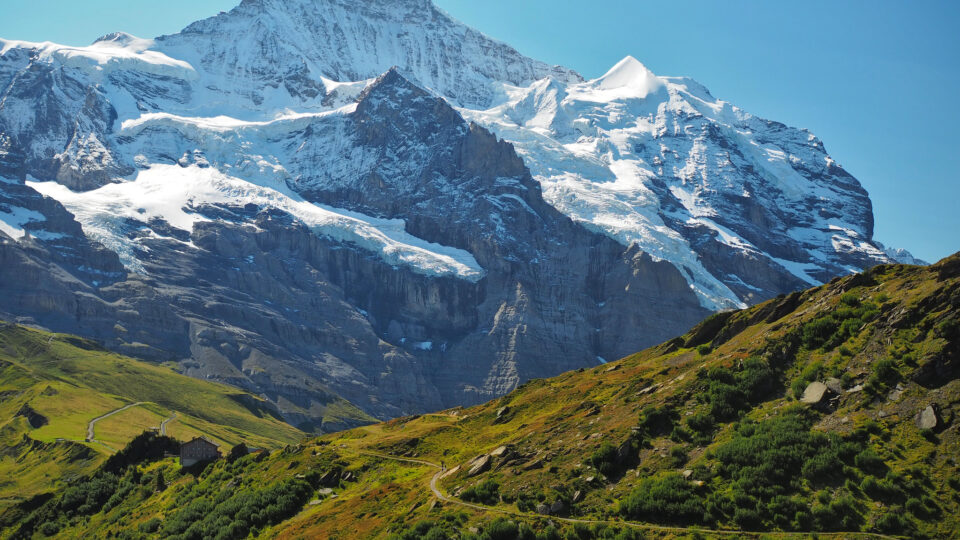
Among the effects of the multiple European heatwaves has been the cancellation of climbing tours up some of the most iconic peaks in the Alps, including Mont Blanc and the Matterhorn.  The high temperatures and rapidly melting glaciers have made the climbing routes too dangerous.  Overall, climbing cancellations occurred on about a dozen peaks, including the Jungfrau in Switzerland, which cancelled tours for the first time in a century.

In previous years, during warm summers, some of these climbing routes were closed in August, but the glaciers were already in a condition that usually only happens at the end of summer or even later.

The combination of heat and glacier melt can be treacherous.  In July, 11 people were killed at Italy’s Marmolada glacier by falling ice and rock.

Glacial melt in the Alps is rapidly accelerating.  The Forni Glacier, the largest valley glacier in Italy, has retreated two miles since 1860 and its area has shrunk by half.  Forecasts are that it will retain only 20% of its current volume by 2050 and may disappear entirely by the end of the century.  Half of the 4,000 glaciers in the Alps are expected to disappear by 2050.

**********

Web Links

European Heat Waves Force Closure of Classic Climbing Routes in Alps

Photo, posted September 4, 2020, courtesy of Dmitry Djouce via Flickr.

Earth Wise is a production of WAMC Northeast Public Radio.

Climate Change And Hurricanes In The Northeast | Earth Wise

February 9, 2022 By EarthWise Leave a Comment

Climate change making hurricanes in the Northeast more likely

According to a new study led by Yale University, more hurricanes are likely to hit Connecticut and the northeastern U.S. as global warming continues to increase temperatures in the region.

Hurricane Henri made landfall in August as a tropical storm on the Connecticut/Rhode Island border.  In September 2020, subtropical storm Alpha made landfall in Portugal, the first subtropical or tropical cyclone ever observed to make landfall in the mainland of that country.

Tropical cyclones, hurricanes, and typhoons are typically intense and destructive in the lower latitudes. 

The study concludes that violent storms could migrate northward in our hemisphere and southward in the southern hemisphere as a result of warming caused by greenhouse gas emissions.

The research predicts that tropical cyclones will likely occur over a wider range of latitudes than has been the case on Earth for the last 3 million years.

In Connecticut, Hurricane Henri was not the only tropical storm to affect the region in 2021.  The remnants of Hurricane Ida brought damaging winds and torrential rain that felled trees and flooded streets and basements.

The northern expansion of such violent storms is going on as water levels in the Atlantic Ocean and Long Island Sound keep rising.  Because of melting glaciers thousands of miles away, water levels in Long Island Sound could rise by as much as 20 inches by 2050, enough to submerge parts of Groton’s shore and cause regular flooding in roads and neighborhoods.

Future hurricane prediction is an inexact science, but the ongoing trends do not bode well for the region.

**********

Web Links

More hurricanes likely to slam Connecticut and region due to climate change, says study

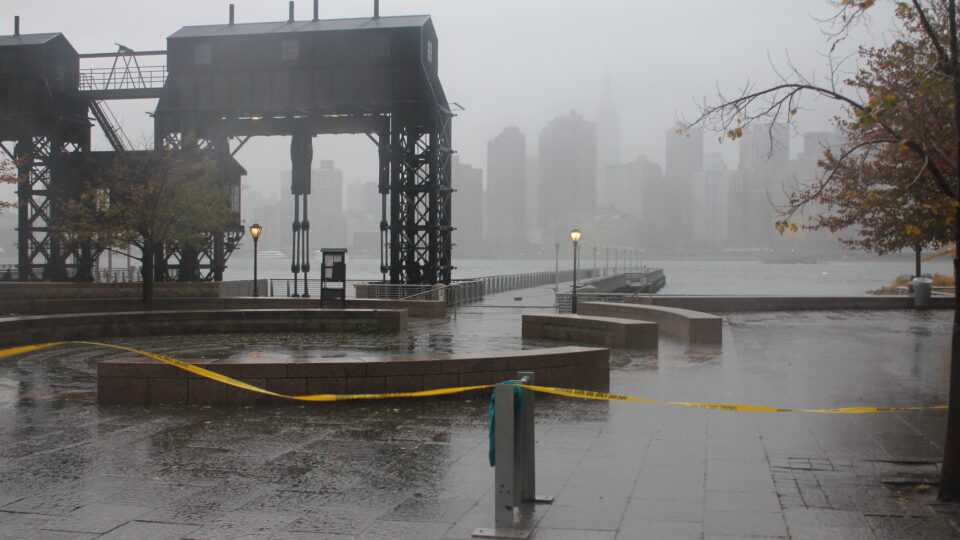
Photo, posted October 29, 2012, courtesy of Rachel via Flickr.

Earth Wise is a production of WAMC Northeast Public Radio.

Primary Sidebar

Recent Episodes

  • An uninsurable future
  • Clean energy and jobs
  • Insect declines in remote regions
  • Fossil fuel producing nations ignoring climate goals
  • Trouble for clownfishes

WAMC Northeast Public Radio

WAMC/Northeast Public Radio is a regional public radio network serving parts of seven northeastern states (more...)

Copyright © 2025 ·