• Skip to primary navigation
  • Skip to main content
  • Skip to primary sidebar

Earth Wise

A look at our changing environment.

  • Home
  • About Earth Wise
  • Where to Listen
  • All Articles
  • Show Search
Hide Search
You are here: Home / Archives for mates

mates

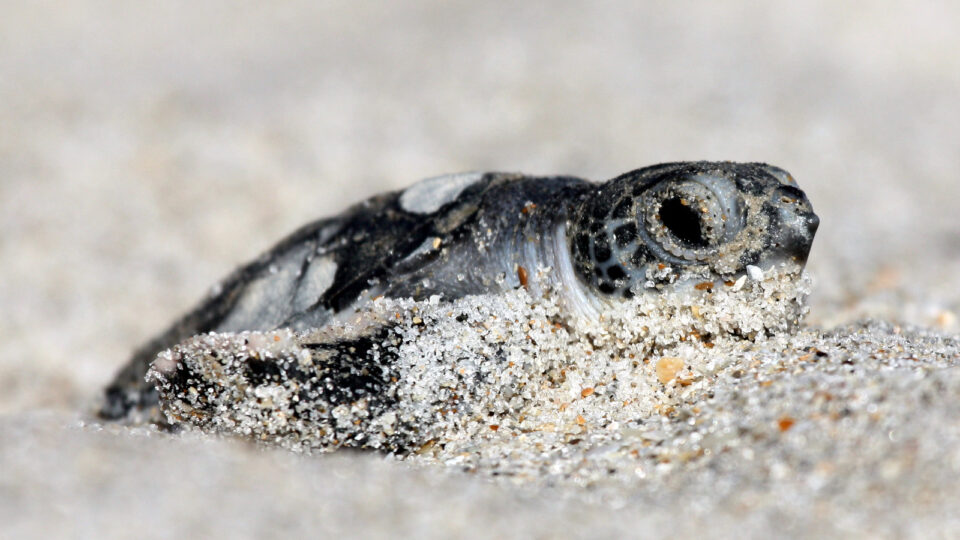
Lots of female turtles

November 3, 2023 By EarthWise Leave a Comment

Climate change threatening the future of green sea turtles

Green sea turtles were listed under the Endangered Species Act in 1978.  Since that time, there have been conservation measures put in place in many locations.  One such place is Florida, where restrictions on beachfront development and careful monitoring of turtle nests has helped to get hatchlings safely into the water.  A gill net ban in 1995 sharply reduced the number of young turtles killed by fishing gear.

All of this has resulted in what is described as an explosion in turtle populations in Florida.  Volunteers monitoring the 2023 nesting season on Florida’s beaches have counted more than 74,000 nests.  That beats the previous record – set in 2017 – by an incredible 40%.

Unfortunately, this does not represent a guaranteed great future for the species.  Sea turtles are particularly sensitive to the warming climate.  The sex of a baby sea turtle is not determined by DNA, but rather by the temperature of the sand in which its egg develops.  Cooler temperatures mean more males; warmer ones mean more females.

In recent years, the proportion of male green sea turtles has dwindled substantially.  In the past few seasons, between 87 percent and 100 percent of the hatchlings tested in Florida have been female.

In the short term, the skewed sex ratio might be a boon for the species.  Lots of females laying lots of eggs means lots of turtles.  Sea turtles don’t reach sexual maturity until their twenties or thirties.  So, for the next few decades, there are likely to be growing numbers of turtle nests.  But down the line, there is going to be a real problem.  Where will for all the female turtles find the mates to populate the species in the future?

**********

Web Links

Florida Turtle Nests Are Recovering. When They Hatch, Expect Mostly Girls.

Photo, posted October 5, 2011, courtesy of Keenan Adams / USFWS via Flickr.

Earth Wise is a production of WAMC Northeast Public Radio
Why Do Woodpeckers Peck? | Earth Wise

October 21, 2022 By EarthWise Leave a Comment

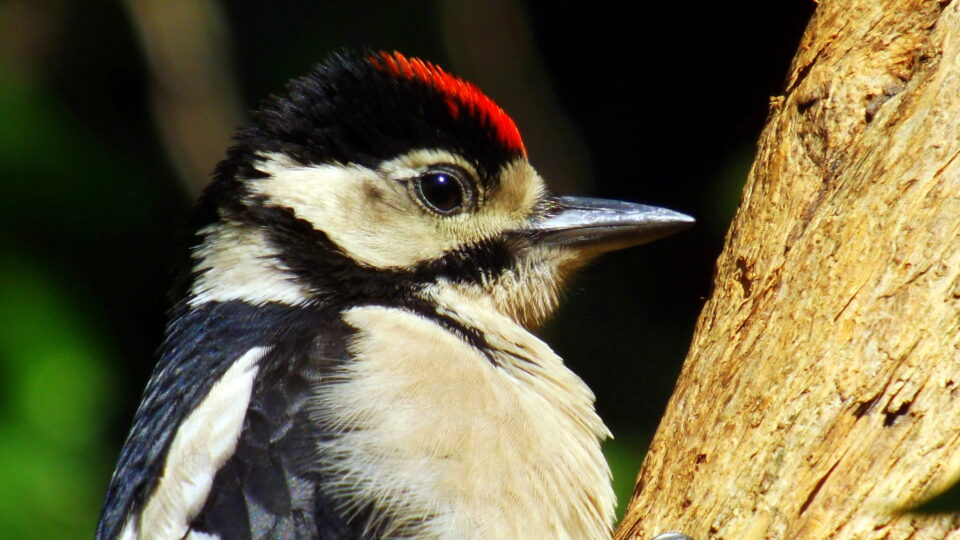
Scientists understand why woodpeckers peck

Most of us have heard the sound of a woodpecker drumming on a nearby tree, or unfortunately, on the walls of our house where it can be very destructive.  We were often told that the birds were hunting for insects inside the wood, or perhaps trying to open up a nest. But a new study at Brown University has found evidence that woodpeckers are just additional musicians in the bird orchestra who happen to be percussionists.

The researchers studied the forebrains of birds and found characteristic gene expression specializations in songbirds.  Songbirds sing to communicate for various reasons – such as staking out territory or seeking mates.  The study looked at birds that are not known to sing, such as the emu, penguin, flamingo, and woodpeckers.  It turns out that among these, only woodpeckers had forebrains that anatomically resembled those of songbirds.  The study is the first time a neural basis has been identified for the communication activities of animals other than primates.

There are over 200 species of woodpeckers around the world and each species has its own characteristic drumming speed and rhythms.  Woodpecker drumming may well have evolved through a form of vocal learning, which is the way songbirds learn to make their own melodious sounds.  And like the calls of songbirds, these drumming patterns change depending on what the birds want to communicate and to whom.

So, the little downy woodpecker that is poking holes in your walls is probably not hunting for insects.  It is more likely to be telling another woodpecker to get out of its territory.

**********

Web Links

Why do woodpeckers peck? New discovery about bird brains sheds light on intriguing question

Photo, posted June 15, 2021, courtesy of Tony Oldroyd via Flickr.

Earth Wise is a production of WAMC Northeast Public Radio
visit site by the doctor who prescribed the drug. Prescription. If the drug is sold in Russia without a prescription, it is necessary to make sure that the drug will also be sold abroad without it. You can find out in advance and, for example, write a letter to a specific pharmacy abroad, or you can be reinsured and ask to make a prescription form for the drug from your doctor.

Tough Times For Fireflies | Earth Wise

March 11, 2020 By EarthWise Leave a Comment

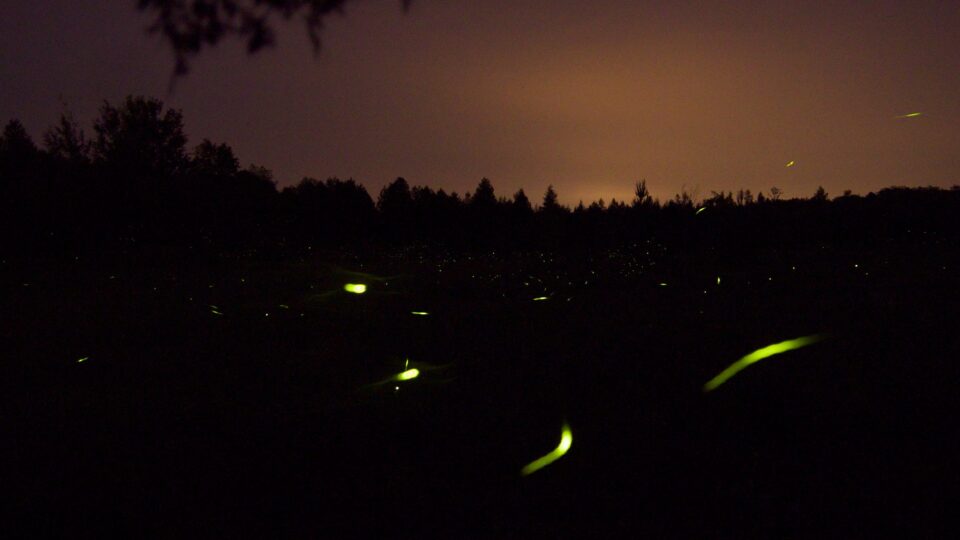
Fireflies facing extinction

Fireflies or lightning bugs are soft-bellied beetles known widely for their use of bioluminescence – the biochemical emission of light – to communicate and to attract mates.  There are more than 2,000 species of these beetles globally.  They can be found in temperate and tropical climates, like marshes or wet, wooded areas, all throughout the world.   

But if you are seeing fewer fireflies each summer, you’re not alone.  Like many insects, firefly populations are under duress from threats like pesticides, pollution, and habitat loss.  But fireflies are also facing another threat unique to luminous bugs: light pollution.  Light pollution is making it harder for fireflies to reproduce because the artificial light is outshining their mating signals. 

Male fireflies light up to signal availability and female fireflies respond with patterned flashes to indicate they’re interested.  But artificial bright light from things like billboards, streetlights, buildings, and homes, is interfering with the fireflies reproduction communications. 

The study, by researchers at Tufts University and the IUCN, warned that these threats facing fireflies could lead them globally to extinction. 

The researchers also point to habitat loss as another major threat to fireflies.  Firefly populations are especially vulnerable because they need special conditions to complete their life cycle.  Mangrove forests and marshes around the world are being removed in favor of cash crops like palm oil.   

Insects like fireflies are crucial components of many ecosystems where they perform important functions, like aerating soil, pollinating plants, and controlling pests.  Firefly larvae feed on snails, slugs and mites, and many fireflies are effective pollinators. 

We can’t afford for fireflies to go dark. 

**********

Web Links

A Global Perspective on Firefly Extinction Threats

Fireflies Have a Mating Problem: The Lights Are Always On

Photo, posted June 5, 2010, courtesy of Matt MacGillivray via Flickr.

Earth Wise is a production of WAMC Northeast Public Radio.

Wildlife Corridors

December 28, 2016 By EarthWise

https://earthwiseradio.org/wp-content/uploads/2016/12/EW-12-28-16-Wildlife-Corridors.mp3

It is widely thought that we are in the midst of the 6th great mass extinction of species on Earth and, unlike the previous ones that were caused by things like asteroid impacts or ice ages, this one is caused by us.  Our impact on the climate, on natural resources, on landscapes and habitats, and more, has wreaked havoc on ecosystems across the globe.

[Read more…] about Wildlife Corridors

Primary Sidebar

Recent Episodes

  • An uninsurable future
  • Clean energy and jobs
  • Insect declines in remote regions
  • Fossil fuel producing nations ignoring climate goals
  • Trouble for clownfishes

WAMC Northeast Public Radio

WAMC/Northeast Public Radio is a regional public radio network serving parts of seven northeastern states (more...)

Copyright © 2026 ·