• Skip to primary navigation
  • Skip to main content
  • Skip to primary sidebar

Earth Wise

A look at our changing environment.

  • Home
  • About Earth Wise
  • Where to Listen
  • All Articles
  • Show Search
Hide Search
You are here: Home / Archives for lungs

lungs

Indoor air and outdoor pollution

July 11, 2025 By EarthWise Leave a Comment

How outdoor pollution can impact indoor air quality

The majority of us spend about 80% of our time indoors.   The quality of the air that we breathe depends on the age and type of building we occupy along with any sources of indoor pollution that may exist and, ultimately, the quality of the air outdoors.  The HVAC used to heat, ventilate, and cool the building plays an important role.

The College of Engineering at the University of Utah used its Salt Lake City campus as a living laboratory to explore how outdoor air pollution affects indoor air quality.  Specifically, the nature of outdoor pollution sources strongly affected how effectively HVAC systems prevented external sources from getting into buildings.

Of particular concern is fine particulate matter with a diameter of less than 2.5 microns.  These PM 2.5 particles can penetrate deeply into lungs, potentially causing health problems like respiratory irritation and heart disease.

There are multiple sources of PM 2.5.  The Utah study found that wildfire smoke had four to five times more PM 2.5 infiltration into buildings than pollution from inversions and wind-driven dust events.

An additional finding was that commercial HVAC systems that use air-side economizers are much less effective at keeping out particulate matter.  These systems use special duct and damper systems that reduce energy use by drawing air from outdoors when temperature and humidity levels are optimum.

**********

Web Links

Does outdoor air pollution affect indoor air quality?

Photo, posted June 15, 2024, courtesy of Peter Burka via Flickr.

Earth Wise is a production of WAMC Northeast Public Radio

Microplastics and birds

March 19, 2025 By EarthWise Leave a Comment

Microplastics are tiny plastic particles, less than 5 millimeters in size, that come from the breakdown of larger plastics, synthetic fibers, microbeads, and tire wear.  Microplastics are found in oceans, rivers, soil, and even the air we breathe. These particles can take hundreds of years to degrade, spreading across ecosystems and accumulating in unexpected places, such as deep-sea sediments and Arctic sea ice.

According to a new study by researchers from the University of Texas at Arlington, microscopic plastic pollutants drifting through the air are lodging in the lungs of birds.  These findings raise  significant concerns about the impact on their respiratory health, but also raise alarms about potential risks to human health.

Birds were chosen for the study because they are found in almost every corner of the world and often share environments with humans. 

In the study, the research team examined 56 different wild birds from 51 distinct species, all sampled from the Tianfu airport in western China.  The researchers found high concentrations of microplastics in bird lungs, with an average of 221 particles per species.  The most common types identified were chlorinated polyethylene, which is used for insulating pipes and wires, and butadiene rubber, which is a synthetic material in tires.

Although there is no established “safe” level of plastic particles in lung tissue, high levels of microplastics have been linked to serious health risks, including heart disease, cancer, respiratory issues, and fertility problems.

The study highlights an urgent need to tackle plastic pollution in the environment because of its far-reaching impact on ecosystems and human health.  

**********

Web Links

Birds breathe in dangerous plastics—and so do we

Photo, posted January 28, 2017, courtesy of Pete Richman via Flickr.

Earth Wise is a production of WAMC Northeast Public Radio

Dangers of distant fires

January 6, 2025 By EarthWise Leave a Comment

Smoke from wildfires can drift thousands of miles

Smoke from wildfires is well known to exacerbate health problems like heart disease, lung conditions, and asthma.  People living in the vicinity of where fires occur face these dangers.  But a new study at the University of Maryland has found that there are health impacts from wildfires occurring thousands of miles away.

During the summer of 2023, massive Canadian wildfires created a vast plume of smoke that drifted more than 2,000 miles across the country resulting in poor air quality across the entire East Coast of the U.S. 

Baltimore had very dark skies over a six-day period in June 2023, sending many individuals to doctors’ offices complaining of breathing issues.  University of Maryland researchers found that medical visits for heart and lung problems rose by nearly 20% during that period.

Using satellite and EPA data combined with electronic health records, the researchers found increased likelihood of patients going to the doctor for complications related to cardiopulmonary conditions during the days with the most smoke in the air.  They found a 55% increase in the risk for an outpatient visit for heart and lung conditions and these additional patients tended to be older, non-smokers, and more socio-economically affluent than the typical patients who see their doctors for such conditions when the air quality is good.

With more climate-related events likely to occur in the future, doctors may require better tools to help disadvantaged patients on so-called hotspot days when conditions are most dangerous.  Increasingly common wildfires are a particular danger to people even when those fires are far away from where they live.

**********

Web Links

Exposure to Remote Wildfire Smoke Drifting Across the U.S. Linked to Increased Medical Visits for Heart and Lung Problems

Photo, posted June 8, 2023, courtesy of Marc A. Hermann / MTA via Flickr.

Earth Wise is a production of WAMC Northeast Public Radio
Progress towards electric school buses

November 8, 2024 By EarthWise Leave a Comment

Making progress on electrifying school buses

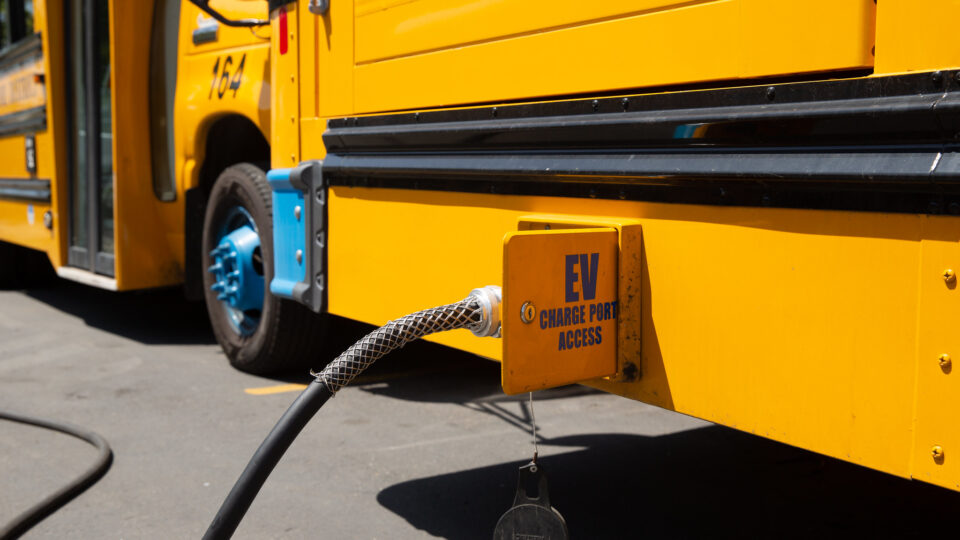
The U.S. has nearly half a million school buses providing daily transportation for about 20 million students.  Most of these buses are powered by diesel engines which not only dump greenhouse gases into the atmosphere but also fill kids’ lungs with harmful fumes.

Thanks to various federal and state incentive programs, this situation is starting to change.  School districts all over the country are beginning to swap out old diesel buses for emissions-free electric-powered school buses.

Electric school buses are finding their way into school districts of all sizes and demographics.  The first district in the country to go fully electric was in Martinsville, Texas, which last year converted its 4-bus fleet.  The first large urban district to go all-electric was the 74-bus fleet in Oakland, California this summer.

The EPA’s $5 billion Clean School Bus program and many state initiatives are providing incentives for the transition.  Five years ago, there were less than 1,000 electric school buses in the U.S.  Now there are about 5,000 and more than 7,000 additional buses are in the pipeline.

Apart from the climate implications, there is urgency to replacing diesel school buses from a health perspective.  Diesel exhaust is classified as a carcinogen by the World Health Organization, and it contains fine particles and nitrogen oxides, both of which are well-documented asthma triggers.

Electric buses are more expensive than diesel buses, but they are much cheaper to operate. School districts need to put in place charging infrastructure.  The transition is not so easy to accomplish, but it is an important step, and more and more school districts are taking it.

**********

Web Links

Slowly but Surely, U.S. School Buses Are Starting to Electrify

Photo, posted May 5, 2021, courtesy of California Energy Commission via Flickr.

Earth Wise is a production of WAMC Northeast Public Radio
Biodegradable microplastics

April 10, 2024 By EarthWise Leave a Comment

Researchers are developing biodegradable microplastics

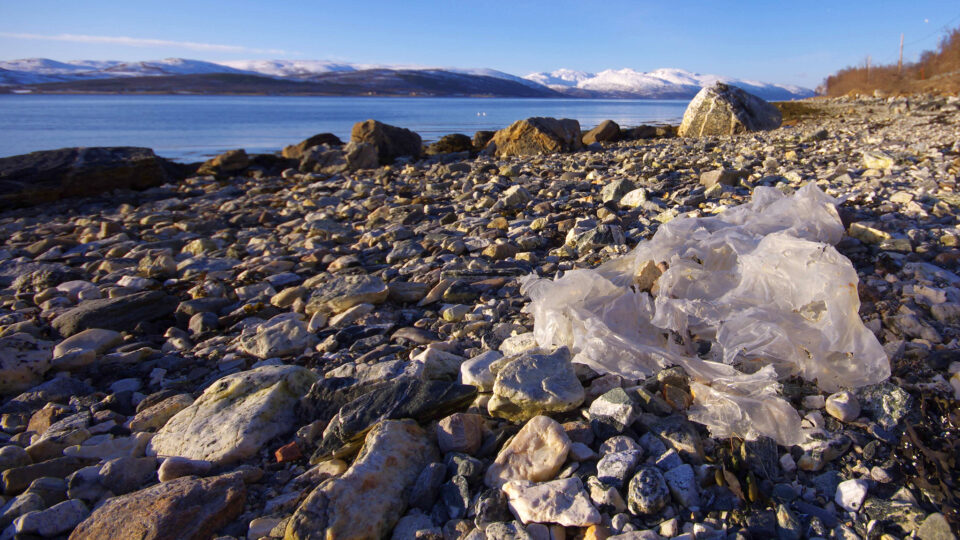
Ordinary plastics are not biodegradable, but they are also not indestructible.  Plastics in the environment can break down into tiny fragments – microplastics – and those, unfortunately, are nearly indestructible.  Microplastics have been documented in the oceans and in soil virtually everywhere on Earth including remote frozen wastelands and on top of high mountains.  More recently, they have been found in our own arteries, lungs, and even in placentas.  Microplastic pollution is a very serious problem.

There is considerable ongoing effort to develop biodegradable plastics from non-petroleum sources.  There has been progress but it has not necessarily been aimed at creating bioplastics that do not create microplastic when they break down.

Researchers at the University of California San Diego have developed algae-based polymers that they have shown to degrade when composted.  Recently, in work published in the journal Nature Scientific Reports, they have shown that even fine microparticles of their bioplastic are digested by microbes when placed in a compost.  What remains are the starting plant materials from which the plastic was made.  Products made from this sort of plastic would not only be sustainable beyond their useful lifetime but would also not represent a potential danger to human life.

Creating this eco-friendly alternative to petroleum-based plastic is only the first step toward creating a viable replacement for existing plastics.  It is necessary to be able to use the new material on existing manufacturing equipment and for it to have the same mechanical and thermal properties as the materials it is replacing.  But the researchers are optimistic that this could be a potential solution to an increasingly serious problem.

**********

Web Links

Say Hello to Biodegradable Microplastics

Photo, posted January 17, 2018, courtesy of Bo Eide via Flickr.

Earth Wise is a production of WAMC Northeast Public Radio
Atmospheric Plastic Polluting The Ocean | Earth Wise

June 8, 2022 By EarthWise Leave a Comment

Winds carry plastic particles all around the world

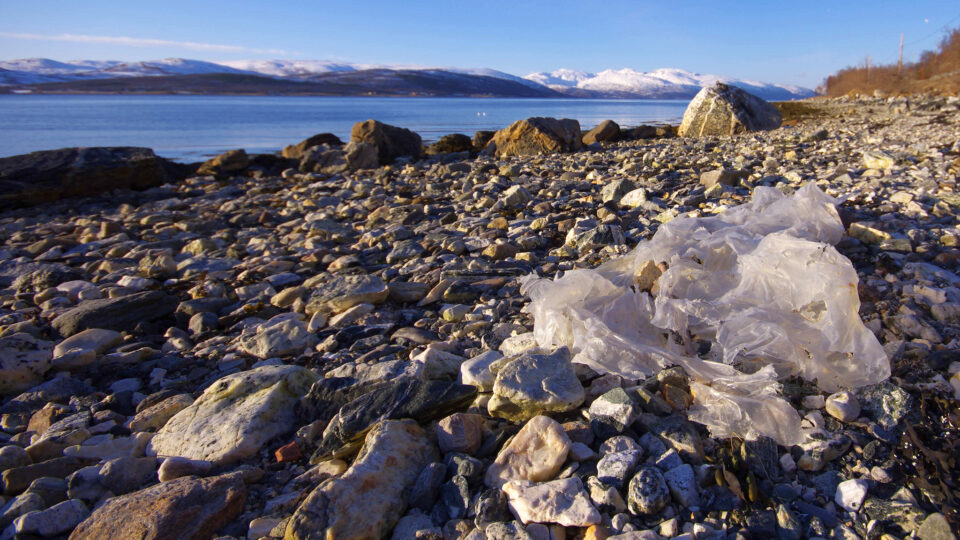
According to estimates, by 2040 there will likely be nearly 90 million tons of plastic pollution entering the environment each year.  Particles of plastic have been found in virtually all parts of our planet including the land, the water, and even the air.  Tiny plastic particles have been found in the Arctic, the Antarctic, and at the tops of the highest mountains.

A new study has shown that winds can carry plastic particles over great distances and in fact can bring them from their point of origin to the most remote places in a matter of days.   As a result, micro- and nanoplastics can penetrate the most remote and otherwise largely untouched regions of the planet

How does plastic get into the atmosphere?  Particles produced by tires and brakes in road traffic or ones in the exhaust gases from industrial processes rise into the atmosphere, where they are transported by winds.  There is also evidence that a substantial number of these particles are transported by the marine environment.  Microplastic from the coastal zone finds its way into the ocean through beach sand.  A combination of sea spray, wind, and waves forms air bubbles in the water containing microplastic.  When the bubbles burst, the particles find their way into the atmosphere.

Understanding the interactions between the atmosphere and ocean is important because the atmosphere turns out to be a major mechanism in depositing substantial amounts of plastic into a broad range of ecosystems.

The impact of plastic particles on ecosystems is not well understood.  Neither is the effect of plastic particles in the air upon human health.  In a recent British study, microplastic was detected in the lungs of 11 out of 13 living human beings.

**********

Web Links

Micro- and nanoplastic from the atmosphere is polluting the ocean

Photo, posted April 25, 2016, courtesy of Bo Eide via Flickr.

Earth Wise is a production of WAMC Northeast Public Radio.

The Lockdown Cleans Up Indian Air | Earth Wise

May 13, 2020 By EarthWise Leave a Comment

Coronavirus lockdown cleans the air

Our stories often discuss how human activities change the natural environment.  With most of us confined to our homes, the lack of human activities is having profound effects on the environment.  We are talking about some of these this week.

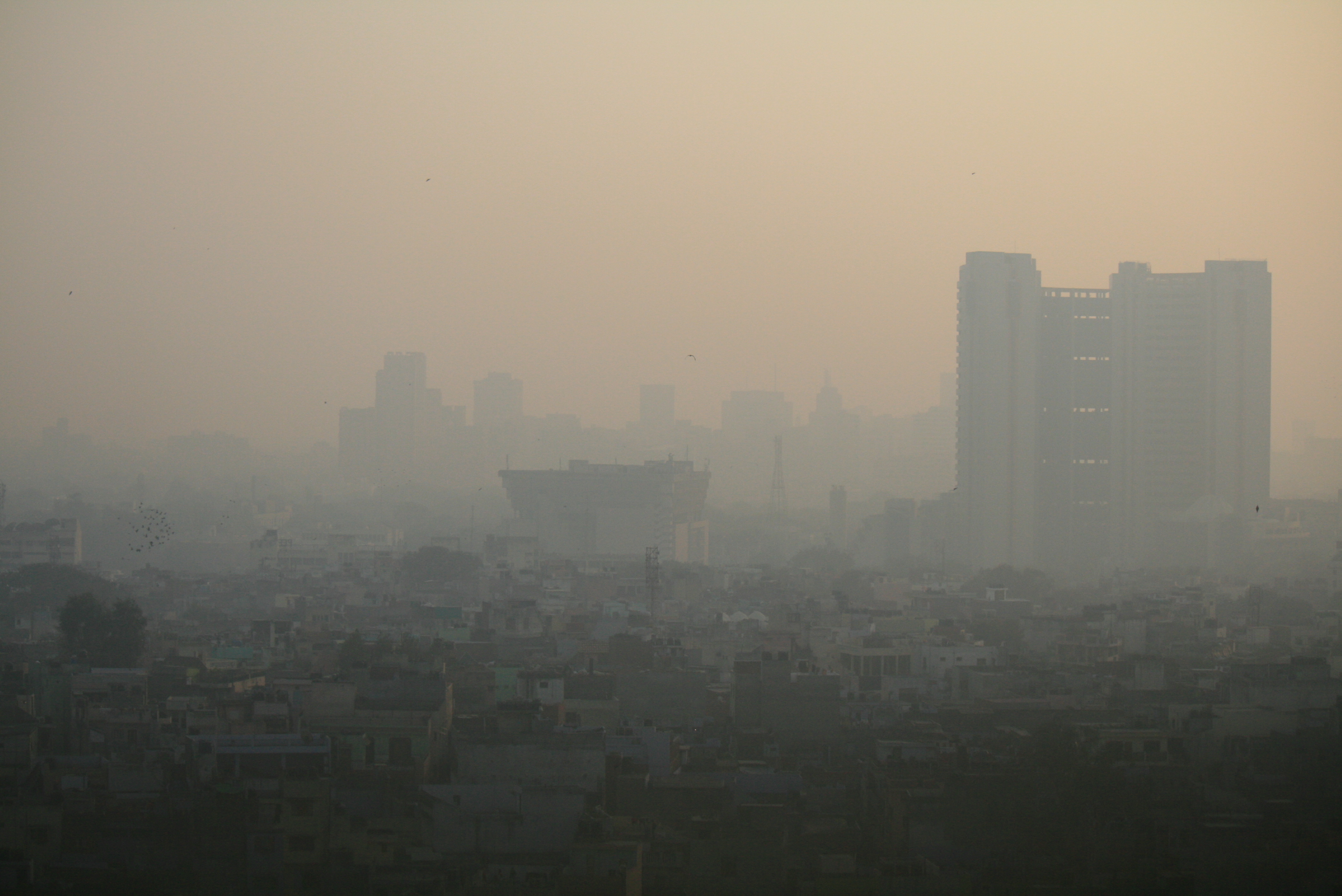
India suffers from some of the worst air pollution in the world.  Of the most polluted cities in the world, 21 out of 30 were in India in 2019.  According to World Health Organization standards, at least 140 million people in India breathe air containing 10 times or more greater levels than the safe limit for pollutants.  Air pollution contributes to the premature death of 2 million Indians every year.

Half of India’s air pollution comes from industry, 27% from vehicles, and 17% from crop burning.  Crop burning is prevalent because it is much cheaper than mechanical tilling after the harvest.

On March 25, the Indian government placed its 1.3 billion citizens under a strict lockdown to reduce the spread of COVID-19.   The country-wide mandate decreased activity at factories and drastically reduced car, bus, truck, and airplane traffic.

Within one week, NASA satellite sensor observed aerosol levels at a 20-year low for this time of year in northern India.  Aerosols are tiny solid and liquid particles suspended in the air that reduce visibility and can damage the human lungs and heart.  Some aerosols have natural sources, such as dust storms, volcanic eruptions, and forest fires.  But many come from human activities such as the burning of fossil fuels and croplands.  Scientists expected to see changes in atmospheric conditions during the Indian lockdown, but the current changes are dramatic.  They also present a unique opportunity to separate how natural and human sources of aerosols affect the atmosphere.

**********

Web Links

Airborne Particle Levels Plummet in Northern India

Photo, posted April 29, 2020, courtesy of Flickr.

Earth Wise is a production of WAMC Northeast Public Radio.

Air Pollution And Diabetes

August 9, 2018 By EarthWise 3 Comments

https://earthwiseradio.org/wp-content/uploads/2018/08/EW-08-09-18-Air-Pollution-and-Diabetes.mp3

Air pollution is deadly.  Studies have found that fine particulate matter, such as airborne pieces of dust, dirt, smoke, soot, and other microscopic particles can enter our lungs and bloodstream, contributing to major health conditions such as heart disease, stroke, cancer, and kidney disease.

[Read more…] about Air Pollution And Diabetes

Pedaling For Clean Air

June 27, 2017 By EarthWise

https://earthwiseradio.org/wp-content/uploads/2017/06/EW-06-27-17-Pedaling-for-Clean-Air.mp3

Poor air quality is a problem all around the world.  Exposure to air pollution is linked to the premature deaths of an estimated 6.5 million people every year, making it the fourth largest threat to human health, trailing only high blood pressure, dietary risks, and smoking. 

[Read more…] about Pedaling For Clean Air

India’s Air Pollution

May 3, 2017 By EarthWise

https://earthwiseradio.org/wp-content/uploads/2017/04/EW-05-03-17-Indias-Air-Pollution.mp3

Poor air quality is a major problem worldwide.  Exposure to air pollution is linked to the premature deaths of an estimated 6.5 million people every year.  This makes air pollution the fourth largest threat to human health, trailing only high blood pressure, dietary risks, and smoking. 

[Read more…] about India’s Air Pollution

Primary Sidebar

Recent Episodes

  • An uninsurable future
  • Clean energy and jobs
  • Insect declines in remote regions
  • Fossil fuel producing nations ignoring climate goals
  • Trouble for clownfishes

WAMC Northeast Public Radio

WAMC/Northeast Public Radio is a regional public radio network serving parts of seven northeastern states (more...)

Copyright © 2026 ·