• Skip to primary navigation
  • Skip to main content
  • Skip to primary sidebar

Earth Wise

A look at our changing environment.

  • Home
  • About Earth Wise
  • Where to Listen
  • All Articles
  • Show Search
Hide Search
You are here: Home / Archives for land

land

Energy storage in New York isn’t easy

September 19, 2025 By EarthWise Leave a Comment

The state of New York has the ambitious goal of having 70% of its electricity come from renewable sources in 2030 and a 100% zero-emission electric grid by 2040.  Meeting these goals is becoming increasingly unlikely as the state faces multiple challenges including local opposition to projects, rising inflation, and the termination of offshore wind projects.

Solar and wind power are key elements of New York’s renewable plans, and both require battery energy storage so that excess energy can be saved when there is plentiful sun and wind so that there will be power available when nature hasn’t cooperated.

There are now over 6,000 battery storage projects in the state, mostly relatively small in magnitude.  Currently, the state has a storage capacity of about 445 megawatts, enough to power roughly 300,000-400,000 homes.  The state has a goal of having 6 gigawatts of storage by 2030, more than a dozen times more than exists today.

Most of New York’s electricity demand is downstate, in and below the Hudson Valley.  Real estate is limited and expensive and there is lots of opposition to big energy projects in the region. 

However, installing the actual battery systems themselves can be one of the easier parts of the process.  Obtaining permits from state and local authorities, buying or leasing land, negotiating with grid operators, completing environmental reviews, overcoming local opposition, and especially, connecting to the electric grid, are all challenging and very time consuming.

Meeting the state’s energy storage goals is not easy.

**********

Web Links

Figuring Out a Battery Storage System to Fit New York’s Wind and Solar Ambitions Has Not Been Easy

Photo courtesy of NineDot Energy.

Earth Wise is a production of WAMC Northeast Public Radio

Abandoned farmland and the environment

September 4, 2025 By EarthWise Leave a Comment

Abandoned farmland has been increasing dramatically in recent decades.  Estimates are that a billion acres – an area half the size of Australia – have been relinquished from cultivation globally.  While more and more of the tropics have been cultivated in recent times, the global amount of land used for agriculture has been in decline since 2001.  In the past 30 years, arable land in the United States has declined by almost a sixth.  The situation in Europe is similar.  Huge amounts of the former Soviet Union now lie abandoned. 

Farmland is abandoned for various reasons.  It may suffer from damaged soil so that crop yields are too low to be worth the effort.  Farm owners may become too old or be physically unable to continue farming.  Many younger people head for jobs in the cities and more attractive opportunities.  Wars, natural and man-made disasters, and political turmoil have all contributed.

Another form of largely ignored lands are so-called degraded forests.  These are forests that were logged in the past but are no longer productive and aren’t protected either.  These places also represent unused land with great potential value.

Ecologists point to the potential of these lands as neglected resources for rewilding efforts, improving biodiversity, and for increasing natural ways to capture carbon.  Left to its own devices, nature will usually reclaim abandoned places.  This generally provides benefits for biodiversity and climate.  But mapping, studying, managing, and protecting the increasingly vast tracts of abandoned land could increase their potential to contribute to climate change mitigation and the restoration of species and their habitats.

**********

Web Links

Abandoned Lands: A Hidden Resource for Restoring Biodiversity

Photo, posted January 26, 2023, courtesy of Larry Syverson via Flickr.

Earth Wise is a production of WAMC Northeast Public Radio

How much nanoplastic is in the oceans?

August 1, 2025 By EarthWise Leave a Comment

There is a shocking amount of nanoplastics in the world's oceans

It is unfortunately well-known that microplastics are pretty much everywhere on Earth.  They are also increasingly found in living things like birds and dolphins as well as in human brains and placentas.  The oceans are polluted with plastic, and for the first time, there is now an estimate for the volume of nanoplastics – which are even smaller than microplastics and invisible to the human eye – found in the North Atlantic.

According to a study published in the journal Nature by the microplastics and nanoplastics research group at the Helmholtz Center for Environmental Research in Germany, there are at least 30 million tons of nanoplastics in the North Atlantic, which is more than the weight of all wild land mammals on Earth.

The same researchers have analyzed plastic in lakes, urban air, and even the air in very remote places, but the new study reveals a missing part of the plastics story.

Nanoplastics are microscopic fragments smaller than one micron, about the size of small bacteria.  There has been ongoing concern about nanoplastics in ocean water, but there wasn’t the technology available to really investigate it.  While nanoplastics were expected to be found in the ocean, the sheer amount of it was surprising.

The average concentration of nanoplastics near coastlines is about 25 milligrams per cubic meter of water, about the weight of a single large bird feather.   Nanoplastics are tiny enough that they can easily infiltrate the bodies of living creatures.  For fish and other ocean animals, that means constant exposure that builds up over time.

It is highly unlikely that plastic pollution is going to stop any time soon, but there is a United Nations meeting on the subject in August in Geneva.

**********

Web Links

Tons of Invisible Plastic Pieces Lurk in Ocean Water

Photo, posted June 24, 2020, courtesy of G.P. Schmal / NOAA via Flickr.

Earth Wise is a production of WAMC Northeast Public Radio

Forest-based agroforestry

July 30, 2025 By EarthWise Leave a Comment

Exploring forest-based agroforestry as a natural climate solution

Tree plantings have become a go-to climate solution for governments and conservation groups due to the carbon-storing potential of trees.  While planting new trees on open farmland would help capture additional carbon, a new study led by scientists from Yale School of the Environment suggests a powerful alternative: forest-based agroforestry.

Instead of clearing land for crops or starting fresh with new trees, forest-based agroforestry (or FAF) brings agriculture into existing forests.  Think fruits, nuts, and medicinal plants, for example, grown sustainably under a forest canopy – all while maintaining biodiversity and storing carbon.

According to the researchers, human activity in forests is often seen as harmful. But for thousands of years, Indigenous and local communities have managed forests in ways that actually strengthen them.

The study, which was recently published in the journal Nature Climate Change, found that FAF not only rivals tree planting in terms of climate benefits, but it can also generate income and support cultural practices tied to the land.

Despite these benefits, forest-based agroforestry receives far less funding and policy support due to two key misconceptions. It’s frequently confused with industrial systems focused on global commodity crops, and results from tropical regions are wrongly assumed to apply to temperate and boreal forests.

The researchers recommend including FAF in agroforestry policies, clearly distinguishing it from harmful industrial practices, and expanding research on FAF in temperate and boreal regions to guide better land management.

Forest-based agroforestry appears to be a natural climate solution hiding in plain sight.

**********

Web Links

Agriculture in Forests Can Provide Climate and Economic Dividends

Photo, posted May 8, 2023, courtesy of Preston Keres / USDA Forest Service via Flickr.

Earth Wise is a production of WAMC Northeast Public Radio

Coexisting birds and solar energy

June 23, 2025 By EarthWise Leave a Comment

Floating photovoltaic systems – known as floatovoltaics – are becoming increasingly popular.  These are arrays of solar panels installed over artificial water bodies such as irrigation ponds, wastewater treatment plants, and reservoirs.  These projects maximize the space for producing clean energy while not taking up natural lands.

Wherever there are bodies of water, there are waterbirds.  A recent study by researchers at the University of California, Davis looked at the potential impact of floating solar projects on birds and other wildlife. 

Birds face many threats from habitat loss, climate change, pollution, and disease.  Many bird populations are in decline.  So, it is important to consider the effects of floating solar projects on birds. 

The researchers have observed birds resting on floating solar structures before dawn, birds jockeying for favorable sites on the structures, and some nesting under the panels.  These are positive interactions.  On the other hand, it is possible that pollutants could be released or leached from floating solar infrastructure.  Such risks must be mitigated.

Floating solar on irrigation ponds and reservoirs can reduce evaporation and reduce algae growth, which benefits both humans and wildlife.

The researchers will continue to monitor bird behavior at floating solar installations using expertise in ecology and energy system science to identify risks and solution pathways so that negative impacts are avoided, and potential ecological benefits are realized.  It is important that as floating solar continues to become more popular, it and waterbirds can coexist.

**********

Web Links

Helping Birds and Floating Solar Energy Coexist

Photo, posted February 28, 2019, courtesy of Renee Grayson via Flickr.

Earth Wise is a production of WAMC Northeast Public Radio

Solar on farmland

June 4, 2025 By EarthWise Leave a Comment

Solar panels on farmland would benefit energy system and farmers

New studies have found that devoting a small percentage of U.S. farmland to producing solar power would benefit both the country’s energy system and its farmers.

Currently, about 46,000 square miles of farmland – about the area of Pennsylvania – is being used to grow corn to make ethanol.  One study looked at the impact of using some of this land for solar power instead of corn ethanol.

Not much of all this farmland is close enough to electrical transmission lines to be practical for utility solar power.  In fact, only about 1,500 square miles fits the bill.  But if even this small fraction of the corn growing land was used instead for solar power, it would generate as much energy each year than from all of the farms growing corn for fuel.

Solar installations on farms are helpful for farmers as well.  The land beneath the panels can be used to grow wildflowers that attracts the bees, wasps, and other insects needed to pollinate crops in the nearby fields.  In addition, the solar arrays provide a steady income stream for farmers.

In some places, farmers can earn substantially more from leasing their land for solar than from growing crops.  But a study of farms in California suggests that the best option is to do both.  Farmers who both grow crops and host solar arrays can have more financial security than those who do just one or the other.  The income from solar arrays is pretty predictable and is paid throughout the year.  Income from crops can drop off from, for example, a seasonal drought, or from extreme weather events.

**********

Web Links

To Help Growers and the Grid, Build Solar on Farmland, Research Says

Photo, posted June 9, 2016, courtesy of Matt Lavin via Flickr.

Earth Wise is a production of WAMC Northeast Public Radio

Bees and urban wildflowers

May 23, 2025 By EarthWise Leave a Comment

Urban wildflowers may threaten bees in some cases

Post-industrial cities often have large numbers of vacant lots, left behind as people have moved out of the area.  Local residents are often tempted to plant wildflowers to make these deserted spaces more attractive. 

Wildflowers are an important food source for bees.  Pollinators like bees play a vital role in food production and attracting them with food sources is a good idea.  However, a study by researchers at the University of Cambridge in the UK found that there are dangers associated with planting wildflowers in some urban settings.

Wildflowers growing on land previously used for buildings and factories can accumulate lead, arsenic, and other metal contaminants from the soil.  These metals have previously been shown to damage the health of pollinators that ingest the metals in the nectar as they feed.

The Cambridge study was carried out in Cleveland, Ohio, which has nearly 34,000 vacant lots.  Cleveland was previously the site of iron and steel production, oil refining, and car manufacturing.  The researchers tested the nectar from flowering plants growing on disused land throughout the city.  Lead was the contaminant found in the highest concentrations.  They also found that different species of plants accumulate different amounts and different types of metals.

The goal of the study was not to discourage the planting of wildflowers in towns and cities.  It is to highlight the importance of growing the right species of wildflowers as well as to encourage testing soils for metals before planting wildflowers and to clean up pollution.  Wildflowers are important for pollinators, but it is also important that they don’t contribute to the decline of pollinator populations that has already been happening for a number of reasons.

**********

Web Links

Growing wildflowers on disused urban land can damage bee health

Photo, posted August 26, 2012, courtesy of RJP via Flickr.

Earth Wise is a production of WAMC Northeast Public Radio

Tracking atmospheric mercury

May 13, 2025 By EarthWise Leave a Comment

A cheap way to track atmospheric mercury levels

Atmospheric mercury is a toxic pollutant released into the air from natural sources—such as volcanoes and wildfires—and from human activities like coal burning and gold mining.  Once in the atmosphere, mercury can travel long distances before settling onto land or into water, transforming into toxic forms that threaten ecosystems and human health.

But tracking atmospheric mercury is a costly and challenging endeavor, requiring specialized equipment and trained personnel. Active monitors, which pump air to collect mercury, are expensive and need electricity, while passive samplers, using activated charcoal for remote areas, cost up to $100 each.

Researchers from Cornell University have found a cheap method for tracking toxic atmospheric mercury near gold mining sites throughout the Global South: wild fig trees.  In the study, which was conducted in the Peruvian Amazon and recently published in the journal Frontiers in Environmental Science, the research team found that the rings in wild fig trees can serve as natural archives of atmospheric mercury, capturing and preserving historical pollution levels over time.

The technique itself is not actually new.  Previous studies have used tree rings to track mercury pollution from coal combustion, particularly in Canada. But the research team wanted to test this method in regions of the Global South, where mercury emissions from gold mining are widespread.

According to the research team, wild fig trees might soon serve as an important biomonitoring tool, helping scientists better understand how mercury disperses across landscapes and through time.

**********

Web Links

Tree rings track atmospheric mercury cheaply

Photo, posted November 13, 2012, courtesy of Steve Kessler via Flickr.

Earth Wise is a production of WAMC Northeast Public Radio

Amphibians and climate change

April 7, 2025 By EarthWise Leave a Comment

Amphibians are a group of vertebrate animals that include frogs, toads, and salamanders. They are unique for their ability to live both in water and on land during different stages of life. Amphibians play a crucial role in ecosystems, often serving as both predators and prey in food webs.

Amphibians are the world’s most at-risk vertebrates, with more than 40% of species listed as threatened.  They are cold-blooded creatures and rely on external sources to regulate their body temperature.  But needing to regulate their body heat this way makes amphibians particularly vulnerable to temperature change in their habitats. 

Researchers from the University of New South Wales in Australia can now predict the heat tolerance of 60% of the world’s amphibian species.  This new tool will allow scientists to better identify which amphibian species and habitats will be most impacted by climate change.  

The study’s landmark findings, which were recently published in the journal Nature, found that 2% of amphibian species are already exposed to overheating in shaded terrestrial conditions.  According to the research team, a 4°C global temperature increase could push 7.5% of amphibian species beyond their physiological limits. 

Local amphibian extinctions can trigger ecological repercussions, including reshuffling community compositions, eroding genetic diversity, and impacting the food chain and overall ecosystem health.

The researchers highlight the importance of vegetation and water bodies in protecting amphibians during heat waves, and emphasize the need to provide adequate water and shade during future conservation efforts. 

**********

Web Links

The pot is already boiling for 2% of the world’s amphibians: new study

Photo, posted October 8, 2011, courtesy of Dave Huth via Flickr.

Earth Wise is a production of WAMC Northeast Public Radio
The green grab for land

March 27, 2025 By EarthWise Leave a Comment

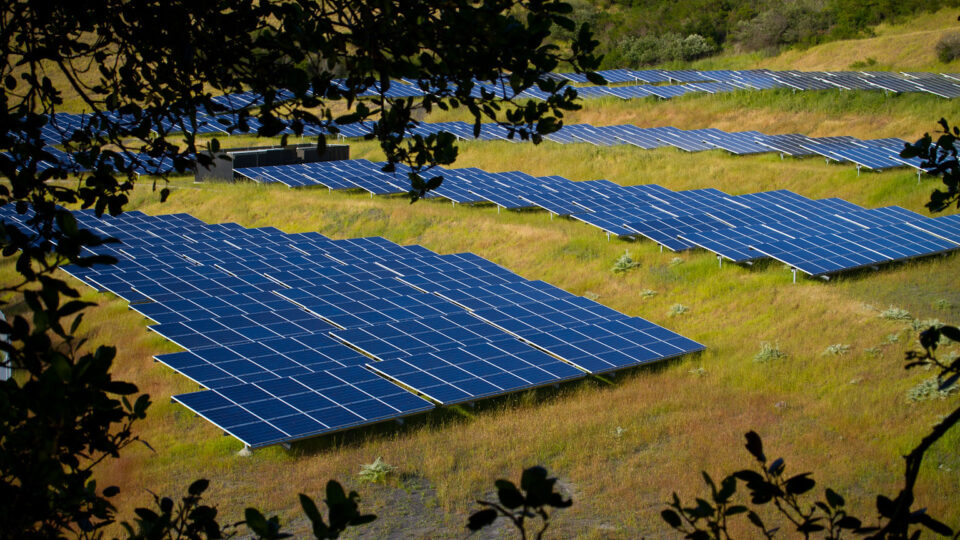
Solar and wind farms are spreading rapidly around the world.  Many economists believe that solar power has crossed the threshold where it is generally cheaper than other ways to make electricity and will become the dominant energy source in the next couple of decades.  As a result, both solar and wind farms are gobbling up more and more land around the world.  Estimates are that they will take up around 30,000 square miles by mid-century.

One concern is whether we are entering an era of trading food for energy.  Land conflicts seem inevitable since solar power operates best in unshaded areas with gentle winds and moderate temperatures, which are the same conditions favored by many crops.

China is installing more solar farms than the rest of the world combined.  Many of these are in the Gobi Desert, where there is no competing need for the land.  But some are in eastern China, in densely populated grain-growing areas.

There are a number of strategies that reduce the impact of solar farms on land use.  One approach is to put them on old industrial or brownfield sites that are otherwise unusable.  Another is floatovoltaics:  putting solar panels on the surface of lakes and reservoirs.  And then there is agrivoltaics, where solar panels are installed above crop fields or where livestock graze between or even beneath solar arrays.  China has more than 500 agrivoltaic projects that incorporate crops, livestock, aquafarming, greenhouses, and even tea plantations.

Green energy has both environmental and economic benefits to offer, but it must conserve nature and not excessively grab land needed for people, wildlife, and ecosystems.

***********

Web Links

‘Green Grab’: Solar and Wind Boom Sparks Conflicts on Land Use

Photo, posted May 25, 2011, courtesy of Michael Mees via Flickr.

Earth Wise is a production of WAMC Northeast Public Radio
Polar bear population decline

March 13, 2025 By EarthWise Leave a Comment

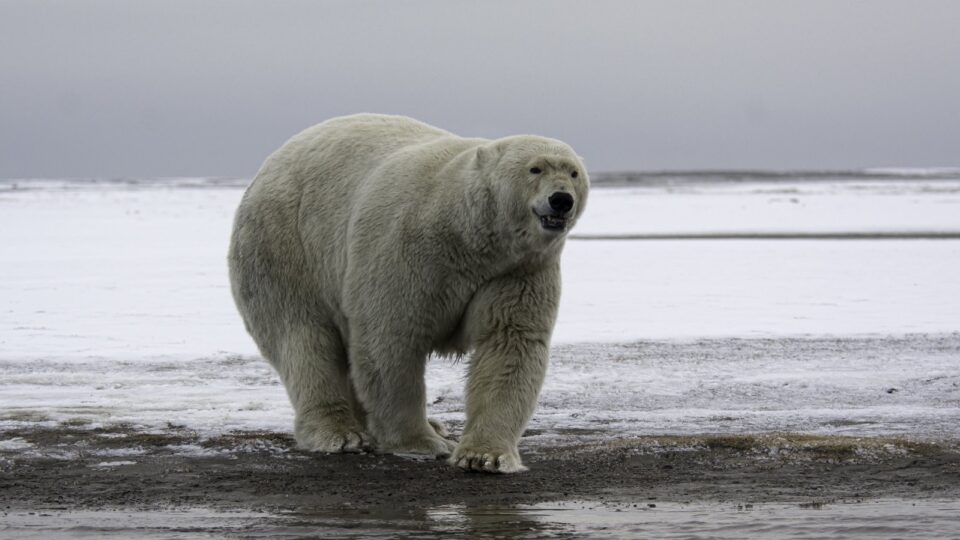
Researchers from the University of Toronto have directly linked the population decline in polar bears living in Canada’s Western Hudson Bay to climate change.  Between 1979 and 2021, the polar bear population in this region has declined by nearly 50%.

The monitoring data over this period shows that the average size of polar bears has declined, the size of cub litters has dropped, and cub survival rates are reduced.

The primary factor is the declining amount and duration of sea ice.  When there is less ice, bears have less feeding time and less energy overall.  The loss of sea ice means that bears spend less time hunting seals and more time fasting on land.  The lack of food leads to reduced reproduction, cub survival, and, ultimately, population decline. 

The average body mass of adult females has dropped by 86 pounds and of cubs by 47 pounds.  With shorter hunting periods and less food, mothers produce less milk.  Not only have cub litter sizes dropped over the monitoring period, but mothers are keeping their cubs longer because they are not strong enough to live on their own.  The bottom line is that the survival of cubs directly impacts the survival of the population.

Western Hudson Bay is considered to be a bellwether for polar bear populations globally.  It is one of the southernmost populations of polar bears and it has been monitored for a long time.  With the Arctic warming at a rate four times faster than the global average, polar bear populations in other Arctic regions are likely to be experiencing similar declines. 

**********

Web Links

Polar bear population decline the direct result of extended ‘energy deficit’ due to lack of food

Photo, posted October 23, 2015, courtesy of Anita Ritenour via Flickr.

Earth Wise is a production of WAMC Northeast Public Radio

Megadroughts

February 24, 2025 By EarthWise Leave a Comment

A new study by Swiss and Austrian scientists has found that persistent multi-year droughts have become increasingly common since 1980 and will continue to proliferate as the climate warms.

There are multiple examples in recent years in places ranging from California to Mongolia to Australia.  Fifteen years of persistent megadrought in Chile have nearly dried out the country’s water reserves and even affected Chile’s vital mining output.  These multi-year droughts have triggered acute water crises in vulnerable regions around the world.

Droughts tend to only be noticed when they damage agriculture or visibly affect forests.  An issue explored by the new study is whether megadroughts can be consistently identified and their impact on ecosystems understood.

The researchers analyzed global meteorological data and modeled droughts over a forty-year period beginning in 1980.  They found that multi-year droughts have become longer, more frequent, and more extreme, covering more land.  Every year since 1980, drought-stricken areas have spread by an additional fifty thousand square kilometers on average, an area the size of Vermont and New Hampshire combined. 

The trend of intensifying megadroughts is clearly leading to drier and browner ecosystems.  Tropical forests can offset the effects of drought as long as they have enough water reserves.  However, the long-term effects on the planet and its ecosystems remain largely unknown.  Ultimately, long-term extreme water shortages will result in trees in tropical and boreal regions dying, causing long-term and possibly irreversible damage to these ecosystems.

**********

Web Links

The Megadroughts Are upon Us

Photo, posted January 7, 2018, courtesy of Kathleen via Flickr.

Earth Wise is a production of WAMC Northeast Public Radio

Thawing permafrost in the Arctic

February 18, 2025 By EarthWise Leave a Comment

Permafrost covers about a quarter of the landmass in the Northern Hemisphere.  It stores vast quantities of organic carbon in the form of dead plant matter.  As long as it stays frozen, it is no threat to the climate.  But as permafrost thaws, microorganisms start breaking down that plant matter and large amounts of carbon are released into the atmosphere in the form of carbon dioxide and methane.

Scientists estimate that there could be two and a half times as much carbon trapped in Arctic permafrost as there is in the atmosphere today.

Thawing permafrost poses various risks to the Arctic environment and the livelihoods of its people.  According to a new study led by researchers from the University of Vienna in Austria, Umeå University in Sweden, and the Technical University of Denmark, thawing permafrost threatens the way of life of up to three million people.

To identify these risks, the research team studied four Arctic regions in Norway, Greenland, Canada, and Russia between 2017 and 2023.  The research, which was recently published in the journal Communications Earth and Environment, identified five key hazards posed by the thawing permafrost: infrastructure failure, disruption of mobility and supply, decreased water quality, challenges for food security, and exposure to diseases and contaminants.

These are present developments – not future dangers.  Global scientific cooperation, policy interventions, and investment in research are critical to mitigate the impact of thawing permafrost and address the broader consequences it brings.

**********

Web Links

A transdisciplinary, comparative analysis reveals key risks from Arctic permafrost thaw

Thawing permafrost threatens up to three million people in Arctic regions

Photo, posted February 9, 2017, courtesy of Benjamin Jones / USGS via Flickr.

Earth Wise is a production of WAMC Northeast Public Radio

The human footprint on Earth

February 6, 2025 By EarthWise Leave a Comment

The Earth is a pretty big place, and it is easy to think that humans and their activities occupy very little of it.  But the impact of human activities on our planet continues to grow.  Recent satellite images from NASA’s Earth Observatory show the staggering extent of the human footprint on Earth.

Agriculture is a major part of it.  Farms and pastures take up almost half of the world’s habitable land – land not covered by ice or desert.  Greenhouses have recently proliferated tremendously and now cover 3.2 million acres, an area the size of Connecticut, and they even have effects on local climates.

More than half of the world’s population now lives in cities, which are expanding rapidly.  Enormous cities in Asia are changing the landscape in places like Thailand and Indonesia.  Apart from taking up lots of land, many of the world’s cities are immersed in clouds of air pollution that they generate.

Greenhouse gas emissions continue to grow, and temperatures continue to rise.  The effects of this on the planet are increasingly evident.  Seas are rising, ice is melting, glaciers shrink away, and wildfires continue to burn.  The massive wildfires in and around Los Angeles have made major changes in the local landscape.  Rising seas have flooded coastal wetlands and elsewhere, rivers and lakes have shrunk.

There are also human impacts visible from space that represent positive signs.  Large solar arrays supply the cheapest form of energy in most parts of the world and the number and size of solar installations are at a record high.   These solar installations provide some hope that global warming can be slowed.

**********

Web Links

The Growing Human Footprint on Earth, as Seen from Space

Photo, posted July 28, 2012, courtesy of Beth Scupham via Flickr.

Earth Wise is a production of WAMC Northeast Public Radio

Energy storage with iron-air batteries

January 24, 2025 By EarthWise Leave a Comment

The Cambridge Energy Storage Project in Cambridge, Minnesota will be the first commercial deployment of iron-air battery technology.  Developed by startup company Form Energy, the battery system will provide 1.5 MW and 150 MWh of multi-day energy storage.

Iron-air batteries are based on the principle of reversible rusting.  When discharging, the battery releases energy by breathing in oxygen from the air and converting iron metal to rust.  When charging, the battery takes up electrical current that converts rust back into iron and breathes out oxygen.

An individual iron-air battery module is about the size of a washer/dryer set and contains about 50 individual cells filled with a water-based, non-flammable electrolyte.  For a utility-scale system like that being built in Cambridge, modules are grouped together in enclosures and hundreds of enclosures grouped together in megawatt-scale power blocks.  A one-megawatt low-density system would take up about half an acre of land.  High-density systems would be capable of producing more than 3 MW per acre. 

The technology has lower costs compared to lithium-ion battery technology but may be best suited as complementary with it since lithium-ion is primarily used for short-duration energy storage while air-iron can store energy for several days.

The system is expected to be operational by late 2025.  Great River Energy, the operator of the system, plans to conduct a multi-year study to evaluate the system’s performance and potential for broader development. 

**********

Web Links

Minnesota co-op breaks ground on multi-day energy storage project

Photo courtesy of Form Energy.

Earth Wise is a production of WAMC Northeast Public Radio
Approaching critical global temperature thresholds

January 21, 2025 By EarthWise Leave a Comment

The globe is approaching critical temperature thresholds

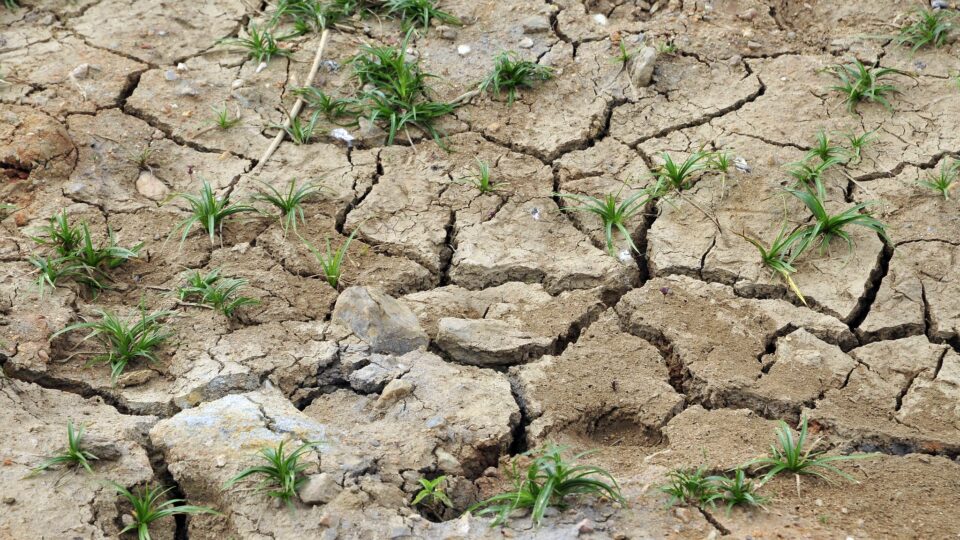
The Paris Climate Agreement is a global treaty adopted in 2015 to combat climate change by limiting global warming to well below 2°C above pre-industrial levels, while striving to keep it below 1.5°C.  But according to recent research, the planet is quickly approaching these critical thresholds. 

An international research team led by scientists from Colorado State University, Stanford University, and ETH-Zurich in Switzerland combined insights from 10 global climate models, and – with the help of artificial intelligence – found that regional warming thresholds are likely to be reached faster than previously thought.

In fact, the researchers found that most land regions will likely surpass the critical 1.5°C threshold by 2040 or even earlier.  Additionally, several regions are on track to exceed the 3.0°C threshold by 2060.  Regions including Central Europe, the Mediterranean, South Asia, and parts of sub-Saharan Africa are expected to reach these thresholds faster. 

The research team relied on transfer learning, a cutting-edge machine learning technique that leverages pre-trained models to tackle new, related tasks.

The research, which was recently published in the journal Environmental Research Letters, found that 34 regions are likely to exceed 1.5°C of warming by 2040.  Of those 34 regions, 31 of them are expected to reach 2°C of warming by 2040, and 26 of these 34 regions are projected to surpass 3°C of warming by 2060.

**********

Web Links

AI predicts that most of the world will see temperatures rise to 3C much faster than previously expected

Photo, posted February 23, 2011, courtesy of 2011 CIAT / Neil Palmer via Flickr.

Earth Wise is a production of WAMC Northeast Public Radio
Regrowing forests naturally

December 17, 2024 By EarthWise Leave a Comment

Naturally regrowing forests is best

Deforestation is one of the major causes of climate change and restoring and enhancing forests is a major activity around the world as a way to mitigate its effects.  There are high-profile initiatives to plant millions of trees, but these projects are often ill-conceived and poorly managed.

One of the most dramatic failures was the planting of over a million mangrove seedlings on the Filipino island of Luzon back in 2012.  A study 8 years later found that fewer than 2 percent of the trees had survived.  The rest died or were washed away.

The causes of failure in tree planting programs include planting of trees that become vulnerable to disease, competing demands for land, changing climate, planting in areas not previously forested, and a lack of aftercare including watering seedlings.

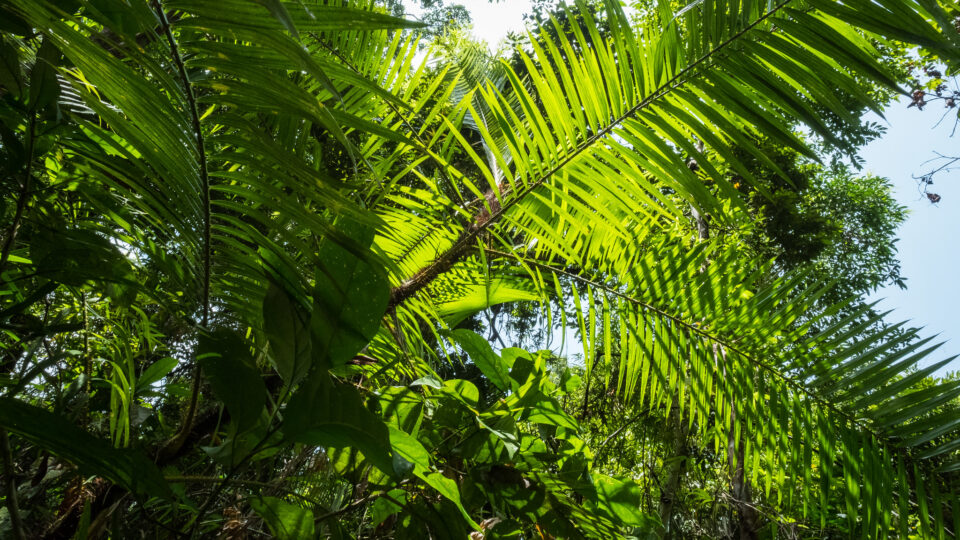
A multinational study recently published in Nature has found that forests could regrow naturally on more than 800,000 square miles of land around the tropics without the need for planting trees by hand.  This is an area larger than Mexico.

The researchers mapped areas where forests would be likely to regrow – areas where soils are healthy and where there is already forest nearby to supply seeds.  In some places, lands are so degraded that it is necessary to plant trees by hand, but this is costly and prone to failure.  Forests that regrow naturally tend to fare better and make better habitats for wildlife.

The effect of regrown forests on the climate would be very substantial.  If these forests were allowed to grow for three decades, they would absorb enough carbon to offset 50 years of emissions by Australia, the home of the lead researcher of the study. 

**********

Web Links

Tropical Forests Could Regrow Naturally on Area the Size of Mexico

Photo, posted February 16, 2018, courtesy of Jason Houston / USAID via Flickr.

Earth Wise is a production of WAMC Northeast Public Radio

Renegade geoengineering

October 30, 2024 By EarthWise Leave a Comment

Geoengineering inc

As the dangers of climate change continue to grow, so has interest in geoengineering – deliberate tinkering with the earth’s climate system.  In particular, stratospheric solar geoengineering – releasing aerosols into the stratosphere to reduce the amount of heat from the sun reaching the Earth – is attracting increasing interest.  Scientists at Harvard, Cornell, Colorado State, Princeton, and the University of Chicago are all researching the topic.

Actually doing it on a scale that matters is fraught with peril from unintended consequences of disrupting the delicate interactions between the Earth’s atmosphere, ocean, land, and sea ice. 

Meanwhile, a tiny start-up company in Silicon Valley has raised more than a million dollars in venture capital and is busy releasing balloons full of sulfur dioxide into the atmosphere in the name of combatting global warming.  Furthermore, they are selling so-called “cooling credits” to customers who want to offset their personal carbon emissions.

The aerosol being released is on such a small scale that it can’t possibly have a meaningful effect on temperatures.  There really isn’t scientific analysis guiding or accompanying the work. 

There are no laws prohibiting the dispersal of small amounts of sulfur dioxide in California.  Even if there were, these people could go offshore or elsewhere to do their work.  But this renegade geoengineering highlights a serious issue; namely, that there doesn’t have to be scientific, political, or any other kind of consensus for someone to undertake a potentially catastrophic attempt to alter the climate.  It’s a real worry.

**********

Web Links

Silicon Valley Renegades Pollute the Sky to Save the Planet

Photo, posted September 24, 2006, courtesy of Doc Searls via Flickr.

Earth Wise is a production of WAMC Northeast Public Radio
Solar energy on federal land

October 15, 2024 By EarthWise Leave a Comment

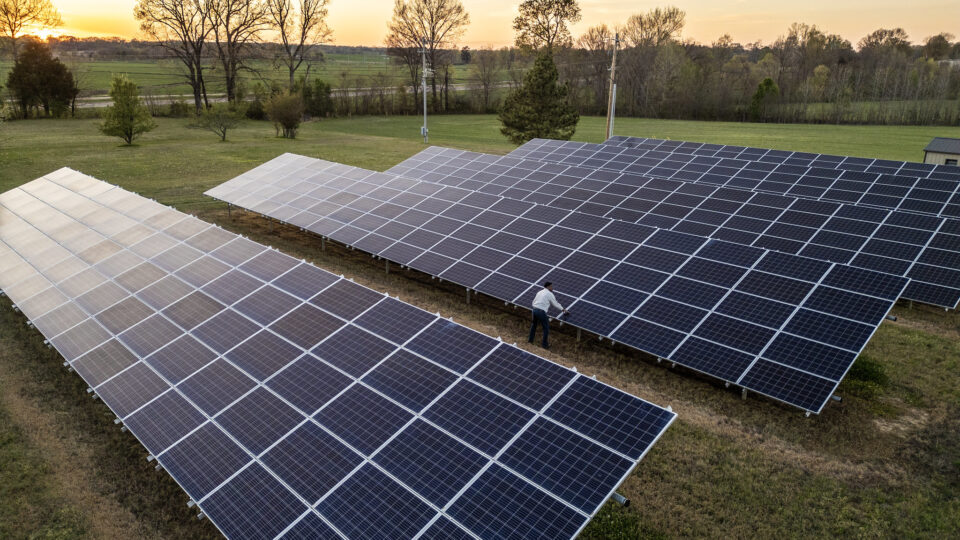
Officials at the federal Bureau of Land Management announced late in August that they had finalized a plan to add Oregon, Idaho, Montana, Washington, and Wyoming to the Western Solar Plan, which started during the Obama era.   The plan, created in 2012, provides permitting for solar projects on federal land.  The original plan included Arizona, California, Colorado, Nevada, New Mexico, and Utah.

The Western Solar Plan is a major expansion for clean energy production in the Bureau of Land Management’s land leasing portfolio.  For decades, the BLM has leased tens of millions of acres of federal land to fossil fuel companies for oil, coal, and natural gas exploration and production.

The new addition includes 1.1 million acres of land in Oregon, an area larger than the entire state of Rhode Island.  The land selected is deemed to be of low risk for any adverse environmental effects from solar installation, and the plots of land are all within 15 miles of existing or planned electrical transmission lines.  A little over 50% of Oregon’s land is owned by the federal government and is managed primarily by the Bureau of Land Management and the U.S. Forest Service.

The publication of the finalized plan at the end of August initiated a 30-day period for any participants in the initial planning to voice objections.  The governors of the 5 new states are reviewing the plan.  Final approval and adoption are expected later this year.

Western states need to expand solar and other clean energy production to meet their climate goals and federal lands will have to play an important role.

**********

Web Links

Plan would make 1 million acres of federal land in Oregon available for solar energy projects

Photo, posted May 20, 2024, courtesy of the U.S. Department of Agriculture via Flickr.

Earth Wise is a production of WAMC Northeast Public Radio
Solar farms and pollinators

September 30, 2024 By EarthWise Leave a Comment

Two important environmental challenges are finding some literal common ground:  the need to reduce carbon emissions and the fight to stave off global biodiversity collapse.  Both issues can be addressed at solar farms.

Solar energy is an important weapon in the battle against climate change.  But utility-scale solar farms take up large amounts of land.  Large-scale solar farms already take up nearly a thousand square miles of land in the US and will take up much more in the coming decades.

In the meantime, the biodiversity collapse is being driven in large part by habitat loss.

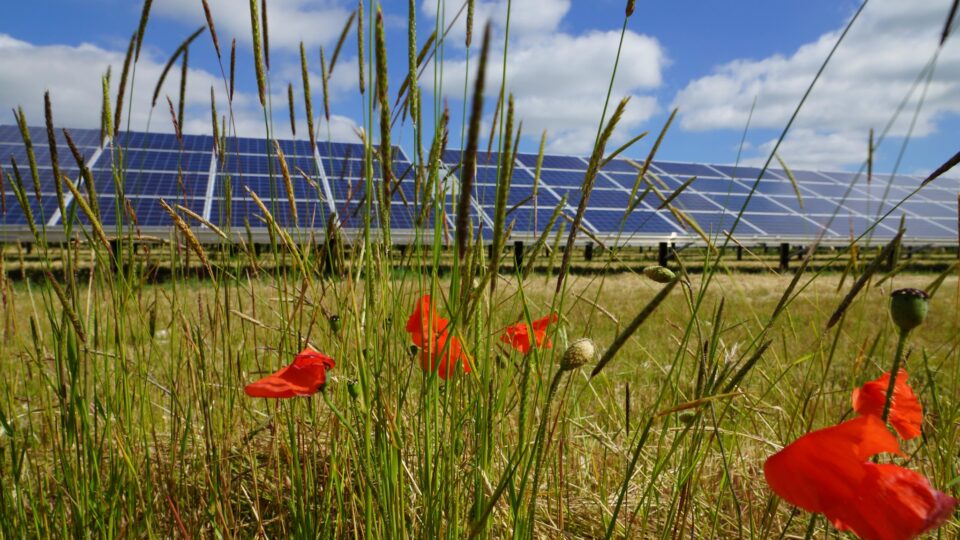
Given all this, solar farm operators, biologists, and environmentalists are teaming up to grow pollinator-friendly plants in and around solar farms. The plantings attract insects, birds and even mammals. The more plant diversity in the solar farms, the more environmental benefits can be achieved. 

There are costs associated with creating pollinator-friendly solar farms. Ideally, solar panels need to be installed at greater height than otherwise in order to permit growing many of the plants that attract bees and butterflies.  But there are economic benefits associated with attracting and sustaining pollinators.  On a cautionary note, there have already been cases of greenwashing, where solar operators claim environmental benefits far in excess of the scope of the actual efforts they have made. 

There are both governmental and non-governmental agencies seeking to assess and certify pollinator-friendly solar farms.  There is considerable variability in the ecological value of existing farms.  Pollinator-friendly solar farms are in their early days, but they have a lot to offer as a win-win strategy for the environment.

**********

Web Links

Solar Farms Have a Superpower Beyond Clean Energy

Photo, posted December 4, 2014, courtesy of Juwi Renewable Energies Limited via Flickr.

Earth Wise is a production of WAMC Northeast Public Radio

  • Page 1
  • Page 2
  • Page 3
  • Interim pages omitted …
  • Page 8
  • Go to Next Page »

Primary Sidebar

Recent Episodes

  • An uninsurable future
  • Clean energy and jobs
  • Insect declines in remote regions
  • Fossil fuel producing nations ignoring climate goals
  • Trouble for clownfishes

WAMC Northeast Public Radio
WAMC/Northeast Public Radio is a regional public radio network serving parts of seven northeastern states (more...)

Copyright © 2026 ·