• Skip to primary navigation
  • Skip to main content
  • Skip to primary sidebar

Earth Wise

A look at our changing environment.

  • Home
  • About Earth Wise
  • Where to Listen
  • All Articles
  • Show Search
Hide Search
You are here: Home / Archives for irreversible

irreversible

Modeling geoengineering

May 19, 2025 By EarthWise Leave a Comment

Modeling the impacts of geoengineering

As the impacts of climate change continue to mount up, there is increasing interest in radical intervention measures designed to keep a lid on rising global temperatures.  Such measures are fraught with potential dangers and unintended consequences but there is no guarantee that one or another of them might still be attempted in the future.  Increasing international interest in geoengineering as a potential strategy for mitigating climate change has created a pressing need to consider its impact before any potentially irreversible actions are taken.

The Natural Environment Research Council in the UK is funding four research projects aimed at understanding the potential consequences of solar radiation modification (SRM) being deployed in the real world.

SRM consists of methods to reflect some of the Sun’s radiation back into space instead of allowing it to reach and warm the earth. 

One approach is stratospheric aerosol intervention in which particles such as sulfates are introduced into the upper atmosphere to reflect sunlight thereby producing a dimming effect.   The idea is to mimic the effects of large volcanic eruptions, which naturally send sulfates into the atmosphere.

A second approach is marine cloud brightening, which increases the reflectivity of clouds over the ocean by spraying very small droplets of sea water into the air.  The fine particles of sea salt enhance cloud condensation nuclei, producing more cloud droplets and making clouds more reflective.

The research aims to deliver independent risk analyses to inform policymakers about the potential environmental impacts of SRM.

**********

Web Links

Scientists to model the impact of controlling Earth’s temperature by reflecting solar radiation

Photo, posted May 6, 2009, courtesy of Denys Zadorozhnyi via Flickr.

Earth Wise is a production of WAMC Northeast Public Radio

The dangers of deep sea mining

April 21, 2025 By EarthWise Leave a Comment

The dangers of deep sea mining are poorly understood

The White House is considering an executive order that would fast-track permitting for deep-sea mining in international waters and allow mining companies to bypass a United Nations-backed review process.

Deep sea mining is the extraction of minerals from the seabed in the deep ocean.  Most of the interest is in what are known as polymetallic nodules, which are potato-sized mineral deposits that have built up in layers over thousands of years. They are located several miles below the surface, primarily in what is called the Clarion-Clipperton zone, which is an environmental management area of the Pacific Ocean about halfway between Mexico and Hawaii.

A new multiyear study led by UK’s National Oceanography Center and published in the journal Nature found that the site of a deep-sea mining test in 1979 still showed lower levels of biodiversity than in neighboring undisturbed sites 44 years later.

Much is not known about the undersea nodules.  We know that they produce oxygen.  If the nodules are removed, will that reduce the amount of oxygen in the deep sea and affect the organisms that live there?  If mining occurs, what effect will the metal-containing sediment plumes churned up by the mining process have? 

The nodule fields sustain highly specialized animal and microbial communities.  More than 20 billion tons of nodules are estimated to lie on the seabed of the Clarion-Clipperton Zone.  If large-scale mining takes place, and there is much interest in that happening, it is important to find out what the impact will be on the ocean and its ecosystems because it is likely to be largely irreversible.

**********

Web Links

Deep sea mining for rare metals impacts marine life for decades, scientists say

Photo, posted September 4, 2014, courtesy of James St. John via Flickr.

Earth Wise is a production of WAMC Northeast Public Radio
The doomsday glacier

October 9, 2024 By EarthWise Leave a Comment

The doomsday glacier is melting

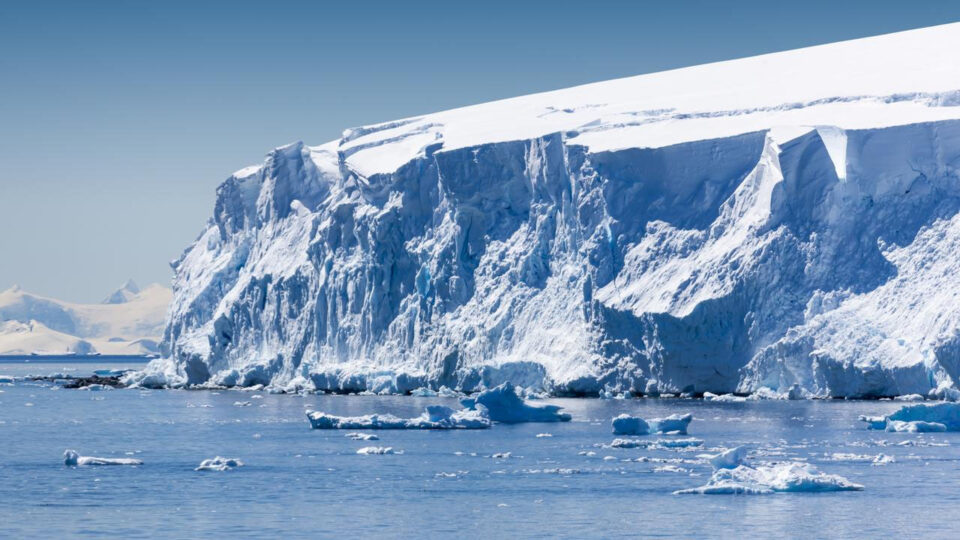
The Thwaites Glacier is an enormous Antarctic Glacier.  Its area is larger than that of Florida – in fact, larger than 30 other U.S. states – and it is melting.  It has been retreating for 80 years but has accelerated its pace in the past 30.  Its shedding of ice into the ocean already contributes 4% of global sea level rise.  If it collapsed entirely, it would raise sea levels by more than 2 feet.  For this reason, it has been dubbed the Doomsday Glacier.

A team of scientists has been studying it since 2018 in order to better understand what is happening within the glacier. They sent a torpedo-shaped robot to the glacier’s grounding line, which is the point at which the ice rises up from the seabed and starts to float.  The underside of Thwaites is insulated by a thin layer of cold water.  However, at the grounding line, tidal action is pumping warmer sea water at high pressure as far as six miles under the ice.  This is disrupting the insulating layer and is speeding up the retreat of the glacier.

The potential collapse of the glacier is not even the only massive risk it poses.  It also acts like a cork, holding back the vast Antarctic ice sheet.  If that ice sheet were ever to collapse, sea levels could rise 10 feet.

A critical unanswered question is whether the ultimate collapse of Thwaites Glacier is already irreversible.  There are regular heavy snowfalls that occur in the Antarctic which help replenish ice loss.  Whether nations’ progress in slowing climate change can change the balance between ice accumulation and ice loss on the glacier remains to be seen.

**********

Web Links

‘Doomsday’ glacier set to melt faster and swell seas as world heats up, say scientists

Photo, posted January 3, 2022, courtesy of Felton Davis via Flickr.

Earth Wise is a production of WAMC Northeast Public Radio
Thawing permafrost:  Is it a ticking timebomb?

July 8, 2024 By EarthWise Leave a Comment

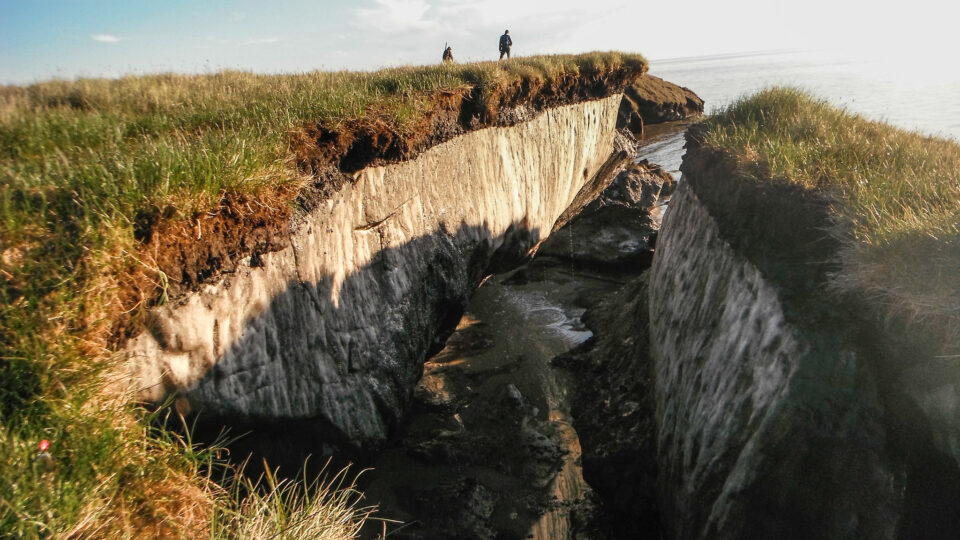
Permafrost covers about a quarter of the landmass in the Northern Hemisphere.  It stores vast quantities of organic carbon in the form of dead plant matter.  As long as it stays frozen, it is no threat to the climate.  But as it thaws, microorganisms start breaking down that plant matter and large amounts of carbon are released into the atmosphere in the form of carbon dioxide and methane.

This process has often been described as a ticking timebomb for the climate.  The theory is that once global warming reaches a certain level, the process will become self-amplifying setting off a catastrophic amount of warming.  If that level was reached, it would be a tipping point in the changing climate.

An international research team from the Alfred Wegener Institute in Germany has extensively researched this hypothesis.  Their conclusion is that within the permafrost, there are multiple geological, hydrological, and physical processes that are self-amplifying and, in some cases, irreversible.  However, these processes act only locally or regionally.  There is no evidence that some particular threshold in global warming could affect all permafrost and accelerate its thawing on a global level.

This research does not mean that Arctic permafrost is nothing to worry about.  In fact, there are ways in which it is more worrisome.  Because the permafrost is very heterogenous – meaning it is very different in different places – there will be numerous small, local tipping points that will be exceeded at different times and at different levels of warming.  All of this will proceed in step with global warming, contributing to the overall worsening situation.  There is no warming level below which permafrost thawing is not a problem.

**********

Web Links

Thawing permafrost: Not a climate tipping element, but nevertheless far-reaching impacts

Photo, posted January 24, 2014, courtesy of Brandt Meixell / USGS via Flickr.

Earth Wise is a production of WAMC Northeast Public Radio

Positive tipping points and climate

January 29, 2024 By EarthWise Leave a Comment

We often hear about tipping points and climate change.  Tipping points are critical thresholds that, when crossed, lead to large, accelerating, and often irreversible changes.  Some of the ones of concern with the climate are thawing permafrost, melting glaciers and ice sheets, and global temperatures reaching certain levels.  These are all tipping points that are essential to avoid.

A study published in the journal One Earth by researchers at the University of Exeter in the UK contends that in order to avoid the severe consequences of climate change, we need to trigger some positive tipping points.

Many climate-friendly changes are happening too slowly.  Triggering positive tipping points is a way to rapidly reach the high levels of decarbonization required to avoid triggering the negative tipping points of great concern.

Reaching a positive tipping point is a way that beneficial changes can rapidly gain momentum.  One example is the adoption of electric vehicles.  It has clearly reached a tipping point across Scandinavia and has happened rapidly.  Norway has managed to transition the market share of electric vehicles from under 10% to nearly 90% in less than 10 years.  At some point, everybody wanted an electric car.  This is evidence that positive tipping points can happen.

Many of the other forms of decarbonization need to move from their current level of adoption to rapid expansion.  A combination of affordability, attractiveness, availability, and political will are needed to trigger tipping points.  Exactly what those tipping point are is not necessarily known, but unless something accelerates the current pace of change, it will be very difficult to prevent negative climate tipping points from changing the world in destructive ways.

**********

Web Links

Positive tipping points must be triggered to solve climate crisis

Photo, posted July 8, 2023, courtesy of Michael Swan via Flickr.

Earth Wise is a production of WAMC Northeast Public Radio

Climate Change And Species Tipping Points | Earth Wise

June 22, 2023 By EarthWise Leave a Comment

In climate science, tipping points are critical thresholds that, once crossed, lead to large and often irreversible changes in the climate system. For example, surpassing a 1.5 degree C rise in global warming has long been considered a tipping point for the planet. 

According to a new study led by researchers from University College London, climate change will abruptly push species over tipping points as their geographic ranges reach unforeseen temperatures. 

In the study, which was recently published in the journal Nature Ecology and Evolution, the research team analyzed data from more than 35,000 species of animals and seagrasses from every continent and ocean basin, alongside climate projections up to 2100.  The researchers found a consistent trend:  for many animals, the thermal exposure threshold will be crossed for much of their geographic range within the same decade. 

The thermal exposure threshold is defined as the first five consecutive years where temperatures consistently exceed the most extreme monthly temperature experienced by a species across its geographic range over recent history. 

The researchers also found that the extent of global warming will make a big difference for animals.  If the planet warms by just 1.5°C, 15% of species studied will be at risk of experiencing unfamiliarly hot temperatures across at least 30% of their current  geographic range in a single decade.  But this figure will double to 30% of species at 2.5°C of warming.

Since their data provides an early warning system, the researchers hope that their findings will help species conservation efforts. 

**********

Web Links

Climate change to push species over abrupt tipping points

Photo, posted May 27, 2017, courtesy of Sarah Lemarié via Flickr.

Earth Wise is a production of WAMC Northeast Public Radio
Climate Change And The World’s Fisheries | Earth Wise

March 10, 2022 By EarthWise Leave a Comment

Climate change is affecting the world's fishing

According to a new study, approximately 70% of the world’s oceans could be suffocating from a lack of oxygen by 2080 as a consequence of climate change.  This has the potential to impact marine ecosystems all around the world.  

The study, which was recently published in the journal Geophysical Research Letters, is the first to use climate models to predict how and when deoxygenation will occur throughout the world’s oceans outside of its natural variability. 

According to the findings, significant and potentially irreversible deoxygenation of the ocean’s middle depths began occurring last year.  The models predict that deoxygenation will begin affecting all zones of the ocean by 2080.

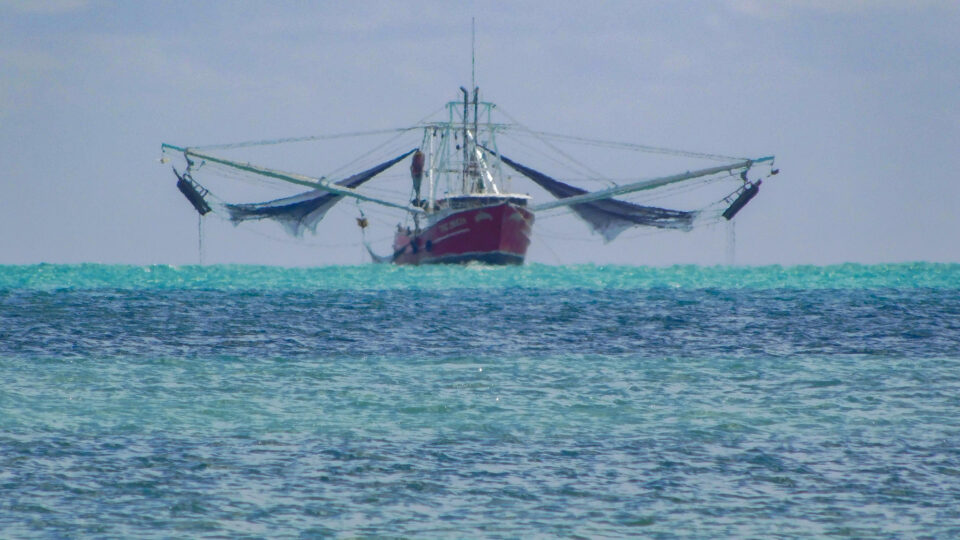
According to the study’s models, mid-ocean depths are already losing oxygen at unnatural rates. Globally, the ocean’s middle depth – known as the mesopelagic zone – is home to many of the world’s commercially fished species.  This makes these new findings a potential harbinger of economic hardship, seafood shortages, and environmental disruption. 

Just like land animals, aquatic animals need oxygen to breathe.  As climate change warms the oceans, the water holds less oxygen and is more buoyant than cooler water.  This leads to less mixing of oxygenated water near the surface with deeper waters, which naturally contain less oxygen.  Warmer water also raises oxygen demand among living organisms, resulting in less availability for marine life. 

The researchers also found that oceans closer to both the North Pole and the South Pole are particularly vulnerable to deoxygenation.  While they are not yet sure why, accelerated climate warming could be the culprit. 

These findings should add new urgency to climate change mitigation efforts. 

**********

Web Links

Climate change has likely begun to suffocate the world’s fisheries

Photo, posted January 28, 2019, courtesy of Joseph Gage via Flickr.

Earth Wise is a production of WAMC Northeast Public Radio.

Increasing Antarctic Ice Loss

July 31, 2018 By EarthWise Leave a Comment

https://earthwiseradio.org/wp-content/uploads/2018/07/EW-07-31-18-Increasing-Antarctic-Ice-Loss.mp3

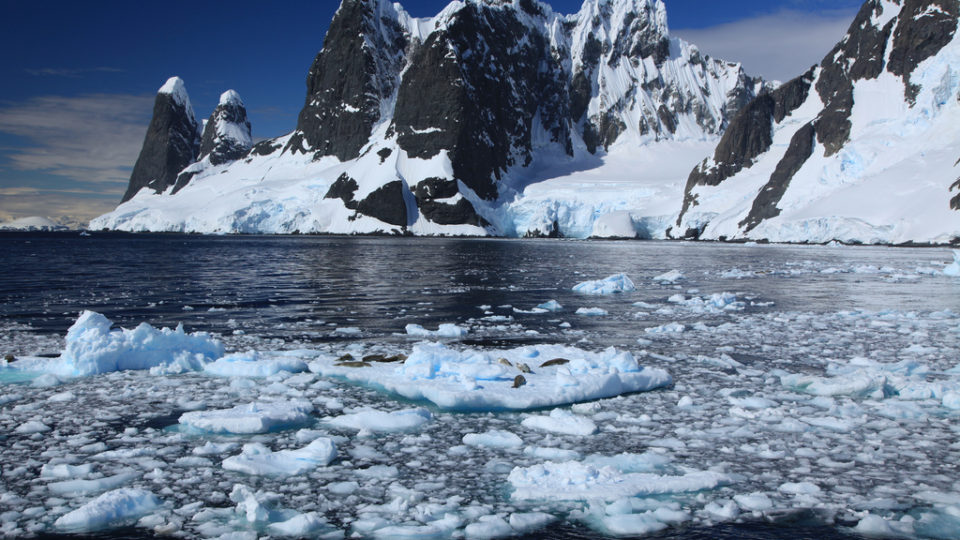
Antarctica’s ice sheets contain enough frozen water to raise sea levels globally about 190 feet.  Ice in the Antarctic is melting at a record-breaking rate and subsequent sea rises could have catastrophic consequences around the world.  So, it is no surprise that scientists have been closely tracking ice loss in recent decades to understand both the current and future impacts of climate change.

[Read more…] about Increasing Antarctic Ice Loss

Primary Sidebar

Recent Episodes

  • An uninsurable future
  • Clean energy and jobs
  • Insect declines in remote regions
  • Fossil fuel producing nations ignoring climate goals
  • Trouble for clownfishes

WAMC Northeast Public Radio

WAMC/Northeast Public Radio is a regional public radio network serving parts of seven northeastern states (more...)

Copyright © 2026 ·