• Skip to primary navigation
  • Skip to main content
  • Skip to primary sidebar

Earth Wise

A look at our changing environment.

  • Home
  • About Earth Wise
  • Where to Listen
  • All Articles
  • Show Search
Hide Search
You are here: Home / Archives for individuals

individuals

Distributed Wind Energy | Earth Wise

March 17, 2023 By EarthWise 1 Comment

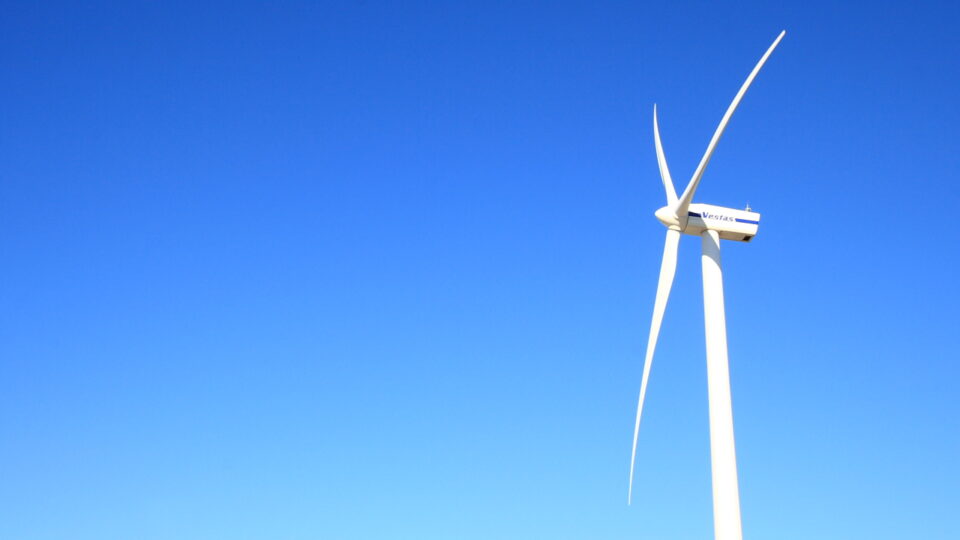
When we think about wind power, we are usually talking about increasingly giant windfarms – either on land or offshore – that produce power on a utility scale.  But there is also distributed wind energy, which refers to wind technologies in locations that directly support individuals, communities, and businesses.  

Distributed wind can be so-called behind-the-meter applications that directly offset retail electricity usage much as rooftop solar installations do.  It can also be front-of-the-meter applications where the wind turbines are connected to the electricity distribution system and supplies energy on a community scale.  Distributed wind installations can range from a several-hundred-watt little turbine that powers telecommunications equipment to a 10-megawatt community-scale energy facility. As of 2020, there were nearly 90,000 distributed wind turbines in the U.S. with a total capacity of about 1 GW.

A study by the National Renewable Energy Laboratory has estimated the potential for distributed wind energy in the U.S.   According to the new analysis, the country has the ability to profitably provide nearly 1,400 GW of distributed wind energy capacity. 

Entire regions of the country have abundant potential. The regions with the best economic prospects have a combination of high-quality wind, relatively high electricity rates, and good siting availability.  Overall, the Midwest and Heartland regions had the highest potential especially within agricultural land.

Realizing this outcome for distributed wind will require improved financing and performance to lower costs, relaxation of siting requirement to open up more land for wind development, and continued investment tax credits and the use of net metering.

**********

Web Links

U.S. has potential for 1,400 GW distributed wind energy, NREL finds

Photo, posted January 3, 2009, courtesy of skyseeker via Flickr.

Earth Wise is a production of WAMC Northeast Public Radio

Carbon Inequality | Earth Wise

November 4, 2022 By EarthWise Leave a Comment

Everyone contributes to climate change, but not equally

Everyone contributes to climate change through the generation of greenhouse gas emissions, but individual contributions vary greatly.   A study at the Paris School of Economics has determined that just 1 percent of the population is responsible for nearly a quarter of global carbon emissions growth since 1990.

The study estimated emissions from individuals’ consumption and their financial investments, and also from government spending in their country.  Individuals are responsible for carbon emissions as a result of their own activities, but they also bear their share of responsibility for the emissions of the firms that they own or invest in. 

In 2019, people living in sub-Saharan Africa produced an average of 1.8 tons of CO2 equivalent per capita.  In North America, the average per capita was more than 10 times higher.  Meanwhile, the top 10% of North America’s emitters produced more than 75 tons each.

From 1990 to 2019, the bottom 50% of emitters was responsible for just 16% of emissions growth, while the top 1% was responsible for 23%.  The top 0.1% saw emissions growth of 80%.

The inequality between rich and poor is driven more by inequality within countries than by inequality between countries.  This is particularly true for wealthy countries.  For example, over the study period, the top 1% saw their emissions grow by 26% while emissions actually declined 5-15% among low and middle earners even in wealthy nations.

Economic inequality drives a lot of the dynamics taking place within many countries around the world, and this even applies to pollution and greenhouse gas emissions.

**********

Web Links

Global carbon inequality over 1990–2019

Photo, posted December 11, 2017, courtesy of Bernal Saborio via Flickr.

Earth Wise is a production of WAMC Northeast Public Radio
Community Solar In New York | Earth Wise

April 18, 2022 By EarthWise Leave a Comment

Community solar booming in New York State

New York has now installed 1 GW of community solar capacity, which is more than any other state.

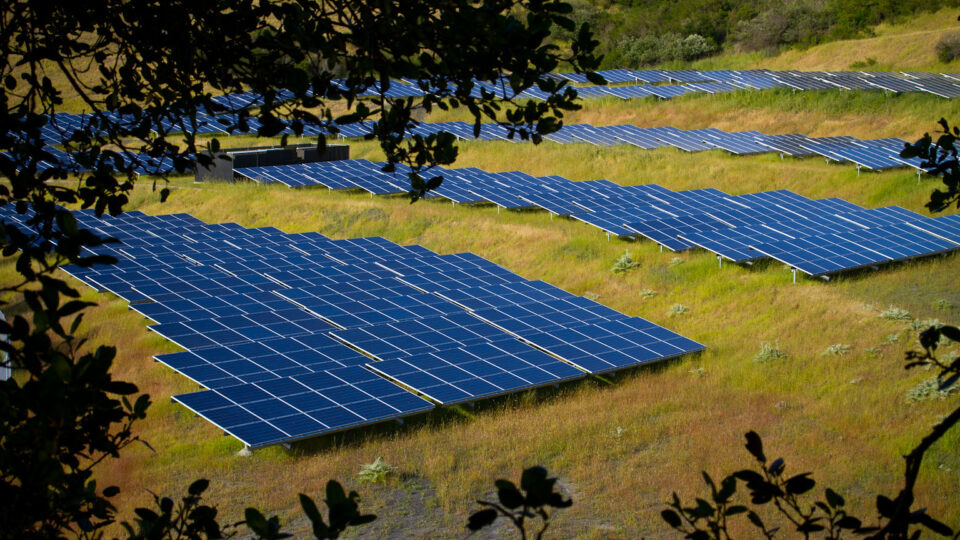
Community solar is a solar energy project within a geographic area for which the benefits flow to multiple customers such as individuals, businesses, nonprofits, or other groups.  For the most part, the customers benefit from energy being generated by solar panels located at an off-site array.  Customers typically buy or lease a portion of the solar panels in the array and then receive an electric bill credit for the electricity generated by their share of the community solar system.  It is a great option for people who can’t install their own solar panels because they don’t own their home, don’t have a suitable location for various reasons, or have financial constraints.

Community solar in New York now generates enough electricity to power 209,000 homes.  Community solar installations accounted for 70% of New York’s solar additions in 2021 and the state has a pipeline of 708 more projects totaling 2.3 gigawatts.

The NY-Sun program run by NYSERDA since 2011 has directed over $200 million to low-to-moderate income households as part of its Solar Energy Equity Framework. 

Growing community solar depends strongly on policy expansion.  At this point, 19 states and D.C. have established policies and programs to support community solar adoption.  The federal government set a goal of powering 5 million American homes with community solar over the next five years.  With 30% of the country’s current community solar capacity, New York is leading the way.

**********

Web Links

New York reaches 1 GW community solar milestone

Photo, posted May 24, 2011, courtesy of Michael Mees via Flickr.

Earth Wise is a production of WAMC Northeast Public Radio.

Offsetting Reef Acidification | Earth Wise

August 13, 2021 By EarthWise Leave a Comment

Could artificial ocean alkalinization help offset reef acidification?

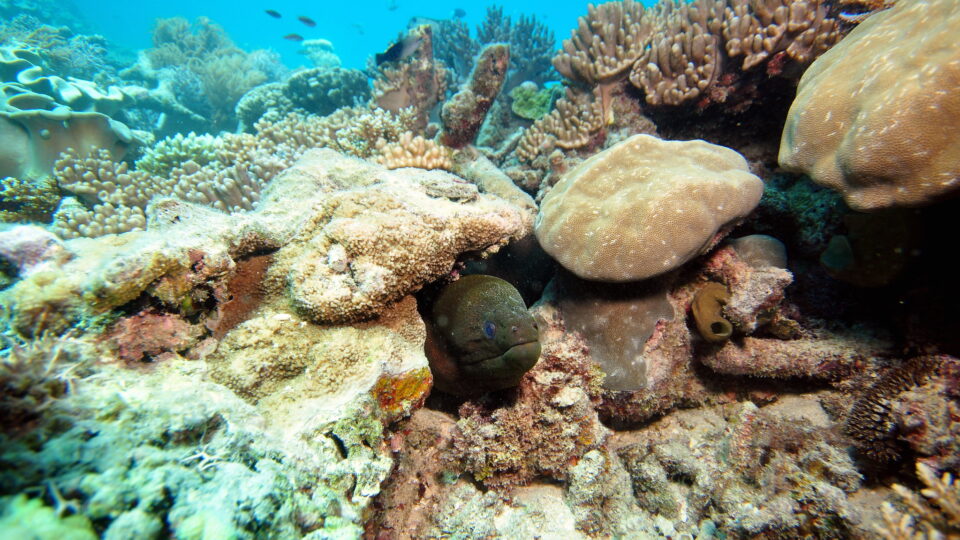
The Great Barrier Reef is the world’s largest coral reef system.  It is composed of nearly 3,000 individual reefs and 900 islands covering an area of more than 130,000 square miles.  In recent times, it has been under unprecedented stress from ocean warming, tropical cyclones, sediment and nutrient runoff, marine pests, and ocean acidification.

Among these stressors, ocean acidification is one of the most significant threats to the long-term viability of the reef because acidification affects the ability of corals to rebuild and repair their structures and recover from bleaching events.

New research from CSIRO, Australia’s national science agency, studied the impact of artificial ocean alkalinization on the acidity of the waters in the Great Barrier Reef.  The idea is to inject a source of alkalinity into the ocean, an accelerated version of a natural process that occurs from the chemical weathering of minerals under the sea.

The results of the study, published in the journal Environmental Research Letters, are that injecting an alkalinizing agent into the ocean along the length of the Reef would make it possible to offset ten years’ worth of ocean acidification based on the present rate of human-generated carbon emissions.  Such an effort could use an abundant mineral resource like olivine, which is already mined near the Great Barrier Reef.  Releasing 30,000 tons a day of the alkalinizing agent from an existing shipping line from a bulk carrier would reach almost the whole of the Great Barrier Reef.

In response to the declining health of coral reef ecosystems, many different intervention concepts and technologies are under consideration.  The goal of these would be to minimize environmental pressures and enhance the resilience of the ecosystems.

**********

Web Links

Projected acidification of the Great Barrier Reef could be offset by ten years

Photo, posted August 4, 2019, courtesy of Larry Koester via Flickr.

Earth Wise is a production of WAMC Northeast Public Radio.

Being Ready For Adverse Weather

December 25, 2017 By EarthWise Leave a Comment

https://earthwiseradio.org/wp-content/uploads/2017/12/EW-12-25-17-Being-Ready-for-Adverse-Weather.mp3

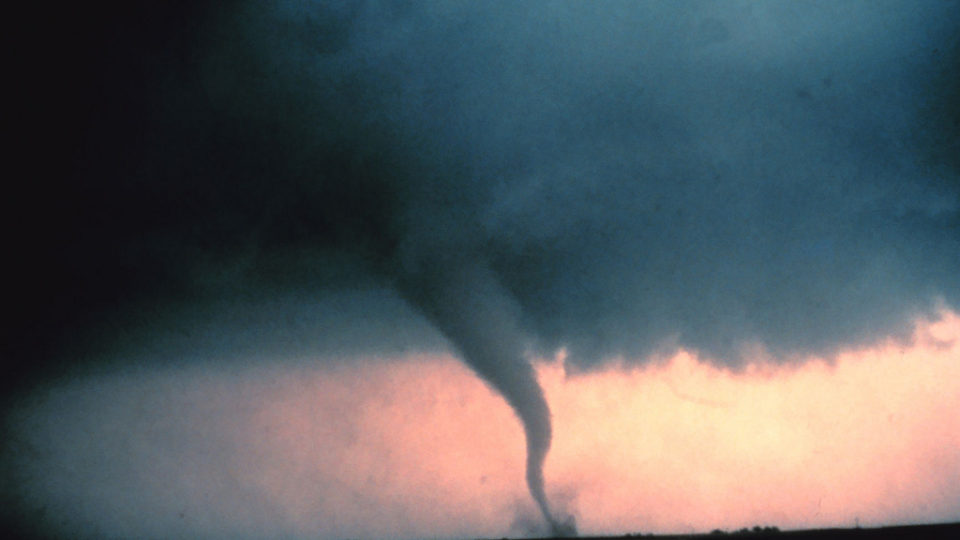
Severe weather is a major cause of death and destruction.   Recent hurricanes provided all too many examples.   The catastrophic flooding from Hurricane Harvey led to more than 60 deaths and necessitated thousands of emergency rescues.   And yet, increasingly, weather events like hurricanes don’t occur without warning and accurate weather forecasts are increasingly common.

[Read more…] about Being Ready For Adverse Weather

Primary Sidebar

Recent Episodes

  • An uninsurable future
  • Clean energy and jobs
  • Insect declines in remote regions
  • Fossil fuel producing nations ignoring climate goals
  • Trouble for clownfishes

WAMC Northeast Public Radio

WAMC/Northeast Public Radio is a regional public radio network serving parts of seven northeastern states (more...)

Copyright © 2026 ·