• Skip to primary navigation
  • Skip to main content
  • Skip to primary sidebar

Earth Wise

A look at our changing environment.

  • Home
  • About Earth Wise
  • Where to Listen
  • All Articles
  • Show Search
Hide Search
You are here: Home / Archives for house

house

Neighborhood geothermal energy

December 30, 2024 By EarthWise Leave a Comment

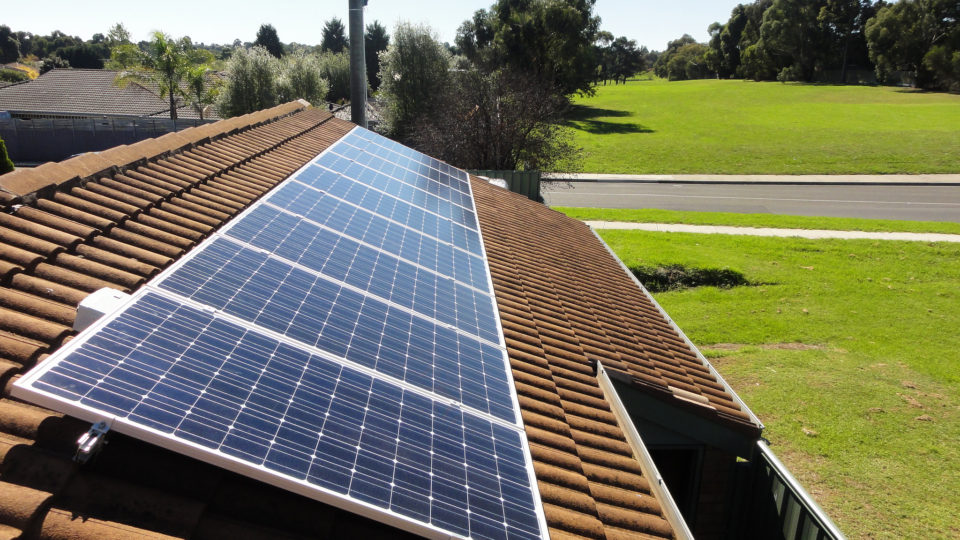
Residential geothermal energy makes use of the constant, year-round temperature of the earth below the surface to efficiently provide both heating and cooling for a home.  In the summer, the cool earth beneath a house sits at about 55 degrees and can be tapped into with a heat pump to provide cooling.  In the winter, that 55-degree underground expanse provides a much warmer source of air to heat instead of the often freezing-cold air outside.  Geothermal systems are appealing because they use far less energy than other sources of heating and cooling.

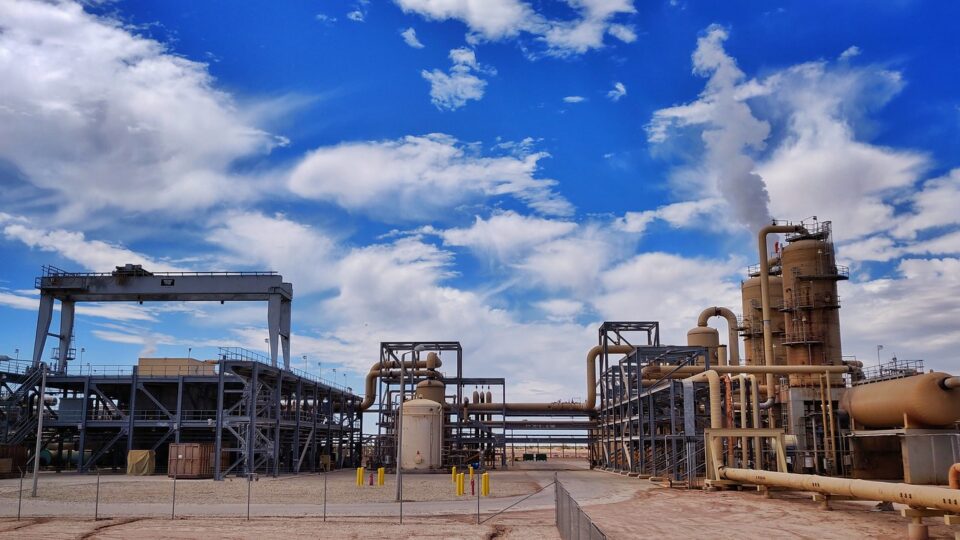
Using geothermal energy to heat and cool buildings is nothing new.  But after years of planning and months of drilling into the ground, the first neighborhood-scale geothermal heating and cooling project has come online in Framingham, Massachusetts.

The project ties together 31 residential and five commercial buildings that share the underground infrastructure needed to heat and cool them.  This sort of shared geothermal system has previously been used on college campuses and similar places, but never before across a neighborhood in the United States.

The $14 million project, built by Eversource, broke ground in June 2023, and comprises 90 boreholes or wells drilled 600-700 feet underground. Approximately 135 customers are connected to the system, including low- and moderate-income customers, apartment buildings, a gas station, and a kitchen cabinet showroom.

A total of 13 states, including Massachusetts and New York, are considering pilot projects or advancing legislation that would allow gas utilities to develop networked geothermal heating and cooling.

**********

Web Links

First-in-the-Nation Geothermal Heating and Cooling System Comes to Massachusetts

Photo, posted September 30, 2019, courtesy of Stephen D. Strowes via Flickr.

Earth Wise is a production of WAMC Northeast Public Radio

Why Do Woodpeckers Peck? | Earth Wise

October 21, 2022 By EarthWise Leave a Comment

Scientists understand why woodpeckers peck

Most of us have heard the sound of a woodpecker drumming on a nearby tree, or unfortunately, on the walls of our house where it can be very destructive.  We were often told that the birds were hunting for insects inside the wood, or perhaps trying to open up a nest. But a new study at Brown University has found evidence that woodpeckers are just additional musicians in the bird orchestra who happen to be percussionists.

The researchers studied the forebrains of birds and found characteristic gene expression specializations in songbirds.  Songbirds sing to communicate for various reasons – such as staking out territory or seeking mates.  The study looked at birds that are not known to sing, such as the emu, penguin, flamingo, and woodpeckers.  It turns out that among these, only woodpeckers had forebrains that anatomically resembled those of songbirds.  The study is the first time a neural basis has been identified for the communication activities of animals other than primates.

There are over 200 species of woodpeckers around the world and each species has its own characteristic drumming speed and rhythms.  Woodpecker drumming may well have evolved through a form of vocal learning, which is the way songbirds learn to make their own melodious sounds.  And like the calls of songbirds, these drumming patterns change depending on what the birds want to communicate and to whom.

So, the little downy woodpecker that is poking holes in your walls is probably not hunting for insects.  It is more likely to be telling another woodpecker to get out of its territory.

**********

Web Links

Why do woodpeckers peck? New discovery about bird brains sheds light on intriguing question

Photo, posted June 15, 2021, courtesy of Tony Oldroyd via Flickr.

Earth Wise is a production of WAMC Northeast Public Radio
visit site by the doctor who prescribed the drug. Prescription. If the drug is sold in Russia without a prescription, it is necessary to make sure that the drug will also be sold abroad without it. You can find out in advance and, for example, write a letter to a specific pharmacy abroad, or you can be reinsured and ask to make a prescription form for the drug from your doctor.

Sand From Mining Waste | Earth Wise

May 10, 2022 By EarthWise Leave a Comment

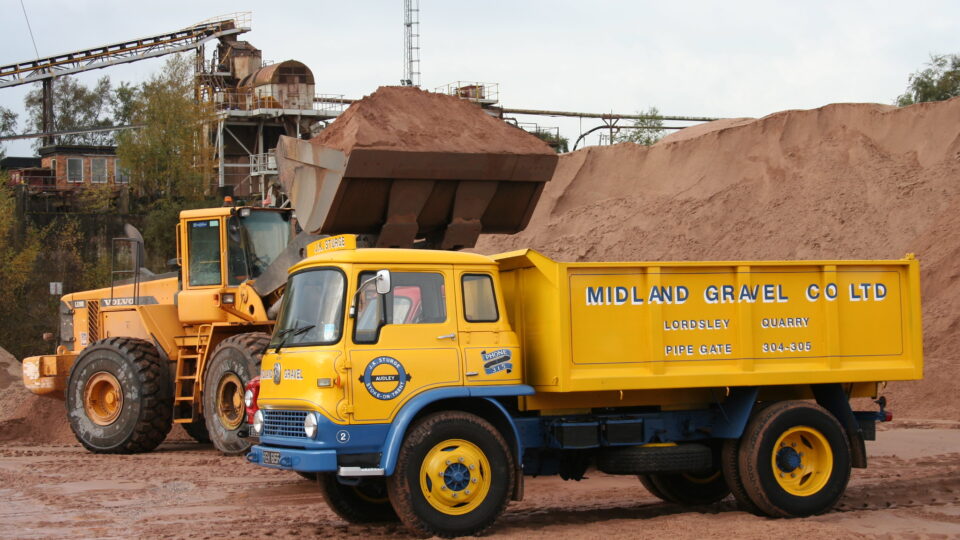
The natural resources people use the most are air and water.  It may come as a surprise that in third place is sand.  Sand is used to make glass, computer chips, toothpaste, cosmetics, food, wine, paper, paint, plastics, and more.  It is estimated that 50 billion tons of sand are used each year.

Concrete is 10% cement, 15% water, and 75% sand.  The concrete required to build a house takes on average 200 tons of sand, a hospital uses 3,000 tons, and a mile of a highway requires 15,000 tons.

One would think that there is no shortage of sand, but we are using it up faster than the planet can make it and the extraction of sand from seas, rivers, beaches, and quarries has negative impacts on the environment and surrounding communities.  For example, removing sand leads to erosion in riverbanks, significantly increasing the risk of flooding in some places.

A potential strategy to reduce the impact of extracting sand to meet society’s growing need for is also a strategy for helping to reduce the production of mineral mining waste, which is the largest waste stream on the planet.  Mining produces between 33 and 66 billion tons of waste material each year.

A new study by researchers in Switzerland and Australia looked at the potential for using mining waste as a source of so-called ore-sand.  Sand-like material left over from mining operations could be used for many current applications for sand.  Separating and repurposing these materials before they are added to the waste stream would not only reduce the volume of waste being generated by mining operations but would also create a responsible new source of sand.

**********

Web Links

Solution to world’s largest waste stream: Make sand

Photo, posted October 22, 2005, courtesy of Alan via Flickr.

Earth Wise is a production of WAMC Northeast Public Radio.

Mandatory Solar In California

May 30, 2018 By EarthWise Leave a Comment

https://earthwiseradio.org/wp-content/uploads/2018/05/EW-05-30-18-Mandatory-Solar-in-California.mp3

In May, California became the first state in the U.S. to require solar panels on almost all new homes.  Under new standards adopted by the California Energy Commission, most new homes, condos and apartment buildings built after January 1, 2020 will be required to include solar systems.

[Read more…] about Mandatory Solar In California

Water From Thin Air

May 26, 2017 By EarthWise

https://earthwiseradio.org/wp-content/uploads/2017/05/EW-05-26-17-Water-from-Thin-Air.mp3

Scientists at UC Berkeley and MIT have demonstrated a water harvester that uses only sunlight to pull liters of water out of the air each day in conditions as low as 20% humidity, a level common in arid areas.

[Read more…] about Water From Thin Air

Primary Sidebar

Recent Episodes

  • An uninsurable future
  • Clean energy and jobs
  • Insect declines in remote regions
  • Fossil fuel producing nations ignoring climate goals
  • Trouble for clownfishes

WAMC Northeast Public Radio

WAMC/Northeast Public Radio is a regional public radio network serving parts of seven northeastern states (more...)

Copyright © 2025 ·