• Skip to primary navigation
  • Skip to main content
  • Skip to primary sidebar

Earth Wise

A look at our changing environment.

  • Home
  • About Earth Wise
  • Where to Listen
  • All Articles
  • Show Search
Hide Search
You are here: Home / Archives for hottest

hottest

The UK is heating up

August 5, 2025 By EarthWise Leave a Comment

Record-breaking heat in the UK

June and July have both seen multiple days with temperatures in the 90s in London, England.  This is almost unheard of, but according to British scientists, record-breaking extreme weather has become the new norm in the UK.

Weather records show that the UK’s climate is different now compared with just a few decades ago.  The number of days with temperatures 9 degrees Fahrenheit above the average from 1961-1990 has doubled in the last 10 years.  For days 14 degrees above average, the number has tripled, and for 18 degrees above average, it has quadrupled. 

Apart from the higher temperatures, rain in the UK has become more intense.  The number of months where counties receive at least double their average rainfall has risen by 50% in the past 20 years.  Sea level around the UK is rising faster than the global average, worsening the impact of coastal flooding.

An estimated 600 people died as a result of the heatwave that hit England and Wales at the end of June.  Scientists calculated that the extreme high temperatures were made 100 times more likely to have occurred as a result of climate warming.

The UK has some of the longest duration meteorological records in the world.  Those records show that recent temperatures have far exceeded any in at least 300 years.  The last three years were among the UK’s five hottest years on record. 

Today’s record-breaking temperatures are likely to be average by 2050 and positively cool by 2100, according to scientists.

**********

Web Links

‘Profound concern’ as scientists say extreme heat ‘now the norm’ in UK

Photo, posted February 4, 2018, courtesy of Hannes Flo via Flickr.

Earth Wise is a production of WAMC Northeast Public Radio
New highs for carbon dioxide

April 11, 2025 By EarthWise Leave a Comment

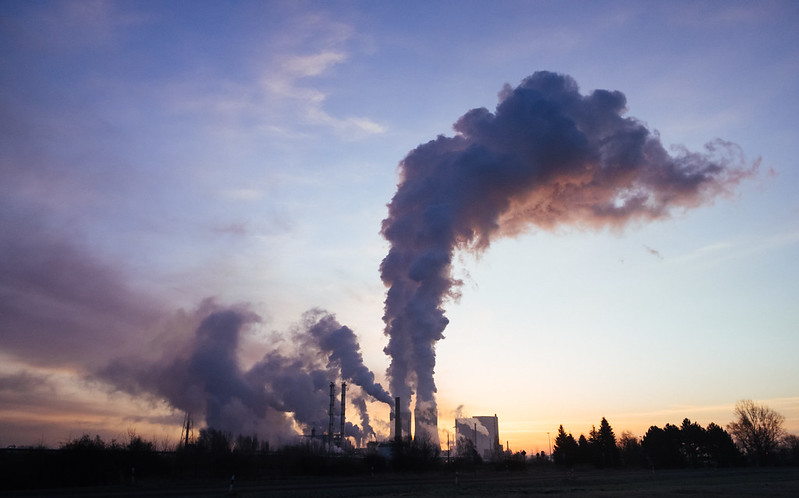
New highs reached for global carbon dioxide emissions

Last year was the hottest year on record and the ten hottest years on record have in fact been the last ten years.  Ocean heat reached a record high last year and, along with it, global sea levels.  Those are rising twice as fast as they did in the 1990s.

The World Meteorological Organization reports that the global atmospheric concentration of carbon dioxide reached a new observed high in 2023, which is the latest year for which global annual figures are available.  The level was 420 ppm, which is the highest level it has been in 800,000 years. 

The increase in carbon dioxide levels was the fourth largest one-year change since modern measurement began in the 1950s.  The rate of growth is typically higher in El Niño years because of increases from fire emissions and reduced terrestrial carbon sinks.

Concentrations of methane and nitrous oxide – which are two other key greenhouse gases – also reached record high observed levels in 2023.  Levels of both of these gases have also continued to increase in 2024.

The annually averaged global mean near-surface temperature in 2024 was 1.55 degrees Celsius above the 1850-1900 average.  Apart from being the warmest year in the 175 years records have been kept, it is also above the 1.5-degree limit set as the goal of the Paris Climate Agreement.  While a single year above 1.5 degrees of warming does not mean that the efforts to limit global warming have failed, it is a strong warning that the risks to human lives, economies, and the planet are increasing.

**********

Web Links

Carbon Dioxide Levels Highest in 800,000 Years

Photo, posted January 30, 2018, courtesy of Johannes Grim via Flickr.

Earth Wise is a production of WAMC Northeast Public Radio

The warmest year on record

February 14, 2025 By EarthWise Leave a Comment

2024 was the warmest year on record

It came as no surprise that 2024 ended up as the warmest year on records. It was the hottest year since record keeping began in 1880.  The global average temperature was 1.28 degrees Celsius (or 2.3 degrees Fahrenheit) above the 20th-century baseline period of 1951-1980.  It was actually 1.47 degrees above the 1850-1900 average.

The Paris Climate Agreement has a goal to keep the global average temperature increase below 1.5 degrees Celsius over the long term.  Long term is specified because for more than half of 2024, average temperatures were more than 1.5 degrees above the baseline.

The temperature of an individual year can be influenced by various natural climate fluctuations, such as the presence of an El Niño or a La Niña condition in the Pacific, or volcanic eruptions.  A strong El Niño began in 2023 and continued throughout much of 2024.  That El Niño has abated, so it is no longer a factor in the global climate condition.

The global temperature is determined using surface air temperature data collected from thousands of meteorological stations as well as sea surface temperature data collected by ships and buoy-based instruments. 

When the climate changes, it is observed first in the global mean temperature.  Then there are changes seen on a continental scale and then at the regional scale.  Finally, changes are observable at the local level.  These changes are becoming more and more common as people’s everyday weather experiences become different from any they had encountered before.

**********

Web Links

2024 Was the Warmest Year on Record

Photo, posted August 26, 2015, courtesy of Saskia Madlener / NASA via Flickr.

Earth Wise is a production of WAMC Northeast Public Radio

Unexplained heat wave hotspots

December 27, 2024 By EarthWise Leave a Comment

2023 and 2024 have been the hottest years since records have been kept.  But above and beyond the upward march of average temperatures around the globe, there has been the phenomenon of distinct regions across the globe experiencing repeated heatwaves that are so extreme that they cannot be accounted for in any models of global warming.

A new study by Columbia University’s Climate School has provided the first worldwide map of such regions, which have emerged on every continent except Antarctica.  Heatwaves in these regions have killed thousands of people, withered crops and forests, and triggered devastating wildfires.

These recent regional-scale record-breaking temperature extremes have raised questions about whether current climate models can provide adequate estimates of the relationship between global mean temperature changes and regional climate risks.

Some of these regional events in recent years include a nine-day heatwave in the U.S. Pacific Northwest and southwestern Canada in June 2021 that broke daily records in some places by 54 degrees Fahrenheit.  Across Germany, France, the UK, the Netherlands, and other countries, the hottest days of the year are warming twice as fast as the summer mean temperatures. 

There is yet little understanding of the phenomenon.  Some theories related to destabilization of the jet stream don’t really explain all the temperature extremes observed.  But regardless of the underlying causes, the health impacts of these heat waves are severe, as are the effects on agriculture, vegetation, and infrastructure.  Society is not built to quickly adapt to them.

**********

Web Links

Unexplained Heat Wave ‘Hotspots’ Are Popping Up Across the Globe

Photo, posted August 16, 2022, courtesy of Alisdare Hickson via Flickr.

Earth Wise is a production of WAMC Northeast Public Radio

Rivers are drying up

November 4, 2024 By EarthWise Leave a Comment

Rivers are drying up around the world

According to a new U.N. report, the world’s rivers had their driest year in at least three decades.  Record heat and droughts in many places contributed to low levels of water in many of the world’s rivers.

The world faces problems of either too much or too little water. The warming climate has fueled both powerful storms with heavy rainfall and intense droughts around the globe. 

Last year was the hottest year on record, and it’s a record that is unlikely to last long.  The Mississippi River and Amazon River basins were at all-time lows.  Major rivers with headwaters in the Himalayas – the Ganges, Brahmaputra, and Mekong Rivers – were all unusually dry.

According to the World Meteorological Organizations State of Global Water Resources Report, nearly half of the nearly 1,000 rivers tracked around the world had below-normal levels of water.  Only 17% had above-average levels.  Over the past 32 years, on average only a quarter of the rivers monitored had below-normal water levels and last-year’s 45% was the largest ever.

Last year’s severe heat shrank glaciers that are a crucial source of meltwater that feeds rivers.  Glaciers lost more ice last year than they have in at least 50 years.

More than half of the world’s population lives within a couple of miles of a body of fresh water.  The places with the highest population densities around the world are almost all near large rivers.  Rivers provide freshwater for irrigation, consumption, and transportation and are an important source of energy. Historically, they have played an important role in the development of human society.  The shrinking of rivers is a big deal.

**********

Web Links

World’s Rivers Are Driest They Have Been in Decades

Photo, posted August 22, 2023, courtesy of Radek Kucharski via Flickr.

Earth Wise is a production of WAMC Northeast Public Radio

And the heat goes on

October 16, 2024 By EarthWise Leave a Comment

August 2024 was the hottest August in the 175-years for which there are global records.  The last full month of summer also wrapped up the Northern Hemisphere‘s warmest summer on record.

The average global surface temperature in August was 62.39 degrees Fahrenheit, which is 2.29 degrees above the 20th century August average.  Furthermore, August was the 15th consecutive month of record-high global temperatures, which is a record in and of itself.

Regionally, Europe and Oceana had their warmest August on record.  Asia had its second-warmest August, and Africa and North America had their third-warmest August.

The summer in the Northern Hemisphere was a record-breaker with a temperature 2.74 degrees Fahrenheit above average.  Thinking about climate goals, this is 1.52 degrees Celsius above average, which is a troubling amount.  Meanwhile, in the Southern Hemisphere, where it was winter in the June-to-August period, it was also the warmest ever with a temperature 1.73 degrees Fahrenheit above average.

Globally, this year to date ranks as the warmest ever recorded with a temperature 2.3 degrees above the 20th-century average.  With a few months to go, the prediction is that there is a 97% chance that 2024 will rank as the world’s warmest year on record.

Other aspects of the global climate system were consistent with these record-breaking temperatures.  The global ocean surface temperature for June through August was the warmest on record. 

These monthly climate reports have an unfortunate similarity:  the heat goes on.

**********

Web Links

Earth had its hottest August in 175-year record

Photo, posted June 22, 2021, courtesy of Vicky Brock via Flickr.

Earth Wise is a production of WAMC Northeast Public Radio

A month of extra-hot days

June 19, 2024 By EarthWise Leave a Comment

Climate change increasing number of hot days each year

The past 12 months have been the hottest ever measured across the globe.  This may not be everyone’s experience in every location, but the average person on Earth experienced 26 more days of abnormally high temperatures than they would have in the absence of climate change.

Researchers considered a given day’s temperature to be abnormally high in a particular location if it exceeded 90% of the daily temperatures recorded there between 1991 and 2020.  Nearly 80% of the world’s population experienced at least 31 days of abnormal warmth since May of 2023.  Theoretically, the number of unusually warm days would have been far fewer in the absence of global warming.

In some countries, the extra-warm days added up to two or three weeks.  In others, such as Colombia, Indonesia, and Rwanda, there were up to 4 months of them. The average American experienced 39 days of extra-warm temperatures since last May.

Scientists also added up how many extreme heat waves the planet experienced since last May.  These are defined as episodes of unseasonable warmth across a large area, lasting three or more days, and causing significant loss of life or disruption to infrastructure or industry.  In total, the researchers identified 76 such episodes, affecting 90 countries, on every continent except Antarctica.

The world’s climate is now shifting toward the La Niña phase of the cyclical pattern called the El Niño-Southern Oscillation. This usually leads to cooler temperatures on average, but the recent heat could have lingering effects on weather and storms for months to come, including what is expected to be an extraordinarily active Atlantic hurricane season.

**********

Web Links

Climate Change Added a Month’s Worth of Extra-Hot Days in Past Year

Photo, posted December 21, 2011, courtesy of Maggie Lin Photography via Flickr.

Earth Wise is a production of WAMC Northeast Public Radio
Rising fossil fuel emissions

April 22, 2024 By EarthWise Leave a Comment

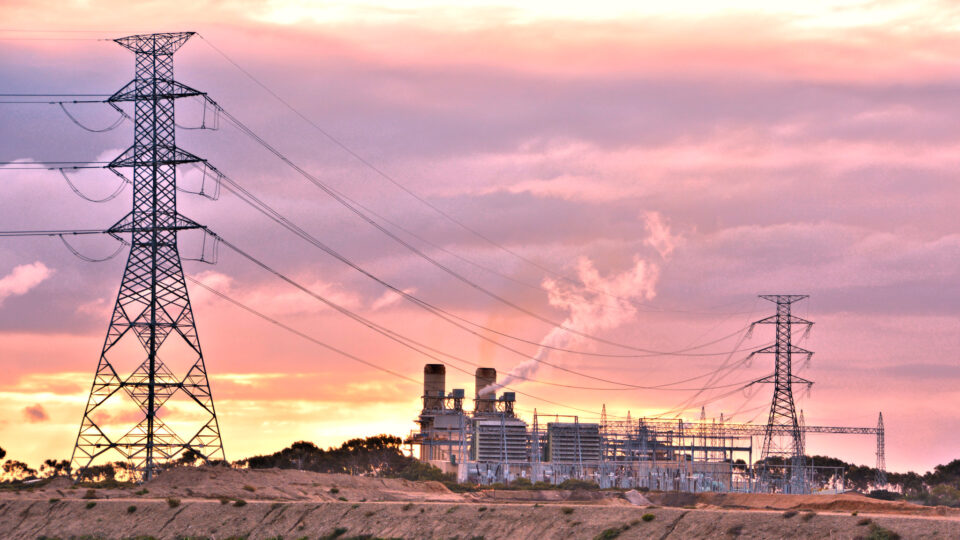
Fossil fuel emissions are rising globally

Almost every nation in the world has pledged to reduce carbon dioxide emissions.  There is expanding use of renewable energy sources and growing numbers of electric cars.  But despite all this, carbon dioxide emissions from fossil fuels rose again in 2023, reaching record levels.

The world’s population continues to grow and nations with large, rapidly growing populations are becoming increasingly industrialized and are embracing more and more of the trappings of modern life.  As a result, the global burning of oil, coal, and natural gas is increasing.

Analysis of 2023 date shows that emissions from fossil fuels rose 1.1 percent compared to 2022 levels.  The total fossil fuel emissions in 2023 was 40 billion tons of carbon dioxide. 

Clearly, the world continues to head in the wrong direction in order to limit global warming.  The concentration of carbon dioxide in the atmosphere has increased from about 278 parts per million in 1750 – considered to be the start of the industrial era – to 420 parts per million in 2023.

The rise in heat-trapping carbon dioxide along with other greenhouse gases such as methane is the primary reason that the planet’s temperature is continuing to rise.  The average global surface temperature in 2023 was 1.2 degrees Celsius – or 2.1 degrees Fahrenheit – higher than it was in the NASA baseline period of 1951-1980.  Last year was the hottest year on record.  Unfortunately, the rise in global ocean temperature was even larger, compounding the effects of global warming.

**********

Web Links

Emissions from Fossil Fuels Continue to Rise

Photo, posted June 22, 2020, courtesy of John Morton via Flickr.

Earth Wise is a production of WAMC Northeast Public Radio

The hottest year on record

December 26, 2023 By EarthWise Leave a Comment

Barring some sort of massive global deep freeze late in the year, it was increasingly obvious by November that 2023 was going to be the hottest year ever recorded.  After analyzing data that showed the world saw its warmest ever November, experts around the world made the call early in December.

According to the European Union’s Copernicus Climate Change Service, from January to November 2023, global average temperatures were the highest on record – 1.46 degrees Celsius or 2.6 degrees Fahrenheit above the pre-industrial average.  Given that the Paris Climate Accord has the goal of keeping warming below 1.5 degrees Celsius, 2023 has been an alarmingly hot year.

November itself was 1.75 degrees warmer than the pre-industrial average.  The average surface air temperature for the planet was 14.22 degrees Celsius or about 57.6 degrees Fahrenheit.  Now 57 degrees doesn’t sound all that warm, but we are not accustomed to thinking in terms of the average temperature for the entire planet.  Keep in mind that the planetary average includes Antarctica and the polar north. The year as a whole had six record-breaking months and two record-breaking seasons. 

There is no reason to hope that the warming in 2023 was an anomalous occurrence and that 2024 is apt to be cooler.  With an El Niño in place in the Pacific, the new year might even be warmer than the previous one.  With continued warming, extreme weather events are likely to become even more frequent and intense, exacerbating the damage and loss of life from droughts, floods, hurricanes, and wildfires.

**********

Web Links

2023 is officially the hottest year ever recorded, and scientists say “the temperature will keep rising”

Photo, posted June 7, 2012, courtesy of NASA/Kathryn Hansen via Flickr.

Earth Wise is a production of WAMC Northeast Public Radio

List of Telegram channels with advanced design – fapaton.com
List of Telegram channels with advanced design – fapaton.com Managing digital sovereignty demands strict discipline when monitoring your assets through ledger live desktop at home.

Summers are getting hotter

November 7, 2023 By EarthWise Leave a Comment

Summers are getting increasingly hotter around the globe

Climate scientists have warned for decades that a seemingly small change in the global average temperature can lead to large changes in extreme heat.  So far, the world has warmed by 1.2 degrees Celsius (or 2.2 degrees Fahrenheit) and that has been enough to cause big changes in summer heat.

This past summer was the hottest on record.  The heat fueled deadly wildfires across the Mediterranean.  Record highs caused Chinese cities to suspend outdoor work.  Weeks of triple-digit temperatures in the U.S. southwest led to heat-related hospitalizations and deaths.

But not every recent summer has been hotter everywhere.  Even this summer saw average or even colder than average temperatures in some places.  But the distribution of summer temperatures across the Northern Hemisphere has shifted dramatically in recent decades.

Less than 1% of summers in the middle of the 20th century were extremely hot for their location.  Over the past decade, more than a quarter of summers were extremely hot for their location.

Between 1950 and 1980, about a third of summers across the hemisphere were near average in temperature; a third were considered cold; a third were hot.  Only a few summers in a few places were either extremely cold or extremely hot.  Over the past decade, the vast majority of summers have either been hot or extremely hot.

We experience summer weather in the location where we spend our time, and it is entirely possible that our own experience may have been unremarkable.  We may even have had a cool, rainy summer.  But on a global scale, summers are getting hotter and hotter and making it harder to ignore what is happening to our planet.

*********

Web Links

It’s Not Your Imagination. Summers Are Getting Hotter.

Photo, posted August 21, 2022, courtesy of Bonnie Moreland via Flickr.

Earth Wise is a production of WAMC Northeast Public Radio

July Was A Scorcher | Earth Wise

September 2, 2021 By EarthWise Leave a Comment

Record setting July 2021 was the hottest month ever

July 2021 has the unfortunate distinction as being the world’s hottest month ever recorded according to global data from the National Oceanic and Atmospheric Administration.   July is typically the warmest month of the year, but this July was the warmest month of any year on record.

The combined global land and ocean surface temperature was 62.07 degrees Fahrenheit, which is 1.67 degrees above the 20th century average.  This was the highest monthly average since records began 142 years ago.  It broke the previous record set in July 2016 and tied in 2019 and 2020.

The Northern Hemisphere was 2.77 degrees above average.  Asia had its hottest July on record.  Europe had its second hottest July on record.  Places like Africa, Australia, and New Zealand all had top-ten warmest Julys.

Other aspects of the changing climate included the observation that Arctic sea ice coverage for July was the fourth-smallest in the 43-year record.  Interestingly, Antarctic sea ice extent was actually above average in July.  Global tropic cyclone activity this year so far is above normal for the number of named storms.  In the Atlantic basin, the formation of the storm Elsa on July 1 was the earliest date for a 5th named storm.

It remains very likely that 2021 will rank among the 10 hottest years on record.  Extreme heat is a reflection on the long-term climate changes that were outlined recently in a major report released by the Intergovernmental Panel on Climate Change.  These latest global observations add to the disturbing and disruptive path that the changing climate has set for the world.

**********

Web Links

It’s official: July was Earth’s hottest month on record

Photo, posted July 15, 2021, courtesy of Lori Iverson/National Interagency Fire Center via Flickr.

Earth Wise is a production of WAMC Northeast Public Radio.

The Hottest June | Earth Wise

July 29, 2021 By EarthWise Leave a Comment

Climate change continues to fuel the heat records

A series of heatwaves from coast to coast caused June 2021 to be the hottest June on record in the U.S. The average June temperature across the contiguous U.S. was 72.6 degrees Fahrenheit, making it the hottest June in 127 years of record keeping and breaking the previous record set in 2016 by nearly a full degree. Eight states had their hottest June on record and six others marked their second hottest June.

One of the most extreme heatwaves in modern history impacted the Pacific Northwest of the U.S. and western Canada late in the month.  Temperature records were not merely broken in the region; they were smashed over an incredibly hot four-day period from June 26th through June 29th when all-time records over 100 degrees were set at dozens of locations.

Portland, Oregon’s average high temperature over this period was 112 degrees, breaking the previous 3-day record by an amazing 6 degrees.  The high on June 28th was 116 degrees, an all-time record for the city.  Seattle set back-to-back all-time heat records of 104 on June 27th and then 108 on June 28th.  In the previous 126 years, Seattle had only hit 100 degrees three times.  It reached that mark 3 days in a row in June.

Crossing the border, the town of Lytton, British Columbia reached a temperature of 121 degrees on June 29th, the third day in a row in which the town registered a new all-time high temperature ever measured in Canada.  To put this in perspective, this temperature is hotter than has ever been recorded in Las Vegas.

June was a hot month indeed.

**********

Web Links

June 2021 was the hottest June on record for U.S.

Astounding heat obliterates all-time records across the Pacific Northwest and Western Canada in June 2021

Photo, posted July 7, 2021, courtesy of Poyson / GPA Photo Archive via Flickr.

Earth Wise is a production of WAMC Northeast Public Radio.

The Hottest September | Earth Wise

November 5, 2020 By EarthWise Leave a Comment

The hottest September

Here’s a news item that is like many other recent news items:  September 2020 was the hottest September since 1880, according to the National Oceanic and Atmospheric Administration.   The warm September is a part of a year that so far is poised to be at least the second hottest year in the 141-year climate record.

The ten warmest Septembers on record have all occurred since 2005, and the seven warmest Septembers have occurred in the past seven years.

So far, the year-to-date average global temperature has been the second warmest on record, being just 0.07 degrees Fahrenheit lower than the record year-to-date temperature set in 2016.  Expectations are that 2020 will end up somewhere among the three warmest years on record for the globe.

September was warm in many places around the world.  California and Oregon had their warmest September ever.  Europe had its warmest September on record, Asia had its second warmest September on record as did Australia and South America. 

So far, it has been the hottest year-to-date on record in Europe, Asia, and the Gulf of Mexico.  No land or ocean areas anywhere had record-cold year-to-date temperatures. 

Global temperatures represent an average over the entire surface of the planet.  The fact that the global temperature is now nearly one Celsius degree above the 20th century average means that a vast amount of heat has been added in order to warm all the oceans, atmosphere, and land by that much.  So, every uptick in global temperature is a big deal.

Meanwhile, the average Arctic sea ice coverage for September was the second smallest on record.  The 14 smallest minimum annual sea ice extents have all occurred in the past 14 years.

**********

Web Links

Earth just had its hottest September on record

Photo, posted September 2, 2020, courtesy of Tim Vrtiska via Flickr.

Earth Wise is a production of WAMC Northeast Public Radio.

A Hot July | Earth Wise

September 2, 2020 By EarthWise Leave a Comment

record temperatures

The numbers are in and, unsurprisingly, July was a hot month.  July 2020 tied for the second-hottest July on record for the planet, according to the National Oceanic and Atmospheric Administration.  In our own backyard, the Northern Hemisphere saw the hottest July ever, breaking the previous record set just last year.

The July 2020 global temperature was 62.06 Fahrenheit, which is 1.66 degrees above the 20th-century average.  The combined land and ocean surface average temperature for the Northern Hemisphere, the highest ever recorded for July, was 2.12 degrees F above average, breaking the previous record by 0.14 degrees.

Record-hot July temperatures were also recorded across parts of southeastern Asia, northern South America, across the west and northern Pacific Ocean, the northern Indian Ocean, and parts of the Caribbean Sea.

The year-to-date global land and ocean surface temperature was the second highest in the 141 years of record keeping at 58.79 degrees Fahrenheit, which is 1.89 degrees F above the 20th-century average. 

So far it is been the hottest year to date on record across a large portion of northern Asia, parts of Europe, China, Mexico, northern South America, as well as the Atlantic, northern Indian and Pacific oceans.

Meanwhile, the extent of sea ice in the Arctic for July 2020 was the smallest ever measured in the 42 years of record-keeping, over 23% below the 1981-2010 average.  July’s Arctic sea ice extent was smaller than the previous record (set last year) by 120,000 square miles, an area roughly the size of New Mexico.

*********

Web Links

July 2020 was record hot for N. Hemisphere, 2nd hottest for planet

Photo, posted July 24, 2018, courtesy of Maria Eklund Flickr.

Earth Wise is a production of WAMC Northeast Public Radio.

Primary Sidebar

Recent Episodes

  • An uninsurable future
  • Clean energy and jobs
  • Insect declines in remote regions
  • Fossil fuel producing nations ignoring climate goals
  • Trouble for clownfishes

WAMC Northeast Public Radio

WAMC/Northeast Public Radio is a regional public radio network serving parts of seven northeastern states (more...)

Copyright © 2026 ·