• Skip to primary navigation
  • Skip to main content
  • Skip to primary sidebar

Earth Wise

A look at our changing environment.

  • Home
  • About Earth Wise
  • Where to Listen
  • All Articles
  • Show Search
Hide Search
You are here: Home / Archives for high tide

high tide

Salt Marshes And Climate Change | Earth Wise

May 5, 2023 By EarthWise Leave a Comment

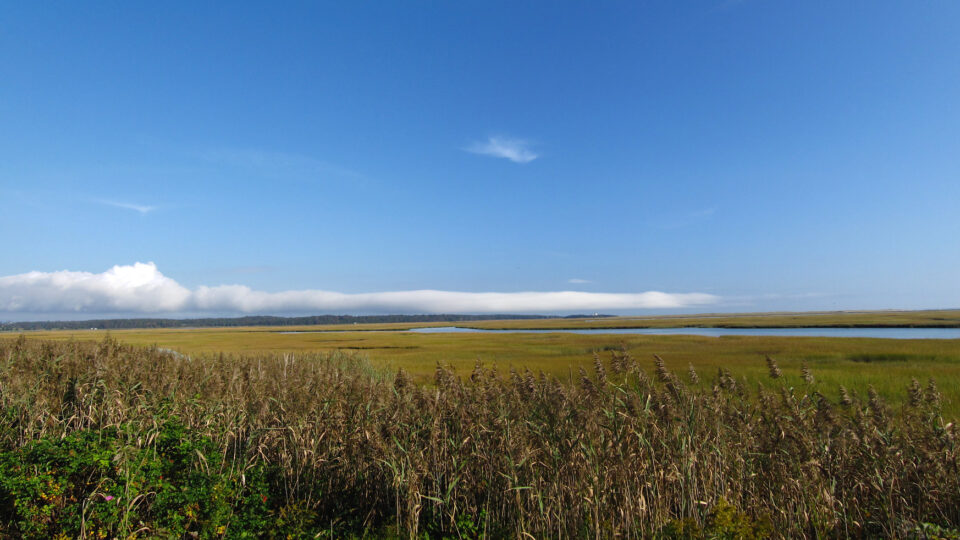
Salt marshes are coastal wetlands that are flooded and drained by salt water brought in and out by the tides. These low-lying wetlands are also sometimes called tidal marshes because they occur in the zone between low and high tides. These wetlands are some of the most biologically productive ecosystems on Earth.

Cape Cod’s beautiful salt marshes are as important as they are iconic.  They act as carbon sinks, protect coastal development from storm surge, play an outsized role in nitrogen cycling, and provide critical habitats for many fish, shellfish, and coastal birds.

According to scientists from the Marine Biological Laboratory in Woods Hole, Massachusetts, more than 90% of salt marshes around the world are likely to be underwater by the end of the century. 

Since 1971, scientists from the Marine Biological Laboratory have mapped vegetative cover in Great Sippewissett Marsh in Falmouth, Massachusetts, to examine whether increased nitrogen in the environment would impact species of marsh grass.  Because of the length of the study, the researchers were also able to investigate the impacts of climate change on the ecosystem, especially those driven by accelerating sea level rise. 

The research team found that increased nitrogen favored higher levels of vegetation and accretion of the marsh surface.  However, the researchers found that salt marshes will not be able to outpace the submergence from global sea level rise – no matter how much nitrogen is applied.

Sea level rise is the biggest threat to salt marshes around the world.  Mitigating some of these projected losses is critical in order for salt marshes to continue to provide their important ecosystem services for people and the planet.  

**********

Web Links

Most of the World’s Salt Marshes Could Succumb to Sea Level Rise by Turn of Century

Photo, posted September 27, 2011, courtesy of Chris M Morris via Flickr.

Earth Wise is a production of WAMC Northeast Public Radio
Keeping Venice From Flooding | Earth Wise

January 6, 2022 By EarthWise Leave a Comment

Venice can hold back the Adriatic Sea

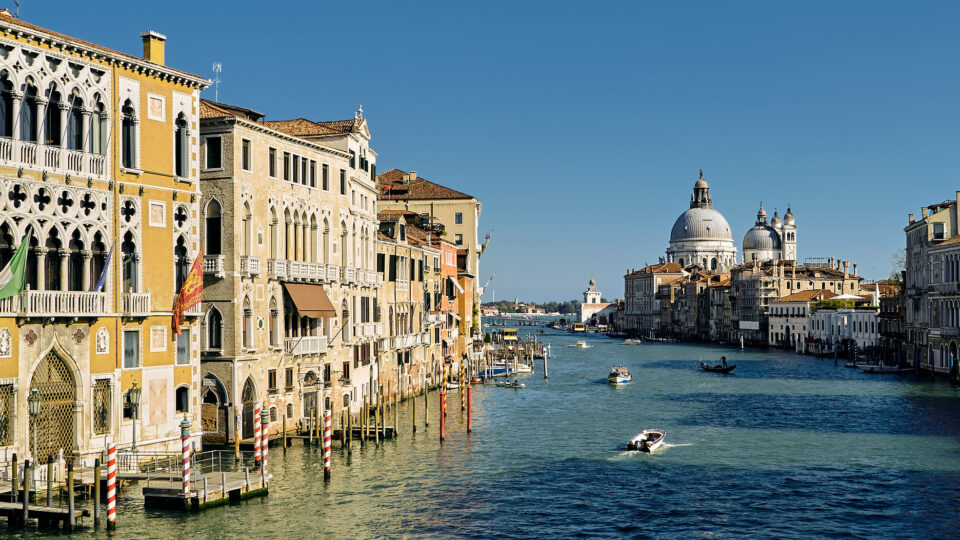
Since 2003, Venice Italy has been building a system of mobile gates at three inlets to its famous lagoon.  The project is called MOSE, the Italian word for Moses, but is actually an acronym for the Italian words meaning Experimental Electromechanical Module.  

The 78 mobile gates are metal box structures that sit at the bottom of inlet channels.  When a high tide is predicted, compressed air is pumped into the structures.  The air causes the barriers to rise up to the surface and block the flow of the tide, thereby preventing water from flowing into the lagoon.

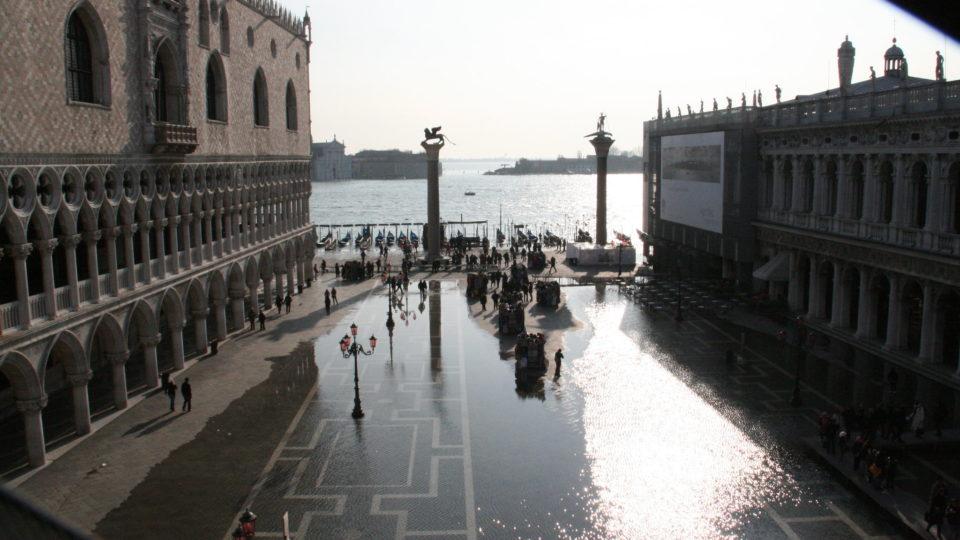
The system had an important test on November 3 when water levels were predicted to rise four-and-a-half feet above normal at high tide and strong winds were blowing.  Water at that level is enough to flood 60% of the city, including the famous St. Mark’s Square, which is unfortunately the lowest part of the city.

Activating the flood gates proved to be successful.  Even though high tide water levels in fact rose 4.3 feet in the surrounding Adriatic Sea, they only reached 2.7 feet in Venice, which was enough to prevent significant flooding.

Rising sea levels have led to increasingly frequent floods in Venice.  In 2019, before the MOSE system was available for use, there were more than 25 high-water events swamping Venice, including one in November of that year that was the second worst on record.

Some researchers have calculated that the system will need to be closed for as much as 3 weeks a year by the end of the century even if emission reductions are reasonably effective.  If they aren’t, the gates may be closed for at least two months a year by 2080.

After many years of delays, setbacks and controversies, the system is finally operational.

**********

Web Links

Venice Holds Back the Adriatic Sea

Photo, posted October 25, 2014, courtesy of Pedro Szekely via Flickr.

Earth Wise is a production of WAMC Northeast Public Radio.

Rising Seas Will Erase Cities

December 18, 2019 By EarthWise Leave a Comment

According to new research, climate-driven sea level rise could affect three times more people by 2050 than previously thought.  This sobering assessment means some of the world’s great coastal cities, including Bangkok, Shanghai, Mumbai, Basra, Alexandria, and Ho Chi Minh City, could be in big trouble.   

Scientists have always relied on land elevation data to determine the effects of sea level rise over large areas.  But standard elevation measurements using satellites struggle to differentiate the true ground level from the tops of trees or buildings.  The authors of the paper developed a more accurate way to calculate land elevation by using artificial intelligence to determine the error rate and to correct for it.  The new findings revealed that 150 million people – three times more than previously thought – are now living on land that is projected to be below the high-tide line by the middle of this century. 

Eight Asian nations – China, Bangladesh, India, Vietnam, Indonesia, Thailand, the Philippines, and Japan – account for about 70% of the people living on at-risk land. 

More than 20 million people in Vietnam, including much of Ho Chi Minh City, live on land that will be inundated by 2050.  In Thailand, more than 10% of its citizens, including much of Bangkok, currently live on land imperiled by projected sea level rise. 

This new research was produced by Climate Central, a New Jersey-based science organization, and was recently published in the journal Nature Communications. 

Sea level rise is clearly not just an environmental problem.  It’s a humanitarian crisis.

**********  

Web Links

New elevation data triple estimates of global vulnerability to sea-level rise and coastal flooding

Rising Seas Will Erase More Cities by 2050, New Research Shows

Photo, posted December 18, 2009, courtesy of Misko via Flickr.

Earth Wise is a production of WAMC Northeast Public Radio.

High-Tide Flooding And Pollution

April 30, 2019 By EarthWise Leave a Comment

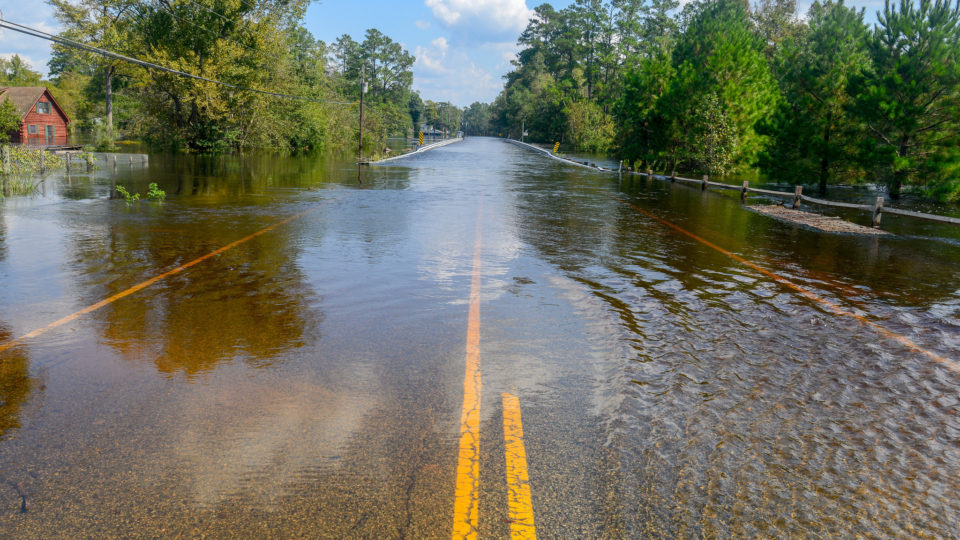
Global sea levels are steadily rising.  They are up 8 inches in the past century and now increasing at an average of 1.3 inches per decade.  As a result, the incidence of high-tide “sunny day” flooding is on the rise, especially along the U.S. East Coast.

Norfolk Virginia experienced fewer than 2 days of high-tide flooding a year in the 1960s; it had 14 in 2017.  Up and down the East Coast, flood days have increased by factors of 5 and more.

This has led to a form of pollution that hasn’t gathered much attention in the past:  when these floodwaters recede, they can carry debris, toxic pollutants and excess nutrients into rivers, bays, and oceans.

In the aftermath of high-tide flooding in Norfolk, Chesapeake Bay was littered with tipped-over garbage cans, tossed-away hamburgers, oil, dirty diapers, pet waste and all manner of other things.  Water that comes up on the landscape takes everything back into the river or ocean with it.

Analysis of tidal flooding along the Lafayette River in Norfolk indicated that just one morning of tidal flooding poured nearly the entire EPA annual allocation of nitrogen runoff for the river – nearly 2,000 pounds – into Chesapeake Bay.  The effects of excess nitrogen in the water are well-known and responsible for the toxic algal blooms that endanger aquatic life as well as human health.

According to the National Oceanic and Atmospheric Administration, high-tide flooding frequency along the southeastern coast of the U.S. rose 160% since 2000.  With the expected continuing rises in sea level, NOAA projects that as many as 85 days of high-tide flooding will occur along the coast by the year 2050.  It’s a big problem.

**********

Web Links

As High-Tide Flooding Worsens, More Pollution Is Washing to the Sea

Photo, posted September 20, 2018, courtesy of SC National Guard via Flickr.

Earth Wise is a production of WAMC Northeast Public Radio.

Primary Sidebar

Recent Episodes

  • An uninsurable future
  • Clean energy and jobs
  • Insect declines in remote regions
  • Fossil fuel producing nations ignoring climate goals
  • Trouble for clownfishes

WAMC Northeast Public Radio

WAMC/Northeast Public Radio is a regional public radio network serving parts of seven northeastern states (more...)

Copyright © 2026 ·