• Skip to primary navigation
  • Skip to main content
  • Skip to primary sidebar

Earth Wise

A look at our changing environment.

  • Home
  • About Earth Wise
  • Where to Listen
  • All Articles
  • Show Search
Hide Search
You are here: Home / Archives for global demand

global demand

Soaring coffee prices

February 20, 2025 By EarthWise Leave a Comment

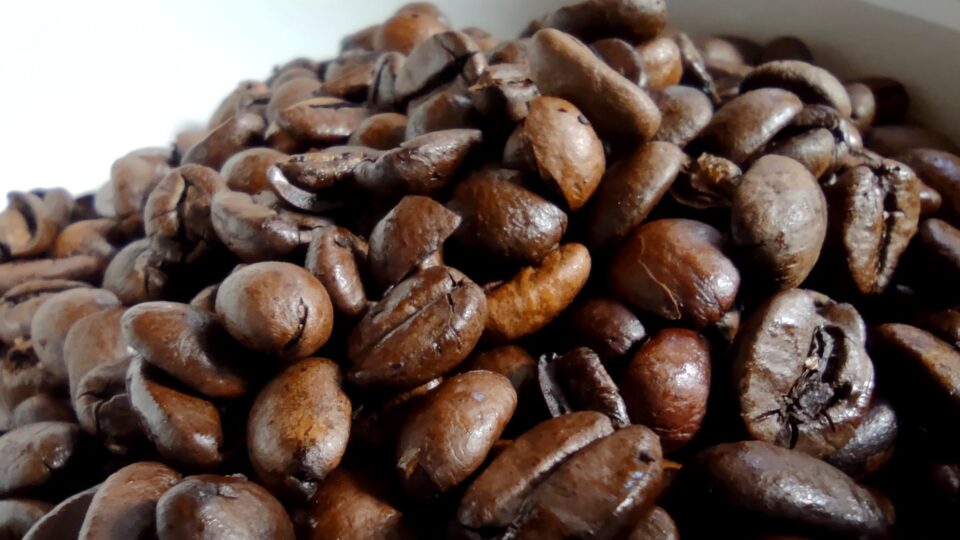
Coffee prices are soaring again

Wholesale coffee prices hit record highs in the midst of the Trump administration’s deportation and tariff dispute with Colombia.  But coffee prices have already been trading near 50-year highs for a while as a result of shortages related to extreme weather and increased global demand.

In recent years, repeated droughts and flooding have put pressure on the global supply of coffee.  These climate swings have caused prices to soar, much as they have for other staples like cocoa, olive oil, and orange juice.  All the while, the global demand for coffee has kept rising.

Coffee is one of the world’s most consumed beverages, but it can be grown only under very specific conditions, namely in misty, humid, and tropical climates, and in rich soil free of disease.   The United States imports nearly all of its coffee – there is only a small amount grown in Hawaii.  Otherwise, the US is the world’s largest coffee importer.  With a limited number of sources for the beans, global coffee prices are very susceptible to the effects of extreme weather.

More than half of the world’s coffee production comes from arabica beans, and Brazil is the largest exporter.  A severe drought there this summer devastated the harvest that typically runs from May to September.   In Vietnam, a severe drought followed by heavy rains harmed the world’s largest source of robusta, the second most popular coffee variety.

People tend to think of coffee as a commodity and not so much as an agricultural product, subject to the vagaries of weather and having prices that fluctuate accordingly.  The bottom line is that drinking coffee is likely to become a bigger strain on one’s own bottom line.

**********

Web Links

Why Coffee Prices Are Soaring (Again)

Photo, posted October 13, 2023, courtesy of Pete via Flickr.

Earth Wise is a production of WAMC Northeast Public Radio
Food, timber, and climate change

October 1, 2024 By EarthWise Leave a Comment

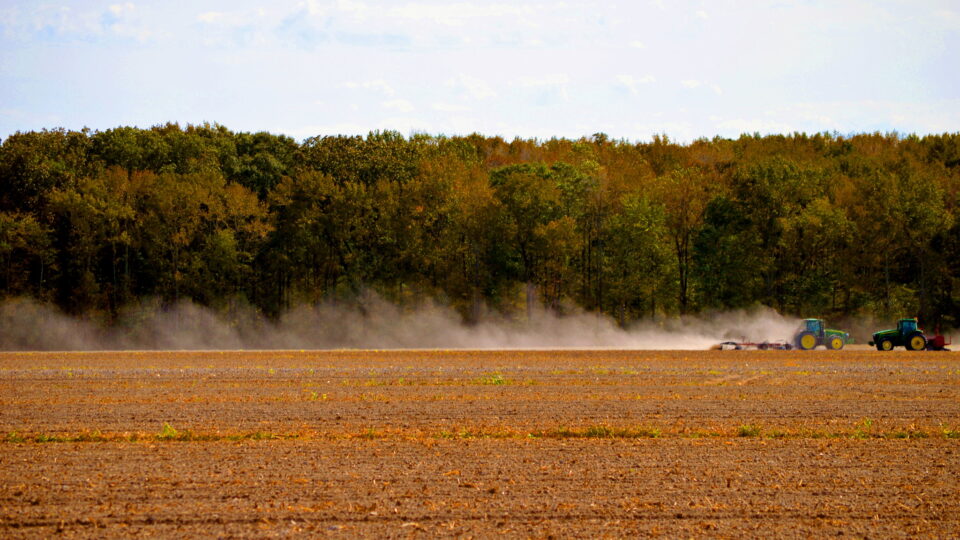
Food and timber production will increasing be in conflict with one another as the climate warms

The sights of coffee plantations in California and vineyards in Britain are becoming more common as the climate changes. But behind what sounds like a success story is a sobering one: climate change is shifting the regions suitable for growing food all around the world. 

According to a new study by researchers from the University of Cambridge, as crop growing shifts northwards, a squeeze will be put on the land needed to produce timber.  The timber these trees produce is used to make everything from paper and cardboard to furniture and buildings.

According to the study, which was recently published in the journal Nature Climate Change, more than 25% of existing forestry land – an area equivalent in size to India – will become more suitable for agriculture by the end of the century if climate change continues unabated.  Approximately 90% of this current forestry land is located in Canada, China, Russia, and the United States.    

Global timber production is worth more than $1.5 trillion every year.  Recent heat waves and wildfires have caused huge losses of timber forests around the world. 

According to the World Bank, the value of the global food system is estimated to be roughly $8 trillion annually.  Scientists expect climate change to cause some areas to become too hot for growing food, particularly in the tropics and southern Europe. 

With the global demand for food and the global demand for wood both projected to double by 2050, the increasing climate change-driven competition between the two is set to be an emerging issue in the coming decades. 

**********

Web Links

Global timber supply threatened as climate change pushes cropland northwards

Do the costs of the global food system outweigh its monetary value?

Photo, posted October 24, 2018, courtesy of Bill Smith via Flickr.

Earth Wise is a production of WAMC Northeast Public Radio
The slow decline of coal

January 25, 2024 By EarthWise Leave a Comment

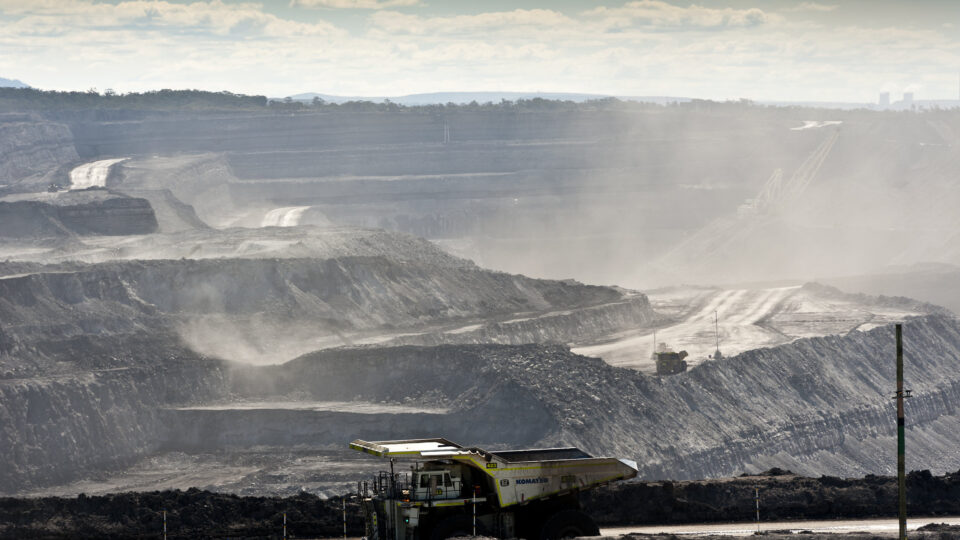
Despite the fact that coal is the dirtiest and most climate-harmful energy source we have, the global demand for it hit a record high in 2023. The demand for coal grew by 1.4% worldwide, according to an analysis by the International Energy Agency.

Coal use grew by 5% in China and 8% in India.  The two countries are the world’s largest producers and consumers of coal.  Meanwhile, coal use in the U.S. and the European Union fell by 20%.

Despite this discouraging news, the IEA forecasts that coal use will decline over the next two years.  There have been declines in coal demand a few times before, but they were driven by unusual events such as the collapse of the Soviet Union and the Covid-19 crisis.  But the IEA says that the forthcoming decline is different.  It will be driven by the formidable and sustained expansion of clean energy technologies.

According to the IEA, global coal demand will fall by 2.3% by 2026 even in the absence of new policies to curb coal use.  Forces at play will be increased hydropower in China as it recovers from drought and puts new wind and solar projects online.  China is responsible for more than half of global coal demand, but it is also responsible for more than half of the planned renewable power projects coming online over the next three years.  Experts believe that with these forthcoming projects, Chinese emissions may have peaked in 2023.

The projected drop in coal demand is still far short of what is required for the world to avoid catastrophic warming.  Much greater efforts are needed to meet international climate targets.

**********

Web Links

After a Record 2023, Coal Headed for Decline, Analysts Say

Photo, posted August 25, 2015, courtesy of Jeremy Buckingham via Flickr.

Earth Wise is a production of WAMC Northeast Public Radio

The Race For American Lithium Mining | Earth Wise

July 7, 2022 By EarthWise Leave a Comment

A race is underway to source enough lithium to meet the global demand

The auto industry is making a massive transition from gas-powered cars to electric cars.  The exploding electric vehicle market has set off what some call a global battery arms race.  Battery manufacturers are urgently trying to source the raw materials needed to make batteries, which presently include cobalt, nickel, graphite, and lithium.  There is encouraging progress in reducing and even eliminating cobalt and nickel from electric car batteries, but so far lithium seems to be essential.

The International Energy Agency has named lithium as the mineral for which there is the fastest growing demand in the world.  Estimates are that if the world is to meet the global climate targets set by the Paris Agreement, at least 40 times more lithium will be needed in 2040 compared with today.

According to the US Geological Survey, the US has about 9 million tons of lithium, which puts it in the top 5 most lithium-rich countries in the world.  Despite this, our country mines and processes only 1% of global lithium output.  Most of the rest comes from China, Chile, and Australia.  Being dependent upon these foreign sources is a serious concern for national security.

There is only one operational lithium mine in the US at present.  Multiple companies are pressing to get more mining projects in operation, including sites in North Carolina and Nevada.  But there are serious environmental problems associated with lithium mining and there is considerable local opposition to establishing the mines.

The US wants to be a leader in the global race to build the batteries that will power the green transition but it is a complicated situation that combines both undeniably important benefits as well as very real dangers.

**********

Web Links

Powering electric cars: the race to mine lithium in America’s backyard

Photo, posted January 18, 2022, courtesy of Ivan Radic via Flickr.

Earth Wise is a production of WAMC Northeast Public Radio.

Eating To Help The Planet | Earth Wise

November 30, 2021 By EarthWise Leave a Comment

Agriculture accounts for more carbon dioxide emissions than transportation.  Producing our food is one of the largest contributors to climate change.   Experts agree that the world cannot achieve net zero emission targets without changing our diets.  Be that as it may, we still have to eat. 

According to experts from Oxford University, there are things we as individuals can do to lower the impact of the food system on the climate.

There are three primary actions that would have the greatest impact: avoiding eating too much, cutting down on food waste, and reducing consumption of meat and dairy.

We all know that overeating is bad for our health, but it is also bad for the environment as it drives excess production and the emissions associated with it.

Food waste occurs across the supply chain but much of it is in the hands of consumers.  Food waste costs us a lot of money and is associated with emissions that are ultimately unnecessary.  The goal of the consumer should be to buy only the food one needs and to eat what one buys.

Meats, particularly from ruminant animals, result in the highest emissions per pound of food compared with vegetables, grains, and such.  Some people have given up animal proteins entirely, but properly managed livestock are an important part of the agricultural ecosystem and provide valuable services including enhancing the carbon sequestering ability of grasslands.  Nevertheless, it is important to reduce the global demand for meat and thereby prevent the need to clear more land for livestock and reduce emissions from meat animals.  So, we should all eat less meat and dairy even if we don’t become vegetarians.

**********

Web Links

How can we eat without cooking the planet?

Photo, posted September 17, 2017, courtesy of Ella Olsson via Flickr.

Earth Wise is a production of WAMC Northeast Public Radio.

Insanely Cheap Energy | Earth Wise

June 11, 2021 By EarthWise Leave a Comment

Solar power is cheapest energy option in most places

The International Energy Agency, founded in 1974, keeps track of the world’s energy systems and anticipates how they are likely to change over time.  Policymakers around the world look to the agency’s annual World Energy Outlook publication for guidance.

In 2000, the agency made the prediction that by the year 2020, there would be a total of 18 gigawatts of photovoltaic solar power installed.  Within seven years, that number was already too small.

The IEA was not the only source to miss the mark on solar power.  The head of solar analysis at BloombergNEF in 2005 expected solar to eventually supply 1% of the world’s electricity.  It is already 3% and Bloomberg now predicts that it will be 23% by 2050 and expects that to be an underestimate. 

What has happened is that the world has unexpectedly gotten to the point where solar is the cheapest source of energy in most places.  Over the past decade, every time solar production capacity has doubled, its cost has dropped by 28%.

Historically, a combination of groundbreaking research in Australia and intense Chinese industrial development led to the creation of a massive new industry.  When Germany passed laws encouraging the use of solar power, suddenly there was massive global demand and a struggle to keep up with supply.

The industry had its fits and starts, and many players fell by the wayside.    But at this point, solar technology continues to get better and cheaper.  Market forces are pretty hard to beat and when solar technology can supply insanely cheap energy, it is going to be used in more and more places.

**********

Web Links

‘Insanely cheap energy’: how solar power continues to shock the world

Photo, posted January 10, 2020, courtesy of Tony Webster via Flickr.

Earth Wise is a production of WAMC Northeast Public Radio.

Is Coffee Endangered?

October 5, 2016 By WAMC WEB

https://earthwiseradio.org/wp-content/uploads/2016/10/EW-10-05-16-Coffee-Endangered.mp3

There are many worries related to climate change, notably the increasing occurrence of extreme weather events, melting polar ice, rising seas, and so forth.  But perhaps one of the most ominous warnings comes from a new report issued by the Climate Institute about the future of coffee.

[Read more…] about Is Coffee Endangered?

Primary Sidebar

Recent Episodes

  • An uninsurable future
  • Clean energy and jobs
  • Insect declines in remote regions
  • Fossil fuel producing nations ignoring climate goals
  • Trouble for clownfishes

WAMC Northeast Public Radio

WAMC/Northeast Public Radio is a regional public radio network serving parts of seven northeastern states (more...)

Copyright © 2026 ·