• Skip to primary navigation
  • Skip to main content
  • Skip to primary sidebar

Earth Wise

A look at our changing environment.

  • Home
  • About Earth Wise
  • Where to Listen
  • All Articles
  • Show Search
Hide Search
You are here: Home / Archives for global crisis

global crisis

Disappearing wetlands

August 21, 2025 By EarthWise Leave a Comment

More than 170 countries gathered recently to discuss how to save wetlands, which are critical ecosystems.  However, the U.S. was a no-show for most of the summit and Russia said it will withdraw from the wetlands treaty.

Wetlands are a crucial element of all life on Earth, supplying fresh water, oxygen, habitat, and food.  The Ramsar Convention, an international treaty focused on the conservation and wise use of wetlands, is the oldest modern global environmental agreement, adopted in 1971. 

Despite this agreement, since 1970 more than 35% of wetlands have been lost or degraded.  A recent report compiled by more than 60 experts from around the world issued a dire warning that the decline of wetlands spells trouble for global food security, climate stability, and even the capacity for life on Earth to persist.

Sadly, geopolitics have overtaken even the instinct for survival.  Because of a prior resolution to monitor Ukranian wetlands harmed during Russia’s ongoing war there, Russia now intends to withdraw from the treaty.  Meanwhile, the U.S. delegate to the wetlands summit only showed up near the end of the meeting to demand that conference documents make no mention of climate change, diversity equity and inclusion, gender, UN sustainable development goals, or zero growth.

Disengagement by the United States from the world’s increasing and shared environmental problems is a global crisis that only worsens existing global crises.

**********

Web Links

Earth’s Wetlands Are Disappearing and Global Efforts to Save Them Are Unraveling

Photo, posted October 8, 2013, courtesy of Marek Kusmin via Flickr.

Earth Wise is a production of WAMC Northeast Public Radio
Whales Eating Plastic | Earth Wise

December 1, 2022 By EarthWise Leave a Comment

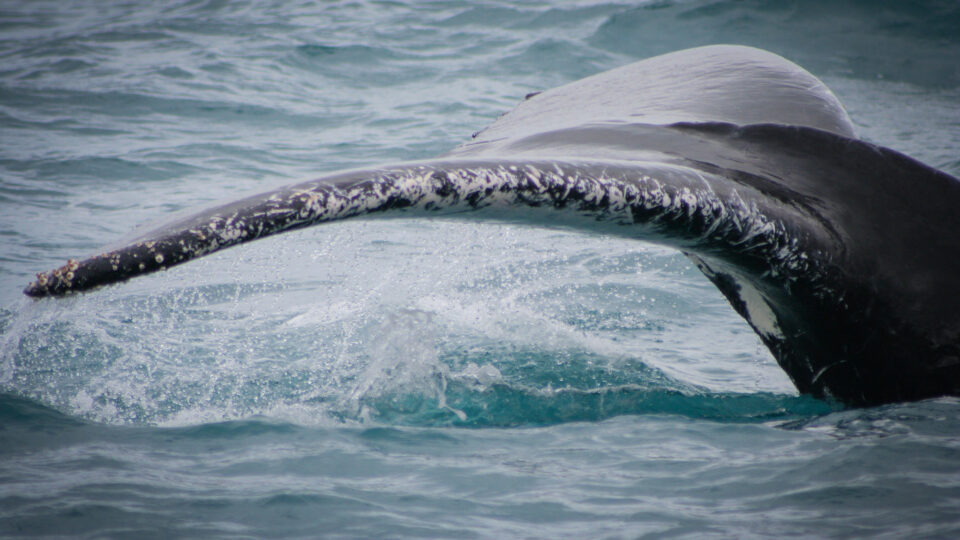
Whales are eating lots of plastic

Plastic waste has been accumulating in the world’s oceans in greater and greater quantities and much of it is in the form of microplastic particles.  Many kinds of whales – the largest creatures on Earth – feed by gulping up mouthfuls of krill and other tiny creatures and then straining the seawater through bristly filter structures called baleens.  As they do this, they are likely to be swallowing large amounts of plastic.

Scientists at Stanford University recently estimated just how much plastic whales are ingesting by tracking the foraging behavior of 65 humpback whales, 29 fin whales, and 126 blue whales in the Pacific Ocean.  Each of the whales was tagged with a camera, microphone, and GPS device suction-cupped to their back.

After accounting for the concentration of microplastics in parts of the Pacific Ocean, the researchers were able to estimate the amount of plastic the whales were consuming.  Humpback whales likely consume 4 million microplastic pieces each day, adding up to about 38 pounds of plastic waste.  Fin whales swallow an estimated 6 million pieces each – amounting to 57 pounds of plastic.  Blue whales, which are the largest creatures on Earth, eat an estimated 10 million microplastic pieces, or as much as 95 pounds of plastic waste each day.

Despite their enormous size, whales actually eat rather low on the food chain, which puts them close to where the plastic is in the water.   Krill eats plastic and whales eat the krill.   Many marine animals are at risk of eating microplastics, but whales are unique in that they can consume so much of it.  It is just one more way in which the ocean plastic situation is a global crisis.

**********

Web Links

Blue Whales Swallowing 95 Pounds of Plastic Daily, Scientists Estimate

Photo, posted October 21, 2005, courtesy of Tobias Begemann via Flickr.

Earth Wise is a production of WAMC Northeast Public Radio
Displaced By Extreme Weather

November 11, 2019 By EarthWise Leave a Comment

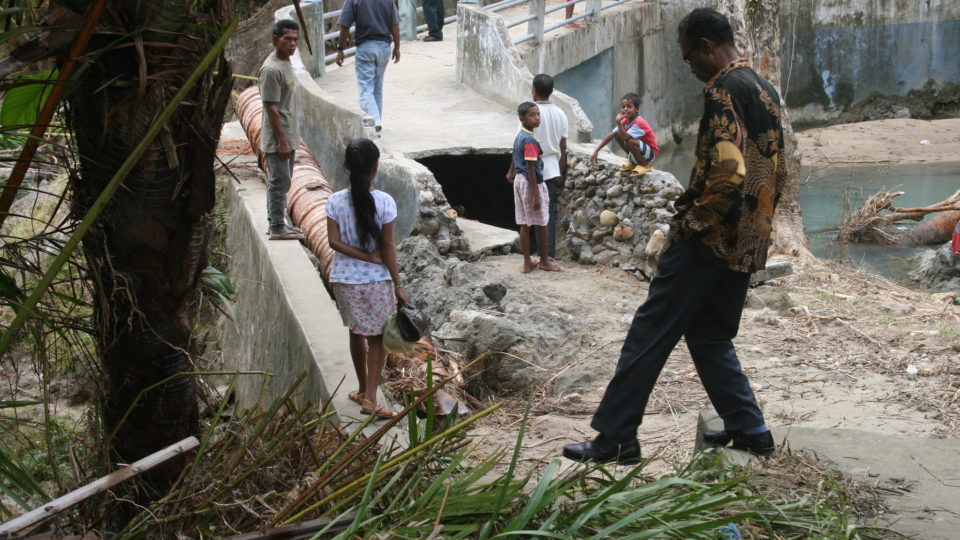
The Internal Displacement Monitoring Centre is the world’s authoritative source of data and analysis on internal displacement.  Internal displacement refers to people being forced to flee their homes or places of habitual residence but who remain within their country’s borders.  Such displacements can be the result of conflict, violence, development projects, natural disasters, or climate change.  As of the end of 2018, over 41 million people were living in internal displacement because of conflict and violence alone.

This year, natural disasters are causing a record number of internal displacements.  In the first half of the year, 7 million people were displaced by disasters, accounting for nearly two-thirds of all the internal displacements worldwide.  The IDMC estimates that this number could hit 22 million by the end of the year.

The vast majority of displacement has been associated with storms and floods.  Cyclone Fani alone in May displaced more than 3.4 million people in India and Bangladesh.  In March, Cyclone Idai displaced 617,000 people in Mozambique, Malawi, and Zimbabwe.  In total, 950 extreme weather events in 102 countries and territories displaced 7 million people from January to June.

Technically speaking, internally displaced people are not considered to be refugees because they remain in their home countries.  But the growing millions of people represent a global crisis that continues to worsen with the changing climate.  The international community cannot ignore the plight of these people.  Governments around the world have to redouble their efforts to protect and assist their displaced citizens as well as to invest in sustainable development and climate change adaptation.

**********

Web Links

Extreme Weather Displaced 7 Million People in First Half of 2019

Photo, posted August 5, 2012, courtesy of the U.S. Embassy, Jakarta via Flickr.

Earth Wise is a production of WAMC Northeast Public Radio.

Primary Sidebar

Recent Episodes

  • An uninsurable future
  • Clean energy and jobs
  • Insect declines in remote regions
  • Fossil fuel producing nations ignoring climate goals
  • Trouble for clownfishes

WAMC Northeast Public Radio

WAMC/Northeast Public Radio is a regional public radio network serving parts of seven northeastern states (more...)

Copyright © 2026 ·