• Skip to primary navigation
  • Skip to main content
  • Skip to primary sidebar

Earth Wise

A look at our changing environment.

  • Home
  • About Earth Wise
  • Where to Listen
  • All Articles
  • Show Search
Hide Search
You are here: Home / Archives for french

french

Mercury in tuna

March 25, 2024 By EarthWise Leave a Comment

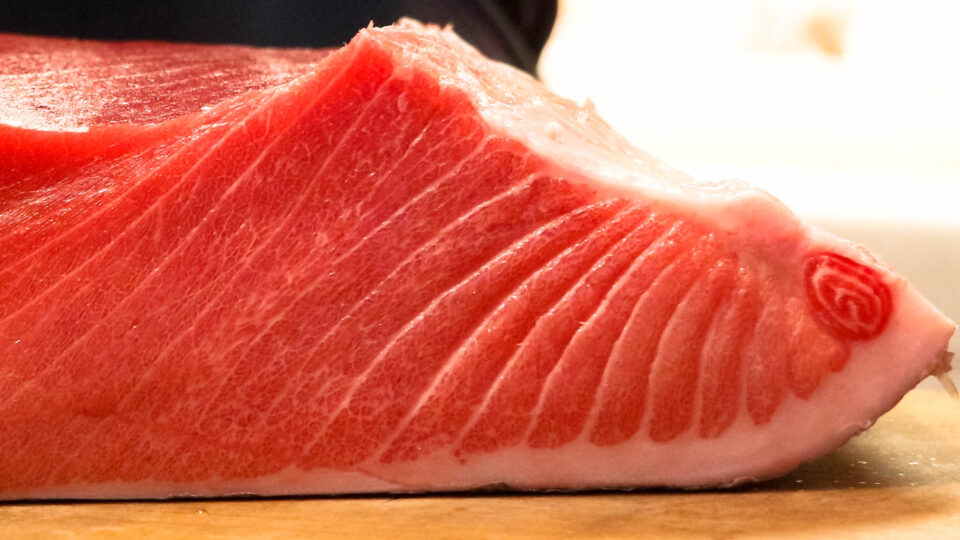
Mercury in tuna still a lingering issue

Mercury is found throughout the ocean, and there is at least some of it in any fish one might eat. It is an element found naturally in the environment, but it is also a byproduct of manmade pollution. Generally speaking, bigger fish tend to have higher mercury levels than smaller ones, because they are higher up in the food chain. The more small fish those big fish eat, the more mercury builds up in their bodies.  Tuna aren’t the biggest fish in the ocean, but they are very common in many people’s diets.

Increased mercury levels are a result of human activities like burning coal and mining which release methylmercury into the air.  It then finds its way into the oceans in rainwater.  Methylmercury is a particularly toxic chemical that affects the nervous system.  Environmental protection policies in recent decades have helped to reduce mercury pollution.

However, a recent study by French researchers looked at the mercury levels in tuna over the past 50 years.  They found that the levels have basically not changed since 1971.  As a result, they are calling for more restrictive environmental policies to further lower mercury pollution levels.

The researchers explained that the lowering of mercury airborne levels to date has not necessarily been ineffective.  They theorized that the static levels in tuna may be caused by the upward mixing of “legacy” mercury from deeper ocean water into the shallower depths where tropical tuna swim and feed.  It could very well take decades to dramatically reduce ocean mercury levels. 

Meanwhile, mercury content in tuna varies considerably by tuna type and source and there are both better and worse choices out there.  Consumers should learn the facts.

**********

Web Links

Mercury levels in tuna remain nearly unchanged since 1971, study says

Photo, posted November 7, 2015, courtesy of Mussi Katz via Flickr.

Earth Wise is a production of WAMC Northeast Public Radio

California Offshore Wind Auction | Earth Wise

January 10, 2023 By EarthWise Leave a Comment

In December, the Bureau of Ocean Energy Management held the first auction for offshore wind energy leases on the West Coast.  The BOEM lease sale offered five lease areas covering 373,268 acres off the central and northern California coast.  The leased areas have the potential to produce over 4.6 gigawatts of wind energy, which is enough to power 1.5 million homes.

The auction drew competitive bids from five companies totaling over $750 million.  The winning bidders were RWE Offshore Wind Holdings, California North Floating, Equinor Wind, Central California Offshore Wind, and Invenergy California Offshore. 

RWE is a German company with subsidiaries across the globe.  California North Floating is an affiliate of the Danish developer Copenhagen Infrastructure Partners.  Equinor Wind is a Norwegian company already heavily involved in offshore wind projects on the East Coast.  Central California Offshore Wind is managed by a joint venture between Spanish and French energy companies.   Invenergy is a privately held global developer and operator of renewable energy headquartered in Chicago.

The bidders will receive credits for participating in programs that support work force training programs for the floating offshore wind industry and/or the development of a US domestic supply chain for that industry. 

Offshore wind off the Pacific coast has enormous potential for enhancing the country’s energy future but represents a significant challenge because the deep ocean floors necessitate the use of floating wind technology as opposed to turbines that are affixed to the sea floor.

**********

Web Links

Biden-Harris Administration Announces Winners of California Offshore Wind Energy Auction

Photo, posted December 30, 2013, courtesy of Derek Finch via Flickr.

Earth Wise is a production of WAMC Northeast Public Radio.

Banning Short Plane Flights | Earth Wise

May 20, 2021 By EarthWise Leave a Comment

Banning short plane flights to reduce emissions

Almost everything we do ultimately results in greenhouse gases entering the atmosphere and therefore has an impact on the climate.  But some activities have much more impact than others.  The aviation industry is responsible for about 5% of global warming.

This doesn’t seem like that large a contribution, but only a very small percentage of the world’s population flies frequently and even in richer countries, only around half the population flew in any given year (at least before the pandemic.)

Flying is generally the only practical option for most long-haul trips and unless people give up on seeing the world or conducting global business in person, they are not going to give up taking air trips.

But shorter flights are a different story.  If you are planning to take a reasonably short trip in France, a plane will soon no longer be an option.  The French government says that flights will be banned on any route where the trip could be made on a train in 2.5 hours or less.  The driving force is the reduction of CO2 emissions.  A plane trip emits an average of 77 times more CO2 per passenger than taking a train on the same route.

The Netherlands and Belgium are also considering bans on short-haul flights and Austrian Airlines recently replaced its Vienna-to-Salzburg flights with train service.

Advocates of the flight bans say that not only does taking the train significantly reduce a traveler’s carbon footprint, but it can be cheaper and actually faster than a plane when factoring in the time spent getting to airports, standing in security lines, getting on and off planes, and so on.  Europe’s extensive train system makes this approach broadly practical. Unfortunately, here in the U.S., it is not quite that easy.

**********

Web Links

France Will Ban Short Flights That Could Be Replaced By a Train Trip

Photo, posted December 17, 2016, courtesy of Dylan Agbagni via Flickr.

Earth Wise is a production of WAMC Northeast Public Radio.

Big Success From A Big Battery

January 1, 2019 By EarthWise Leave a Comment

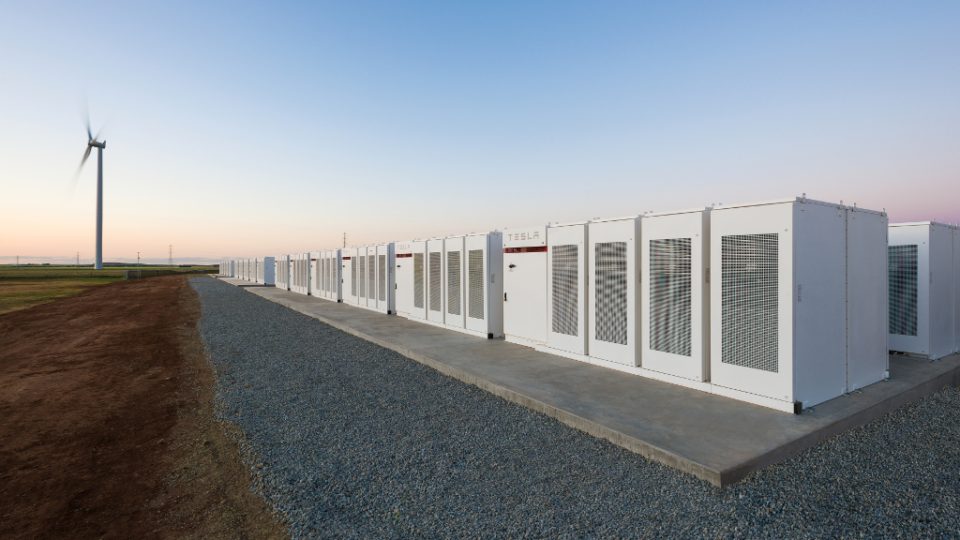
In the fall of 2017, Tesla took on the challenge of installing a 100-megawatt battery storage system in South Australia in under 100 days, promising that the system would be free if it was not built in time.  The project was actually completed in 54 days.

The system is located at the Hornsdale Wind Farm, which consists of 99 wind turbines with a generation capacity of 315 MW.  The Hornsdale Power Reserve installation is the world’s largest lithium-ion battery system and, after a year of operation,has proven to be a smashing success. Estimates are that the project has reduced costs associated with stabilizing the energy grid by about $29 million. The cost of the system was about $87 million, so it is paying for itself quite rapidly. The wind farm and battery systems are owned and operated by a French renewable energy company.

The battery storage system provides a variety of different services to the electric grid.  The primary motivation for it was to achieve system security and reduce the risk of blackouts and load shedding.   Having the battery system in place protects the regional interconnection from tripping,which reduces the risk of separation of South Australia from the National Electricity market.  The system also provides so-called ancillary services such as frequency control and other forms of electricity supply regulation.

The most significant contribution of the Hornsdale Power Reserve is that it has raised the profile of energy storage technology and demonstrated its unique capabilities.  Based on the success of the system, there are now about 2,500 MWh of new storage projects announced by the public and private sectors in Australia.

**********

Web Links

Tesla’s Battery Has Already Saved South Australia a Huge Amount of Money

Photo courtesy of Hornsdale Power Reserve. 

Earth Wise is a production of WAMC Northeast Public Radio.

A Hydrogen-Powered Train

June 5, 2017 By EarthWise

https://earthwiseradio.org/wp-content/uploads/2017/06/EW-06-05-17-A-Hydrogen-Powered-Train.mp3

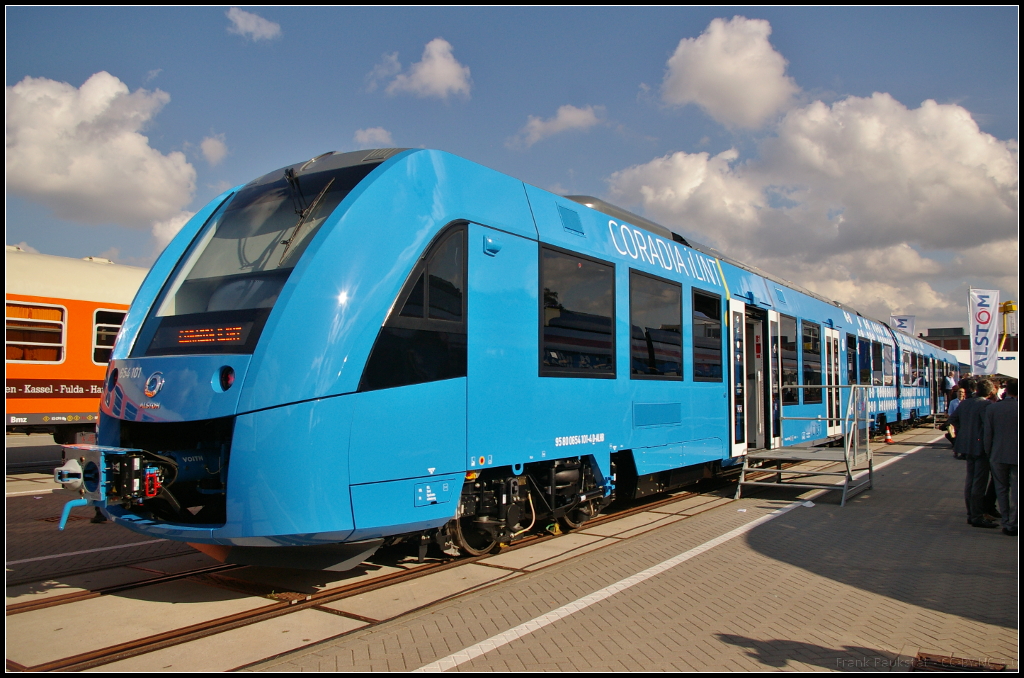
It seems like something out of a science fiction movie, but a nearly silent train that glides along its tracks emitting nothing but water is a reality.   In March, Germany conducted successful tests of the world’s first “Hydrail,” which is a hydrogen-powered, zero-emission train.

[Read more…] about A Hydrogen-Powered Train

Bidding ‘Adieu’ To Plastics

October 13, 2016 By WAMC WEB

https://earthwiseradio.org/wp-content/uploads/2016/10/EW-10-13-16-Bidding-‘Adieu’-To-Plastics.mp3

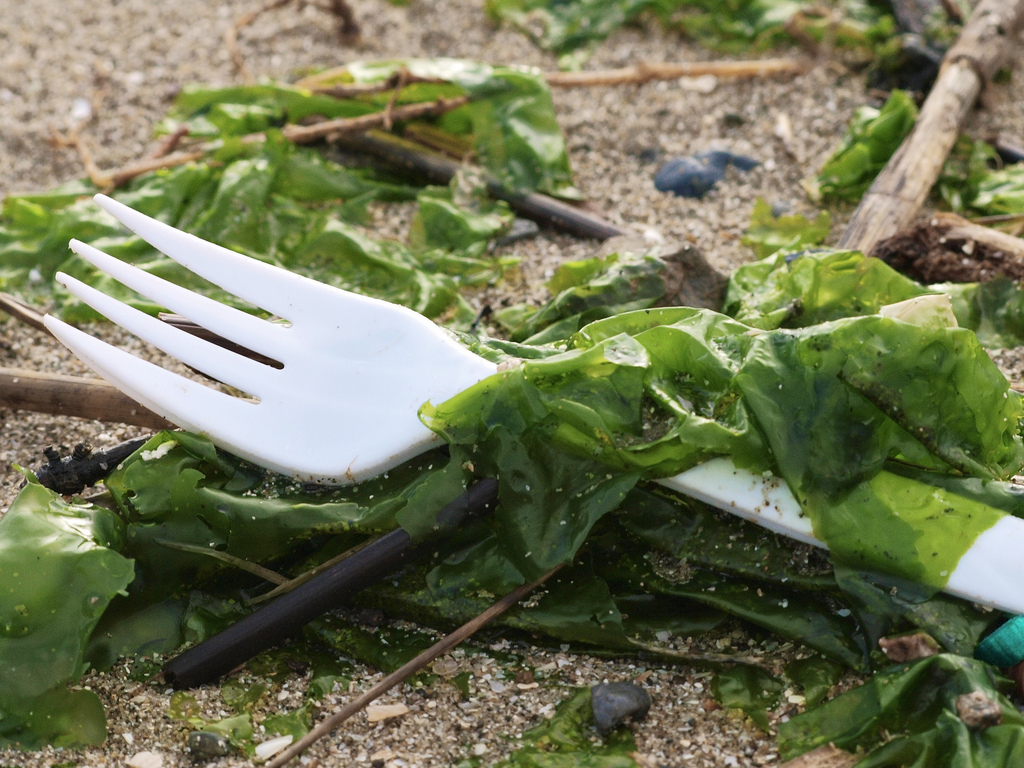
The use of plastics has increased 20-fold in the past 50 years, and production of plastics is expected to double again in the next 20 years.  According to Eco Watch, the average American throws away approximately 185 pounds of plastic every year.  And nearly one-third of all discarded plastic is not properly disposed of or recycled.

[Read more…] about Bidding ‘Adieu’ To Plastics

Primary Sidebar

Recent Episodes

  • An uninsurable future
  • Clean energy and jobs
  • Insect declines in remote regions
  • Fossil fuel producing nations ignoring climate goals
  • Trouble for clownfishes

WAMC Northeast Public Radio

WAMC/Northeast Public Radio is a regional public radio network serving parts of seven northeastern states (more...)

Copyright © 2026 ·